
If drafts are your real problem — that feeling of cold pouring off the glass even with the window shut, or a kitchen window you stretch over the sink to crank open — here’s the one style I’d point you to first, and the catch that comes with it.
The catch involves a sail. We’ll get there.
What is a casement window?
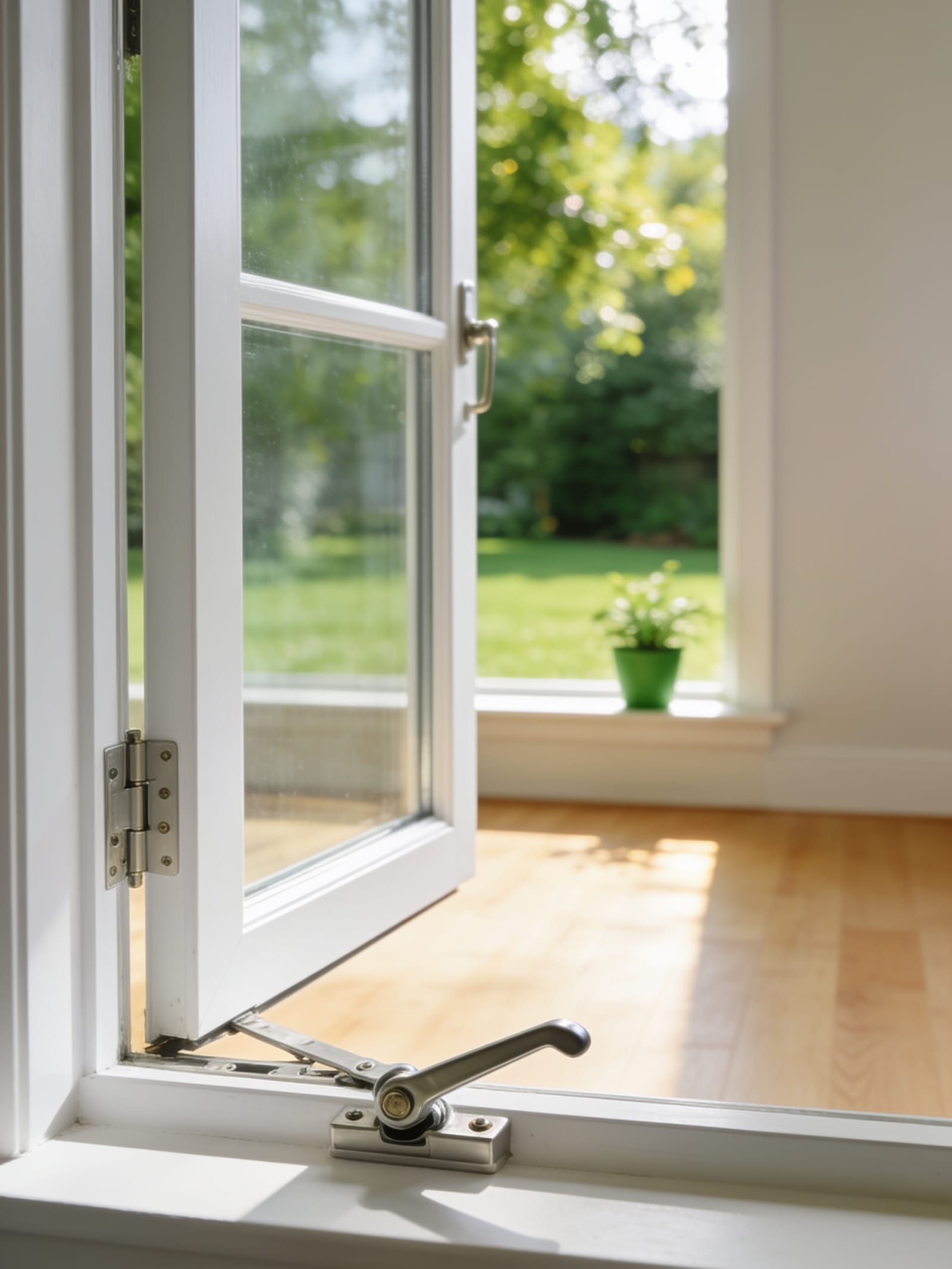
A casement is a single sash hinged on the side that cranks fully outward like a door. The whole sash opens, so the entire opening clears.
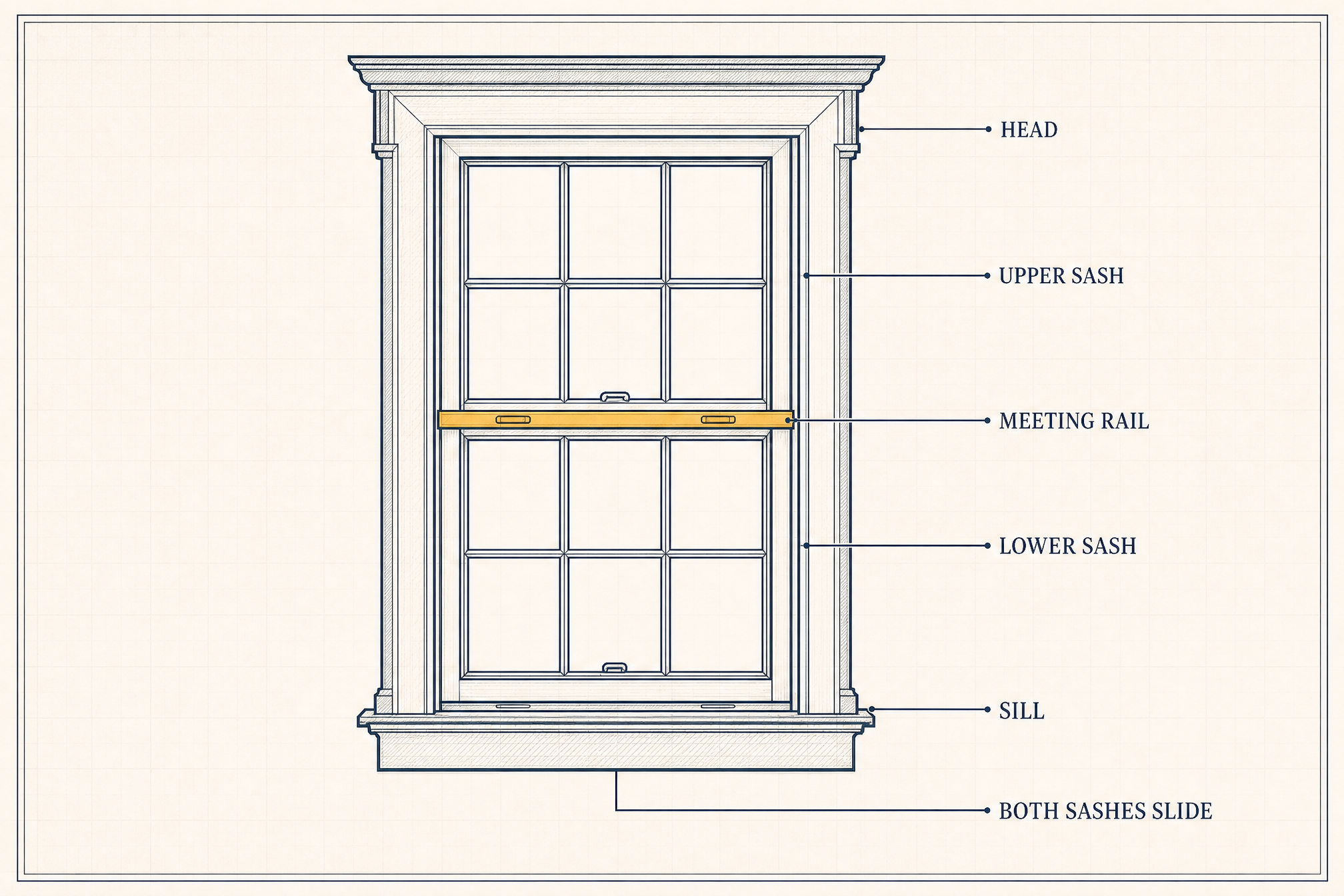
It belongs to the SWING family, which also includes the awning (top-hinged) and the hopper (bottom-hinged). The crank operator and a multi-point lock are what make it behave differently from a sash that slides.
Why do casement windows seal so tightly?
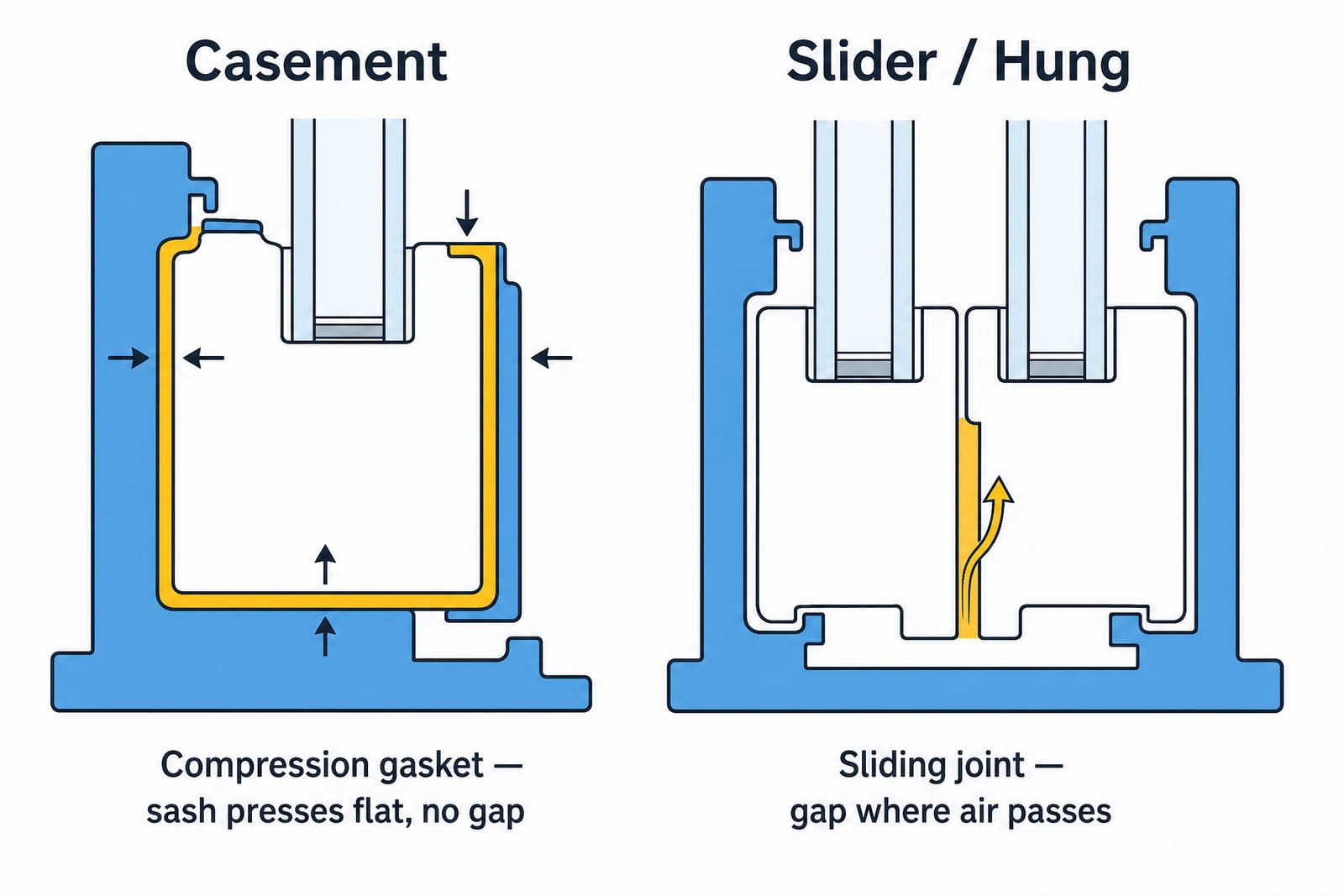
Because locking a casement pulls the whole sash flat against the frame — a compression seal — instead of leaving the sliding gap a hung or slider window has.
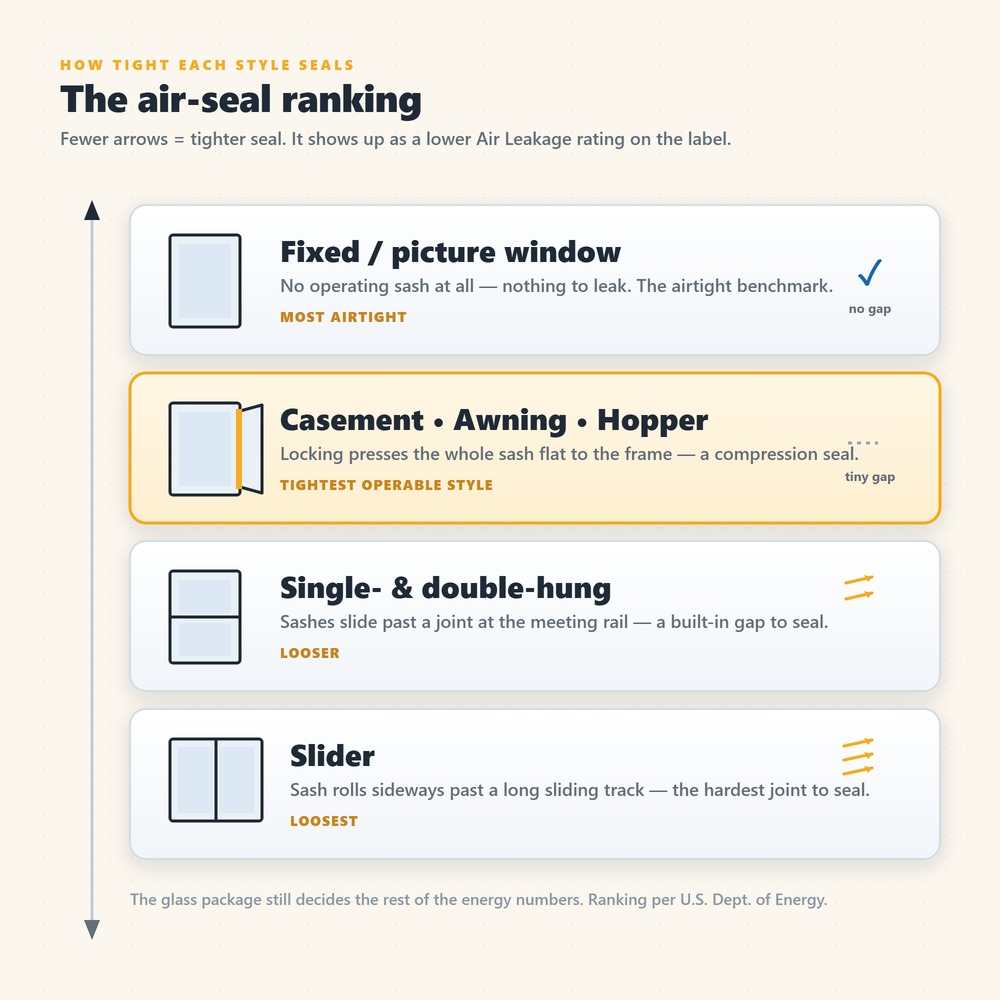
That’s why the casement sits at the tight end of the air-seal ranking: a fixed picture window is most airtight, then the compression-seal styles (casement, awning, hopper), then the hung windows, and slider last.
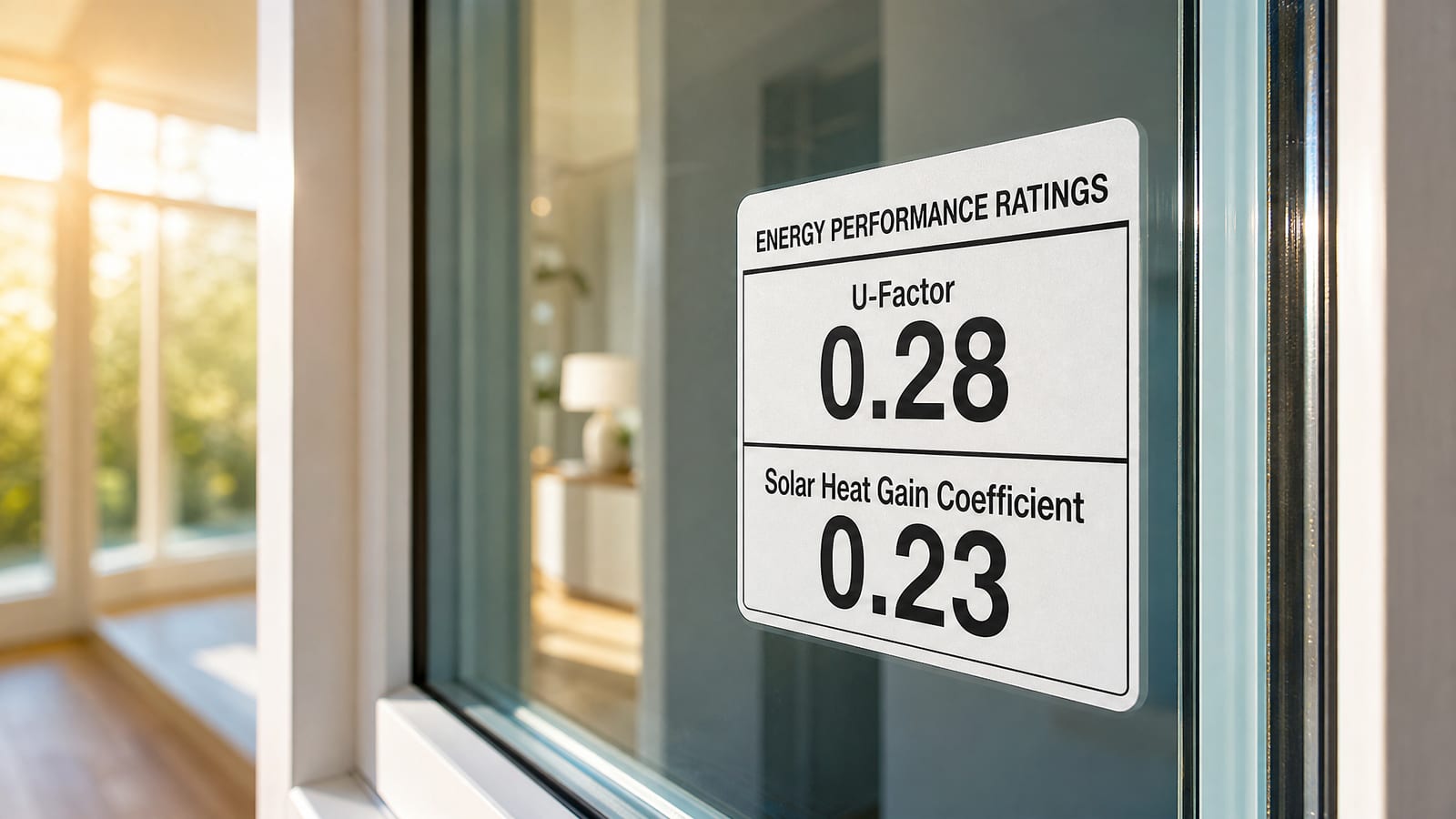
If your real complaint is drafts, that compression seal is the honest answer. It shows up as a low on the label — though the glass package decides the rest of the energy numbers. Here’s what the air-leakage rating tells you.
Are casement windows good for ventilation and kitchens?
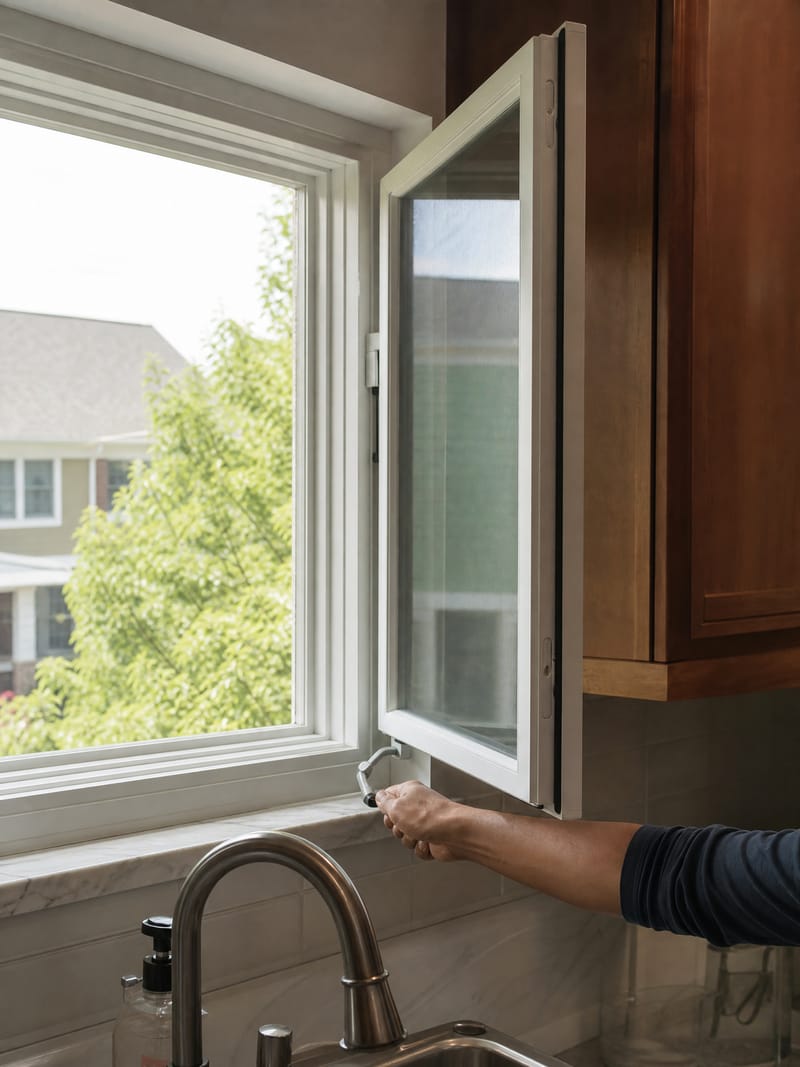
Yes — a casement opens fully and catches side breezes like a sail. Because the whole sash swings out, it scoops air a hung window can’t.
And the crank works with one hand, which is why it’s the go-to over a kitchen sink or counter where you can’t reach to shove a sash upward. For hard-to-reach spots, that one-handed crank is the whole reason to choose it.
Can a casement window be an egress window?
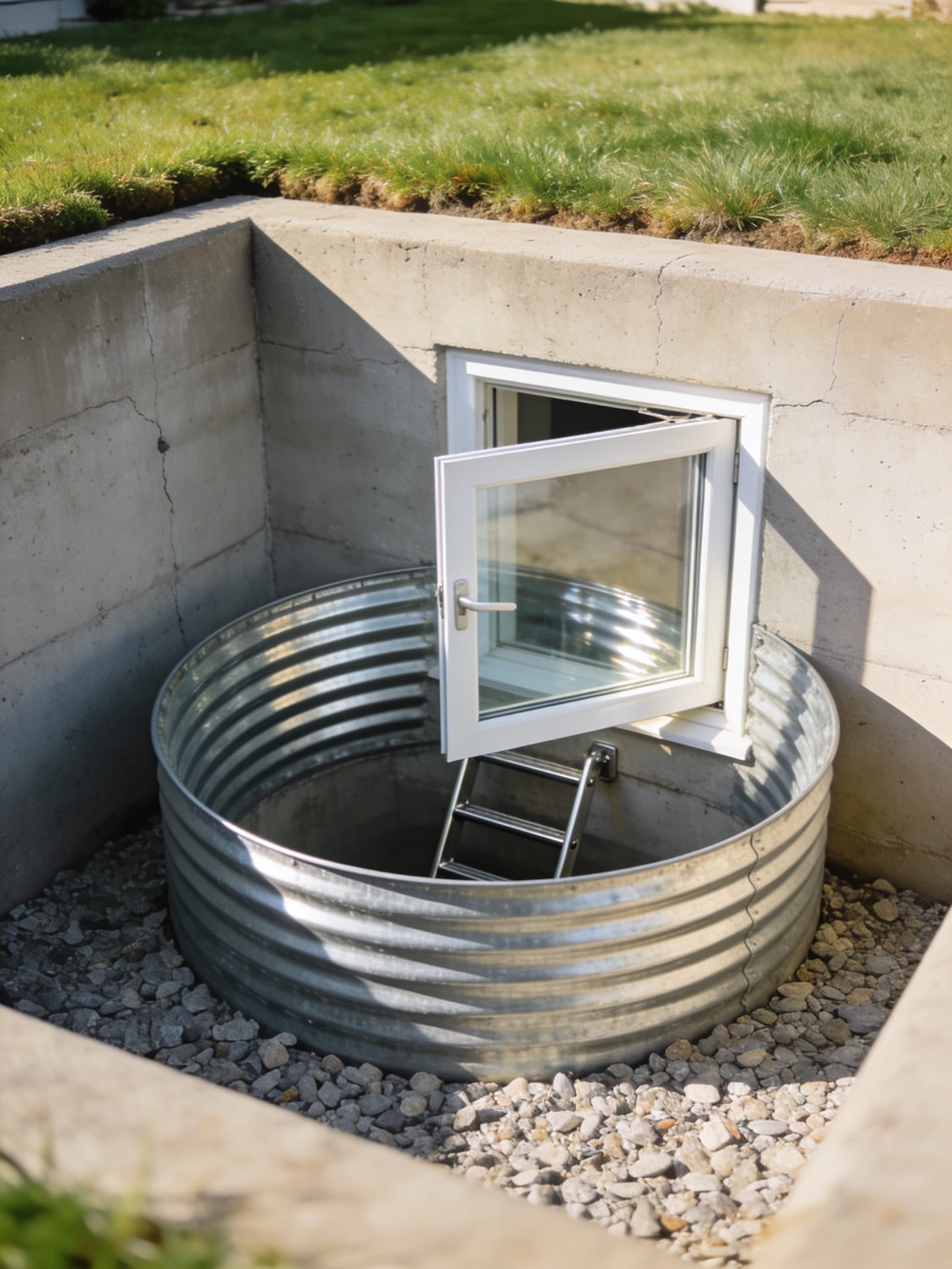
Yes, and it’s the most egress-efficient style there is. Because nearly the whole sash becomes net clear opening, a casement can satisfy the egress opening requirement in a smaller unit — roughly 36 by 48 inches — where a double- or single-hung needs about 60 by 48 inches because only half opens.
Those unit sizes are approximate ballpark examples, not code figures. The firm numbers under the 2018 NC Residential Code (Section R310.2.1) are a minimum net clear openable area of 4 sq ft, a minimum net clear opening height of 22 inches, and a minimum width of 20 inches — with the sill no more than 44 inches above the floor.
Heads up: North Carolina amended these down from the base IRC (which uses 5.7 sq ft / 24-inch height), so if you’ve read the national 5.7 sq ft figure elsewhere, NC is different — confirm the requirement against the code your local inspector actually enforces.
If you’re working with a tight wall opening in a bedroom, that efficiency matters. Here’s how casement meets egress code.
What are the downsides of casement windows?
A casement isn’t free of trade-offs. Here are the ones the forums flag — before you find them somewhere else.
- Heavier to operate. The whole sash swings on hardware, so it’s more to move than a light bottom sash.
- Catches wind. Here’s the sail from the top of the page: left open in a storm, the whole sash acts like one. On a windy exposure that’s a real consideration.
- Hardware wears. The crank and hinge are moving parts that wear over time — worth checking the warranty fine print on the operator.
- Needs clearance. It swings outward, so it needs room to open.
- Costs a bit more than a comparable double-hung, because of the more complex hardware. (For real numbers, see what windows cost in NC.)
NC homeowner takeaway: the wind-and-weight gripes are real, but they’re situational — they matter on an exposed, windy wall, less so on a sheltered one.
None of them undo the casement’s tight seal. If drafts are your problem and the exposure isn’t brutal, the trade is worth it.
Where do casement windows work best in an NC home?
Casement shines over the kitchen sink, in hard-to-reach spots, in tight bedrooms that need egress in a smaller wall opening, and in any draft-prone room where the compression seal is the point.
It’s the style I reach for first when comfort and a tight seal are the priority — and the one I’d steer you away from on a wide, exposed, windy wall where you’d want to leave it open. For the full picture, see all the window styles.
If you’ve got a casement on a quote and you’re weighing it against your old double-hungs, that’s worth talking through — which walls get the tight seal, and which ones would just be flying a sail.
Talk it through with an NC window expert, no pressure.
Sources, Verification & Fact-Checking verified July 2026
Every load-bearing fact on this page is sourced and verified against a primary authority.
Verified July 2026 via direct review of the cited authority — the links open the controlling source so you can check it yourself rather than take our word.
- A casement seals tightest of the operable styles via a compression seal. Locking a side-hinged casement pulls the whole sash flat against the frame instead of leaving the sliding gap a hung or slider sash rides past, which is why it earns a lower air-leakage rating than sliding styles. The U.S. Department of Energy states directly: casement, awning, and hopper windows “generally have lower air leakage rates than sliding windows because the sash closes by pressing against the frame,” while sliding and single-/double-hung windows “generally have higher air leakage rates than projecting or hinged windows.” Fixed picture windows, with no operating sash at all, are the most airtight of any style. (view source — U.S. Department of Energy, Building Science Education: Window Operation Methods)
- Air leakage is the NFRC label rating that reflects seal tightness; the glass package drives the other energy numbers. The NFRC label reports Air Leakage (AL) — “the rate of air movement around a window, door, or skylight” — alongside U-factor and SHGC, letting you compare windows apples-to-apples; a lower AL is a tighter product. (view source — U.S. Department of Energy, Building Science Education: fenestration performance ratings; NFRC — the energy performance label)
- Casement is the most egress-efficient style: nearly the whole sash becomes net clear opening. Because a casement opens fully, a smaller unit can hit the required net clear openable area, where a hung window — only half of which opens — needs a much larger unit to clear the same hole. This is opening geometry, not a rated spec; the code figure it has to satisfy is the R310 net clear opening below. (view source — 2018 NC Residential Code R310.2.1, via ICC)
- North Carolina’s emergency-escape (egress) opening requires a 4 sq ft minimum net clear openable area (2018 NC Residential Code, Section R310.2.1) — not the national 5.7 sq ft. North Carolina amended the base IRC: NC R310.2.1 sets a minimum net clear openable area of 4 sq ft, a minimum net clear opening height of 22 inches, and a minimum width of 20 inches, with the sill no more than 44 inches above the floor (R310.2.2). The base IRC figures often quoted nationally (5.7 sq ft, 5.0 at grade, 24-inch height) do NOT apply in NC — the 5.0/5.7 sq ft figures in NC are a separate minimum-total-glazing-area requirement (5 sq ft ground-floor / 5.7 sq ft upper-story window), not the escape opening itself. “Net clear opening” is the actual hole with the sash fully open, not the frame size. The unit dimensions in this article (roughly 36×48 in for a casement vs ~60×48 in for a hung window) are approximate ballpark examples, not code figures; always confirm the requirement with the code your local inspector enforces. (view source — 2018 NC Residential Code R310.2.1, via ICC)
- The casement’s trade-offs are operational, not spec claims. The heavier swinging sash, the open sash catching wind, the crank-and-hinge hardware wearing over time, and the need for exterior swing clearance are inherent to the crank-out mechanism. We state hardware “wears over time” and quote no specific lifespan figure — there’s no manufacturer-independent lifespan standard to cite, so check the operator warranty on any specific unit. (Not cited: no primary authority sets a hardware-life number.)