

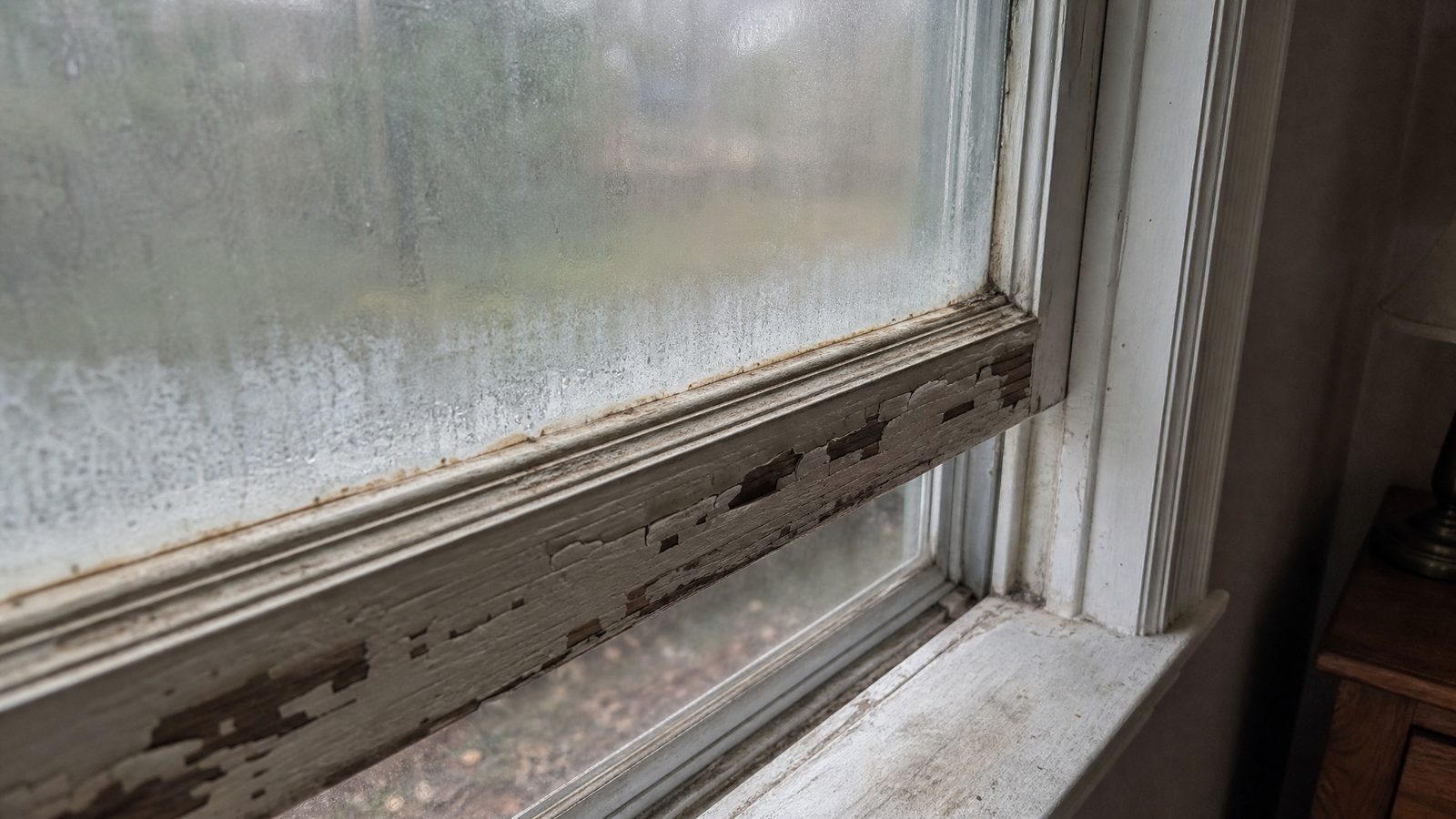
There’s a lot of money riding on this question, and the company quoting you a full replacement isn’t always the one to ask.
Here’s the honest version: sometimes a repair is the smart money, and sometimes replacement genuinely pays for itself. The trick is knowing which situation you’re in.
The default reflex is to replace the whole house — and the whole house is rarely the answer.
When a repair is usually the smart money
- Foggy glass, sound frame. A failed seal often means you can swap just the insulated glass unit and keep the frame.
- Drafts from worn parts. Weatherstripping, balances, and locks are cheap fixes compared to a new window.
- One or two problem windows in an otherwise good set. Fix the outliers; don’t replace the house.
- Historic or character windows worth keeping. Quality old wood windows can be restored.
When replacement actually pays off
- The frame or surrounding wood is rotted. No glass swap fixes a failing frame.
- Single-pane windows you want to upgrade. Here the comfort and efficiency jump is real — heat gain and loss through windows runs 25–30% of a home’s heating and cooling energy use, and single-pane glass gives up the most.
- Whole-house age and failure. When most windows are at end of life, replacing as a set is usually cheaper per window and gets you a consistent result.
- You’re re-siding or remodeling anyway. The labor overlap makes replacement more efficient.
The same fork, at a glance — what the condition looks like on a real window, and which way it usually points:
| Condition | What it looks like | The smart move |
|---|---|---|
| Foggy glass, sound frame | 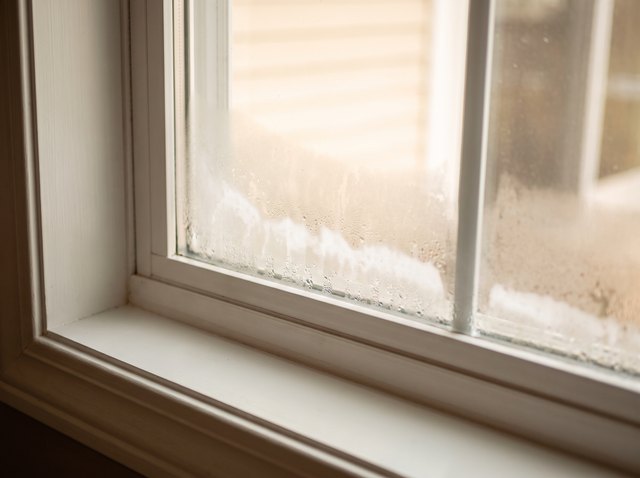 | Repair — swap just the sealed glass unit, keep the frame |
| Draft from a worn weatherstrip | 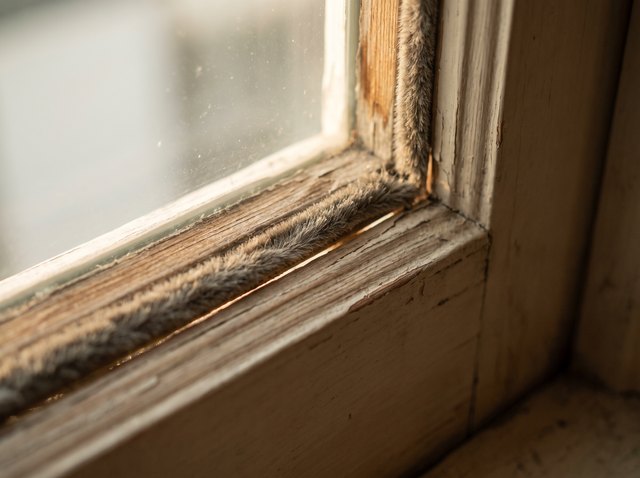 | Repair — reseal the moving joint, don't buy a window |
| Loose lock or tired sash balance | 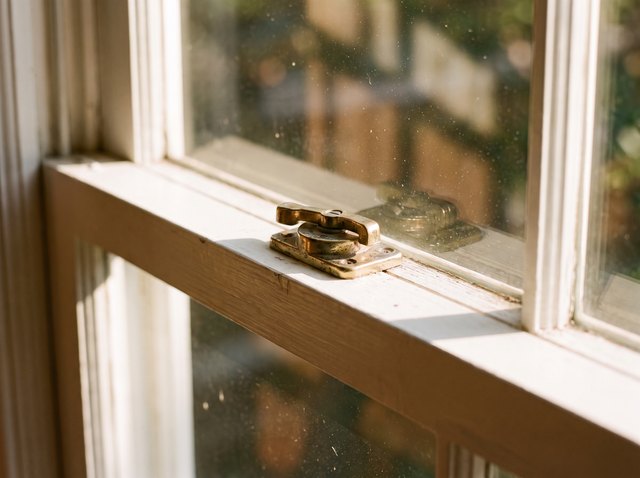 | Repair — a cheap part, not a new window |
| Rotted frame or sill wood | 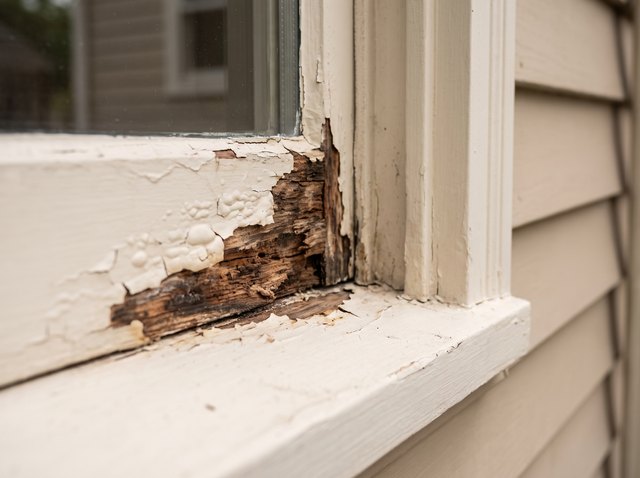 | Replace — no glass swap fixes failing wood |
| Old single-pane glass | 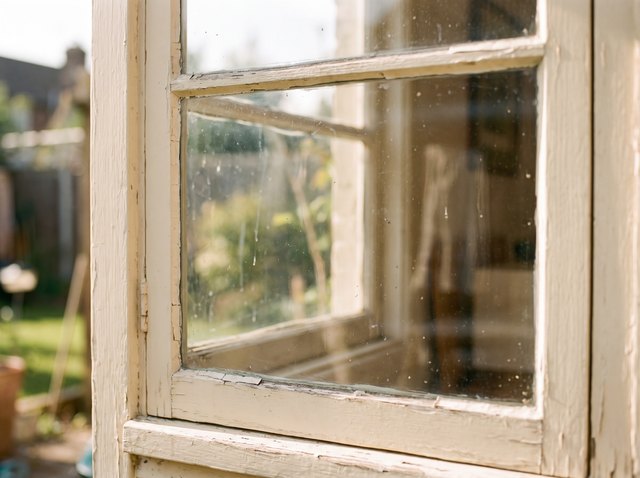 | Replace — the comfort and efficiency jump is real |
| Most windows at end of life | 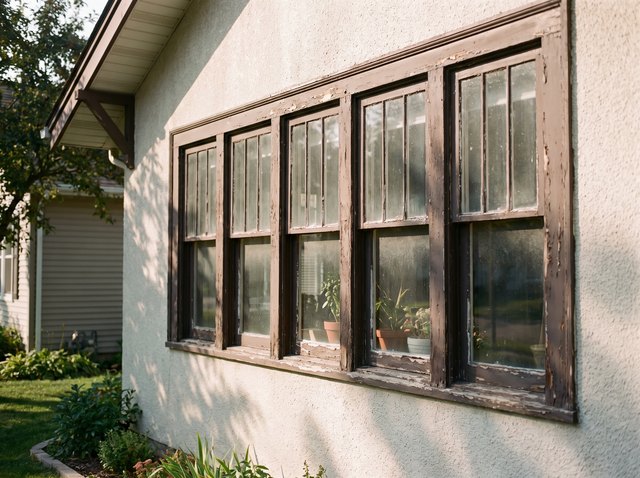 | Replace — a set is usually cheaper per window |
Foggy glass, sound frame
- What it looks like
-
- The smart move
- Repair — swap just the sealed glass unit, keep the frame
Draft from a worn weatherstrip
- What it looks like
-
- The smart move
- Repair — reseal the moving joint, don't buy a window
Loose lock or tired sash balance
- What it looks like
-
- The smart move
- Repair — a cheap part, not a new window
Rotted frame or sill wood
- What it looks like
-
- The smart move
- Replace — no glass swap fixes failing wood
Old single-pane glass
- What it looks like
-
- The smart move
- Replace — the comfort and efficiency jump is real
Most windows at end of life
- What it looks like
-
- The smart move
- Replace — a set is usually cheaper per window
The five-minute self-check
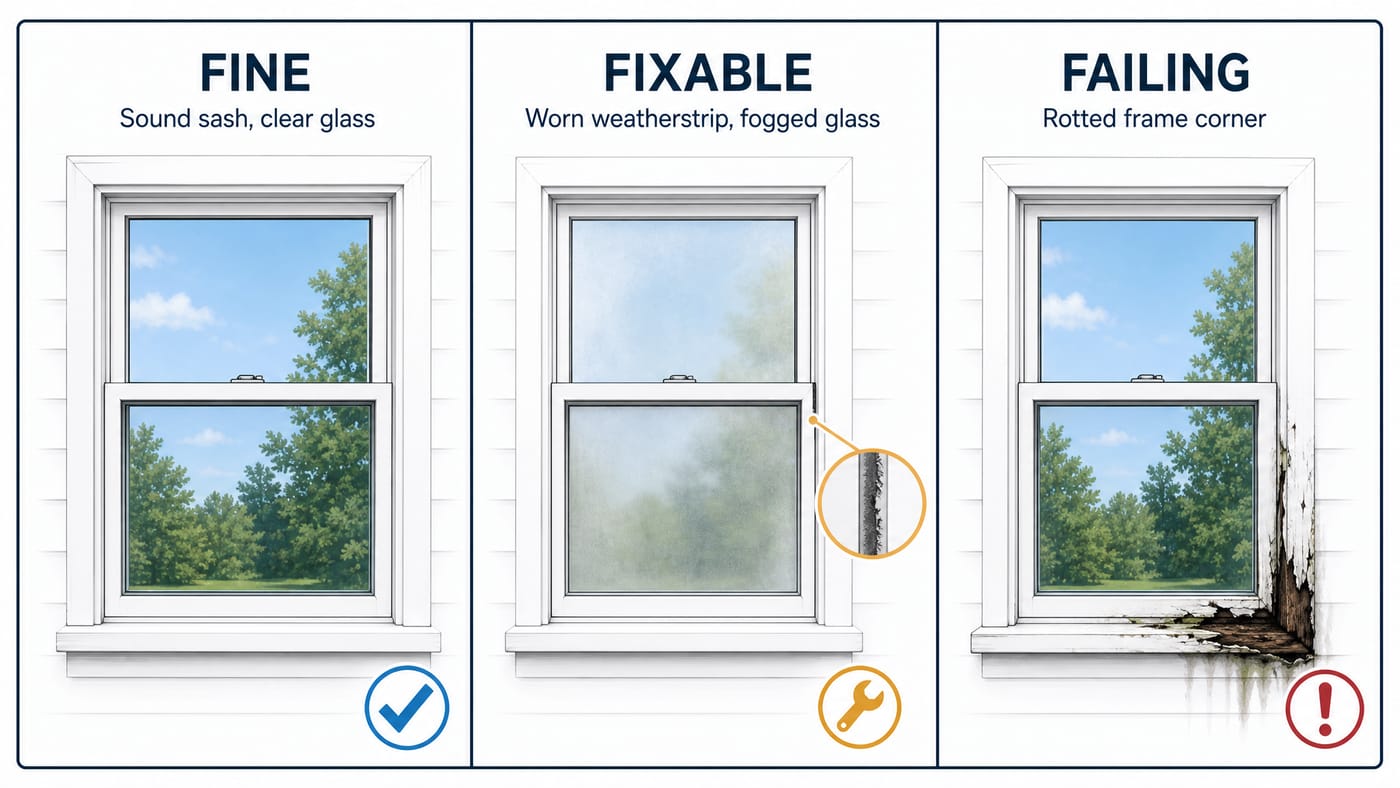
Walk the house and sort each window into fine, fixable, or failing.
If your list is mostly “fixable,” get a repair quote before you let anyone sell you the whole house. If it’s mostly “failing,” price a full replacement — and read what windows really cost in NC first so you can tell a fair quote from a padded one.
Bottom line
Replacement is a great product oversold to plenty of people who didn’t need it yet.
If you’re not sure which camp you’re in, that’s a perfect thing to get a second, no-pressure opinion on.
Sources, Verification & Fact-Checking verified July 2026
Every load-bearing fact on this page is sourced and verified against a primary authority.
Verified July 2026 via direct review of the cited authority — the links open the controlling source so you can check it yourself rather than take our word.
- Repair is often the most cost-effective move when windows are in good condition. If your existing windows are in good shape, improving their efficiency — sealing air leaks with caulk and weatherstripping, adding low-e storm windows — often beats replacement on cost: the U.S. Department of Energy’s field validation found low-e storm windows “bring similar energy savings” to full window replacement at about a quarter of the cost, and the EPA’s ENERGY STAR program names air sealing among the most cost-effective efficiency upgrades. (view source — energy.gov, EERE low-e storm window validation; view source — ENERGY STAR, Seal and Insulate)
- Fog between the panes means the insulated glass unit’s seal has failed, letting moist air into the sealed cavity (and the insulating gas out). When the frame and sash are sound, replacing just the glass unit is a recognized repair; exact cost savings vs a full window vary by unit and market (held as directional field observation — no primary source publishes this comparison).
- Drafts from worn parts are a sealing job, not a replacement trigger. DOE’s air-sealing guide lists weatherstripping for the moving joints — around doors and between window frames and sashes — and caulk for the fixed gaps. (view source — energy.gov, DOE Guide to Air Sealing (PDF))
- Restoring character windows and adding low-e storm windows is a real efficiency path, not a consolation prize: DOE puts low-e storm-window savings at 10%–35% on heating and cooling costs, with similar energy savings to replacement at about a quarter of the cost. (view source — energy.gov, EERE low-e storm window validation)
- The single-pane upgrade payoff is real. Windows are responsible for 25%–30% of a home’s wasted energy through heating and cooling loss (NFRC Consumer Guide to Windows), and ENERGY STAR puts the bill reduction from replacing old windows with certified ones at an average of up to 13% nationwide. (view source — energystar.gov, Residential Windows, Doors & Skylights)
- Whole-house replacement usually pricing out cheaper per window is contractor-market economics (one mobilization, one crew, volume pricing), not a published spec — treat it as a rule of thumb and compare real quotes. (held as field observation, consistent with the cited guidance above)