

You’ve decided the siding’s tired — or you’re close to deciding — and now you’re staring at a wall of options, a stack of half-remembered warnings, and the nagging sense that the windows are next too.
This page is the map. Not every spec on one screen — a short, honest read on what siding costs in North Carolina, whether vinyl really looks cheap, how it stacks up against fiber cement, and whether the windows belong in the same job. Then I’ll point you to the deep page for each.
What siding should I put on an NC home, and how do I not overpay? For most homes, vinyl is the value default and fiber cement is the premium call — and the right pick is a budget-and-how-long-you’ll-stay decision, not a brand contest. Vinyl runs roughly $3–$12 per square foot installed here, with fiber cement higher. The number moves on grade, tear-off, trim, and install far more than the label on the box.
Cost ranges here are general national market bands, not an NC quote — a starting point to read a contractor’s number against. Last reviewed July 2026.
What are my siding options?
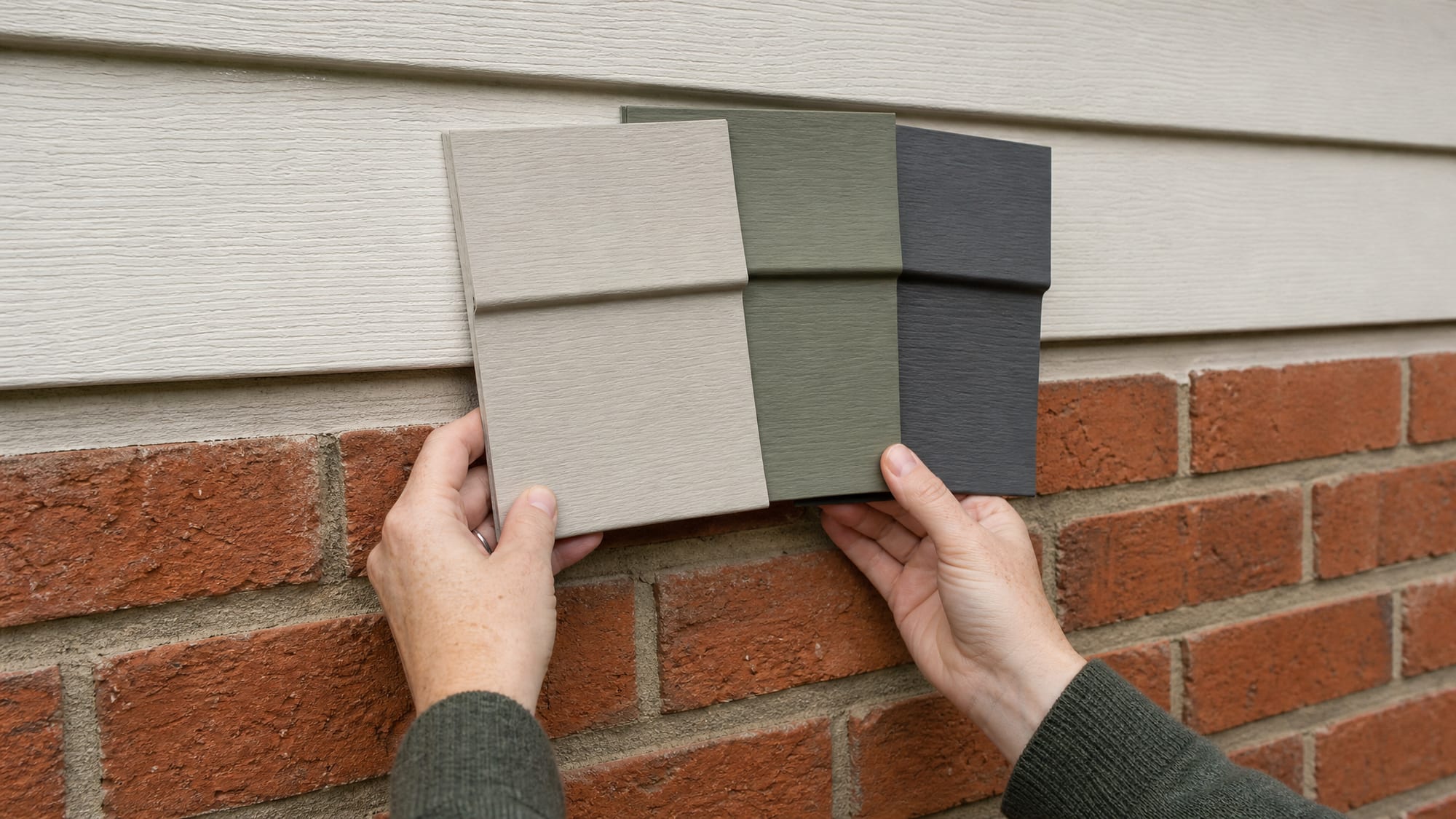
Your real choices come down to two axes: the material and the profile. Get those straight and the showroom stops being overwhelming.
On material, three families cover almost every NC home:
- Vinyl — the value default. Low upkeep, never needs paint, widest color and profile range. Hollow-back is the standard; insulated (foam-backed) is the upgrade.
- Insulated vinyl — the same panel with rigid foam laminated behind it. Stiffer walls, better dent resistance, a modest bump in . More on that below.
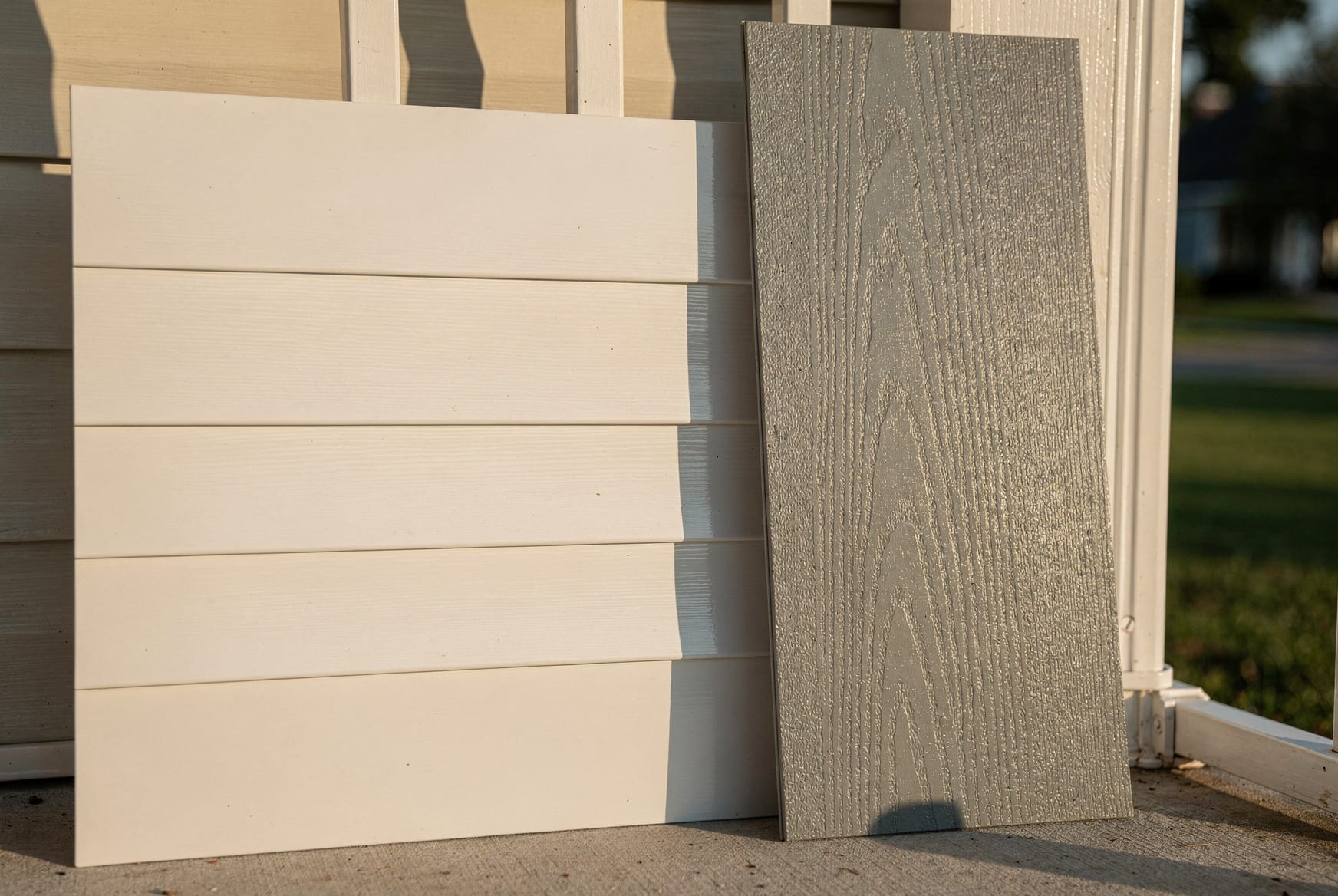
- Fiber cement (James Hardie is the best-known brand) — the premium, longer-lived material. Takes paint, shrugs off sun and pests, costs more and asks for a careful install.
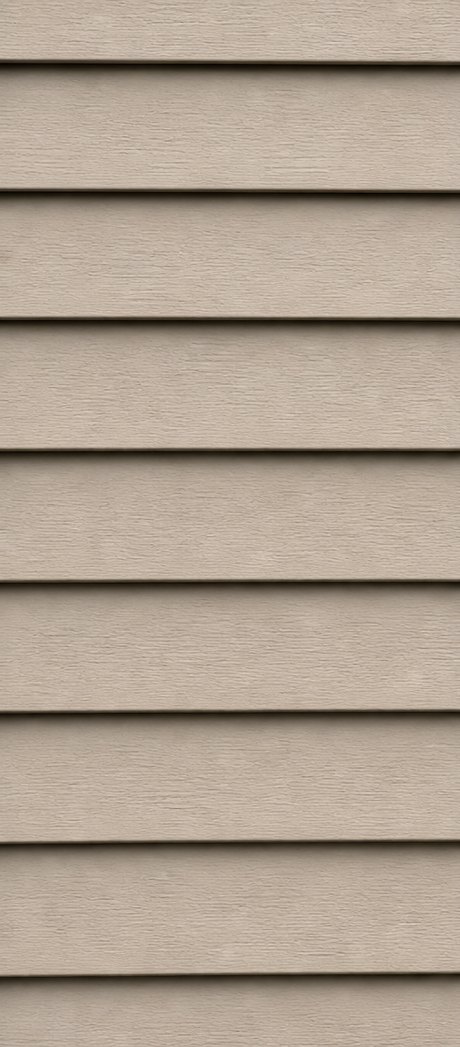
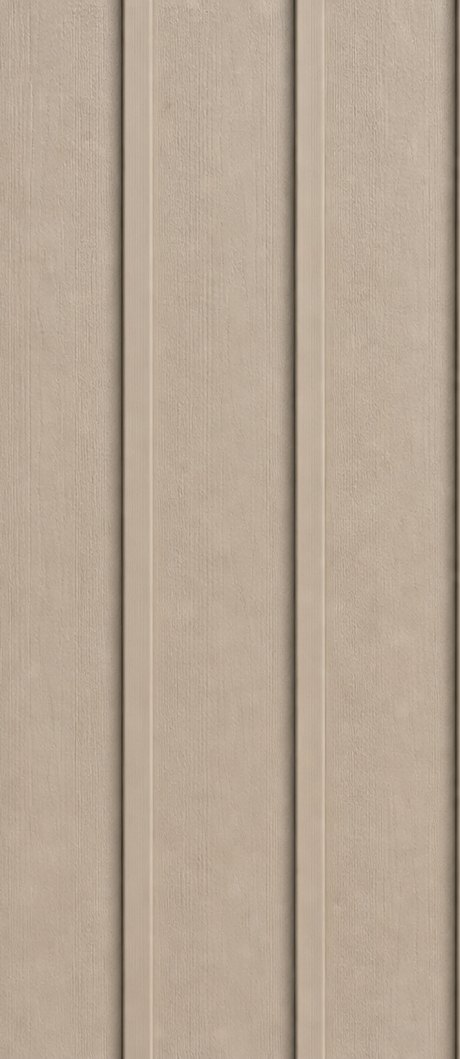
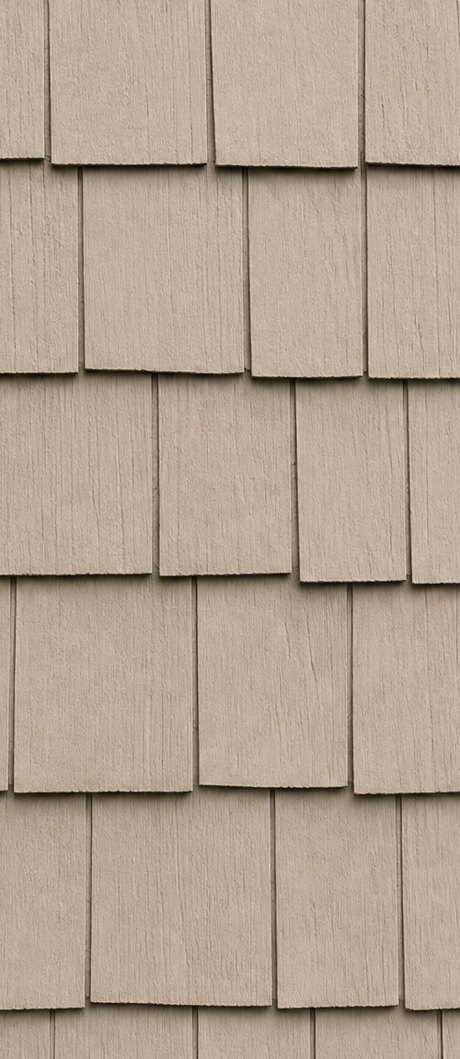
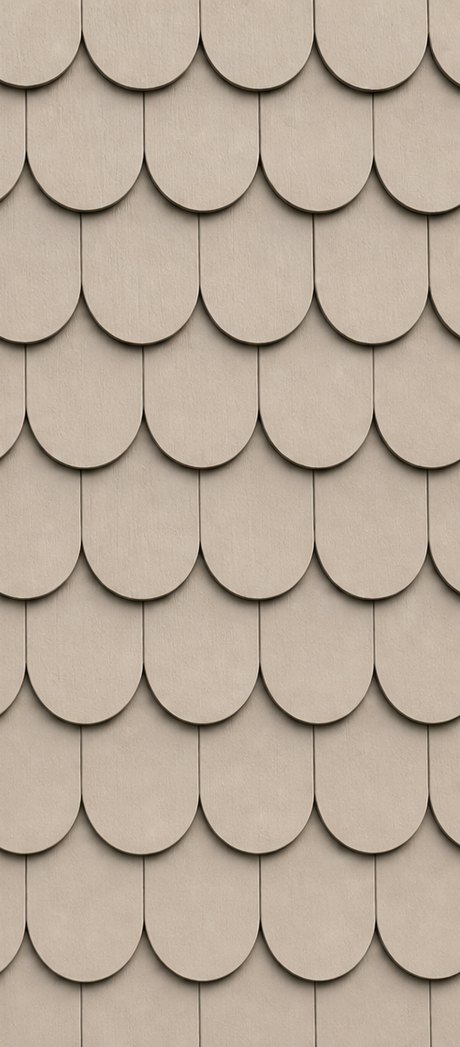
On profile, the look is mostly the panel shape: Dutch lap and traditional lap (the common horizontal looks), board & batten (vertical, farmhouse), shake and scallop (accents and gables), and beaded (a crisp shadow line). You can mix them — lap on the body, board & batten or shake on a gable.
For the full breakdown, the siding styles guide walks every profile with pictures, and the siding colors guide covers how color holds up in NC sun.
Is vinyl still any good, or does it look cheap?
The material isn’t what reads cheap — the grade and the install are. That’s the honest answer to the objection I hear most.
A thin builder-grade panel near the D3679 minimum of 0.035” telegraphs every imperfection in the wall behind it, and it usually comes wrapped in skinny, flat trim. That combination is what people are seeing when they say a house “looks like plastic.”
Step up to a mid-grade panel, add proper trim depth, and hang it straight, and vinyl reads like siding — not a compromise. Modern UV pigments hold color far better than the faded panels people remember from the ‘90s.
So when someone worries vinyl will cheapen the house, I don’t tell them it won’t. I tell them where the cheap look actually comes from — thin grade, bad trim, sloppy install — so they can spend on the parts that matter. The vinyl siding page goes deeper on grade and thickness.
What will siding cost in NC?
As a general market range, vinyl runs roughly $3–$12 per square foot installed, and a whole North Carolina house commonly lands in the low-to-mid five figures. Fiber cement sits higher — often meaningfully so, with Hardie at the upper end.
Those are national aggregator bands, not an NC quote. No NC-specific installed-cost dataset exists, so treat any “NC price” you’re handed as one contractor’s number, not a market fact.
What moves the number is rarely the brand. It’s home size and stories, whether tear-off of the old siding is in the quote, the trim and flashing package, and the vinyl grade. A whole-house total feels like the price, but it’s really square footage times a per-foot rate plus scope — and padding hides in that gap.
The full siding cost breakdown has the per-grade tables and the line items a fair quote should name. If you’re comparing two numbers that are thousands apart, start there.
Vinyl or fiber cement? How I’d actually decide
This isn’t a winner-take-all fight — it’s a match between the material and your situation. Here’s the decision axis in one view, with directional figures you should confirm on the deep pages.
| What you're weighing | Vinyl | Fiber cement (e.g. James Hardie) |
|---|---|---|
| Up-front cost | Lower — the value default | Higher — premium, Hardie at the top end |
| Lifespan (directional) | ~20–40 yrs | ~50+ yrs |
| Upkeep | No paint; wash it | Takes paint; repaint down the road |
| Fire behavior | Combustible (PVC); melts near intense heat | Non-combustible board |
| NC exposure fit | Fine most places; premium grade for high sun/wind | Engineered for NC's HardieZone HZ10 (hot/humid/storm) |
| How to choose | Value + low upkeep, shorter stay | Longevity + paintable look, long stay |
Up-front cost
- Vinyl
- Lower — the value default
- Fiber cement (e.g. James Hardie)
- Higher — premium, Hardie at the top end
Lifespan (directional)
- Vinyl
- ~20–40 yrs
- Fiber cement (e.g. James Hardie)
- ~50+ yrs
Upkeep
- Vinyl
- No paint; wash it
- Fiber cement (e.g. James Hardie)
- Takes paint; repaint down the road
Fire behavior
- Vinyl
- Combustible (PVC); melts near intense heat
- Fiber cement (e.g. James Hardie)
- Non-combustible board
NC exposure fit
- Vinyl
- Fine most places; premium grade for high sun/wind
- Fiber cement (e.g. James Hardie)
- Engineered for NC's HardieZone HZ10 (hot/humid/storm)
How to choose
- Vinyl
- Value + low upkeep, shorter stay
- Fiber cement (e.g. James Hardie)
- Longevity + paintable look, long stay
Fiber cement is heavier and stricter to install than vinyl, and North Carolina sits in James Hardie’s HardieZone HZ10 — the product line engineered for our hot, humid, storm-prone climate. That’s a genuine NC-fit point in fiber cement’s favor for a long-stay home.
But none of that makes vinyl the wrong call. NC homeowner takeaway: if you’re staying decades and want a paintable wall that lasts a lifetime, fiber cement earns the premium. If value and paint-free upkeep matter more, vinyl is the honest pick — and a mid-grade vinyl installed right beats a premium board installed badly. Dig in on the vinyl vs fiber cement comparison and the fiber cement page.
Is insulated vinyl worth it?
Insulated vinyl is a comfort-and-durability upgrade, not an energy-payback promise. The foam backing makes the wall feel more solid, resists dents, and adds a modest R-value that a hollow-back panel doesn’t have.
The U.S. Department of Energy recognizes foam-backed siding as continuous insulation — it reduces thermal bridging across the studs. But the R-value is modest and varies with foam thickness, and the upcharge is real: roughly $2–$4 per square foot over a comparable hollow-back profile.
I wouldn’t buy it expecting the energy savings to pay it back — that’s the part that gets oversold. I’d buy it if I wanted the wall to feel solid and the panels to shrug off a stray ball. The insulated vinyl page has the honest math.
You came for siding. Should the windows go in the same project?
It’s the same wall, often the same crew, and one combined quote — so windows and siding frequently belong in one project. This is the question the siding guides never answer, and NC homeowners ask it constantly.
The exact phrasing I keep seeing: spend twenty thousand on siding now and do the windows in two years, or wait and do both together for fifty? And: does it even matter which one I do first?
Here’s the honest read. There’s no single right order for everyone. But the flashing details around window openings overlap with the siding work, so doing them together avoids disturbing brand-new siding to swap a window later. If the budget can carry both, one project is usually cleaner than two.
One real, answerable wrinkle homeowners raise: windows installed during a siding job (full-frame) can keep more glass than a pocket insert dropped into the old frame. That’s a genuine trade-off worth understanding before you sequence the work — the window installation guide covers full-frame versus insert.
If you’re pricing both, it’s worth knowing what replacement windows cost in NC and how to read a window quote for red flags before you sign anything on the siding side. The buyer is the same person; the trust test is the same. Start at the windows hub if that’s where your head really is.
Get a real read on your house
A range tells you whether a quote is in the right neighborhood. It can’t tell you your number — that depends on your wall area, your trim, whether there’s rot hiding behind the old panels, and whether the windows are part of the story.
If you want a no-pressure second opinion — on the siding, the windows, or both — have me walk the house with you. I’ll measure, name what’s driving the numbers, and let you decide.
Sources, Verification & Fact-Checking verified July 2026
Every load-bearing fact on this page is sourced and verified against a primary authority.
Verified July 2026 via direct review of the cited authority — the links open the controlling source so you can check it yourself rather than take our word.
- Vinyl installed cost roughly $3–$12/sq ft; whole-house commonly low-to-mid five figures; fiber cement higher (Hardie at the upper end). National aggregator ranges, not an NC quote — no NC-specific installed-cost dataset exists; they move with the market and vary by region, home, and scope. Verify against a real itemized quote for your square footage. (view source — Fixr, vinyl siding cost; corroborated by Angi and HomeAdvisor cost guides. Detail deferred to the siding cost page.)
- ASTM D3679 sets 0.035” as the minimum thickness for residential rigid-PVC (vinyl) siding; vinyl is a rain-screen cladding that must be nailed loose to float over house-wrap and flashing. The Vinyl Siding Institute (now Polymeric Exterior Products Association) runs an independent third-party program certifying products to ASTM D3679. Nailing tight or omitting the moisture barrier causes buckling and substrate rot. (view source — VSI / Polymeric Exterior Products Association, certified products)
- Insulated (foam-backed) vinyl is continuous insulation that reduces thermal bridging; its R-value is modest and varies with foam thickness, at roughly $2–$4/sq ft over hollow-back — not a guaranteed energy payback. The DOE recognizes insulated siding (EPS foam laminated to vinyl) as continuous insulation across the studs; the ~$2–$4/sq ft premium is a national cost-guide range, time-sensitive and not an NC quote. (view source — U.S. Dept. of Energy, Building Science Education)
- North Carolina falls in James Hardie’s HardieZone HZ10 — the fiber-cement line engineered for hot, humid, storm-prone climates. HardieZone is Hardie’s climate-engineering system; HZ10 covers the Southeast including NC. Product and warranty terms are the manufacturer’s. (view source — James Hardie, HardieZone system; longevity/warranty context via the Hardie lifetime-value page.)
- Directional lifespans: vinyl ~20–40 years, fiber cement ~50+ years, both install- and exposure-dependent. General industry ranges; a well-installed panel on a shaded elevation outlasts a poorly-installed one in full sun. Treat as order-of-magnitude, not guarantees. (Detail deferred to the vinyl vs fiber cement page and its fact-check.)