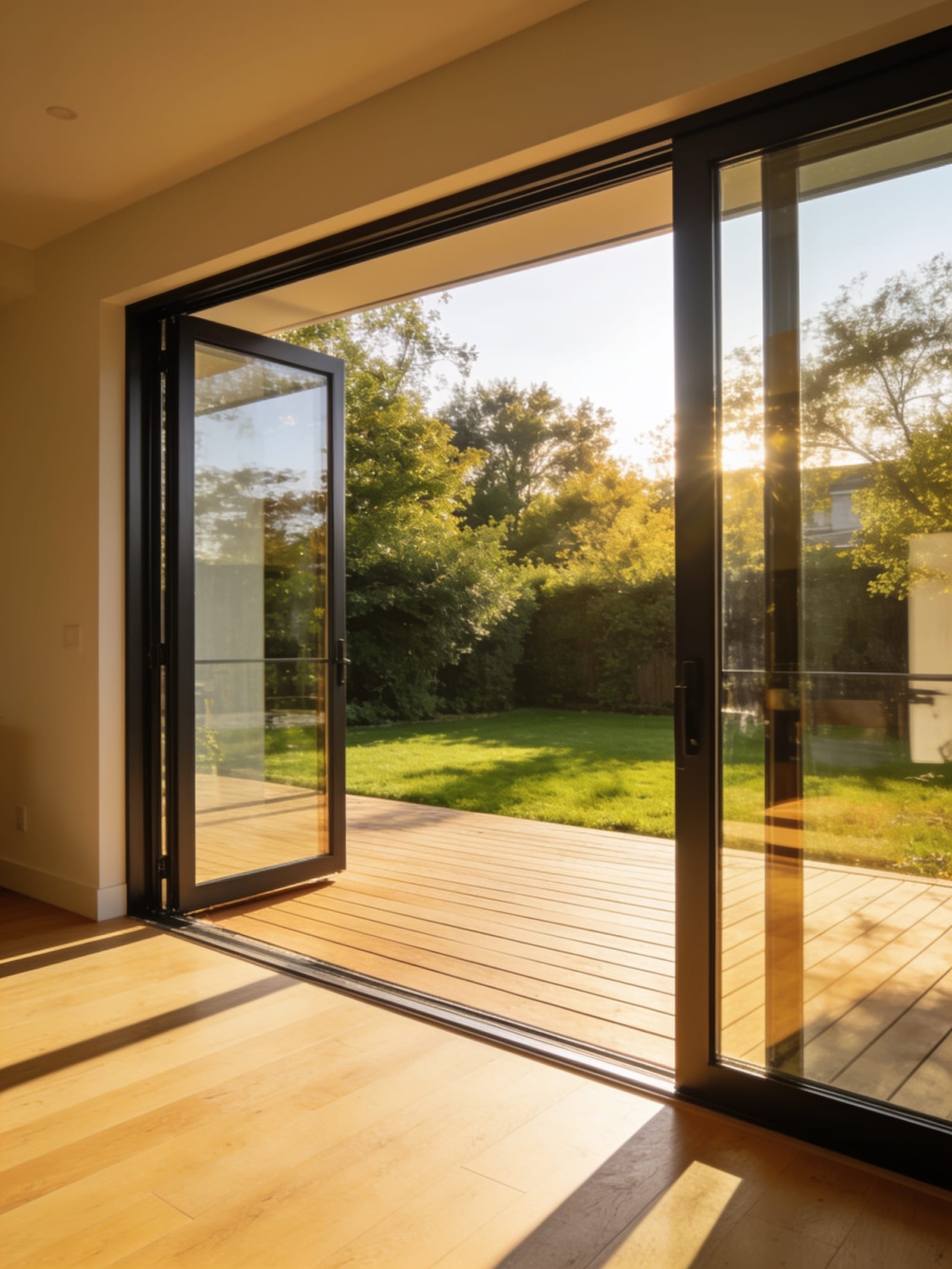


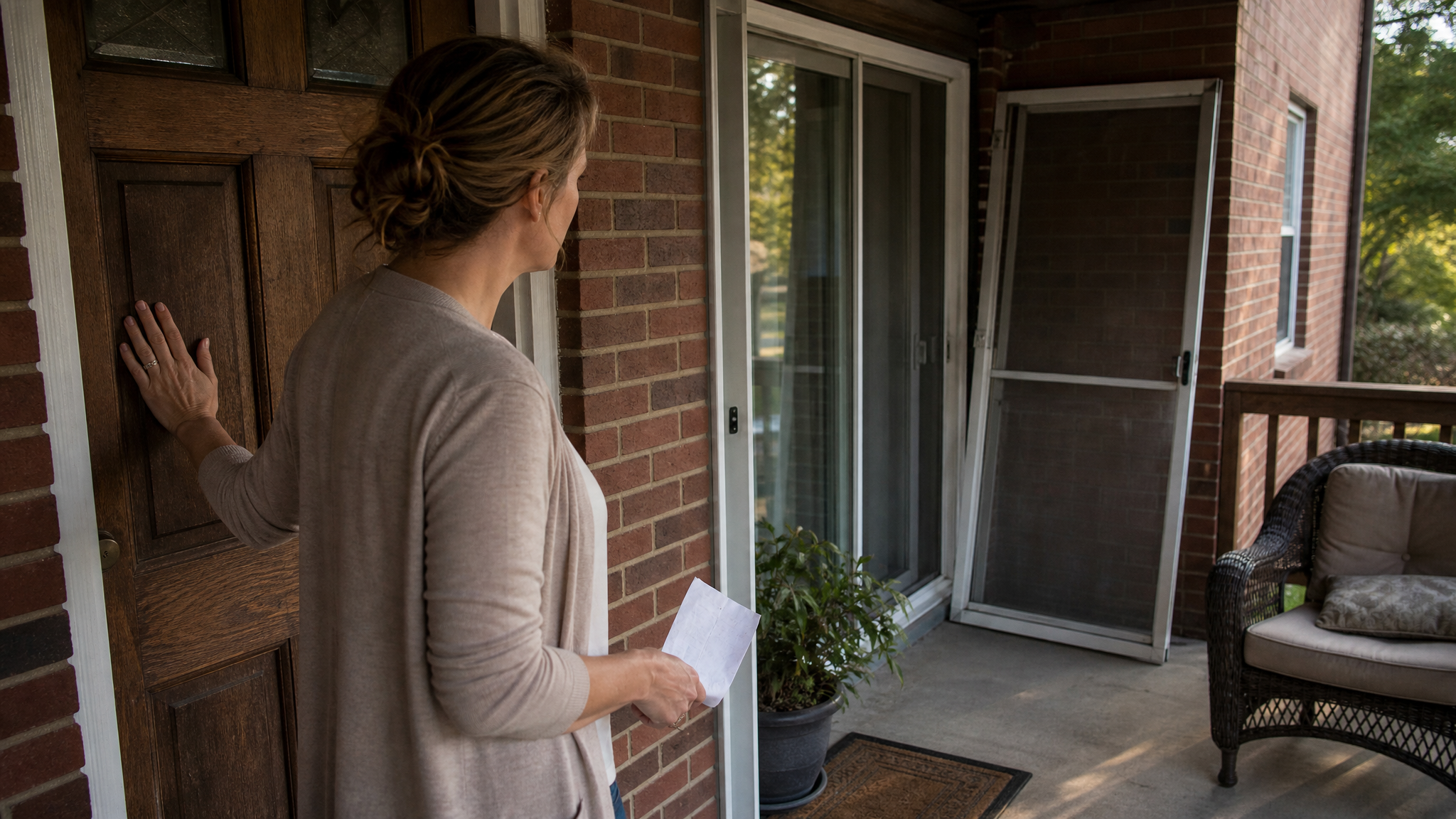
You need a door. Maybe the front one sticks in July and drafts in January. Maybe the patio slider fogged up between the panes or fights you every time it opens. Maybe the porch is bare and you’re thinking about a screen.
And the first thing you find out is that “a door” barely means anything. A storm door and a fiberglass entry with sidelights are both called a door — and one’s two hundred dollars, the other’s eight thousand.
Here’s the honest version, from someone who sells and measures these for a living: you don’t have a door problem — you have a which-door problem. Sort that first, and the rest gets simple.
This page is the map. Tell me the symptom, I’ll point you to the right door, a fair installed range, and what a good install actually includes.
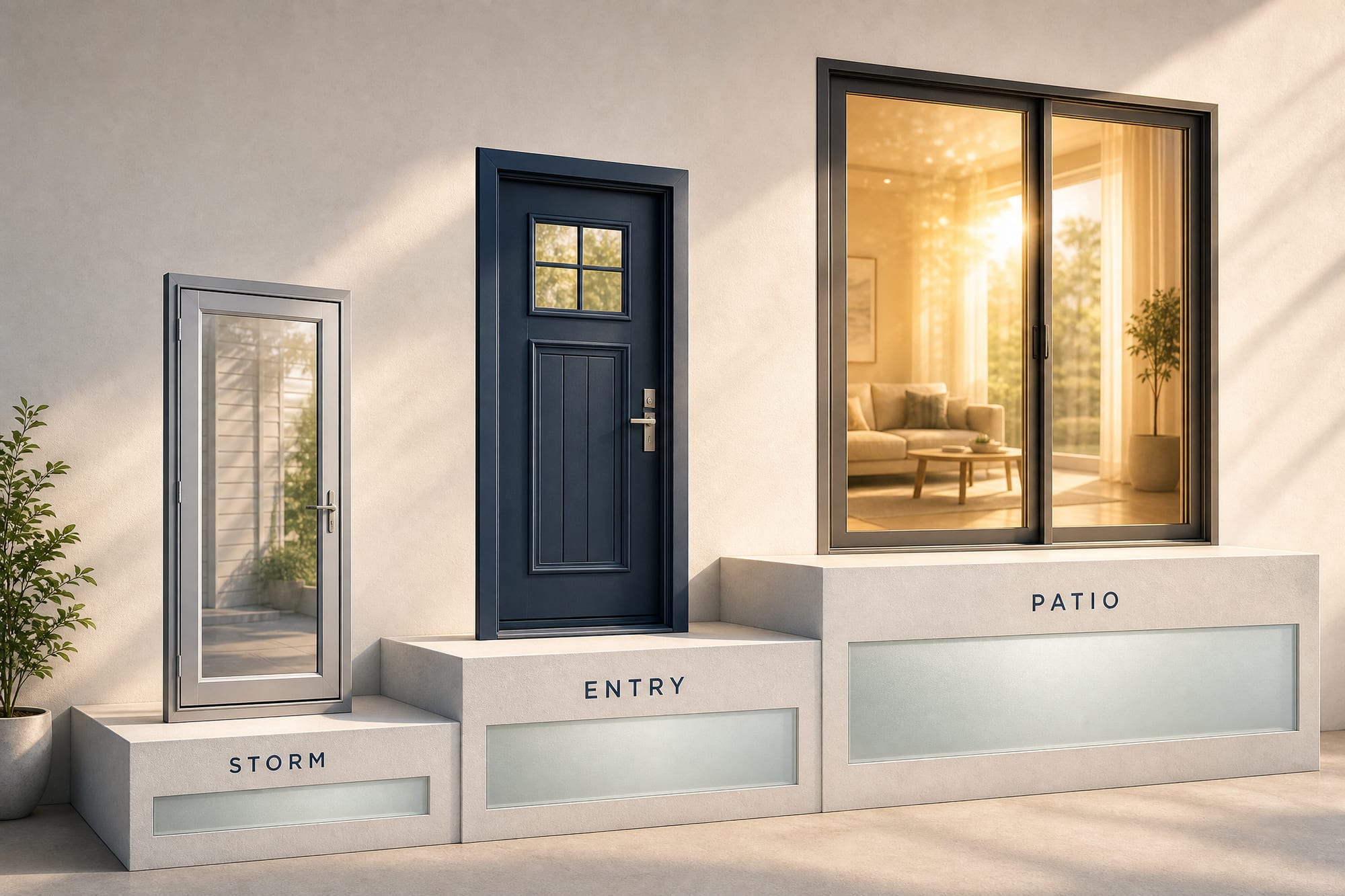
Which replacement door do you actually need? Match the problem to the door. A drafty, dated, or dinged front door → an entry door. A foggy slider or a patio door that won’t glide → a patio door (sliding or French). An exposed entry you want a screen or extra weather layer on → a storm door. Each has its own deep-dive below. Costs run from about $100 for a storm door to $8,000+ for a premium entry — national bands, verify locally — and one crew can price your windows and doors together.
Cost figures here are broad national bands, not an NC quote. Last reviewed July 2026.
Which door do you actually need?
Start with the problem you can see or feel, not the door in the showroom. The symptom tells you which of the three doors you’re shopping for — and which page to read next.
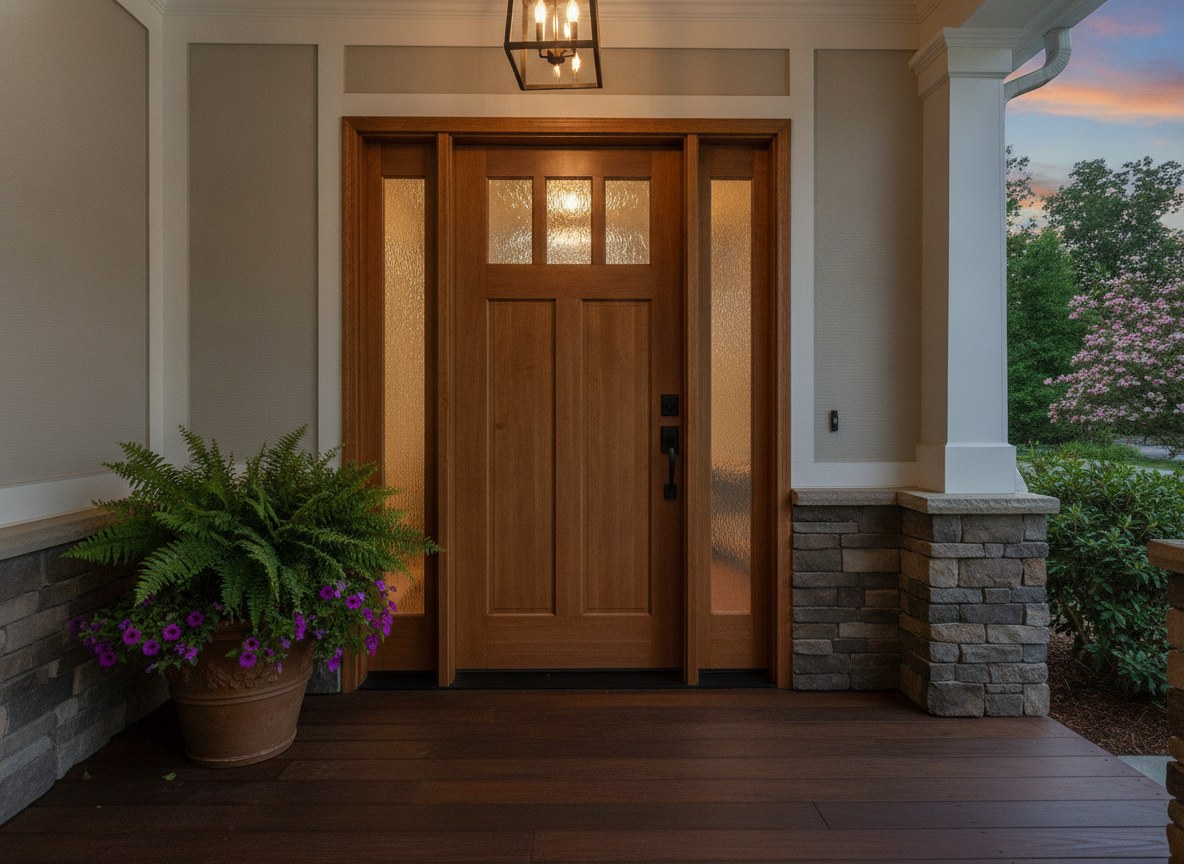
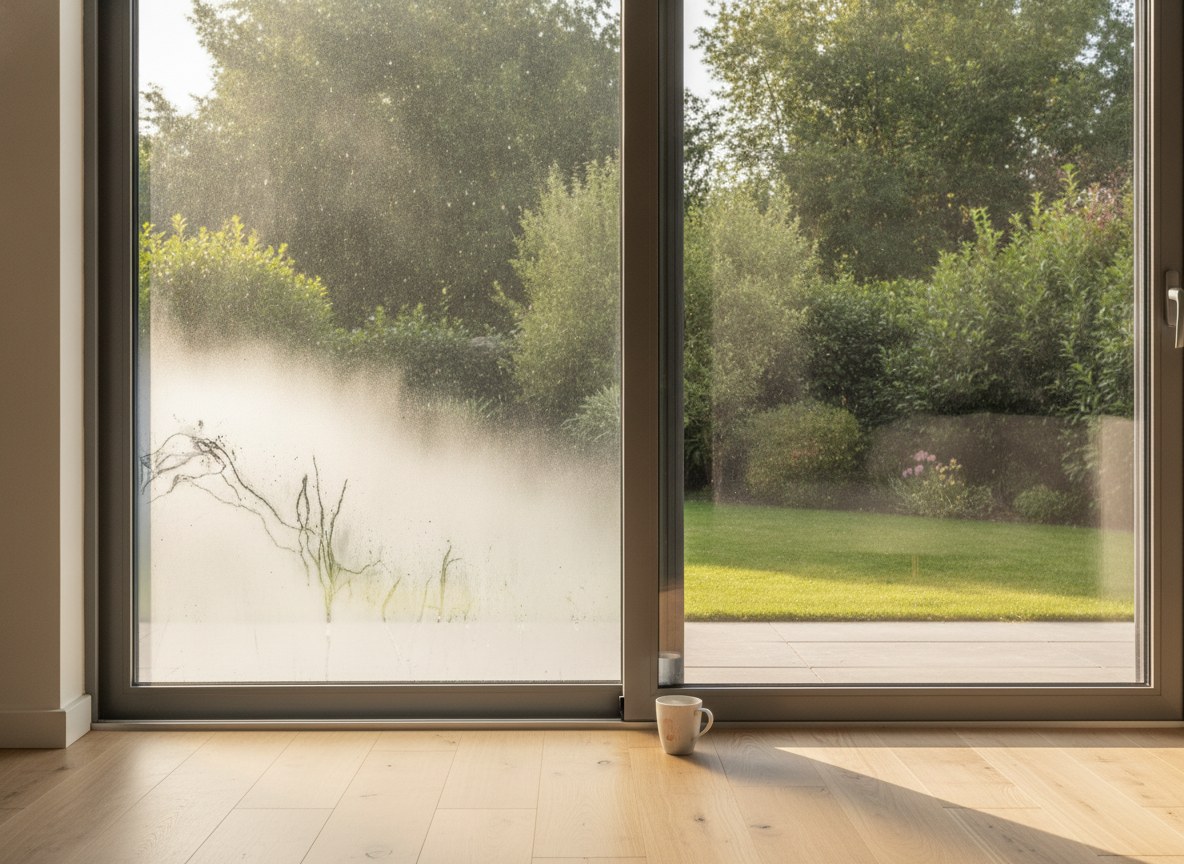
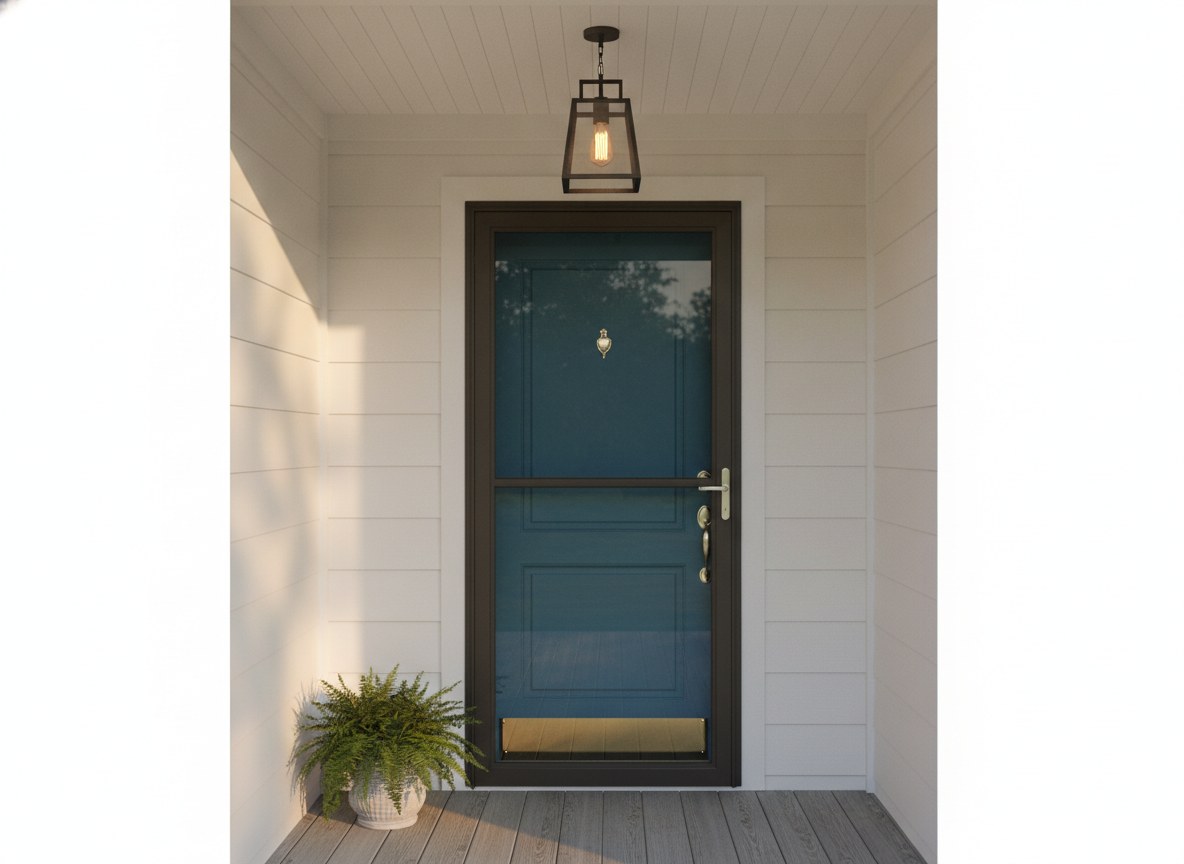
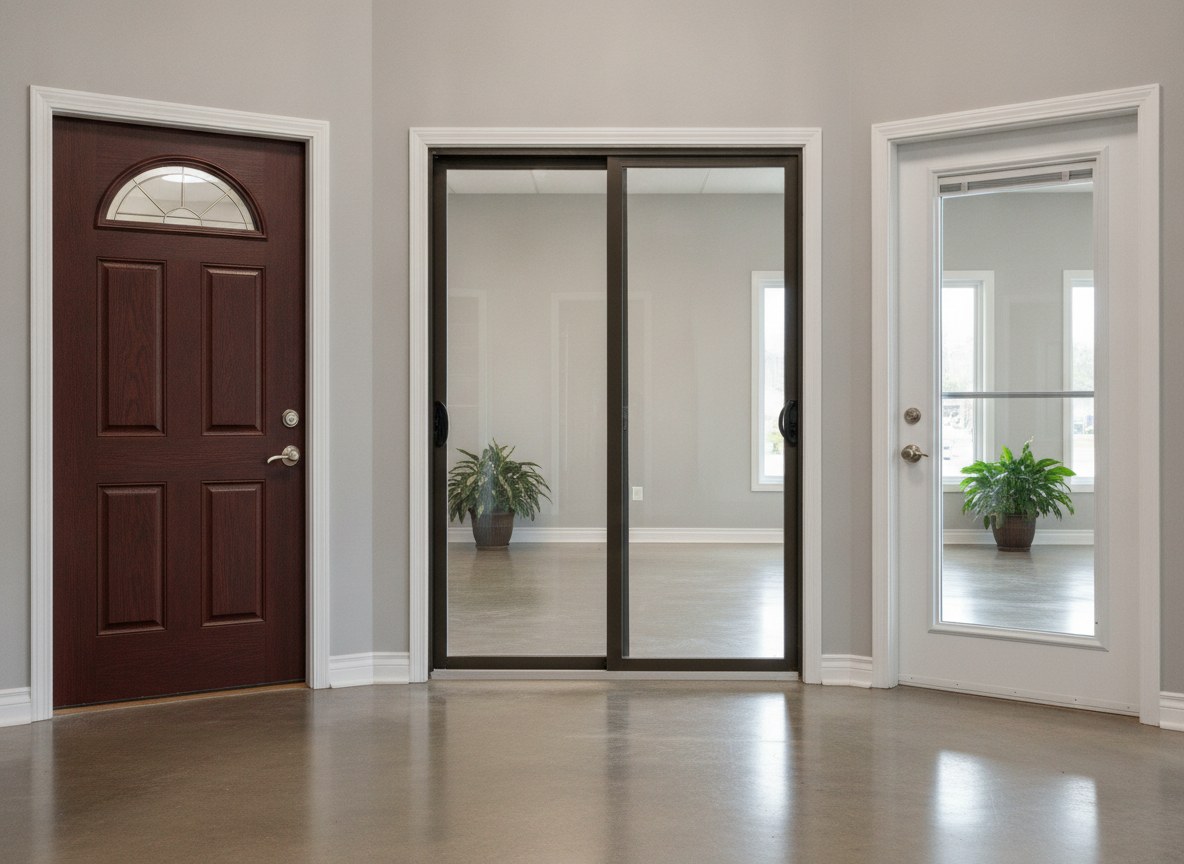
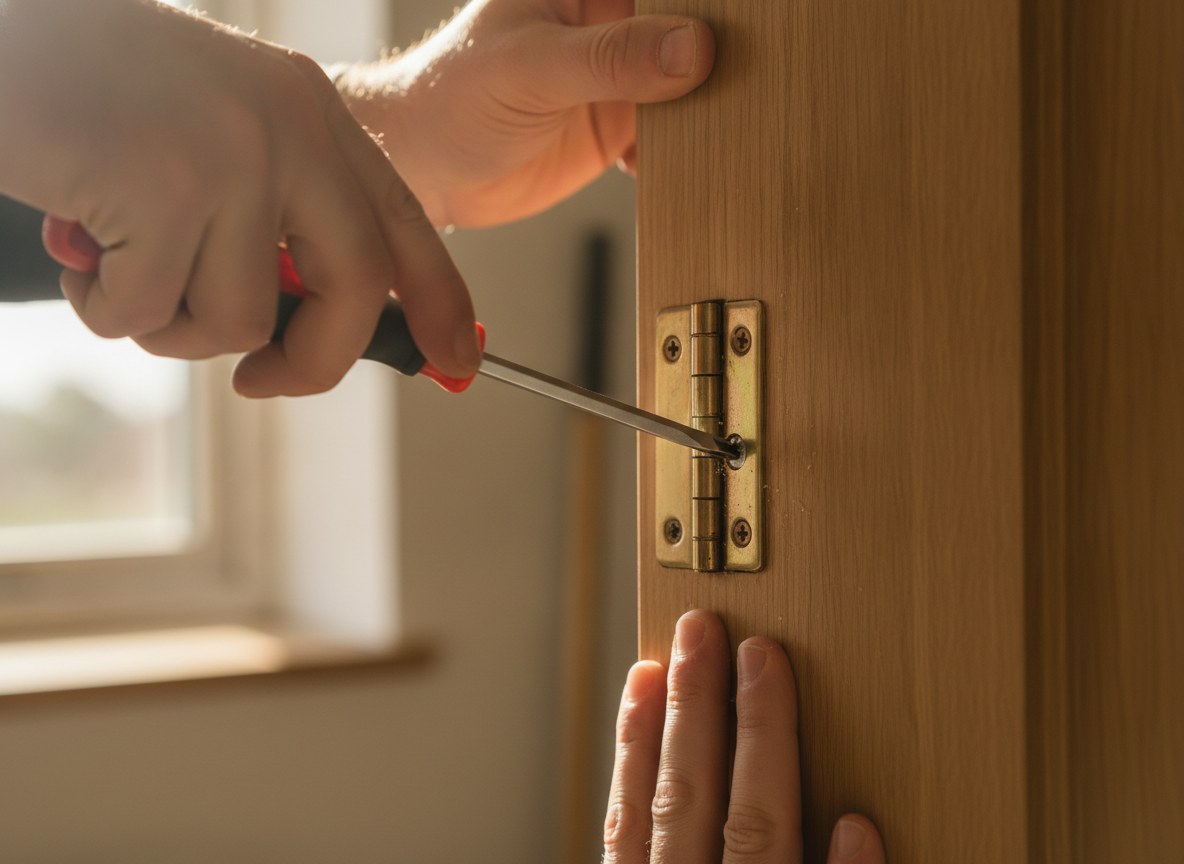
| The problem you have | What it looks like | The door it is | Where to go next |
|---|---|---|---|
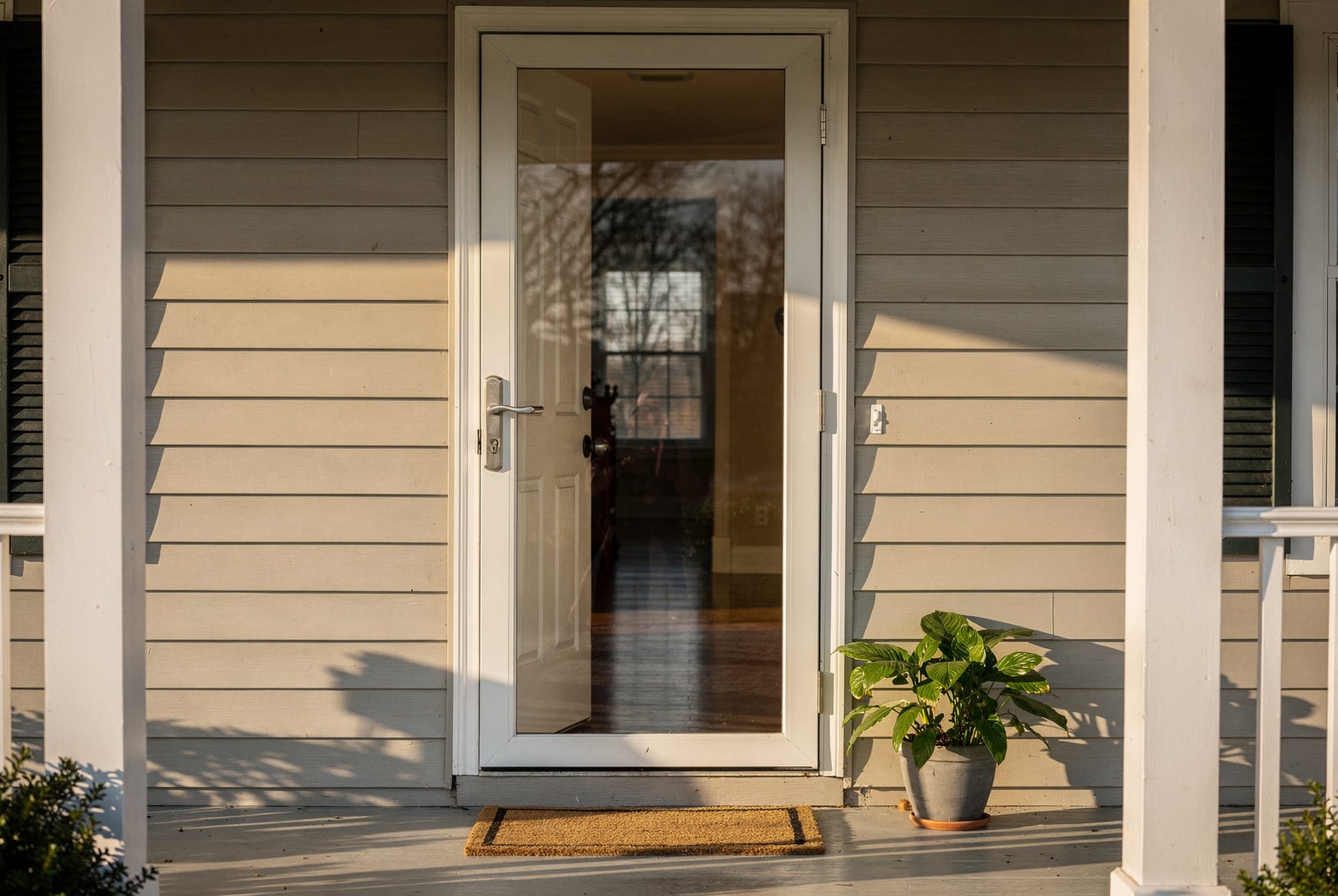
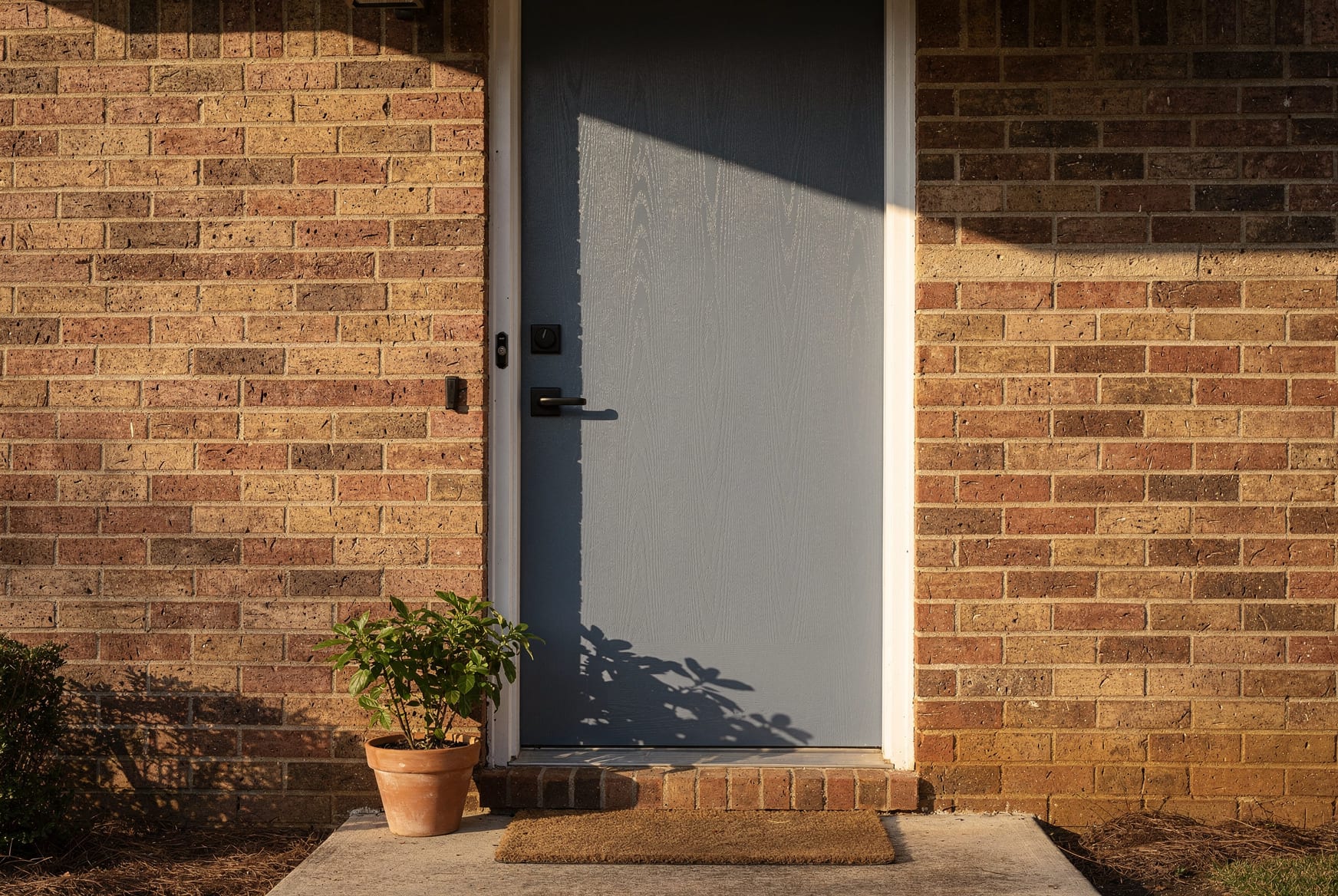
| Front door is drafty, dated, dinged, or you want more curb appeal and security | 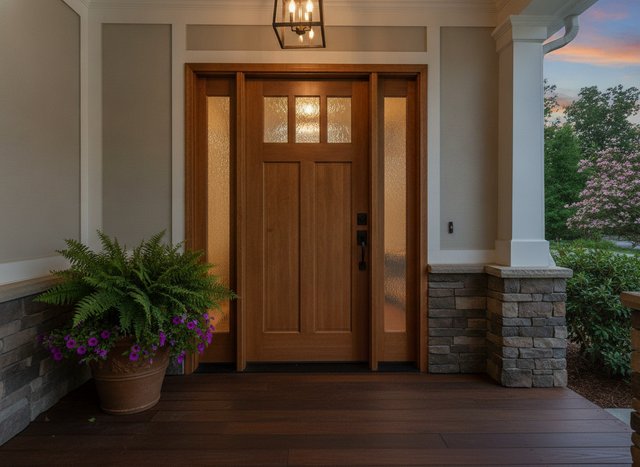 | Entry (front) door — steel, fiberglass, or wood | Entry door guide |
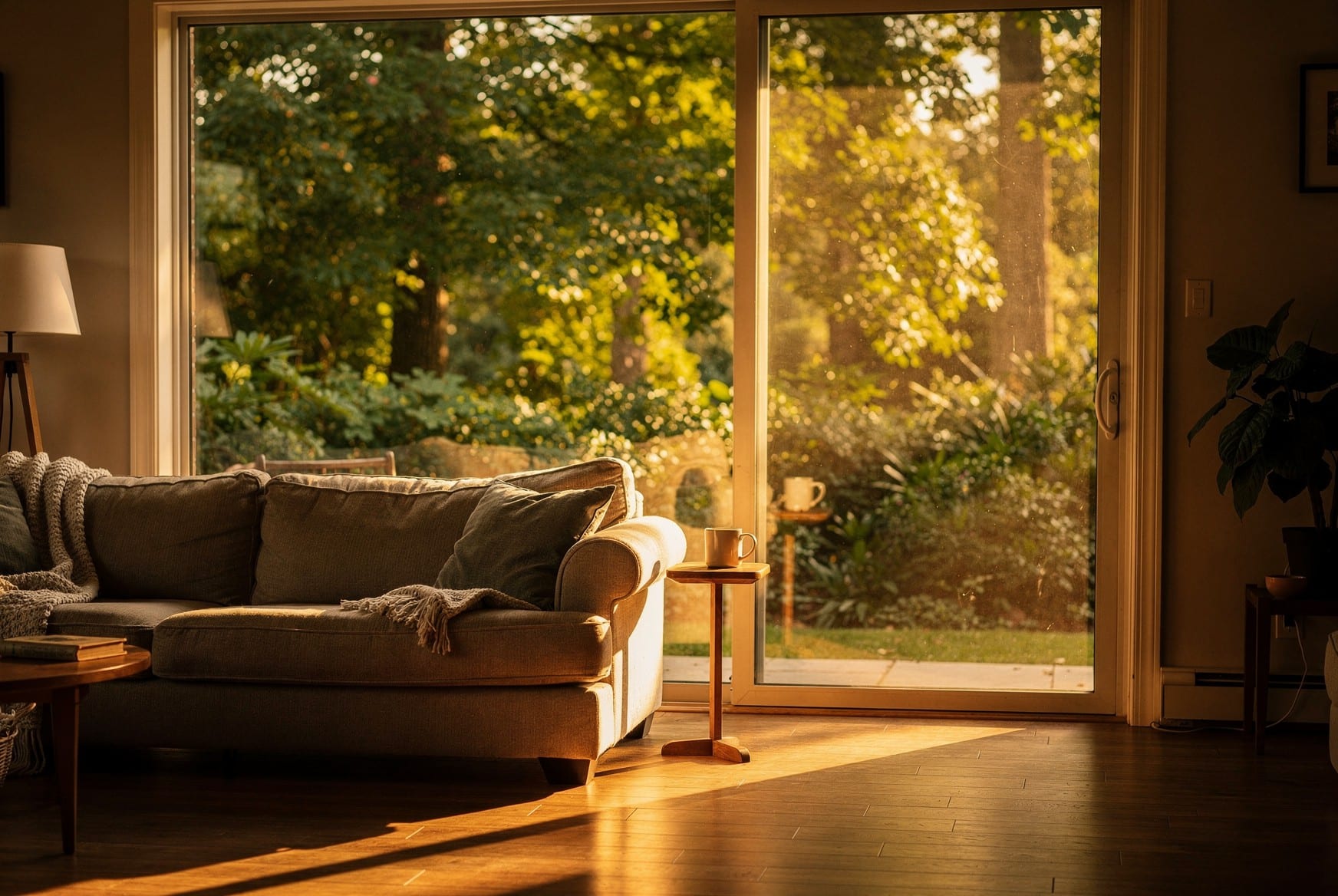
| Patio door fogged between the panes, won't glide, or drafts along the track | 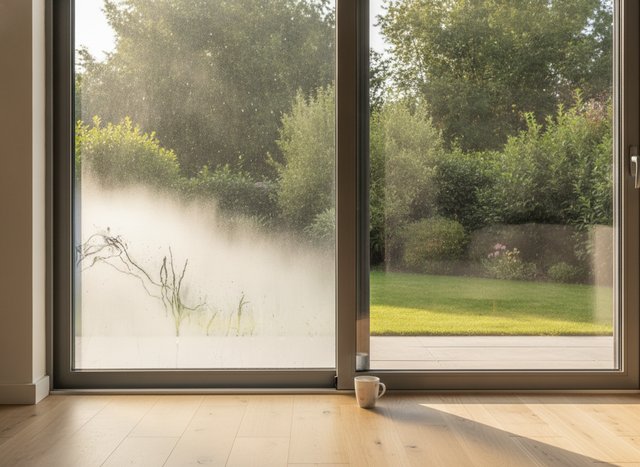 | Patio door — sliding vs French | Patio door guide |
| Exposed entry taking weather; you want a screen or an extra layer | 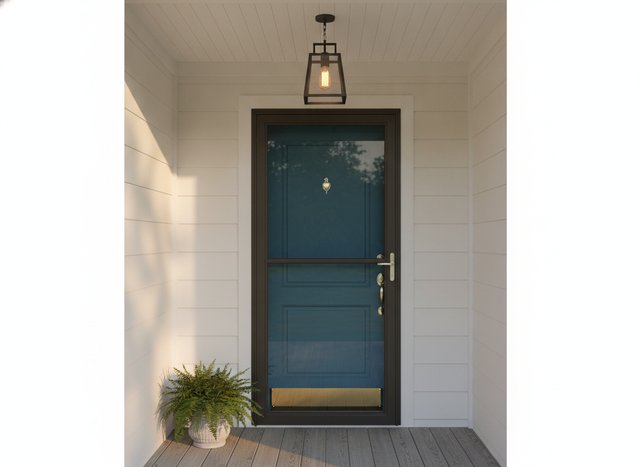 | Storm door (with one heat-trap caution) | Storm door guide |
| "What will any of this cost me?" | 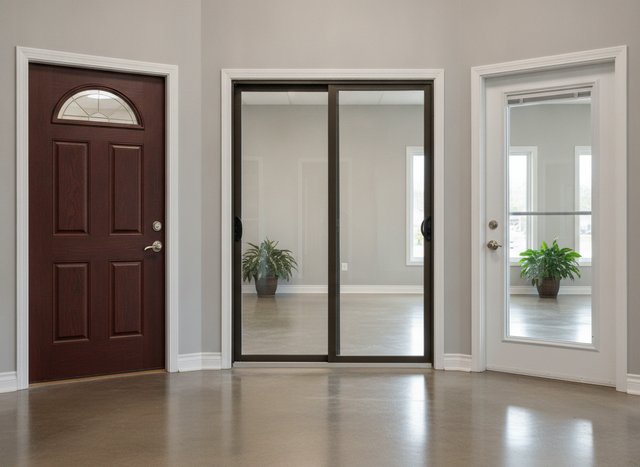 | All three — sorted by type | Door cost guide |
| "Maybe I don't need to replace it at all" | 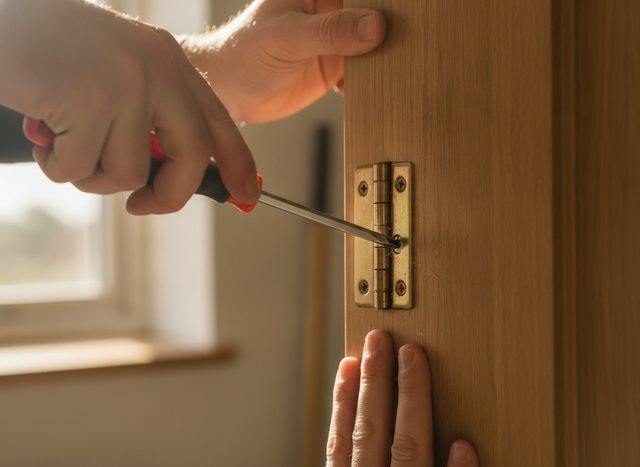 | A repair may do it | Repair vs replace |
Front door is drafty, dated, dinged, or you want more curb appeal and security
- What it looks like
-
- The door it is
- Entry (front) door — steel, fiberglass, or wood
- Where to go next
- Entry door guide
Patio door fogged between the panes, won't glide, or drafts along the track
- What it looks like
-
- The door it is
- Patio door — sliding vs French
- Where to go next
- Patio door guide
Exposed entry taking weather; you want a screen or an extra layer
- What it looks like
-
- The door it is
- Storm door (with one heat-trap caution)
- Where to go next
- Storm door guide
"What will any of this cost me?"
- What it looks like
-
- The door it is
- All three — sorted by type
- Where to go next
- Door cost guide
"Maybe I don't need to replace it at all"
- What it looks like
-
- The door it is
- A repair may do it
- Where to go next
- Repair vs replace
Name the symptom follow it to the door
 Entry doorSecurity · Curb appeal
  Patio doorGlass · Glide
  Storm doorScreen · Shade
 One honest note before the door types: garage doors aren’t here. They’re a separate trade with their own installers and their own failure modes, so I don’t cover them — this guide is the doors you walk through and the weather has to get past.
Entry doors — the drafty, dated, or dinged front door
If the problem is your front door — a draft you can feel with it shut, a look that’s tired, a dent that won’t pop back, or security you don’t trust — that’s an entry-door job. The pitch will want to sell you a slab; the honest read is that the material matters less than the lock, the seal, and a square install.
Steel, fiberglass, and wood each trade off differently, and in NC’s heat and humidity fiberglass usually wins on the balance. But that’s the spoke’s job, not the hub’s.
For the full steel-vs-fiberglass-vs-wood breakdown, what actually makes a door secure, and the that matters for our climate, read the entry door buying guide — and if you’re already down to two materials, steel vs fiberglass settles it.
Patio doors — the foggy slider or the one that won’t glide
If it’s the big glass door — fog you can’t wipe off because the seal failed, a slider that drags on its track, or a draft along a wide glass wall — that’s a patio-door job. Here the real fork is style: a sliding door versus a French (swinging) pair.
A slider is simpler and usually cheaper to build and install. A French set needs more frame, compression weatherstrip, and multi-point locks, so it costs more. Which fits depends on your opening, your floor space, and how you’ll use it.
The patio door guide walks the styles, and sliding vs French is the head-to-head. One North Carolina note the spoke covers: coastal counties carry wind-borne-debris requirements, so a patio door near the coast may need impact-rated glass — an address-specific rule worth checking before you buy.
Storm doors — the extra layer, with one real caution
If your entry is exposed to weather and you want a screen for airflow or an extra barrier against wind-driven rain, that’s a storm door — the least expensive door project on this page. It mounts in front of your existing entry door.
But there’s one caution the showroom skips: a full-glass storm door on a sun-facing wall can trap heat against the entry door behind it, and in NC’s summer that trapped heat can cook the finish — or worse — on the door you’re trying to protect. A dark entry door behind glass on a south or west wall is the risky combination.
When a storm door is worth it, which type vents that heat, and when to skip one entirely are all on the storm door guide.
What will it cost?
“A door” spans a hundredfold range, so the only honest hub-level answer is a wide one — then you narrow it by type. A storm door and a fiberglass entry with sidelights aren’t the same conversation.
Roughly, and all as national bands you should verify locally: a storm door runs about $100–$1,800 installed, an entry door about $1,200–$8,000+, and a patio door about $600–$10,000+, averaging near $2,500. Within each type, the movers are the glass package, slab-only versus full-frame, and any hidden sill or jamb rot — not the brand on the box.
Read every quote down to a single installed number — old door pulled and hauled off included — before you set two side by side. That’s the only way they’re actually comparable. The full type-by-type breakdown, and how to read a quote before a number gets anchored on you, is on the door cost guide.
One thing the cost page is happy to tell you that a salesman rarely leads with: a front door is one of the few projects that more than pays itself back at resale.
Maybe you don’t need to replace it at all
Sometimes the right answer is: don’t replace it yet — and a pro who says so is worth listening to. This is the question the showroom has the least reason to ask, so I’ll ask it here.
A slider that won’t glide often needs new rollers, not a new door. A foggy patio pane can sometimes be a glass-unit () swap instead of a whole new door. A front door that sticks in summer may just need the hinges and strike adjusted, or a fresh weatherseal.
You replace when the frame or sill is rotted, when the door’s failed structurally, or when you genuinely want the upgrade in security or efficiency. Before any of that, it’s worth checking whether a repair does it — the repair-or-replace walkthrough covers the same logic that applies to doors.
Windows and doors are the same job — price them together
Because an exterior door and a window are installed the same way — flash the opening, set the unit plumb, level, and square, seal the perimeter — the same crew almost always does both. That’s not a sales line; it’s just how the trade works.
The practical upshot for you: if you’re already thinking about windows, or you’ve got more than one door on the list, price them as one project. The doors and windows themselves don’t get cheaper, but you pay for one crew and one mobilization instead of three.
If you want the whole-exterior context, knowing what windows cost in NC puts the door numbers in perspective — and the NFRC label you’ll read on a window is the same one on a door.
Get a real number for your doorway
A range tells you whether a quote’s in the right ballpark — it can’t price your door. That depends on which door, the glass, whether the frame is sound, and whether the sill’s hiding rot none of us can see from a chart.
So if you’ve got a quote that feels high, or you just want to know which door your problem actually is, have me look at it. I’ll tell you which door it is, whether a repair would do, and what a fair installed number looks like for your house — windows too, if you’re doing both — and then you decide!
Sources, Verification & Fact-Checking verified July 2026
Every load-bearing fact on this page is sourced and verified against a primary authority.
Verified July 2026 via direct review of the cited authority — the links open the controlling source so you can check it yourself rather than take our word.
- The three exterior door types a homeowner replaces — entry (front), patio (sliding/French), and storm — and the symptom that maps to each: drafty/dated/dinged front door → entry; foggy or non-gliding slider → patio; exposed entry wanting a screen or weather layer → storm. Garage doors are a separate trade and are out of scope here. The per-type detail lives on the linked spoke pages.
- Installed cost bands by door type — storm about $100–$1,800; entry about $1,200–$8,000+; patio about $600–$10,000+ (averaging near $2,500). Broad national estimates aggregated from 2025–2026 contractor cost guides, not NC quotes — NC labor, glass package, and coastal/impact upgrades will move them; verify locally before treating any figure as your price. Full type-by-type breakdown on the door cost page.
- A steel entry-door replacement recouped 216% of its cost at resale in the 2025 Cost vs Value report (national average); the South Atlantic region, which includes North Carolina, came in at 219%. Remodeling/Zonda 2025 Cost vs Value, National Averages and South Atlantic. This is a resale-value estimate, not a guarantee, and it updates annually — re-verify when the next report publishes. (view source — Cost vs Value 2025.)
- Doors carry the same NFRC label as windows, and an exterior door installs the same way a window does — flash the opening, set the unit plumb, level, and square, seal the perimeter — which is why the same crew typically does both and why windows and doors can be bundled as one project. Bundling reduces labor by consolidating crew and mobilization, not by discounting the units themselves. (view source — NFRC.)
- An opaque ENERGY STAR door for North Carolina (South-Central zone) needs a U-factor at or below 0.17 (ENERGY STAR v7.0, effective Oct 23, 2023); coastal NC counties carry wind-borne-debris requirements that can require impact-rated glass on patio doors. The per-county wind/impact contour is address-specific — verified on the patio and entry spoke pages; this hub points to those rather than quoting a county figure. (view source — energystar.gov.)
- A repair can be the right call before a replacement: a non-gliding slider often needs new rollers, a foggy patio pane can sometimes be an IGU (insulated glass unit) swap, and a sticking front door may need hinge/strike adjustment or a new weatherseal. Replace when the frame or sill is rotted, the door has failed structurally, or a genuine security/efficiency upgrade is the goal — the same repair-vs-replace logic used for windows.