

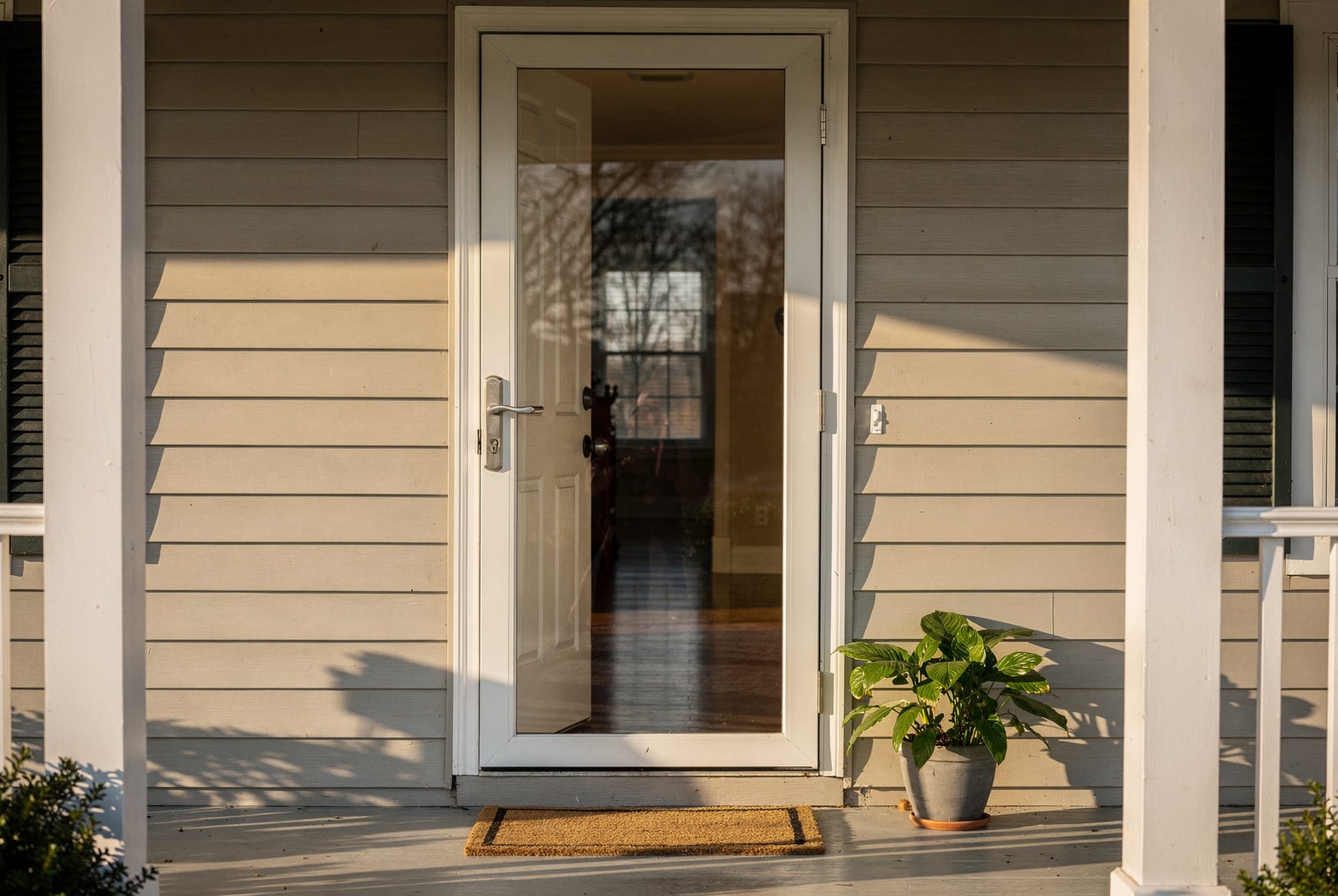
You want more light in the hall, a breeze through the front without bugs, and maybe a little help on the drafts. So you’re looking at a storm door — that second door mounted outside your entry.
Here’s the honest version: a storm door does real, useful things. But there’s one caution nobody at the big-box aisle mentions, and on a sun-facing NC door it can cost you the front door you already have.
What does a storm door actually do? It protects the main door from rain, snow, and UV, lets you ventilate and get light with the bugs kept out, and adds a small efficiency bump from the extra air pocket. What it is not is a big insulation upgrade over a modern entry door. And the real caution: a full-glass, non-venting storm door over a dark, sun-facing door can trap heat and cook the door — often voiding its warranty. National cost figures — verify locally.
Cost figures here are broad national bands, not an NC quote. Last reviewed July 2026.
What a storm door actually does
A storm door earns its keep in three ordinary ways — none of them “double your insulation.” Set the expectation right and it’s an easy call; oversell it and you’ll be disappointed.
- It protects the entry door. It shields the main door from rain, snow, and UV. That matters most for an older or wood door with no overhang — the storm door takes the weather and extends the real door’s life.
- It ventilates and lets in light. Open the main door, keep the storm door’s screen closed, and you get a breeze and daylight without bugs.
- It adds a little efficiency. The trapped air pocket between the two doors is a small buffer. Low-E storm glass helps a bit more. But across most of NC’s climate, draft reduction is a minor benefit, not the reason to buy.
If you already have a modern, well-sealed fiberglass or steel entry door, the insulation gain is small — which is why the next section matters more than the sales sheet.
Full-view or ventilating — which storm door type?
The type you pick decides how much light you get and, more importantly, whether heat can escape. That second part is the whole ballgame on a sunny wall.
| Type | What it is | Best for | Heat-trap risk on a sun wall |
|---|---|---|---|
| Retractable-screen | Screen rolls into the top of the frame on demand; full/mid/high-view glass | The most convenient — no seasonal panel swap; vents easily | Lower — it vents, so heat can escape |
| Ventilating | Interchangeable full-glass and full-screen panels, swapped seasonally | Classic all-season use if you don't mind swapping panels | Lower when the screen panel is in; higher with the full glass in |
| Full-view (non-venting) | A single sheet of fixed full-length glass; maximum light and view | Shaded entries where you want the clearest view | HIGHEST — fixed glass traps heat with nowhere to go |
| Partial-view | Solid lower panel, glass or screen up top | Durability and a bit of privacy; kick-resistant bottom | Moderate — less glass area than full-view |
Retractable-screen
- What it is
- Screen rolls into the top of the frame on demand; full/mid/high-view glass
- Best for
- The most convenient — no seasonal panel swap; vents easily
- Heat-trap risk on a sun wall
- Lower — it vents, so heat can escape
Ventilating
- What it is
- Interchangeable full-glass and full-screen panels, swapped seasonally
- Best for
- Classic all-season use if you don't mind swapping panels
- Heat-trap risk on a sun wall
- Lower when the screen panel is in; higher with the full glass in
Full-view (non-venting)
- What it is
- A single sheet of fixed full-length glass; maximum light and view
- Best for
- Shaded entries where you want the clearest view
- Heat-trap risk on a sun wall
- HIGHEST — fixed glass traps heat with nowhere to go
Partial-view
- What it is
- Solid lower panel, glass or screen up top
- Best for
- Durability and a bit of privacy; kick-resistant bottom
- Heat-trap risk on a sun wall
- Moderate — less glass area than full-view
The warning nobody gives you: a storm door can cook your front door
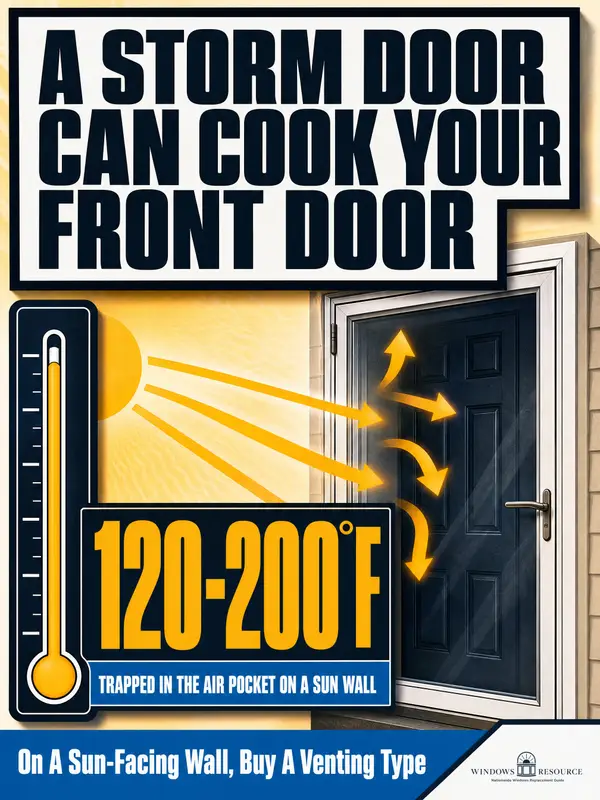
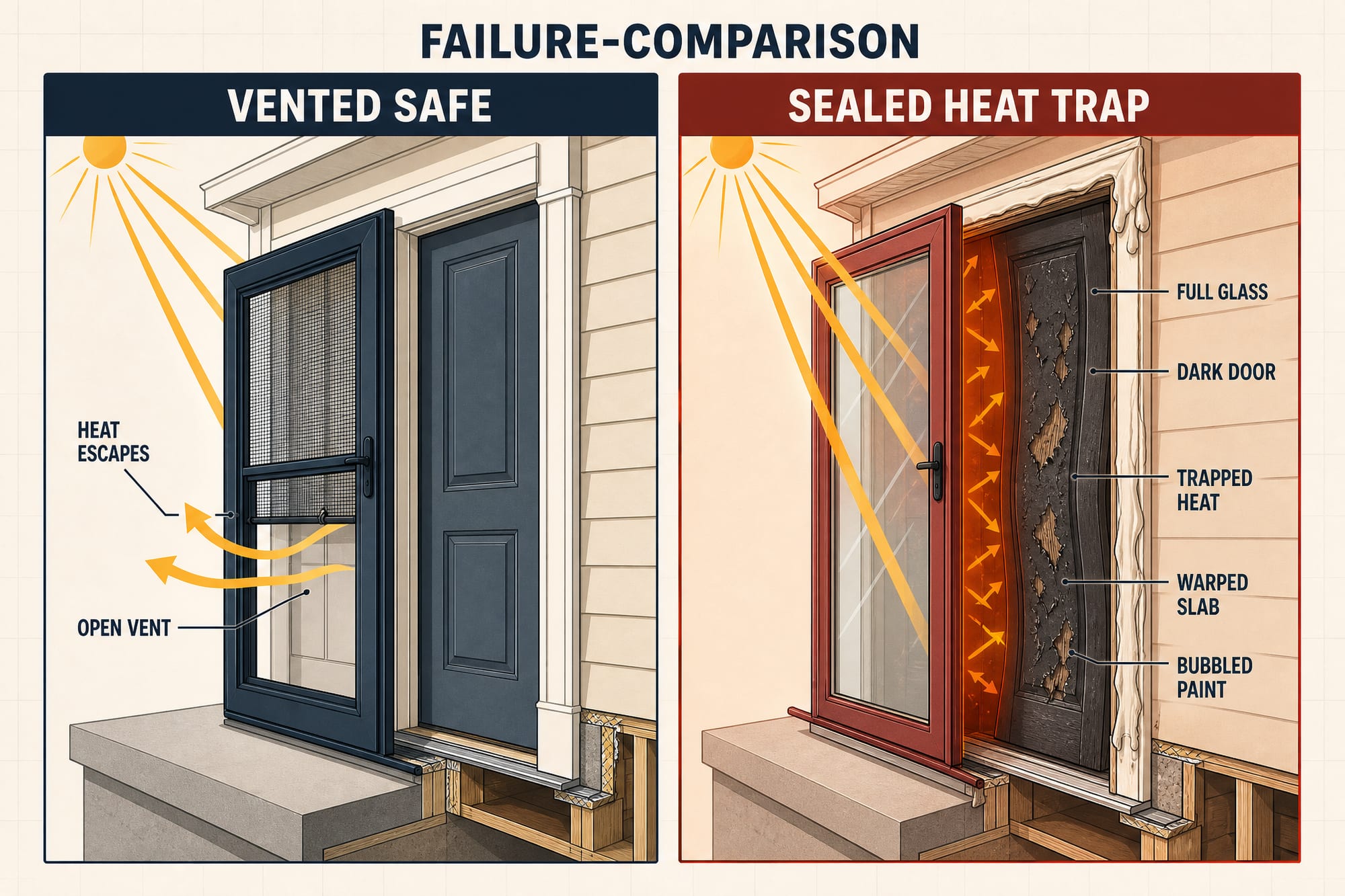
A full-glass, non-venting storm door over a dark, sun-facing entry door turns the gap between them into a greenhouse. This is the one thing to get right, so I’m going to be blunt about it.
Sun passes through the storm glass. The heat has nowhere to go, so it builds in the sealed air pocket against the entry door. Temperatures spike. On a fiberglass door that can mean warping, peeling or bubbling paint, melted glass-insert trim and weatherstrip, off-gassing, and hardware too hot to touch.
How to add a storm door without the heat trap
You can have the storm door and keep your front door safe — you just size the choice to the wall it faces. Here’s the do-this.
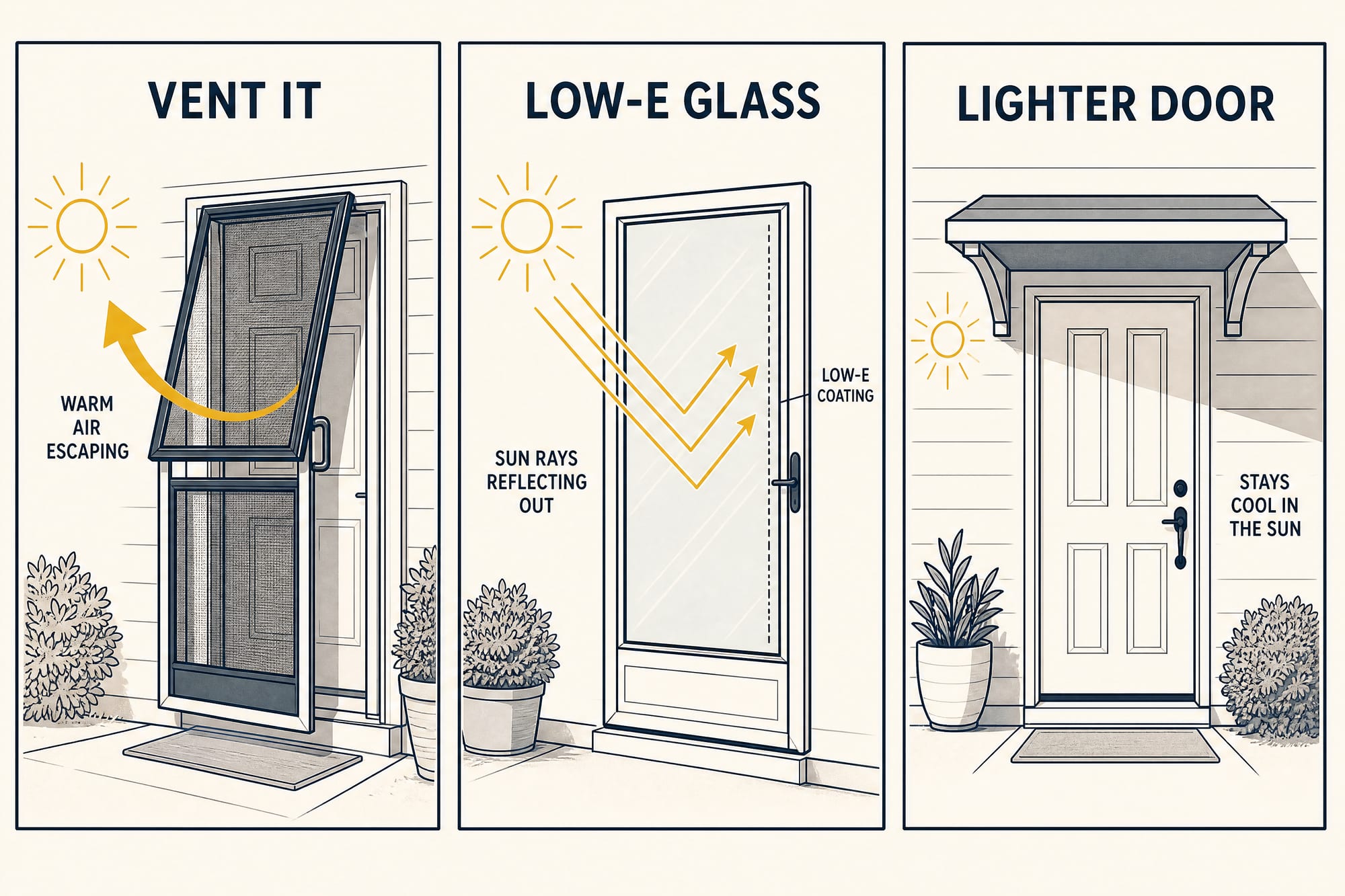
- Choose a venting type. A ventilating or retractable-screen storm door lets the trapped heat escape. On a south- or west-facing wall, this is the single most important choice.
- Ask for Low-E storm glass. A coating on the storm glass reflects some of the sun’s heat back out before it builds against your door.
- Go lighter on a sun wall. A lighter entry-door color absorbs less heat than a dark one. Shade — an overhang or awning — helps too.
Do those three and a sun-facing storm door goes from a warranty risk to a genuine help.
Do you even need one?
Sometimes the honest answer is no — and I’d rather tell you that than sell you a door you don’t need. A storm door isn’t automatic.
It’s worth it when your entry door is older or wood with no overhang — the storm door shields it and buys it years. It’s also worth it if you genuinely want the ventilation and light.
It’s easy to skip when your entry door is modern, well-insulated fiberglass or steel. That door is already weather-tight, the insulation gain is small, and you’d be taking on the heat-trap risk for not much return.
A few other honest drawbacks: two doors are clunky when your arms are full; the added weight strains the main door’s hinges and hardware; poor airflow can trap moisture and grow mildew; and metal storm doors corrode faster in coastal or humid air.
What a storm door costs, and the install
A storm door is one of the cheaper door projects — but “installed” still means it’s fit and sealed to the opening, not just hung. Read the quote for the labor and the fit.
Broadly, storm doors run ~$100–$1,800 installed nationally — the door itself ~$100–$1,500 plus ~$250–$450 labor, roughly a 2–4 hour install. A storm door mounts to the entry door’s frame or brickmould, so it has to fit that opening and the sweep has to meet the sill.
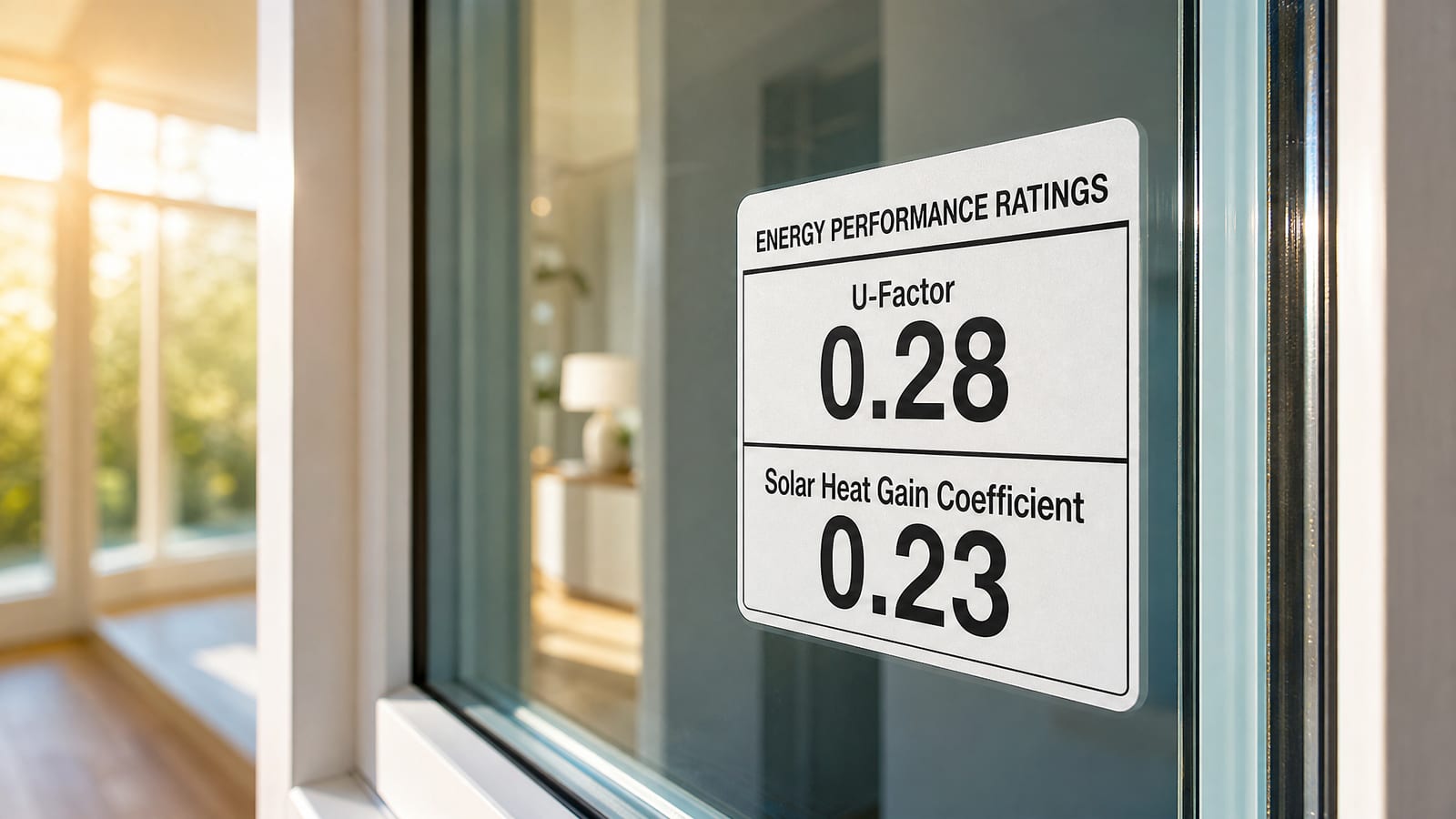
If you’re pricing doors as a project — a new entry door, a storm door, or a patio door on the same trip — it’s worth bundling them for one crew and one mobilization. And the glass logic on a storm door is the same one your windows’ NFRC label uses, so Low-E on the storm glass isn’t a mystery once you’ve read that.
Get it right for your entry
A storm door is a small purchase that can protect — or damage — a much bigger one. The difference is matching the type to the wall it faces and reading the warranty first.
If you’re not sure whether a storm door helps you, or which type your sun-facing entry needs, ask me. I’ll tell you straight whether to add one, and if so, how to keep it from cooking the door behind it. And if you don’t need one, I’ll tell you that too.
Sources, Verification & Fact-Checking verified July 2026
Every load-bearing fact on this page is sourced and verified against a primary authority.
Verified July 2026 via direct review of the cited authority — the links open the controlling source so you can check it yourself rather than take our word.
- What a storm door does: protects the entry door from rain/snow/UV, allows ventilation + light with a screen, and adds a small efficiency buffer from the trapped air pocket — but it is not a major insulation upgrade over a modern, well-sealed entry door. Most valuable on an older or wood entry door with no overhang.
- Storm-door types: full-view (single fixed glass, max light), ventilating (interchangeable glass/screen panels swapped seasonally), retractable-screen (screen rolls into the top frame — most convenient), and partial-view (solid lower panel, glass/screen up top). On a sun-facing wall, a venting type is what lets trapped heat escape.
- The heat-trap failure: a full-glass, non-venting storm door over a dark, sun-facing (south/west) entry door traps solar heat in the air pocket and can warp the door, bubble/peel paint, melt glass-insert trim and weatherstrip, cause off-gassing, and make hardware scorching hot. Mitigate with a venting/retractable-screen storm door, Low-E storm glass, a lighter entry-door color, and shade.
- Many entry-door warranties explicitly exclude heat damage caused by a storm door, and some void coverage specifically for a non-venting, full-glass storm door — so read the entry door’s warranty before adding one. The trapped air pocket behind a full-glass storm door can exceed 120–200°F on a sun-facing wall, well above the ambient temperature; the exact exclusion language is per-manufacturer, so confirm the specific door’s written warranty before installing.
- Installed storm-door cost (~$100–$1,800; door ~$100–$1,500 + labor ~$250–$450; ~2–4 hour install; national average near ~$435). Broad national estimates aggregated from 2025 contractor cost guides, not NC quotes — NC labor and product choice will move them; verify locally.
- Other storm-door drawbacks: two doors are awkward when carrying things, the added weight strains the main door’s hinges/hardware, poor airflow can trap moisture (mildew), and metal storm doors corrode faster in coastal/humid air. These are trade-offs to weigh against the protection and ventilation benefits.