

Your slider fogged up between the panes and now it sticks every time you open it. Maybe there’s a cold draft off the track in January, or the panel drags so hard you brace a knee against the jamb to move it.
Before anyone quotes you, here’s what actually drives the price — and the one cheaper fix worth checking first, because sometimes the whole door doesn’t need to go.
I sell and measure these for a living, so I’ll give you the honest version: the installed number swings on style, glass, and what’s hiding under the threshold — not on which door a salesman calls “premium.”
What does a patio door cost installed in NC? Sliding commonly runs ~$1,200–$4,000; French ~$1,300–$5,500 — national bands, not an NC quote, so verify locally. French runs higher for the extra frame, multi-point locks, and swing room. Glass package, opening changes, removal, and any hidden rot move the number most.
Ranges here are broad national figures — a starting band, not your quote. Last reviewed June 2026.
What a patio door costs installed in NC
The installed range splits by style, and “installed” should include pulling the old door — not just hanging the new one. Read the quote for what’s actually bundled.
Here’s how the three patio-door styles commonly price out, nationally.
Sliding is the value and space pick; French gives the widest opening and often the tightest seal; multi-slide is a high-end, large-opening play that’s rarely a straight replacement.
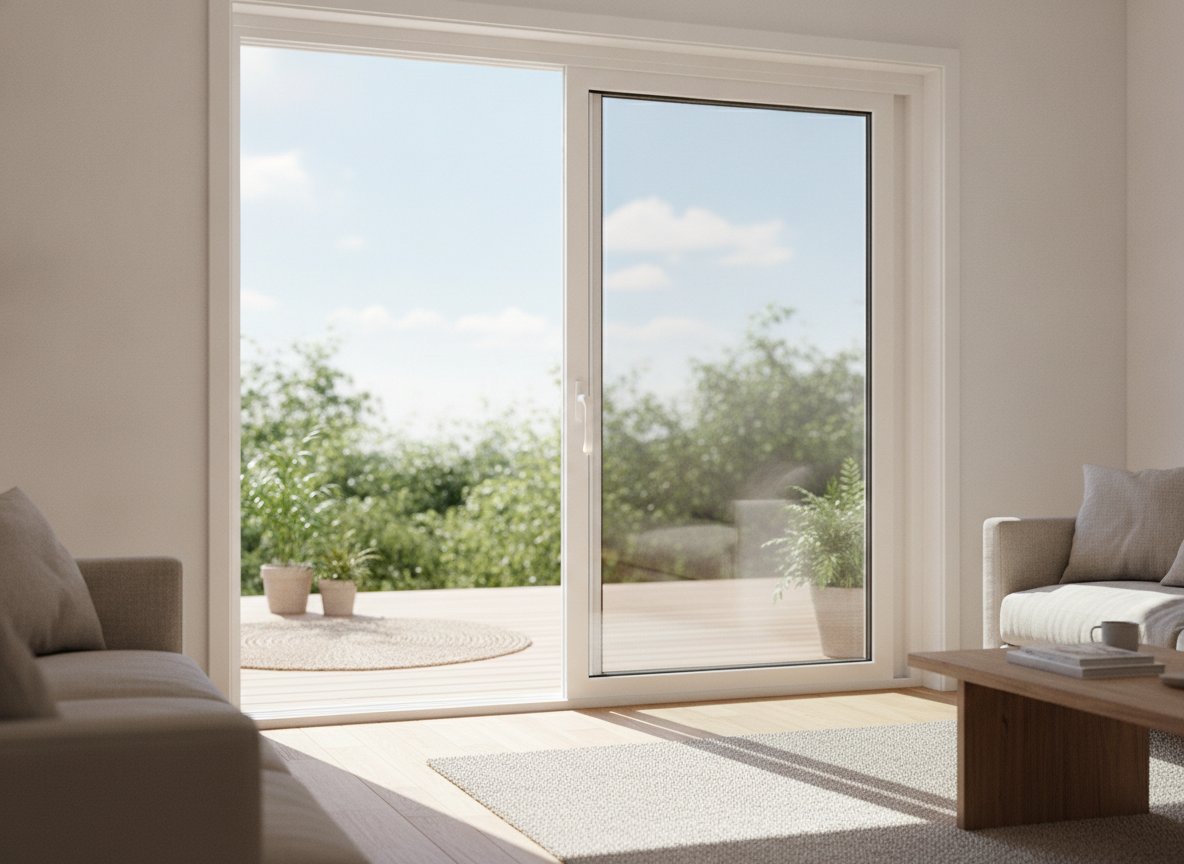
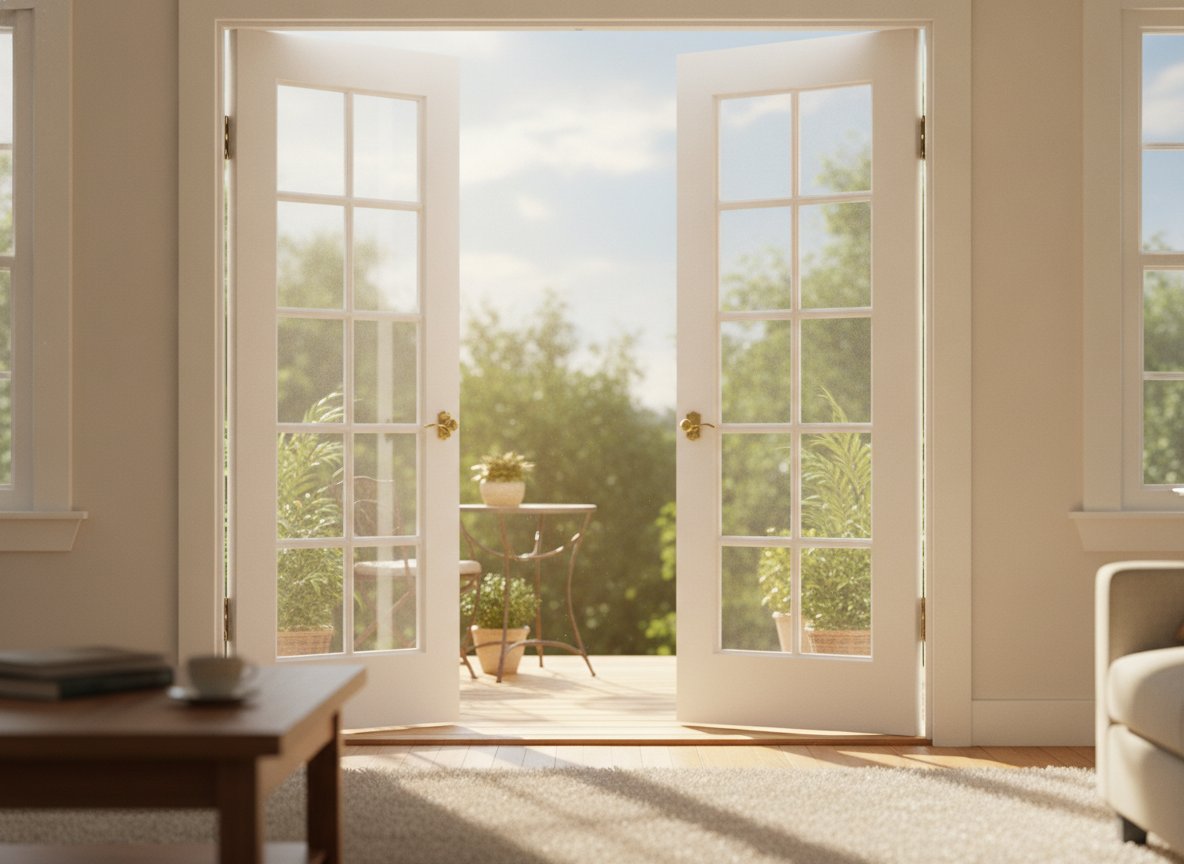
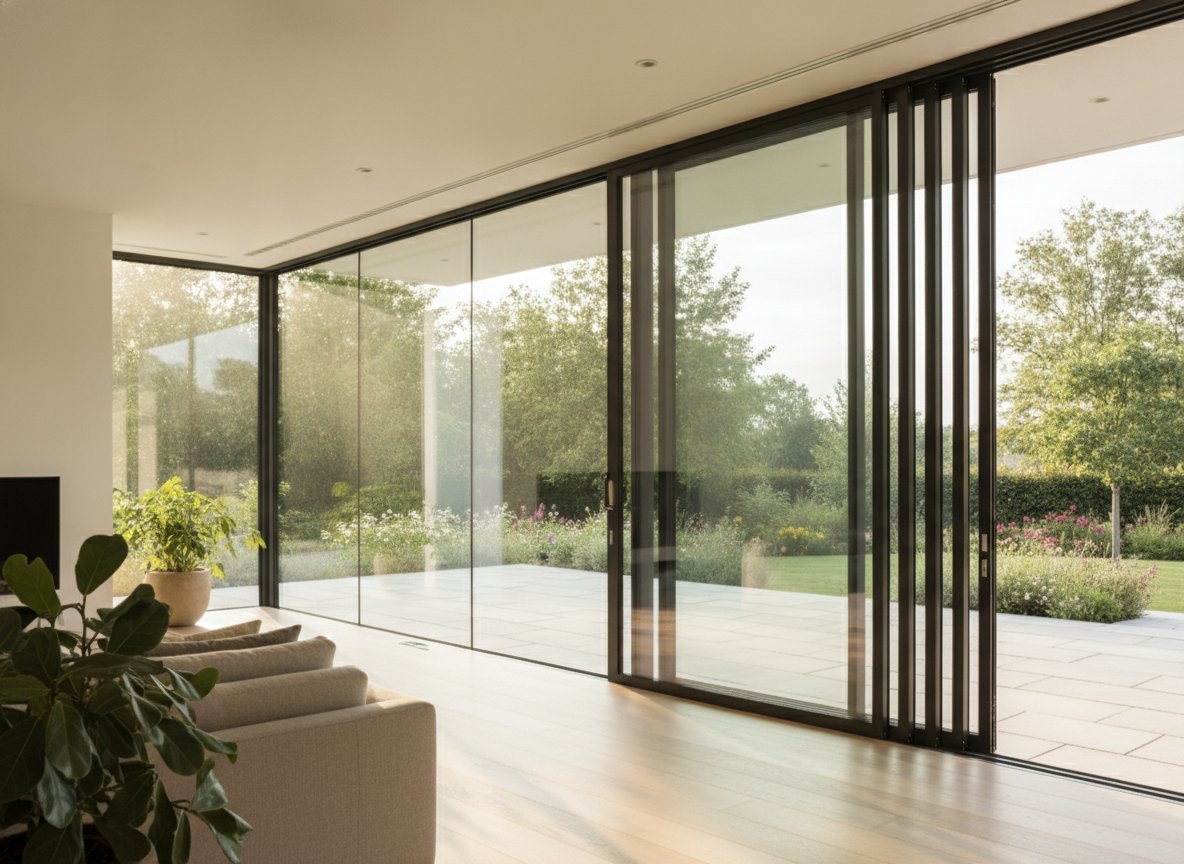
| Style | Look | Commonly installed | Space needed | When it's the right call | Sealing |
|---|---|---|---|---|---|
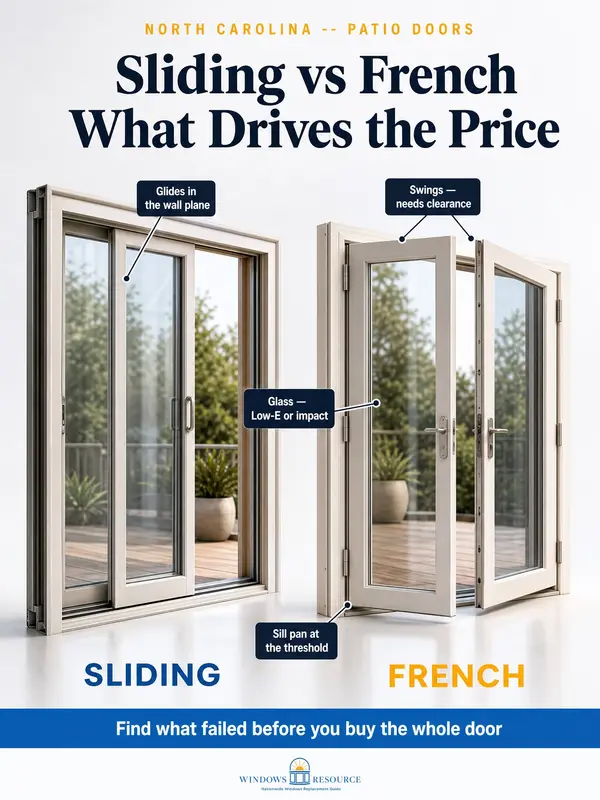
| Sliding (slider) |  | ~$1,200–$4,000 | None — glides in the wall plane | Tight rooms, best value | Good with a quality reach-out lock |
| French (hinged) | 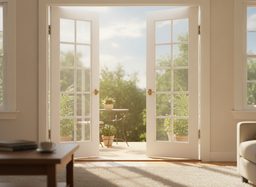 | ~$1,300–$5,500 | High — ~30 in. swing clearance | Widest opening, tightest seal | Often tightest (compression + multi-point) |
| Multi-slide | 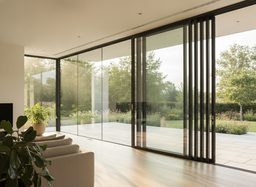 | ~$5,000–$15,000+ | Large — panels stack or pocket | Big openings / new construction | More seal length to get right |
Sliding (slider)
- Look
-
- Commonly installed
- ~$1,200–$4,000
- Space needed
- None — glides in the wall plane
- When it's the right call
- Tight rooms, best value
- Sealing
- Good with a quality reach-out lock
French (hinged)
- Look
-
- Commonly installed
- ~$1,300–$5,500
- Space needed
- High — ~30 in. swing clearance
- When it's the right call
- Widest opening, tightest seal
- Sealing
- Often tightest (compression + multi-point)
Multi-slide
- Look
-
- Commonly installed
- ~$5,000–$15,000+
- Space needed
- Large — panels stack or pocket
- When it's the right call
- Big openings / new construction
- Sealing
- More seal length to get right
What “installed” should already include: Underneath the sticker price sits real labor — commonly around $400–$1,400 to set the door, plus $100–$500 to pull and haul off the old one. The whole-cluster average lands near ~$2,500, but a slider on a sound frame and a wide French set on a coast-code opening aren’t the same job. All national figures — verify locally.
Whatever style you land on, get the quote down to a single installed number for the door — old-door removal included — before you compare it to anyone else’s.
Why French patio doors cost more than sliding
French costs more because of how it’s built and how it opens — not because it’s automatically the better door. Here’s the mechanical reason.
A French (hinged) door needs more frame, compression weatherstrip, and multi-point locks that pull the panels tight at several points along the edges. It also needs swing clearance — roughly a couple of feet of clear floor for a six-foot set.
A sliding door glides in the plane of the wall and needs no swing room, sealing instead with a reach-out lock that draws the moving panel tight to the jamb. That difference in hardware and framing is most of the price gap.
The honest trade: sliders save space and money; French give the widest, most impressive opening and often the tightest seal. Pick on your priorities, not on which one a salesman calls “premium.” More on which style and why it costs more.
The cost drivers that swing your quote
Two quotes on the same opening can differ by thousands because of legitimate scope underneath. The levers, biggest movers first:
- Frame material. Vinyl, fiberglass, and thermally broken aluminum price differently and perform differently in NC humidity. On the coast, corrosion-resistant frames and marine-grade hardware aren’t optional.
- Glass package. is standard on quality doors. Impact-rated (laminated) glass is the upgrade — and near the NC coast it’s often code-required in wind-borne-debris regions.
- Opening-size changes. Widening or altering the rough opening adds framing labor and sometimes a header.
- Old-door removal and haul-off. Real labor and disposal — expect a line for it (commonly ~$100–$500).
- Frame or sill repair. If there’s hidden rot, you fix the structure before setting a new door. See the threshold detail below.
- Permit. Often required; varies by jurisdiction.
On the coast: impact-protected glazing is code-required in NC’s wind-borne-debris region — glazed openings, patio doors included, have to pass the Large Missile Test ( E1886/E1996) under NC Residential Code R301.2.1.2. What stays address-specific is the exact rating and the wind-speed contour line — those vary by county and exposure, so pull them from the current NC State Building Code and a qualified design pro for your address, not a rule of thumb.
The line item that rots your subfloor if it’s skipped
The most expensive patio-door mistake isn’t the door — it’s the threshold set without a sill pan.
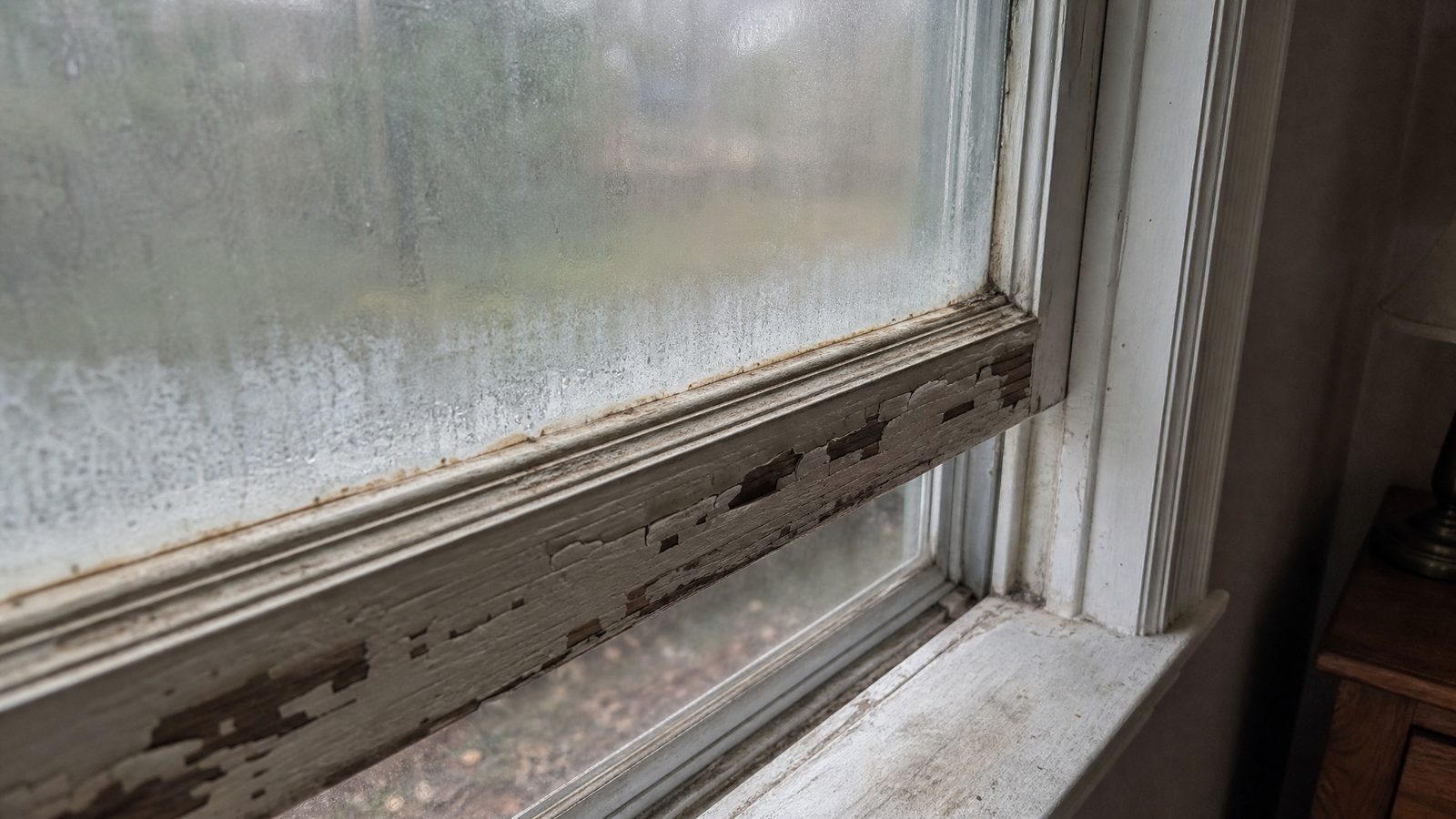
This is the door version of a rotted window sill, and it’s exactly what turns a hidden-rot line item into a wall repair a year later.
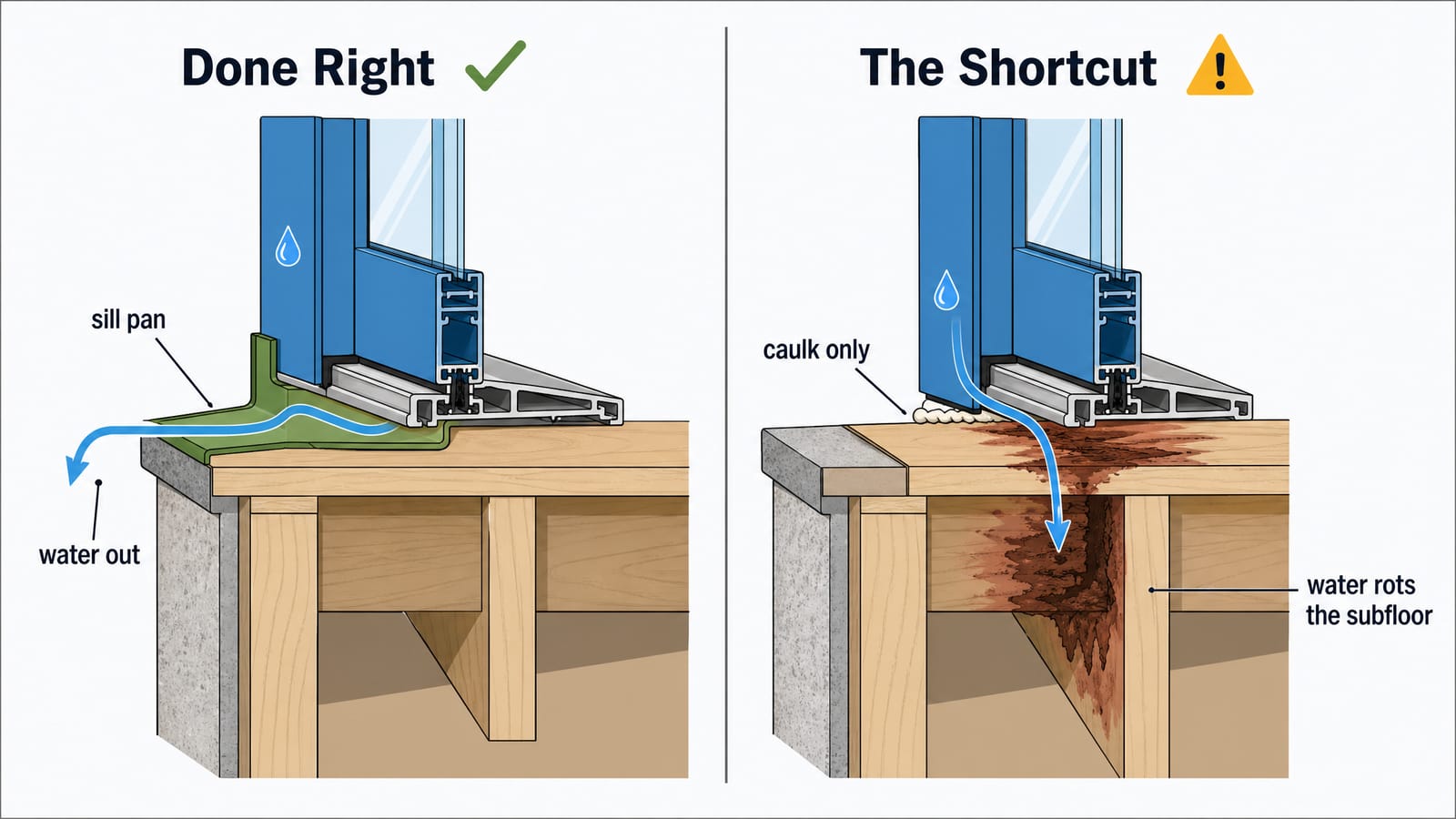
If a quote is cheap because it skips the sill pan and sets the door on a bead of caulk, that’s not a saving — it’s a rot bill deferred a year or two.
Ask whether the threshold gets a sill pan and whether the opening is set plumb, level, and square.
Can you just replace the glass to save money?
Sometimes — and it’s worth checking before you pay for a whole new door. If only the insulated glass unit () seal failed — you’ve got fog between the panes you can’t wipe off — but the frame and sill are sound and the door still glides, reglazing the IGU can be the cheaper fix.
When it’s not an option: a rotted frame or sill, or a slider that won’t move on its track, means a full-frame replacement. Setting a beautiful new door over hidden rot just buys you the same failure again.
That’s the same honest repair-or-replace call I’d make on a window — see when a fix beats replacement. If someone quotes a whole new unit without ever checking whether the seal alone failed, that’s a fair question to put back to them.
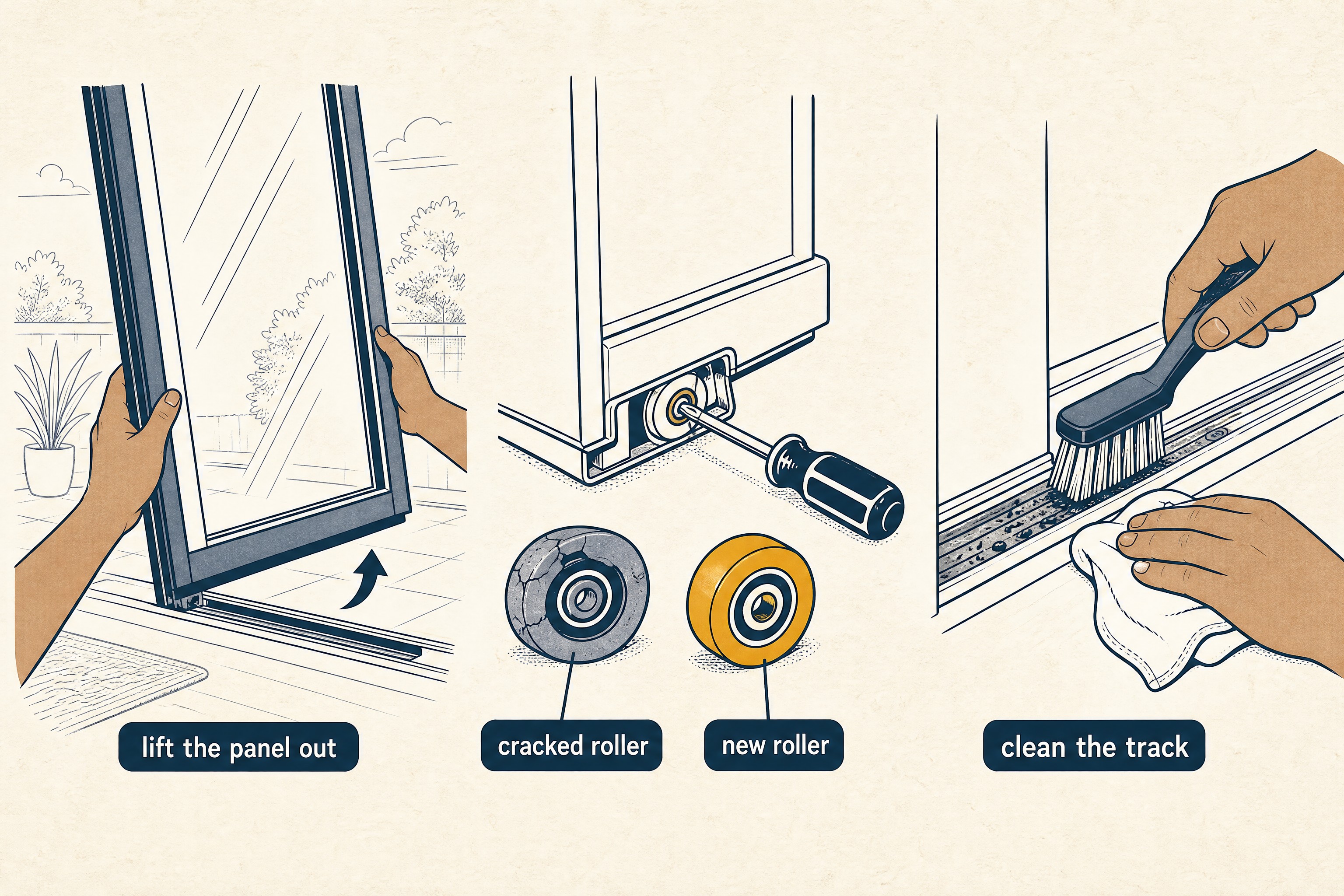
What a fair patio-door quote should include
A fair quote itemizes the work so you can tell padding from real scope. Look for these lines:
- Old-door removal and haul-off
- The glass package named (Low-E standard; impact/laminated if coastal)
- Sill pan flashing at the threshold, and the opening set plumb, level, and square
- Frame/sill inspection and any rot repair (priced or flagged TBD)
- Opening changes, if any
- Permit handling
- The lock package — multi-point vs a basic reach-out lock
Here’s the short version to read them, straight off your phone:
Ask them, word for word
”Is old-door removal and haul-off included, what’s the glass package (Low-E? impact?), does the threshold get a sill pan, and have you checked the sill for rot?”
The red flags to walk away from
Common patio-door tells:
- The “glass only” upsell to a full unit. If the frame and sill are sound and only the seal failed, ask whether reglazing the IGU is an option before paying for a whole new door.
- No removal/haul-off line. Pulling and disposing of the old door is real labor — a quote that omits it is incomplete, not cheap.
- The same-night discount. A patio-door price that only holds if you sign tonight is a pressure tell, not a deal. A real price is a real price next week.
If you want a second opinion on a bid, here’s how to read a door quote and spot the red flags.
Pricing it with your windows
Same crew, same trip, same label — a patio door usually belongs in the same project as your windows. A sliding glass door is even rated the same way a window is, by climate zone, so the glass logic you already learned for your windows carries straight over.
If a crew is already at your house measuring and staging, adding the patio door avoids a second mobilization and a second quote conversation.
If you’re pricing both, it helps to know what windows cost in NC alongside the door number. Same buyer, same budget.
Get a real number for your opening
A range tells you whether a quote is in the right ballpark — it can’t price your opening. That depends on your style, your glass, whether the rough opening changes, and whether the sill is sound.
If you want a no-pressure second opinion on a quote you already have, have me measure it in person. I’ll check the sill for rot, name the glass package you actually need, and let you decide.
And your knee comes off the jamb for good!
Sources, Verification & Fact-Checking verified July 2026
Every load-bearing fact on this page is sourced and verified against a primary authority.
Verified July 2026 via direct review of the cited authority — the links open the controlling source so you can check it yourself rather than take our word.
- Patio-door installed cost bands (sliding ~$1,200–$4,000; French ~$1,300–$5,500; multi-slide ~$5,000–$15,000+; cluster average ~$2,500). Broad national estimates — labor commonly ~$400–$1,400 plus ~$100–$500 haul-off. Not NC-specific quotes; NC labor and coastal/impact upgrades will move these, so verify locally before treating any figure as your price. (National industry cost guides, current as of 2026; treat as order-of-magnitude, not a quote.)
- French patio doors carry compression weatherstrip and multi-point locks and need swing clearance; sliders seal with a reach-out lock and need no swing room. The extra frame, hardware, and install effort are why French commonly prices above sliding.
- Low-E glass is standard on quality patio doors; in NC’s coastal wind-borne-debris region, impact-protected glazing is code-required — glazed openings (patio doors included) must pass the Large Missile Test of ASTM E1886/E1996. The exact design-pressure (DP) rating and wind-speed contour line are address-specific — they vary by county and exposure and must come from the current NC State Building Code and a qualified design pro, not a rule of thumb. (NC Residential Code R301.2.1.2, protection of openings — view source — codes.iccsafe.org (NCRC2018); the county-specific DP rating and wind-speed contour line vary by address, so confirm those per your address.)
- A patio door set without a sill-pan flashing lets wind-driven rain under the threshold and rots the subfloor — the door equivalent of a rotted window sill. The threshold must be set in sealant, back-dammed, and the unit set plumb, level, and square so water drains out.
- A sliding glass patio door is rated by climate zone like a window (via the NFRC label), not by the swinging-door glazing table. ENERGY STAR states it directly: “Windows, sliding glass doors, and skylights shall meet the criteria for a given ENERGY STAR Climate Zone” — a distinction from swinging doors, which meet criteria for a given glazing level. (view source — NFRC; ENERGY STAR key product criteria at view source — energystar.gov.)