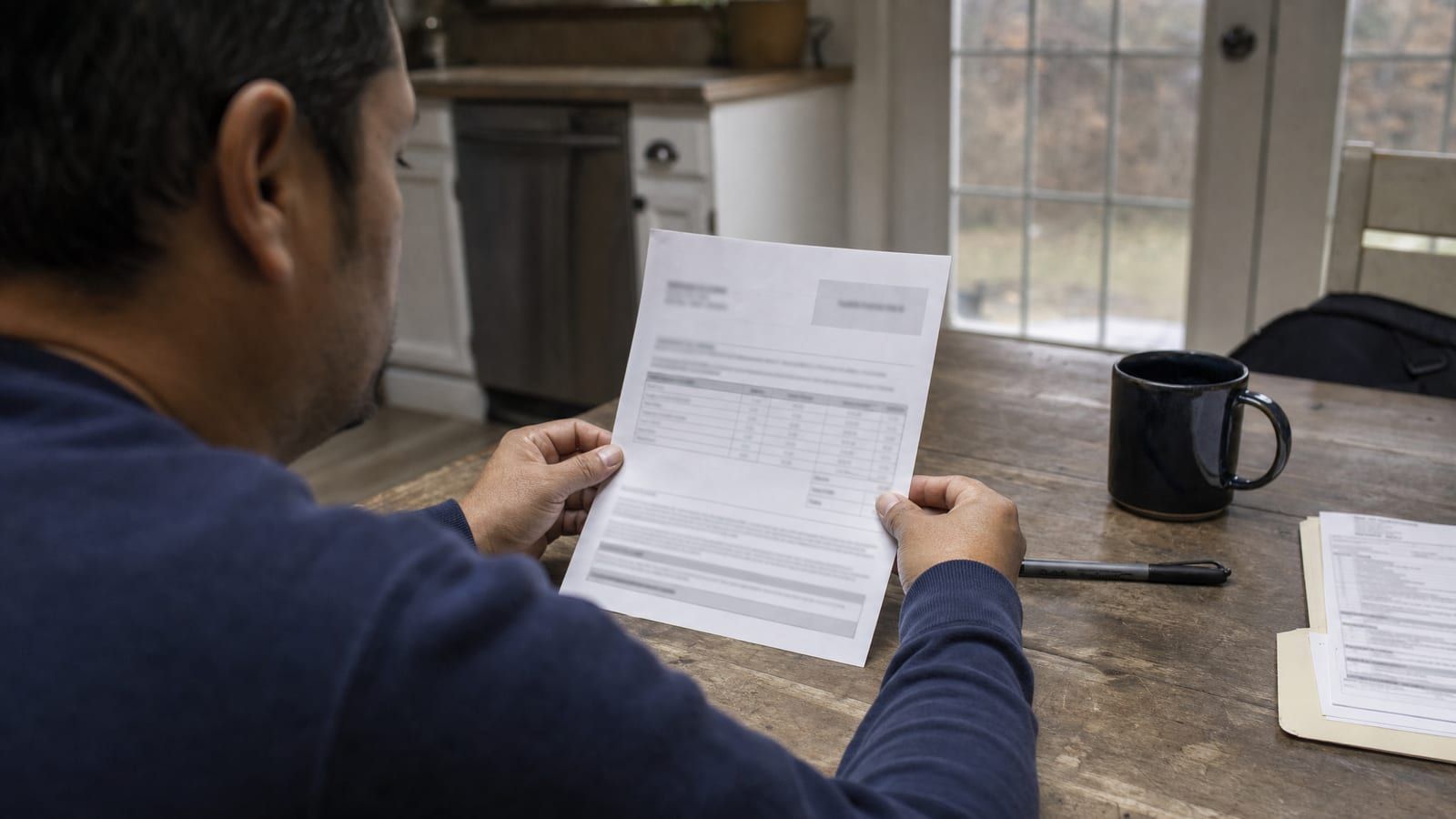


Here’s how I’d sanity-check a window quote before you sign anything. The quote is sitting on your counter, the number made your stomach drop, and you don’t know if it’s fair or a fleecing.
That’s the right question to be asking, and you can answer a lot of it yourself before you ever call anyone back.
The whole method is three steps: normalize the quote to a per-window installed price, compare it to honest NC ranges, then overlay a quick red-flag check. A quote far above the range usually means a better salesman, not a better window.
Is my window quote reasonable? Divide the total by the number of windows to get the per-window installed price, drop that number onto the North Carolina ranges below, then run the four-item red-flag check. A number far over the range is almost always a pricier salesman — not a better window.
Ranges here are general NC bands — a starting point for the sanity-check, not your quote. Last reviewed June 2026.
Step 1: Normalize it to a per-window installed price
Divide the total by the number of windows. That per-window installed price is the only apples-to-apples number you have.
Two “$20,000” quotes are not equal if one is for 8 windows and the other is for 14. The lump sum hides that. Once you’ve got a per-window number, you can compare it to anything — another quote, a neighbor’s job, the NC ranges below.
One caution before you divide: make sure you’re dividing an installed total, not a materials-only “starting at” figure. If the quote doesn’t spell out labor, disposal, and the warranty, that’s Step 3 territory. Start by learning to normalize it to per-window first.
Step 2: Compare it to honest NC ranges
Drop your per-window number onto the NC ranges and see where it lands. Vinyl sits lower. Fiberglass and composite run higher.
As a general 2026 North Carolina band, most vinyl replacement windows land roughly $450–$1,600 per window installed, with the bulk around $500–$1,250. Fiberglass and composite run higher, roughly $1,100–$2,200. Those are wide on purpose — they’re a starting band to place your number against, not a promise. Verify for your specific project.
Quote sanity-checker
Is your window quote reasonable?
Drop in the total and the number of windows. We'll get it to a per-window installed price — the only number you can actually compare.
Enter both numbers to see your per-window price.
A range, not a quote — general 2026 NC bands (vinyl ~$450–$1,600, fiberglass ~$1,100–$2,200), verify for your project. Nothing you type is saved or sent.
What moves your number within the range is real and worth understanding: frame material, the glass package, , and access (second story, tight trim).
Full-frame typically adds 20–30% over an insert. On the NC coast, wind-borne-debris counties may require impact/laminated glass, which is a legitimate cost driver, not an upsell.
None of those is a rip-off — they’re cost levers.
Compare against the full NC cost ranges to see which lever explains your number.
Step 3: Run the red-flag overlay
A high number plus a red flag equals inflated. Here’s the quick overlay.
- Sign-tonight drop — the price fell the moment you hesitated. That’s a tell, not an offer. A real price is real next week too.
- Lump sum, no line items — no per-window breakdown, no separate labor, glass, or disposal. Ask for a revised, itemized quote.
- Cash, no permit — dodging the permit isn’t a favor to you. It’s how a job skips inspection.
- Over-50-percent deposit — too much money up front before a single window is on site.
A fair number with none of these flags is probably just a fair number. It’s the combination — a number above the range with a pressure tactic attached — that tells you the price was inflated to begin with. Cross-check against the full list of window quote red flags.
Before you call anyone back, here’s the one thing worth asking for in writing:
Copy this and send it back: “Send me a per-window breakdown with both the product and labor warranties and old-window disposal listed, and give me a week to think it over.”
A quote that survives that request in writing is one you can actually trust. A salesman who won’t put it on paper just told you something.
What if my quote is ABOVE the range?
Above-range can be legit, or it can be the sales-model premium. The breakdown tells you which.
Legit drivers: full-frame replacement instead of an insert, custom sizes, or impact/laminated glass if you’re on the NC coast where code may require it. The other possibility is the national in-home-sales premium — the long living-room presentation, the commissioned closer, and the television-ad budget all baked into your number.
That premium is the honest explanation nobody selling you will offer: a national in-home-sales brand can charge two to three times what a local installer charges for a comparable-quality window. That gap doesn’t buy you better glass. It pays for the way the window is being sold to you.

NC homeowner takeaway: an above-range number isn’t automatically a rip-off — sometimes there’s a real driver behind it. But the burden’s on the quote to show you that driver.
The way to find out which one you’re looking at is simple: ask for the per-window breakdown, and get one more quote from a local installer. Your instinct to go local over a high-pressure national brand is a good one — this is where it pays off.
What if it’s suspiciously BELOW the range?
A number well under the range usually means something’s getting skipped. A cheap install is a false economy.
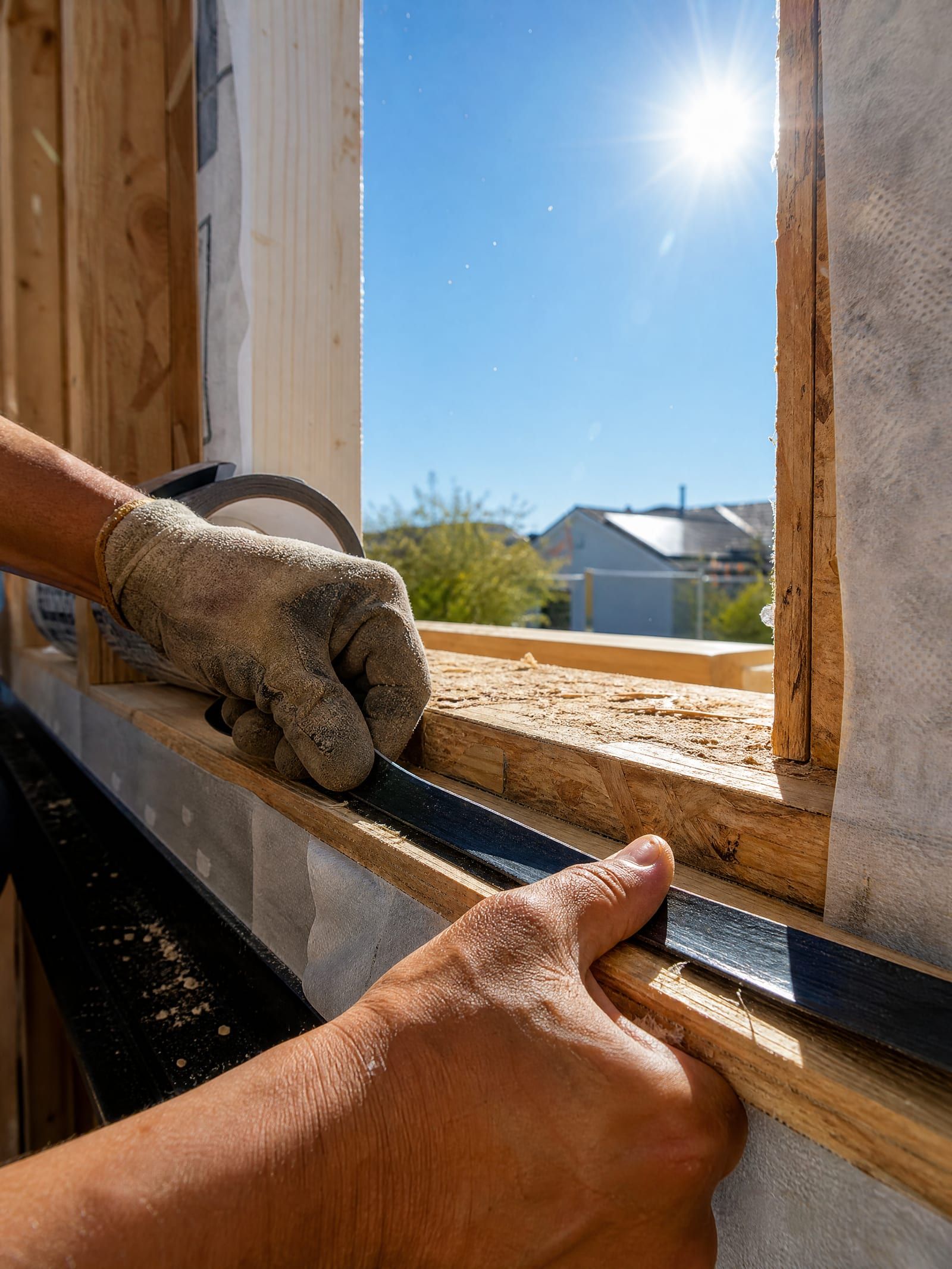
The corners that get cut to hit a low number are the ones you can’t see at handoff: the flashing and sill pan, old-window disposal, and a real labor warranty. That’s exactly the work that decides whether your windows leak in a year.
A window is only as good as the hole it’s set into — the best glass in the world fails if the flashing was skipped. See why a cheap install is a false economy before a low number tempts you.
Want a second opinion? That’s exactly what the consult is for
Bring the quote you already have. The consult is a free, no-obligation second opinion on it — not another sales gauntlet.
You don’t have to decide today, and you don’t have to let anyone into your living room for a three-hour pitch. Run the three steps yourself first.
If you want a second set of eyes on a real number, a no-pressure second opinion on the quote you already have is exactly what the consult is for. The method above is yours to keep either way — the consult is the safety net, not the sell.
And the quote on your counter can wait while you work through it: if it’s a real price, it’ll still be real next week. If it isn’t, you just found that out for free!
Sources, Verification & Fact-Checking verified July 2026
Every load-bearing fact on this page is sourced and verified against a primary authority.
Verified July 2026 via direct review of the cited authority — the links open the controlling source so you can check it yourself rather than take our word.
- Per-window installed price is the only apples-to-apples comparison unit. Dividing a project total by the window count normalizes quotes with different window counts so they can be compared directly — a comparison method, not a price claim; general NC guidance, verify for your project.
- NC per-window installed ranges — vinyl ~$450–$1,600, fiberglass/composite ~$1,100–$2,200. Grounded in 2026 industry cost-guide references. General NC market bands only — these move with the market, so verify for your specific project rather than treating them as a quote. Figures hedged pending a linked public source.
- Full-frame replacement typically adds roughly 20–30% over an insert; frame material, glass package, and access are the levers that move a number within the range. Directional market bands, not a fixed figure; hedged pending a linked public source.
- The national in-home-sales premium (national brands ~2–3× a local installer for comparable-quality windows) is a sales-model markup, not better glass. An illustrative sales-model premium describing how in-home-sales overhead is priced — not a verified list price; hedged pending a linked public source.
- NC coastal (wind-borne-debris) counties may require impact/laminated glazing, a legitimate above-range cost driver. North Carolina Residential Code (2018) §R301.2.1.2 requires glazed openings in the wind-borne-debris region to be protected against large-missile impact (ASTM E1996 / E1886) — impact-rated glass or an approved shutter system. The region is address-specific (basic wind speed 140 mph+, or 130–140 mph within 1 mile of the coast), so confirm your address with the local inspections office before relying on it. (view source — 2018 NC Residential Code R301.2.1)
- A below-range install commonly skips flashing/sill pan, old-window disposal, or a real labor warranty — the work that determines whether the window leaks. Grounded in installation-practice references — installation judgment, not a spec claim; hedged pending a linked public source.