

I get the call every winter: cold air pouring off the glass, and the homeowner already braced to hear they need $12k of new windows.
Most of the time, they don’t.

So before you replace anything, here’s the order I’d actually check it in — and the only diagnostic tool you’ll need is a stick of incense.
Does a drafty window mean I need new ones? Usually no. Most drafts are a worn seal or a gap you can fix for a few dollars.
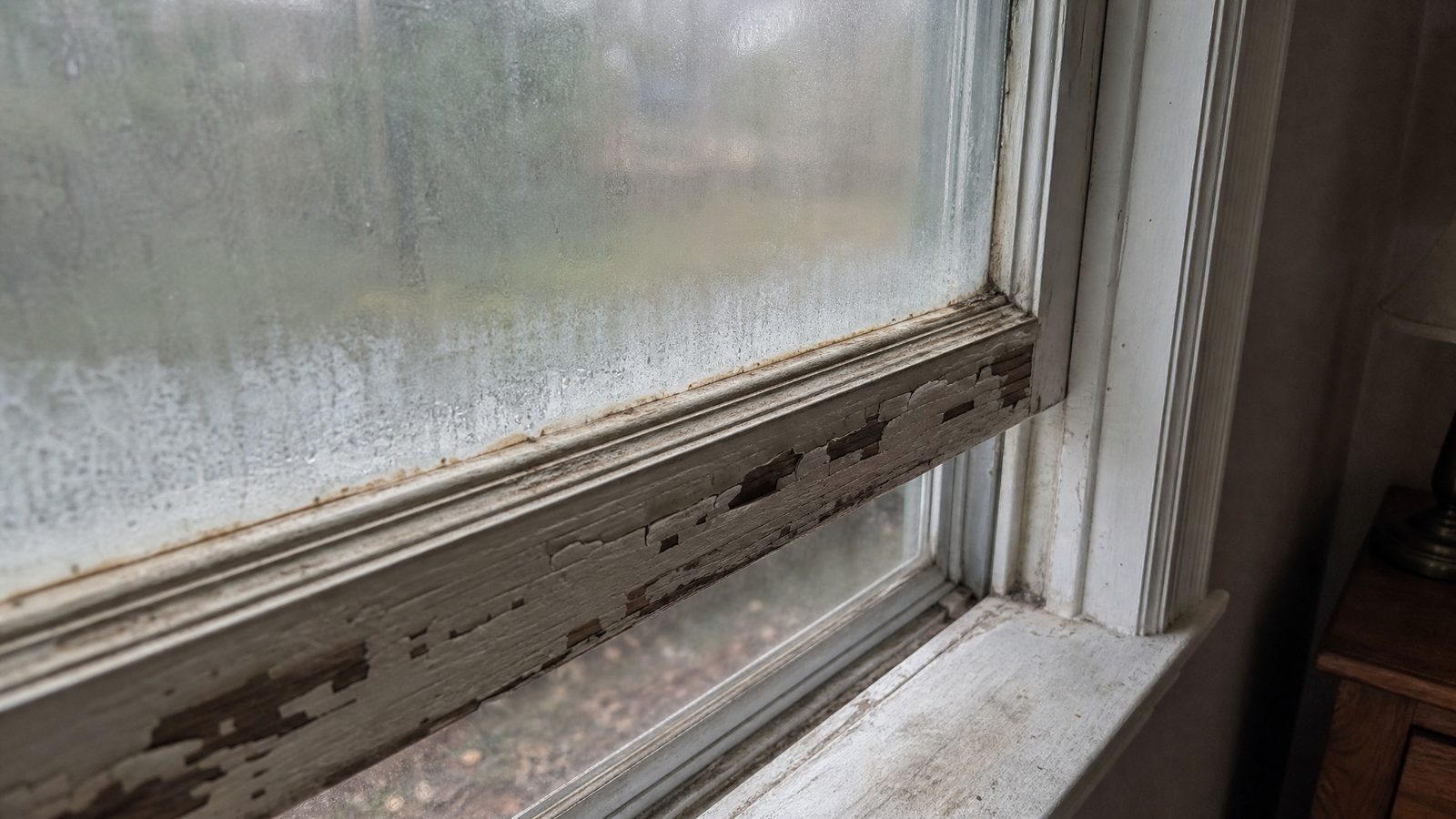
You replace when the draft comes with rot, fog between the panes, or a window that’s already failing.
Where is the draft actually coming from?
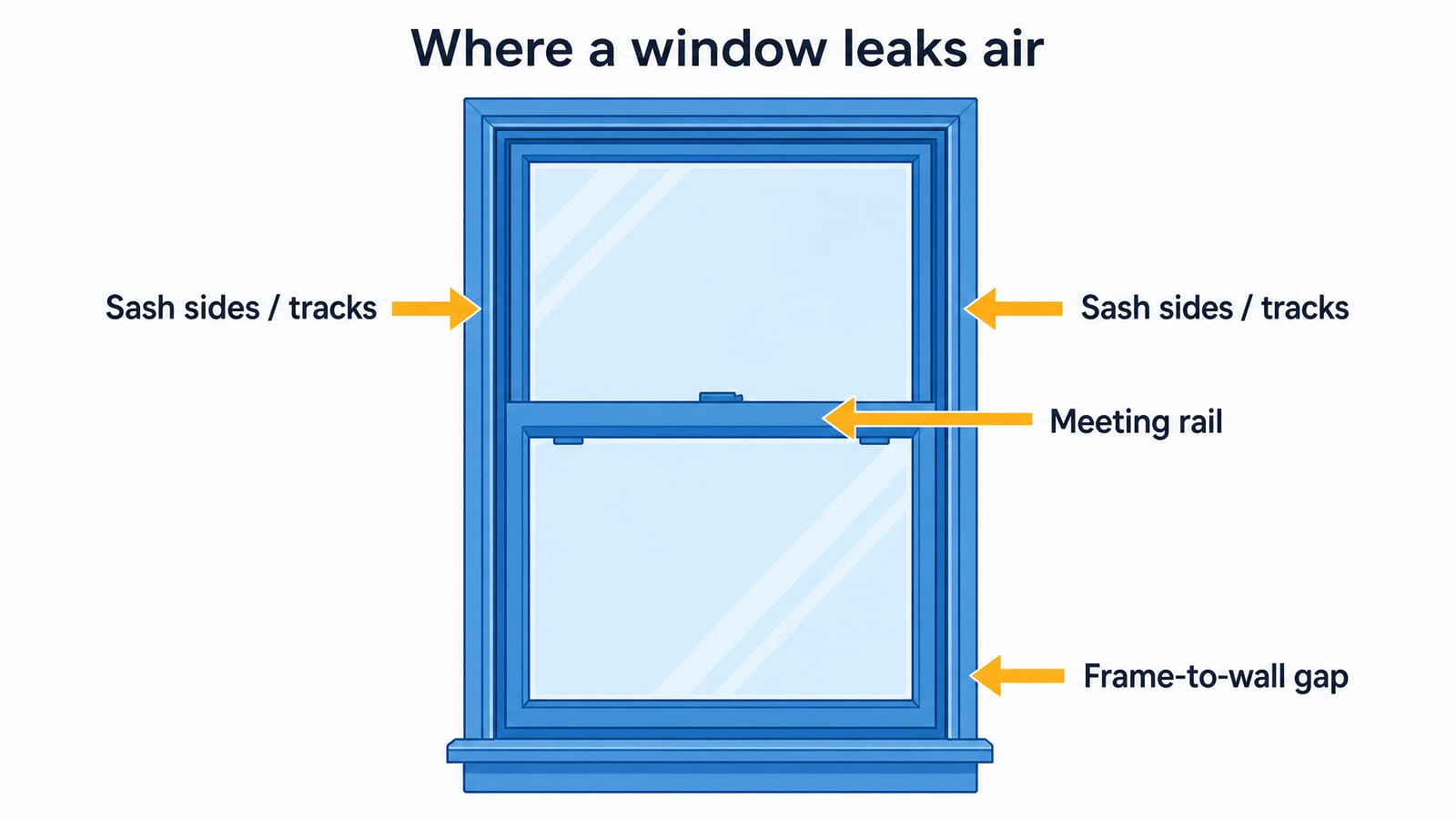
A “drafty window” is rarely the whole window. It’s almost always one of three spots, and they get fixed three different ways:
- The sash meeting rail — where the two sashes overlap on a double-hung. Worn weatherstrip or a loose sash lock lets air slip through here.
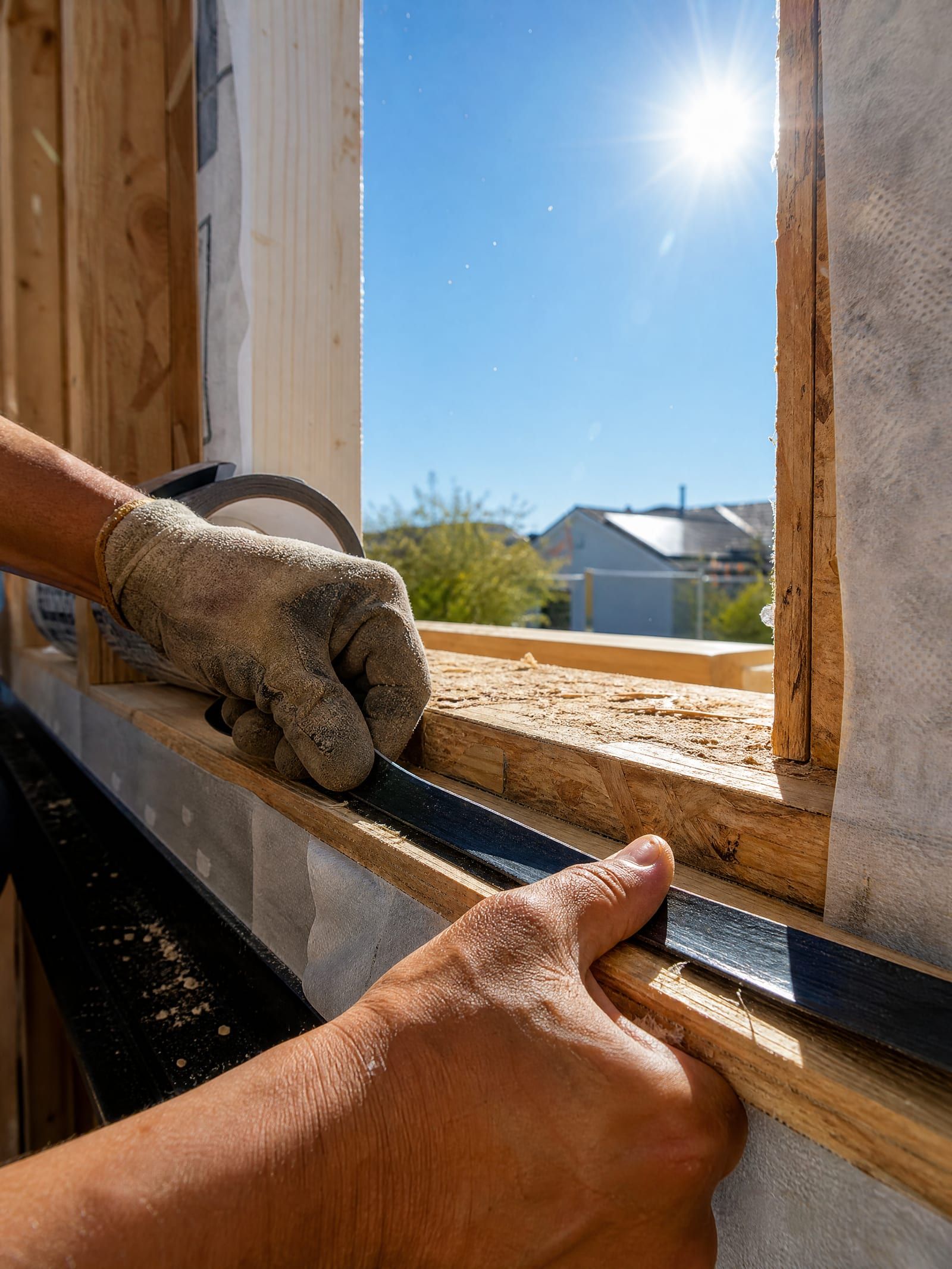
- The frame-to-wall gap — air leaking in at the trim, between the window frame and the wall framing. That’s an install or caulk problem, not the window itself.
- A failed glass seal () — when the sealed glass unit loses its seal, you lose the argon fill and the insulating value, so the glass runs cold even with no moving air.
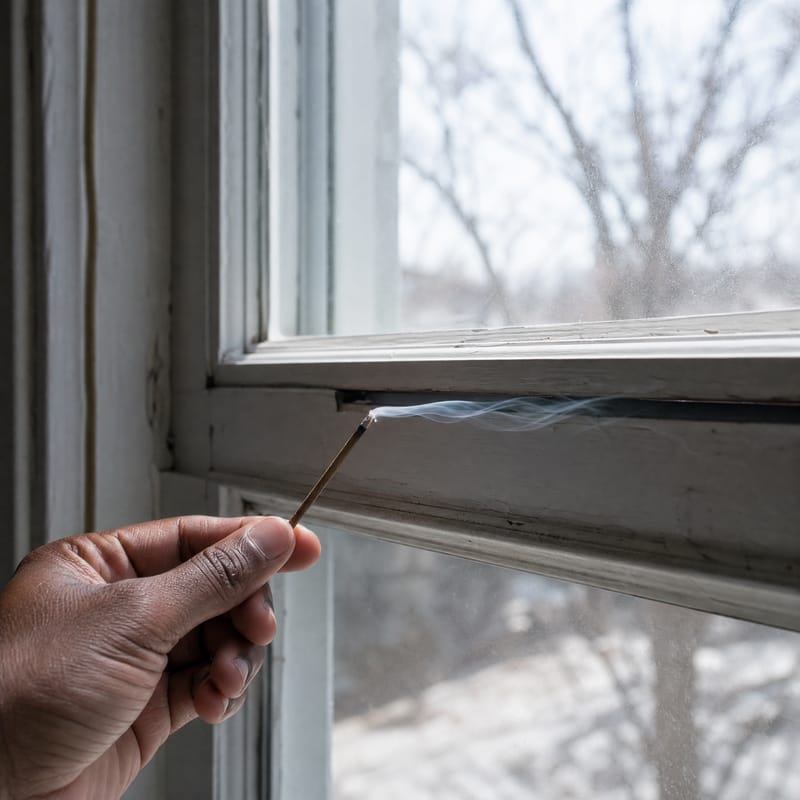
To find it: on a windy day, run a damp hand or a slow-moving incense stick around the sash, the meeting rail, and the frame edge. Where the smoke pulls or your hand goes cold, that’s the leak.
Check the sash seams and the frame edges as two separate tests — they fail for two different reasons, and mixing them up sends you fixing the wrong thing.
The cheap fixes to try first
Validate your own instinct here — you were right to look for the small fix before the big one.
Most drafts close up for a few dollars:
- Replace the weatherstrip — the most common culprit; a worn strip at the sash or meeting rail. A weatherstrip roll or kit is one of the cheapest hardware-store fixes there is: a roll of foam, V-seal, or rubber weatherseal runs roughly $5–$15 at Home Depot or Lowe’s, and one roll covers a window or two.
- Tighten or adjust the sash lock — on a double-hung, the lock pulls the sashes tight against the weatherstrip. A loose one leaves a gap at the meeting rail, and it costs nothing to snug it up.
- Caulk the exterior frame — a fresh caulk bead where the frame meets the siding stops air infiltration at the frame-to-wall gap. A tube of caulk is cheap; the labor is the variable if you hire it out.
- Re-glaze a loose pane — on old wood sash, failed glazing putty lets air past the glass. Re-glazing it reseats the pane and closes the leak.
- Add cellular shades — they don’t fix the leak, but they cut the cold-pour feeling off the glass while you sort the real fix.
As a rule of thumb, even a gap around an eighth of an inch is enough to feel as a real draft — so these small fixes matter more than they look.
Before you spend a dollar, this is the exact question I’d hand a homeowner to ask any installer who shows up:
Ask the installer:
“Is this draft coming from the sash, the seal, or the install — and what’s the cheapest honest fix?”
A straight answer names the source before it names a price. If the only answer is “you need all-new windows,” get a second read.
When a draft means it’s time to replace
A draft tips toward replacement when it stops being just a seal problem. Replace when the chronic draft comes with:
- Rot in the sill or jamb — once the wood is soft, a new seal has nothing solid to seal against.
- Fog between the panes you can’t wipe off — the IGU seal is dead and the unit has lost most of its insulating value.
- Age plus failure — an old window that’s drafty, sticky, and fogged is telling you it’s done. A sash that also won’t stay up or is painted shut is the same story from a different angle — see when a stuck window is worth saving.
That’s the handoff to the full repair-or-replace test — work through it before you let anyone quote you a whole-house job.
And if you do land on replacing, it’s worth knowing what new windows actually cost in NC before the first salesperson frames the number for you.
Drafty after a replacement? That’s the install
If the draft showed up on a window that’s only a year or two old, the window probably isn’t the problem — the install is. A correct install seals and insulates the frame-to-wall gap so air can’t get past it.
A draft at the trim on new windows points straight at a bad install, not a product defect. And the same gaps that let cold air in also let noise in, which is often the first thing a homeowner in a Triad neighborhood notices before they ever feel the draft.
What to do next
If you’ve found the leak and the fix is a weatherstrip you can pick up on the way home, do it yourself and keep your money.
If the draft comes with rot or fog, get a straight read before you replace — it’s worth knowing whether it’s even worth replacing, not just what it costs.
That’s the call I’d rather make for you over the phone than sell you out of: book a no-pressure consult and I’ll help you find the leak and name the cheapest honest fix first. Bring your incense-stick findings — I’ll take smoke evidence over a sales script any day!
Sources, Verification & Fact-Checking verified July 2026
Every load-bearing fact on this page is sourced and verified against a primary authority.
Verified July 2026 via direct review of the cited authority — the links open the controlling source so you can check it yourself rather than take our word.
- Air leaks around windows are commonly sealed with caulk and weatherstripping — a low-cost fix homeowners can do before considering replacement. The U.S. Department of Energy calls air sealing “one of the most cost-effective ways to improve the comfort and energy efficiency of your home,” and lists caulk and weatherstripping first among the DIY sealing materials. (view source — U.S. Dept. of Energy, Guide to Air Sealing (PDF))
- Air escapes and enters a home through gaps and cracks around window sashes and frames. The U.S. Department of Energy’s air-sealing guide puts it directly: air leaks “around windows and doors are the most obvious” in a home’s envelope. (view source — U.S. Dept. of Energy, Guide to Air Sealing (PDF))
- A candle, incense stick, or damp hand can locate an air leak by showing where moving air disturbs the smoke or cools the skin. The EPA’s ENERGY STAR program describes the same test: “Light an incense stick and hold it next to the seams or sash of the window. Watch the smoke” — smoke pushed or pulled marks the leak. (view source — ENERGY STAR, window and door sealing)
- Condensation or fog between the panes of a double-glazed window indicates the insulated glass unit (IGU) seal has failed. The U.S. Department of Energy describes insulated glazing as panes spaced apart and sealed around an insulating gap; once that seal is broken the unit can’t be resealed to restore its insulating value — the glass (or window) is replaced. (view source — U.S. Dept. of Energy, Building Science Education)
- A draft appearing on a recently installed window typically traces to an unsealed frame-to-wall gap rather than a defect in the window itself. The U.S. Department of Energy stresses that “windows are only as good as their installation” — skilled installers air-seal the gap between the frame and the rough opening (backer rod, caulk, or nonexpanding foam), because even tiny cracks around the frame cause substantial heat loss. (view source — DOE Building Science, Correct Window Installation Methods)
- A roll or kit of window weatherstripping is one of the cheapest hardware-store fixes — roughly $5–$15 a roll. Foam, V-seal, and rubber weatherseal rolls (e.g. M-D and Frost King brands) are stocked in that range at major retailers, with a single roll covering a window or two. (view source — Home Depot window weatherstripping)