

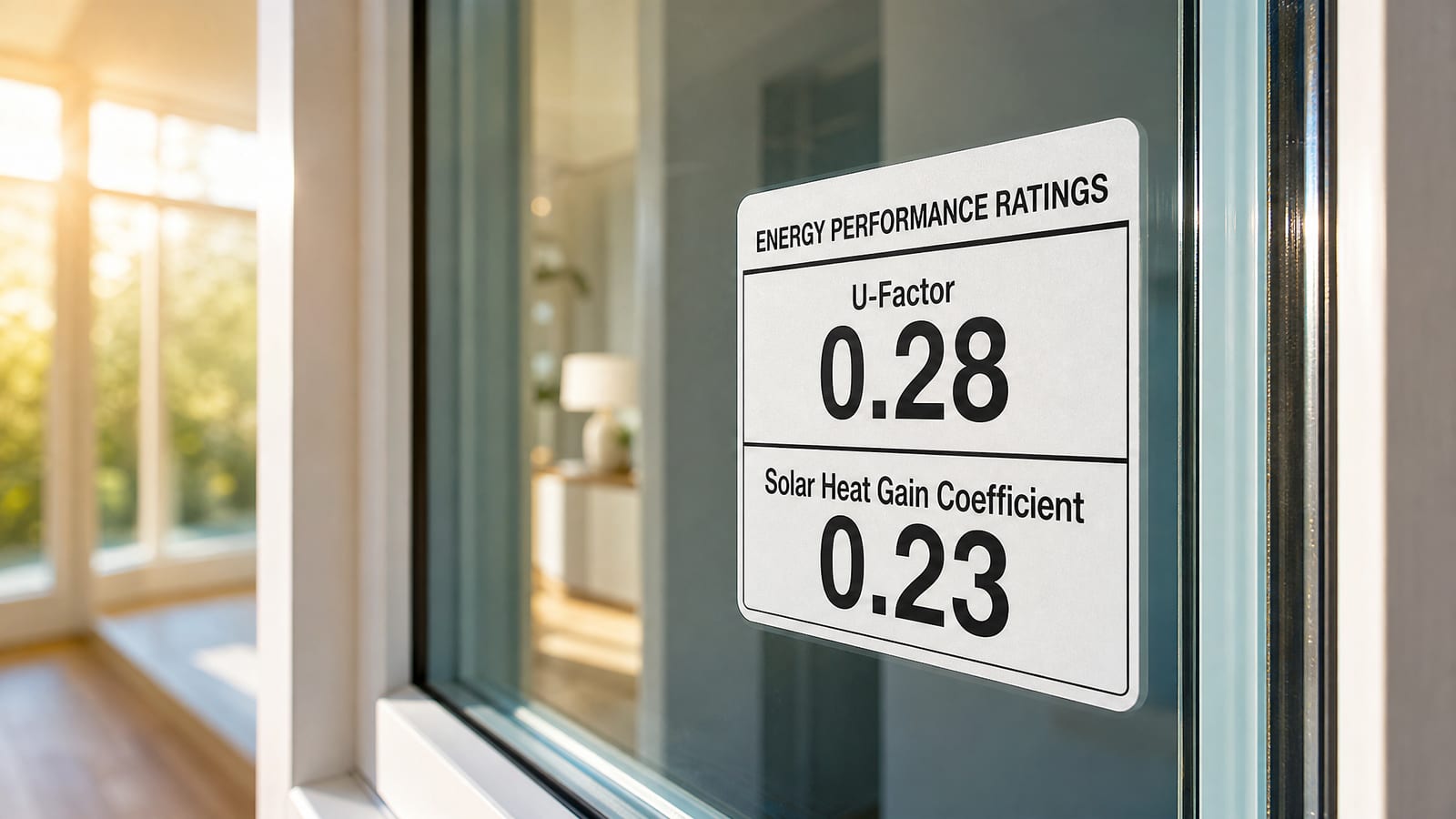
The sticker on a new window is covered in numbers, and salespeople love to wave the impressive- sounding ones at you.
Here’s what they actually mean, and which ones are worth caring about in a North Carolina home.
The NFRC label: your apples-to-apples tool
The label is the standardized sticker you’ll see on rated windows. Its value is that every manufacturer measures the same way, so you can compare two windows fairly.
When a quote gets vague, the NFRC numbers are the part you can trust.
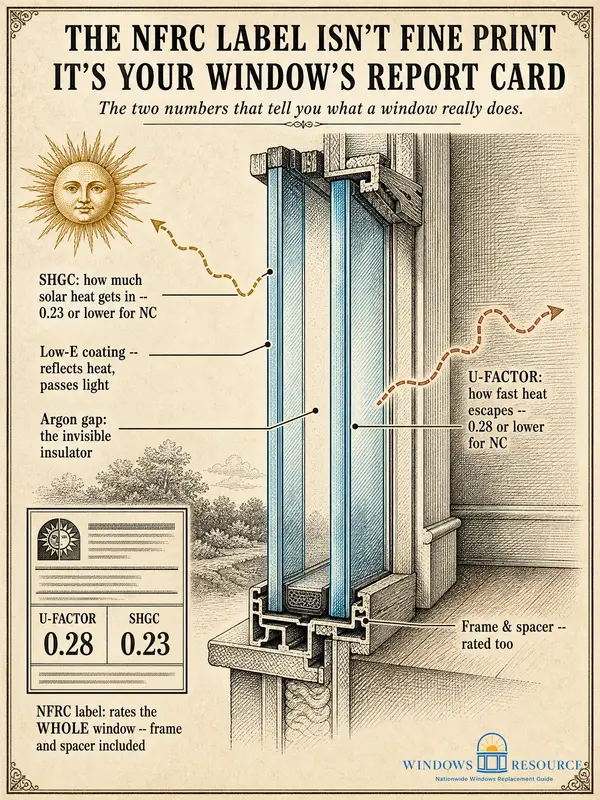
U-factor: how well it insulates
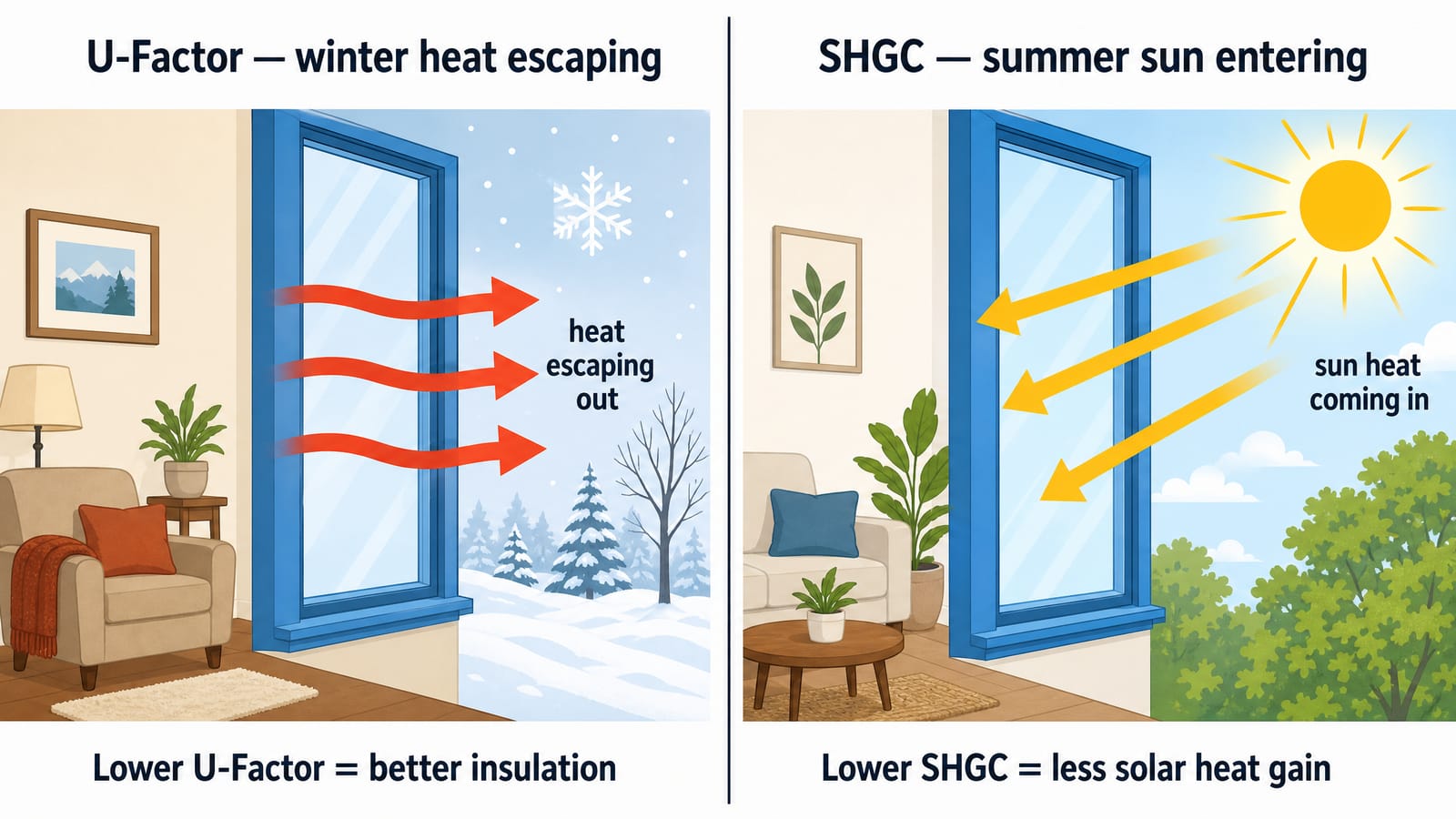
U-factor measures how much heat passes through the whole window. Lower is better — a lower U-factor keeps more of your heated (or cooled) air inside. It’s the number that maps most closely to “will this window feel drafty and cold by the glass in winter.”
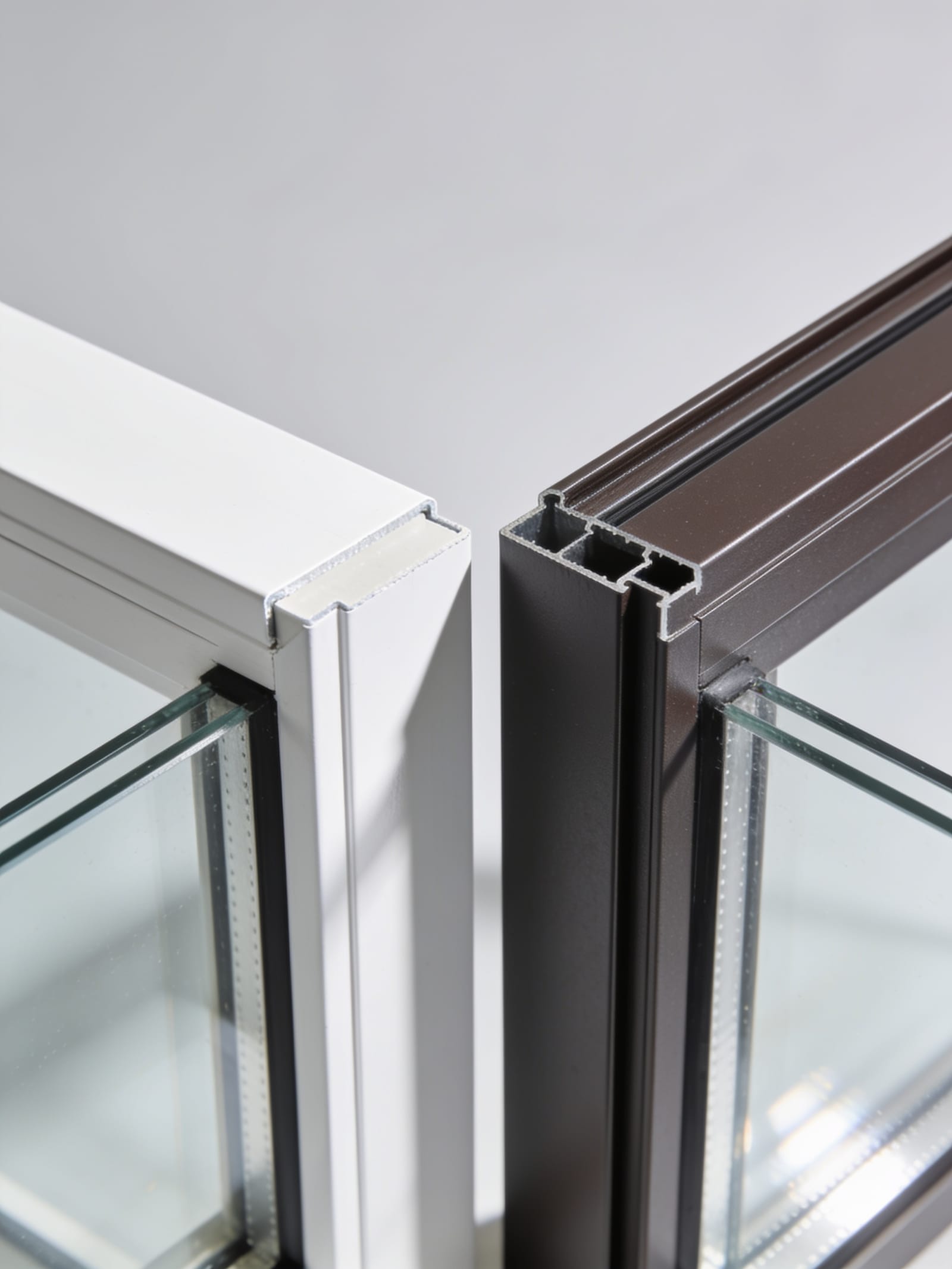
Most of that number comes from the glass build: a double-pane unit with an argon fill insulates far better than single glass, and triple-pane drops the U-factor further still. The frame material matters too — vinyl and fiberglass insulate better than aluminum.
SHGC: how much solar heat it lets in
runs from 0 to 1 and measures how much of the sun’s heat comes through. Lower SHGC = blocks more solar heat. In a hot, sunny climate this is the number that fights your summer AC bill and that “the sunroom is an oven in July” feeling.
The thing that pushes SHGC down is a low-E coating — a microscopically thin layer on the glass that reflects solar heat back outside while still letting light through. When a salesperson talks up “energy glass,” low-E is usually what they mean.
What matters in North Carolina
NC isn’t one climate — the coast, Piedmont, and mountains differ.
But across most of the state we get hot, humid, sunny summers and mild-to-cool winters. Practically, that means:
- Manage solar heat gain (SHGC) for the long cooling season, especially on east- and west-facing glass that takes direct sun.
- Keep a sensible U-factor so winter rooms stay comfortable near the glass.
- Don’t chase a single number off a chart. Orientation, shade trees, and which rooms you live in matter as much as the spec.
For ENERGY STAR certification, NC actually straddles two zones: the mountains and northern Piedmont fall in North-Central (U-factor ≤ 0.25, SHGC ≤ 0.40) and the rest of the state in South-Central (U-factor ≤ 0.28, SHGC ≤ 0.23).
Most of NC lives in that South-Central target — a low SHGC to fight summer sun, paired with a sensible U-factor.
Glass package vs. comfort
What the glass actually buys you in NC
Slide across the three common glass packages and watch the two numbers that matter.
Double-pane + Low-E + argon
Meets NC ENERGY STARU-Factor (insulation · lower better)
0.27–0.30
SHGC (blocks sun · lower better)
0.22–0.25
The NC sweet spot. The Low-E coating blocks summer solar heat — the SHGC number, the difference you actually feel on a west-facing room in July — and it meets ENERGY STAR for our zone.
NC target (South-Central zone): U-Factor ≤ 0.28, SHGC ≤ 0.23. Typical ranges — always read the actual NFRC label on the window you're quoted.
The other label numbers (quick hits)
- Visible Transmittance (VT): how much daylight comes through. Higher = brighter room.
- Air Leakage (AL): lower = less draft through the window assembly.
- Condensation Resistance: higher = less likely to sweat in humid conditions. If sweating glass is the problem that sent you here, the condensation guide sorts which kind you have first.
Bottom line
Learn to read U-factor and SHGC and you can cut through most of the sales noise. They’re the fastest way to tell whether a quote is actually reasonable or just well-presented.
If you want help matching the right glass package to your specific house and which windows take the afternoon sun, that’s a five-minute conversation — and exactly what a no-pressure consult is for.
Sources, Verification & Fact-Checking verified June 2026
Every load-bearing fact on this page is sourced and verified against a primary authority.
Verified June 2026 via direct review of the cited authority — the links open the controlling source so you can check it yourself rather than take our word.
- The NFRC label is an independent, standardized, third-party rating. The National Fenestration Rating Council is a nonprofit that tests and certifies fenestration energy performance so every manufacturer is measured the same way. (view source)
- U-factor measures whole-window heat loss; SHGC is the fraction of solar heat admitted (0–1). U-factor rates the entire assembly — frame, glass, and spacer — and lower blocks more heat loss; a lower SHGC blocks more solar heat. (view source — U.S. Dept. of Energy, Building Science Education)
- ENERGY STAR window targets for NC’s climate zones (Version 7.0, effective Oct 2023): North-Central — U-factor ≤ 0.25, SHGC ≤ 0.40; South-Central — U-factor ≤ 0.28, SHGC ≤ 0.23. Most of NC falls in South-Central. (view source — ENERGY STAR criteria)
- NFRC is the official certification body for ENERGY STAR windows, doors, and skylights. (view source)