
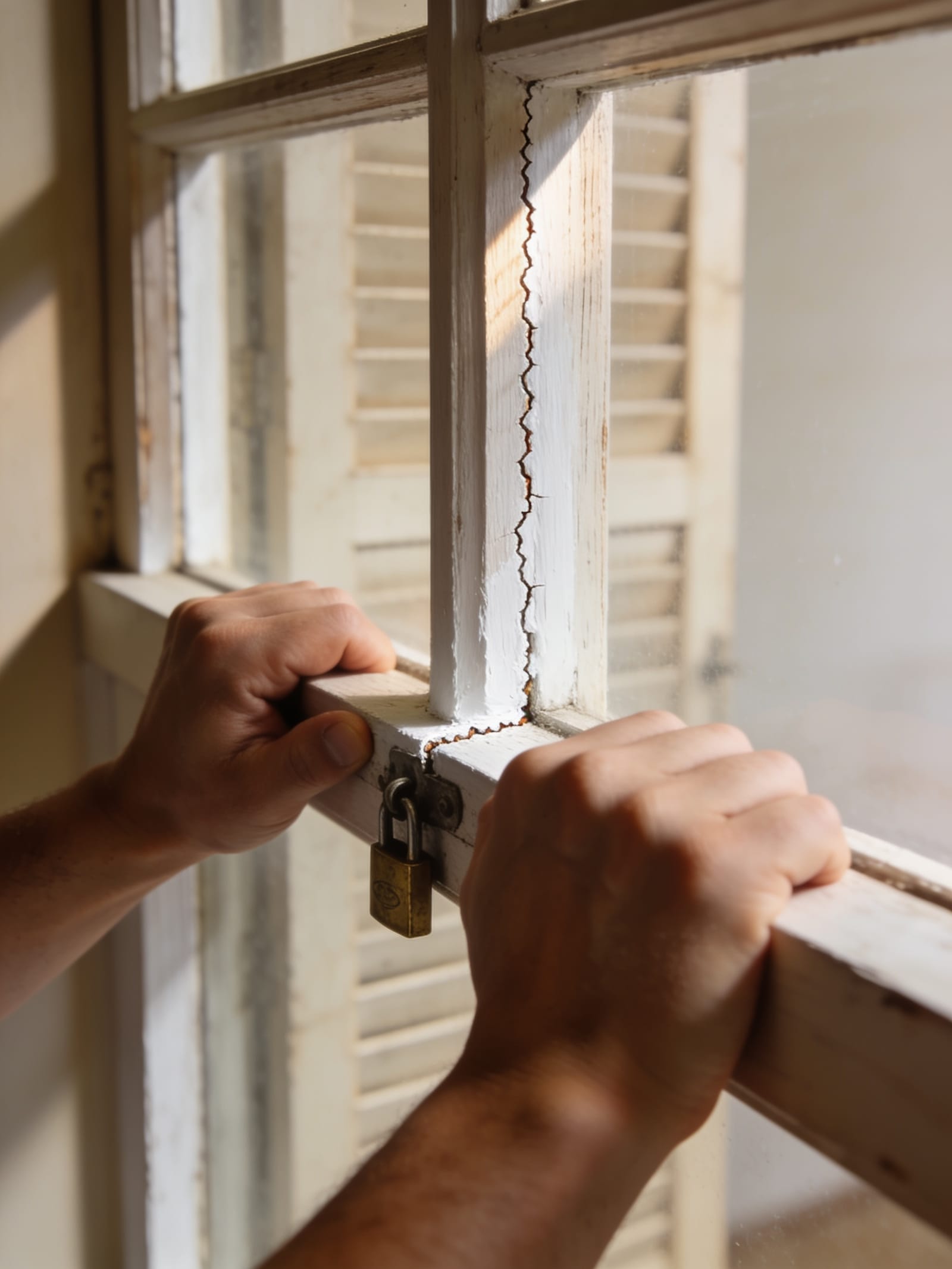
A bedroom window that’s been painted shut since the last owner is one of the most common things I’m asked about — and one of the easiest to fix yourself for nothing.
Before you call anyone or price a replacement, let’s get it open without cracking the glass. And let’s keep safety first, because a bedroom window has to open for escape.
Most of these are a $0 fix with a knife you already own. The homeowners who get in trouble are the ones who lean on the sash hard and hear the glass crack.
That’s the whole game here: diagnose it, then ease it open — never force it.
How do I open a painted-shut window? Score the paint seal all the way around, free the sash gently with a putty knife, then clean and lubricate the track.
Force is what cracks glass — patience is what opens it.First, Figure Out Why It’s Stuck
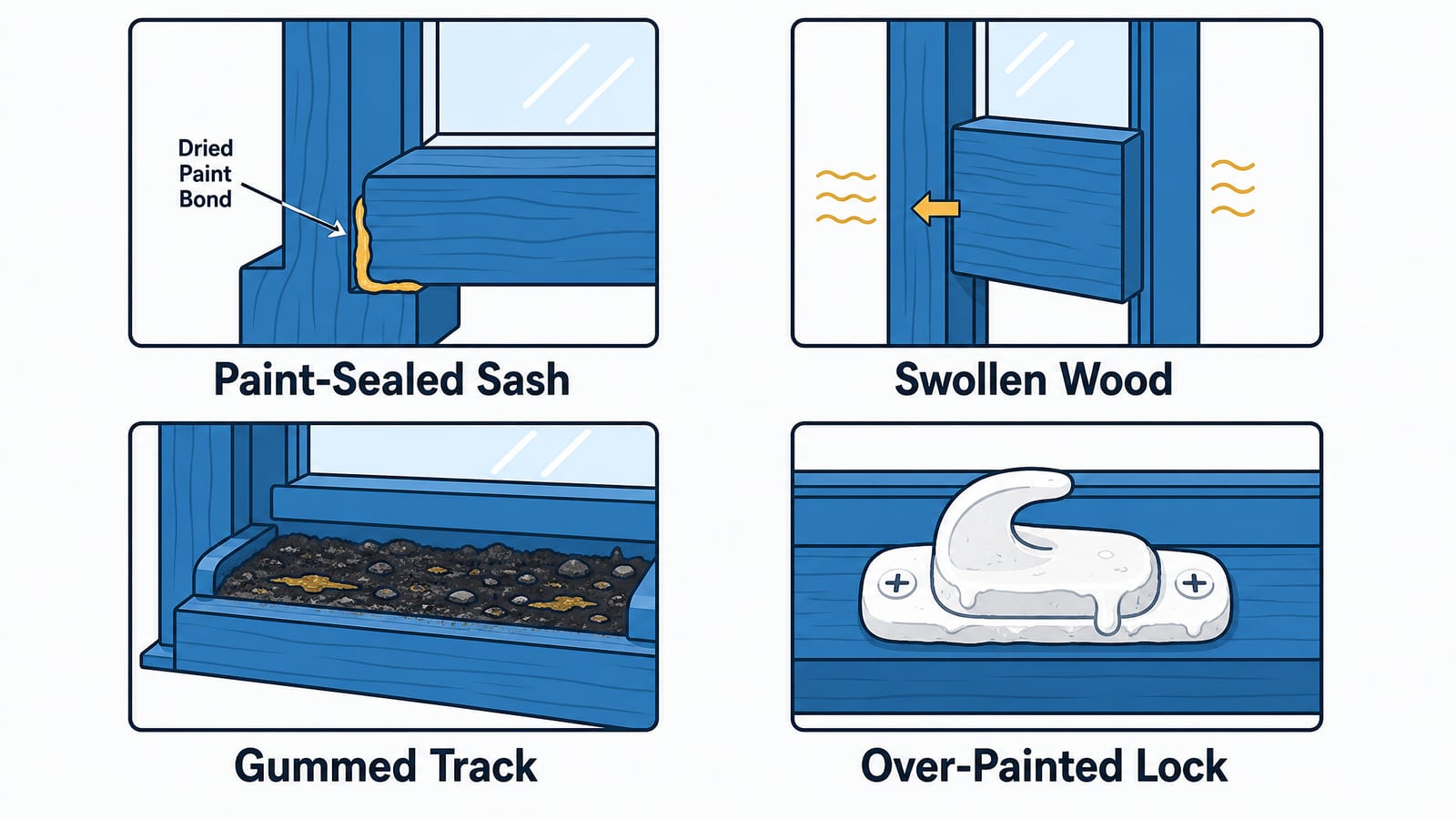
Before you touch it, work out which of these you’re dealing with — the fix is different for each:
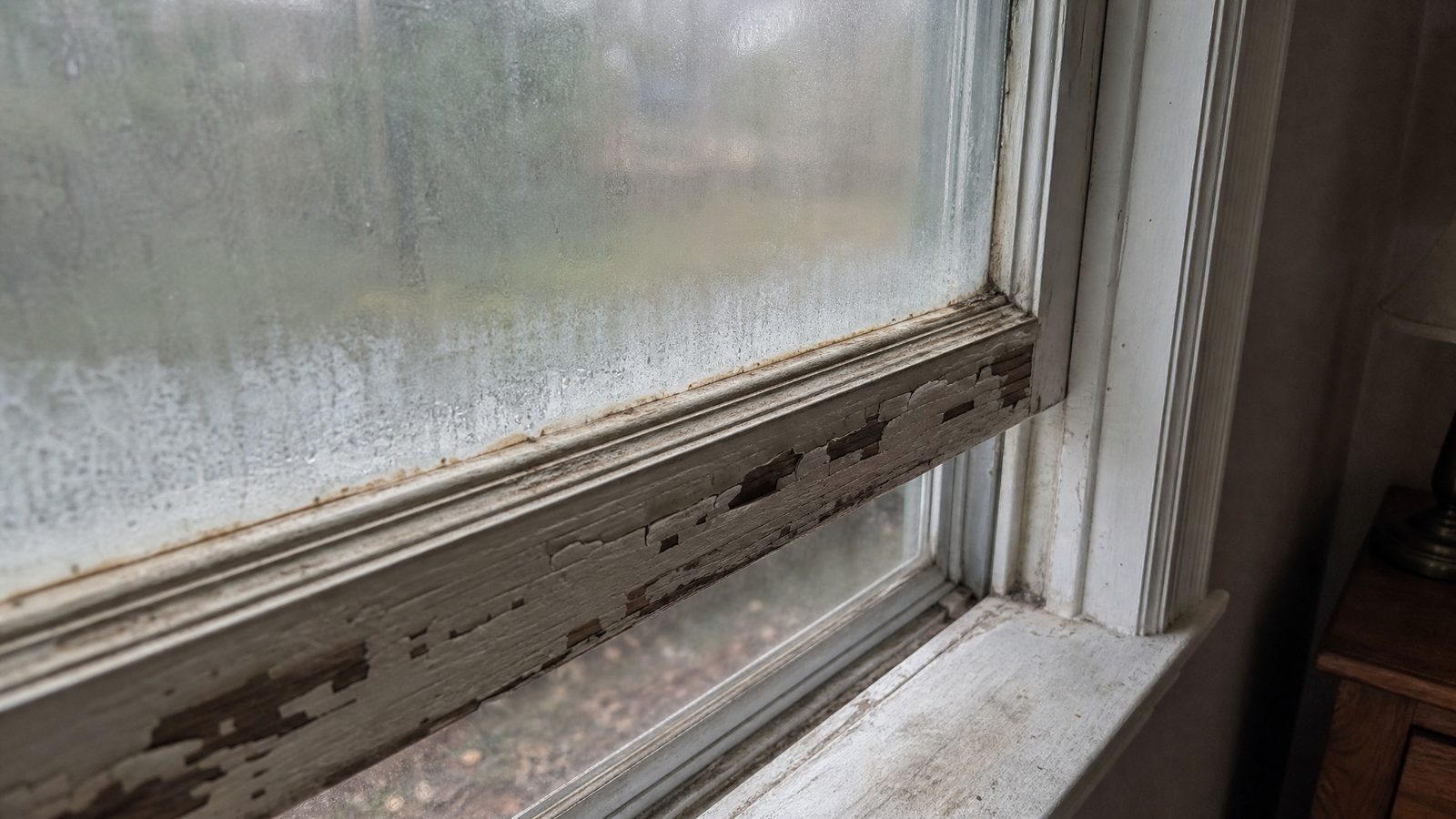
- Paint seal — the sash is glued to the frame by dried paint at the seam. The most common cause in older NC homes, especially anything painted over a few times.
- Swollen wood — humidity has swelled the sash so it binds against the jamb. Common in a Carolina August; the wood grows, the gap closes, and the sash locks up.
- A gummed track or pivot shoe — dirt and old grease lock up the channel, or the pivot shoe that the sash rides on in a modern double-hung.
- An over-painted lock — sometimes it’s not stuck at all. The sash lock is just painted over and still engaged, so the window’s doing exactly what it’s told.
Figure out which one before you pick up a tool.
Half the “stuck” windows I hear about are really an over-painted lock or a swollen sash that a dry week would free on its own.
How to Open a Painted-Shut Window (Step by Step)
This is the technique restoration folks use on old wood windows, and it works because it breaks the paint bond before you ask the sash to move — not by muscling it.
Take these in order.
- Confirm the lock is open. Scrape paint off the sash lock and make sure it’s actually released first. No point wrestling a window that’s just locked.
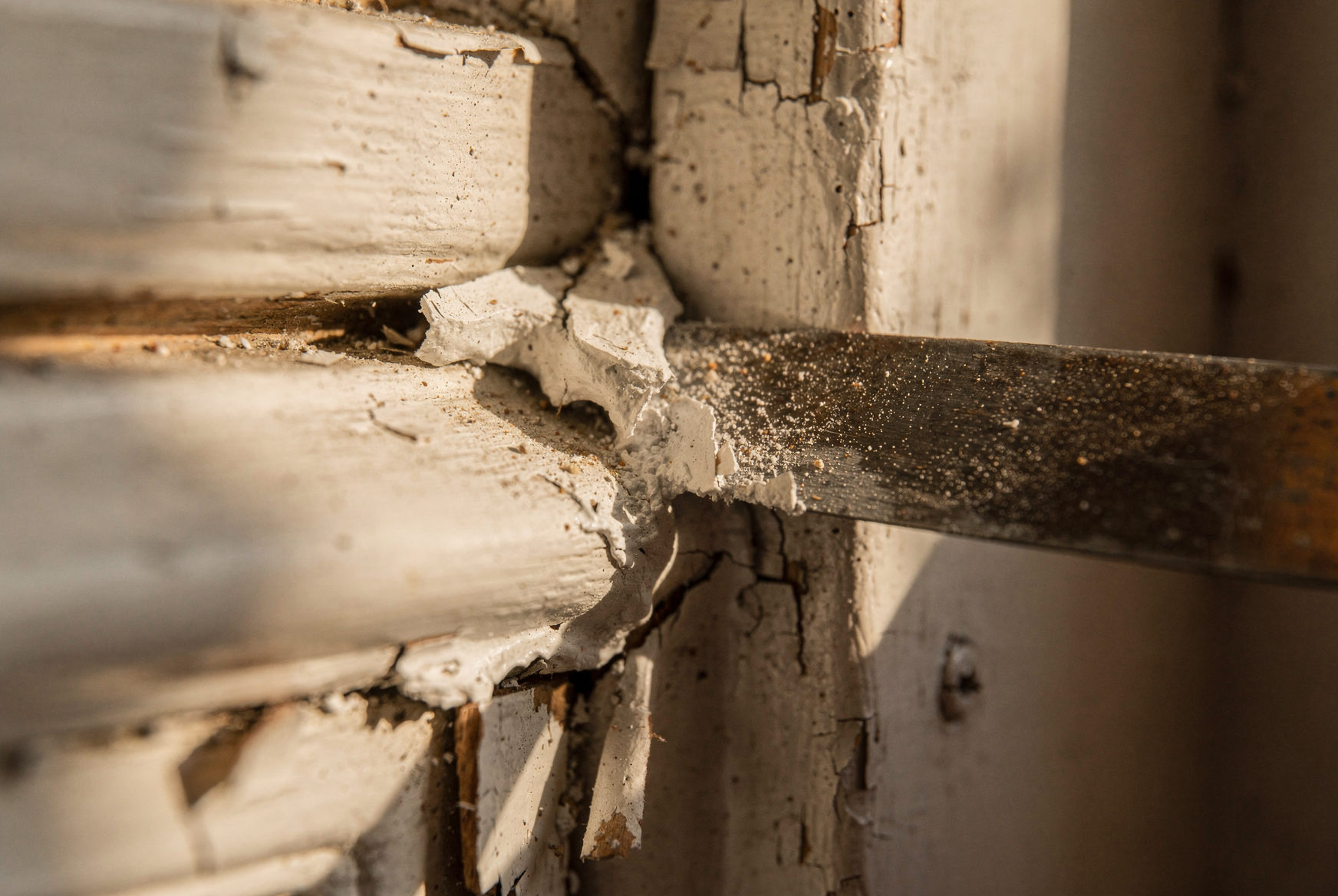
- Score the paint seal. Run a utility knife along the entire seam where the sash meets the frame — inside and out — to break the paint bond. Don’t skip a side. A skipped edge is where the glass cracks when you push.
- Work a putty knife into the seam. Slide a thin, stiff putty knife into the scored joint and tap it gently with a mallet to separate the sash from the frame. Move around the whole perimeter. Don’t lever hard in one spot.
- Tap a wood block to ease it. From outside, place a block of wood against the sash bottom rail and tap upward with a mallet — never pry against the glass.
- Work it gradually. Once it moves a little, raise and lower it in small increments to clear the rest of the bond, then move to cleaning the track below.
No prying on the glass, ever — levering against the pane is exactly what cracks it.
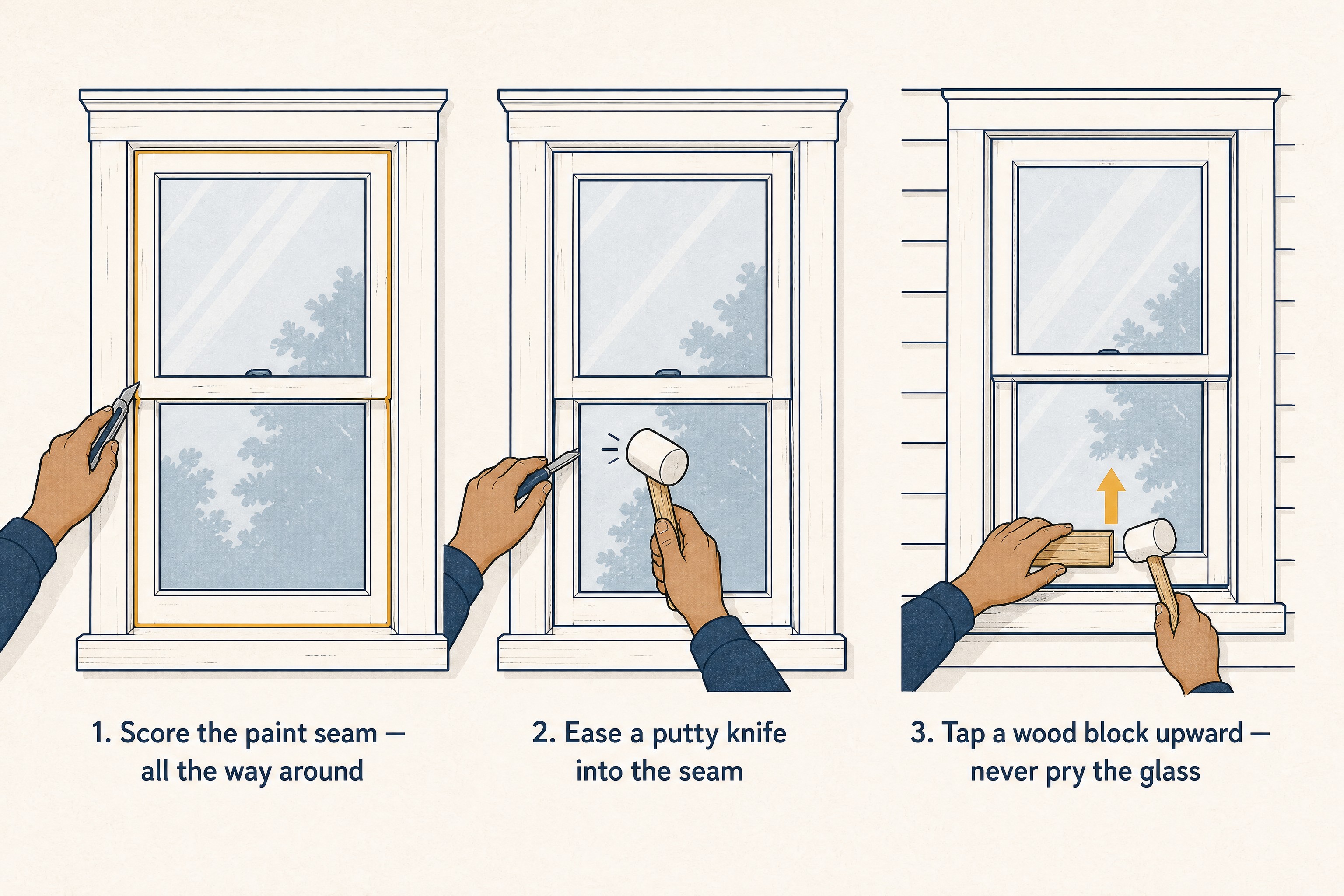
If the sash won’t budge after a full, careful scoring pass, stop and reach for the humidity fix below before you push harder.
Stuck from Humidity or a Gummed Track
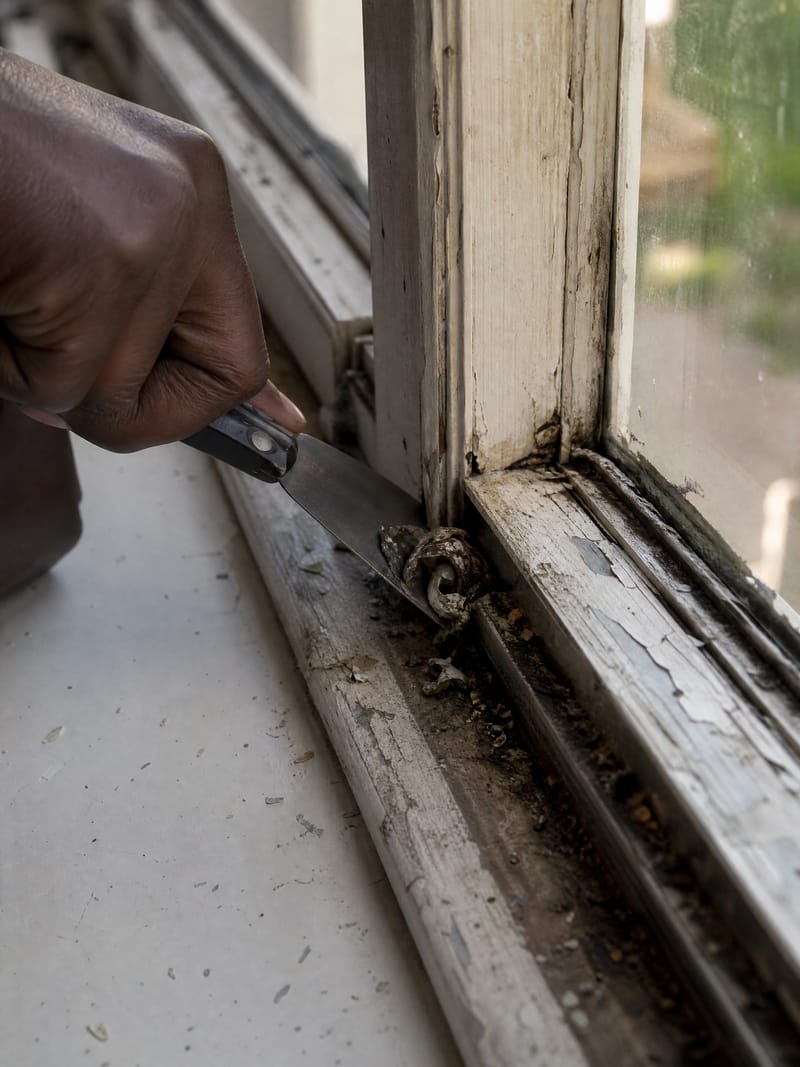
If there’s no paint seal and the sash just binds, it’s usually moisture or grime.
Forcing it is how you rack the frame out of square:
- Dry it out. Swollen wood often frees up once the room’s humidity drops. Run a dehumidifier or wait for a dry stretch — don’t force a swollen sash. In an NC summer this alone fixes a lot of “stuck” windows.
- Clean and dry-lubricate the track. Scrape the channel clean of old grease and grit, then use a dry lubricant rather than oil. Oil grabs dust and gums the track right back up; a dry-film or silicone lube keeps it sliding without collecting grime.
- Free the pivot shoe. On a modern double-hung, a stuck pivot shoe in the jamb track keeps the sash from sliding and can also let it drop. Clean it and re-seat it in the channel.
When a Stuck Window Means Replace
Most stuck windows open with patience, and I’d rather you save the money than sell you a window you don’t need.
The one honest exception is wood that’s warped or rotted past saving. If the sash is swollen permanently, won’t stay up after you free it, or the sill is soft when you press it, you’re past a fix.
A sash that opens but won’t stay put is usually failed balances, not dead wood — that’s often repairable on its own. A soft, punky sill is the real replace signal.
Either way, that’s when it’s worth running the full repair-or-replace test instead of guessing. And while you’re in there, if it’s drafty too, fix that next.
A Safety Note on Egress
This is the part people forget: a bedroom window has to open for emergency escape.
is the building-code term for that escape opening, and a permanently stuck bedroom window is a real hazard, not just an annoyance — it’s the one you’d climb out of in a fire.
North Carolina’s residential code carries operable-egress requirements for sleeping rooms; the specific opening dimensions and how they apply here are covered on the NC window permits page.
If it turns out the window is stuck because it’s genuinely shot, I’ll tell you straight rather than sell you a replacement you don’t need — book a quick consult and we’ll figure out which it is.
And if it’s just paint, as it usually is, the only tool on the invoice is the knife you already own.
Sources, Verification & Fact-Checking verified July 2026
Every load-bearing fact on this page is sourced and verified against a primary authority.
Verified July 2026 via direct review of the cited authority — the links open the controlling source so you can check it yourself rather than take our word.
- A painted-shut sash is freed by scoring the paint seal and easing the sash — not by forcing it. The restoration method is to break the paint bond along the full sash-to-frame seam (utility knife), then separate the sash with a stiff putty knife before working it open. Force against the sash or glass is what cracks the pane. (view source — This Old House)
- Swollen wood binds against the jamb in high humidity and often frees up as it dries. Wood absorbs moisture and expands, closing the gap between sash and jamb; controlling room humidity (a dehumidifier) commonly relieves the bind without any prying. (view source — This Old House)
- Tracks should be cleaned and treated with a dry lubricant rather than oil. Oil-based lubricants attract dust and re-gum the channel; a dry-film or silicone lubricant lets the sash slide without collecting grit. (view source — This Old House)
- A window that opens but won’t stay up is typically a failed sash balance — often repairable — while a soft, rotted sill is the replace signal. Sash balances and cords are serviceable, replaceable components; structural rot through the sill or frame is not. (view source — This Old House)
- Bedrooms (sleeping rooms) require an operable emergency escape and rescue opening under the residential building code. A permanently stuck bedroom window can violate egress requirements and is a genuine life-safety hazard. In North Carolina the controlling section is NC Residential Code R310.2.1 — the NC-amended dimensions (net clear escape opening 4.0 sq ft, height 22 in, width 20 in, sill 44 in max) differ from the national IRC figures and are covered on the NC window permits page. (view source — NC Residential Code R310.2.1)