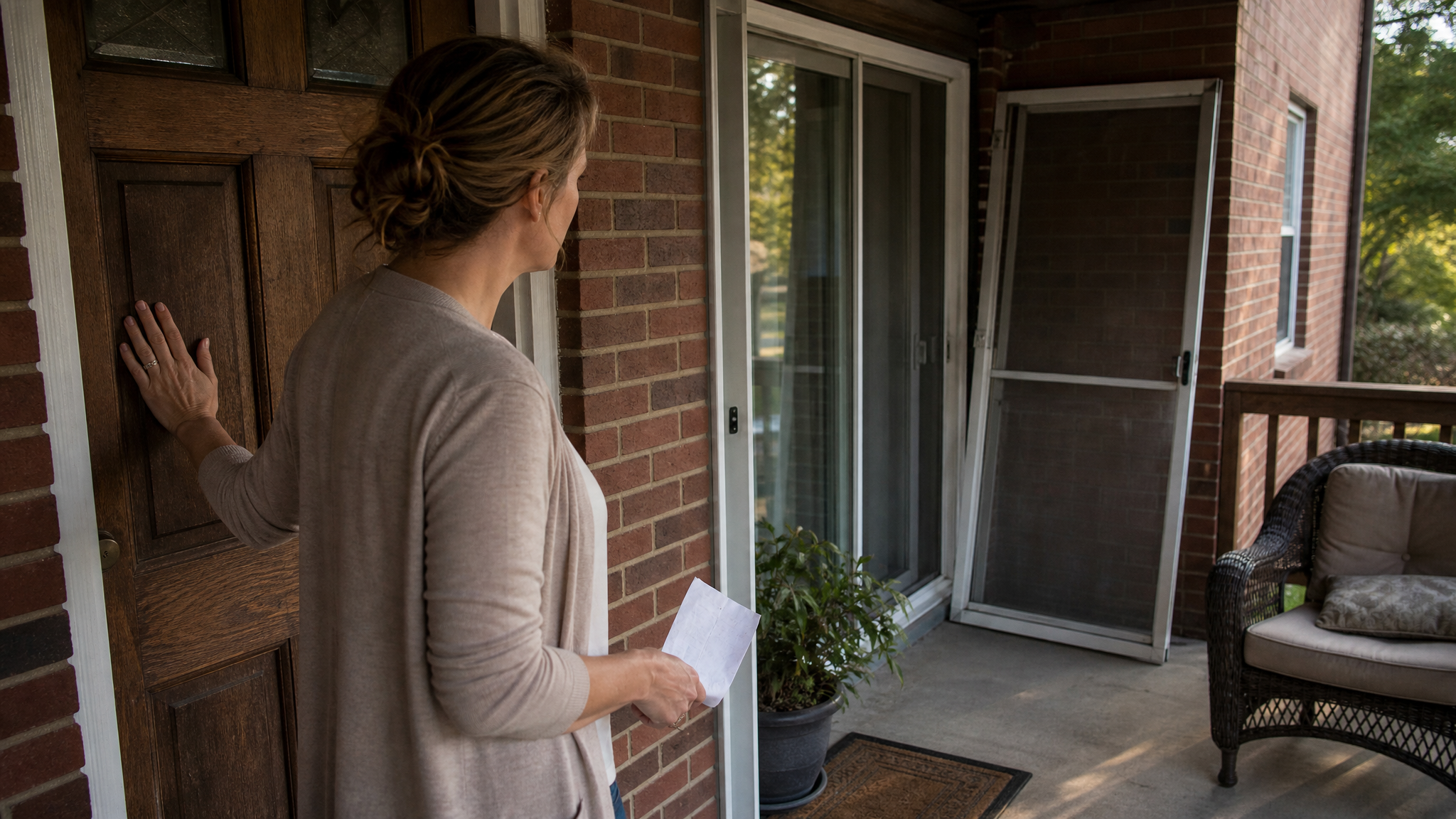

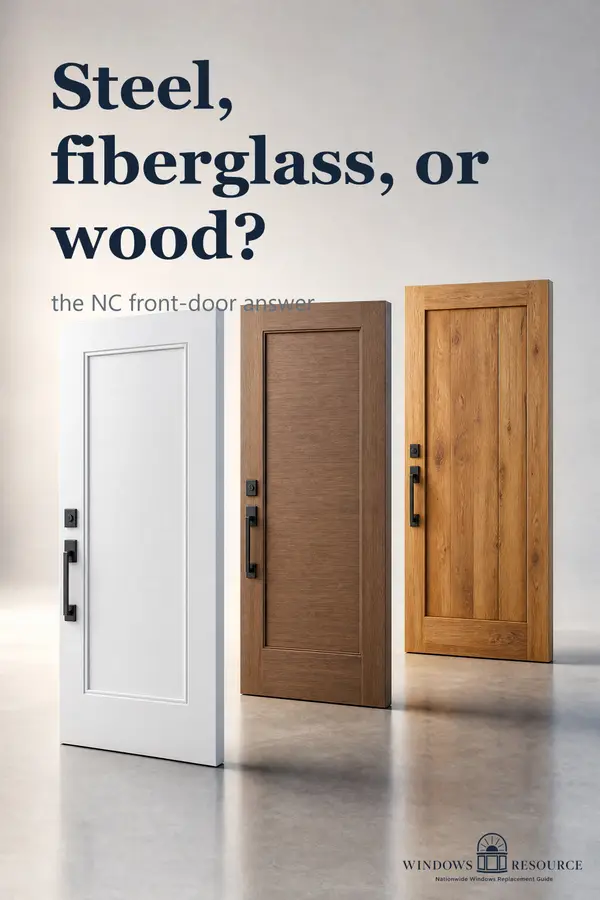

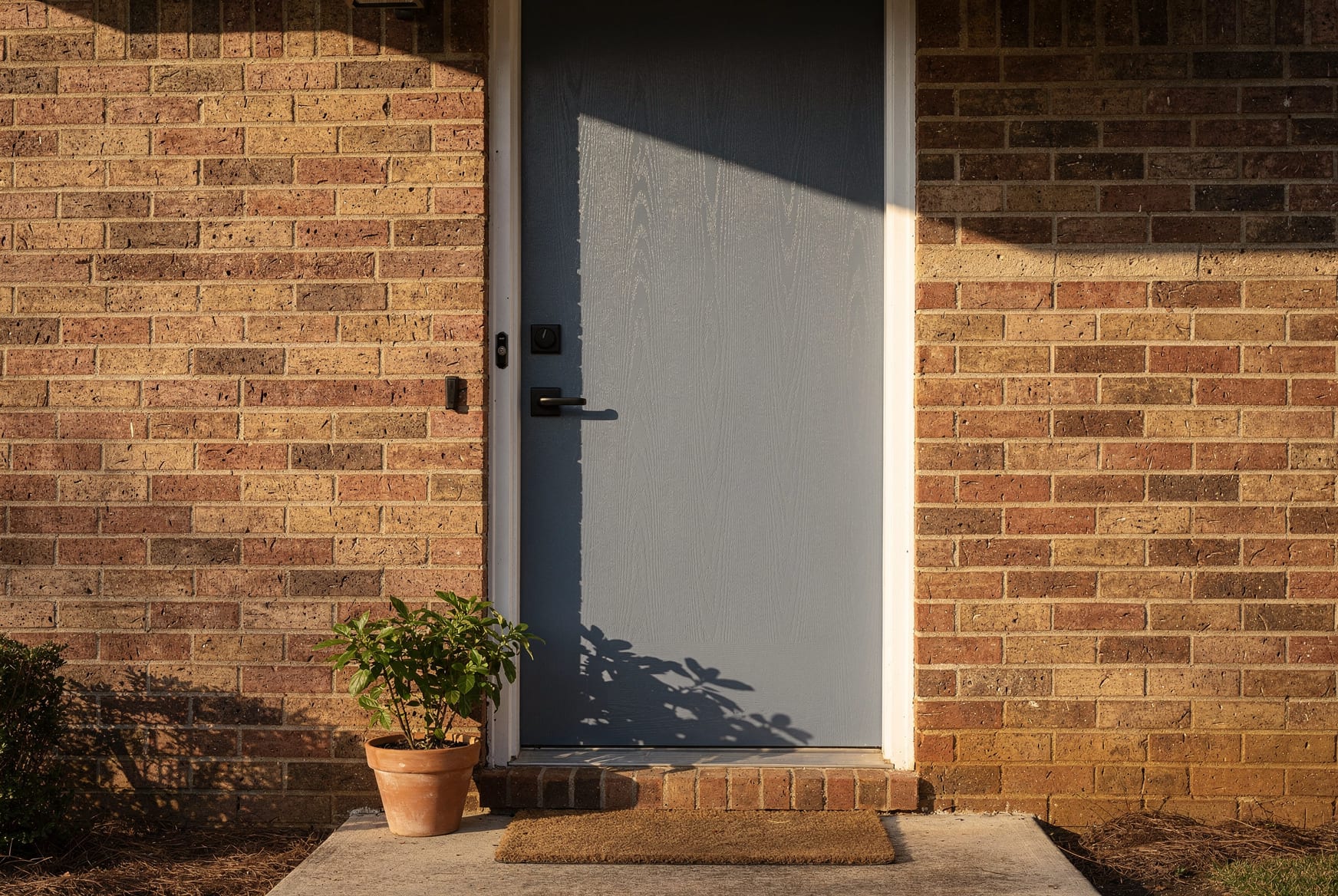
Your front door sticks in July, latches fine in January, and you can feel a draft off the edge when the wind’s up. Or the wood’s checking and graying, or the steel picked up a dent that won’t pop back. Now you’re pricing a new one and a salesman’s telling you fiberglass, wood, steel — each one apparently the only right answer.
Here’s the honest version from someone who sells and measures these: the slab material matters less than most pitches make it sound. The lock, the seal, and a square install decide whether the door lasts.
Which entry door should you buy in NC? For most NC replacements, fiberglass is the balanced pick — it takes our heat, humidity, and rain without wood’s upkeep or steel’s dent-and-rust worry. Steel is the strongest slab and the lower entry price. Wood wins on looks if you’ll maintain it and it’s under a real overhang. But whichever you pick, the lock, the weatherseal, and a plumb-level-square install matter more than the material. National ranges — verify locally.
Cost figures here are broad national bands, not an NC quote. Last reviewed July 2026.
Steel, fiberglass, or wood — which entry door should you buy?
Three mainstream materials, three different trade-offs — and no single “best” that fits every house. Match the material to your wall, your patience for maintenance, and your budget.
Fiberglass is the durability-to-maintenance winner. Steel is strong and cheap to start. Wood is beautiful and needy.
| Material | Typically, installed | Insulation (R-value)* | Lifespan | Where it wins / where it loses |
|---|---|---|---|---|
| Fiberglass | ~$2,200–$8,000+ | ~R-5 to R-8 (premium ~R-10) | 15–30 yrs typical; 50+ best-case | Wins: resists rot, swell, warp, dents — best in NC heat + humidity. Loses: costs more than basic steel; flexes under torque with a plain deadbolt |
| Steel | ~$1,200–$3,800 | ~R-5 to R-6 (foam core) | ~30 yrs (40–50 with upkeep) | Wins: strongest slab, lowest entry price. Loses: dents don't pop back; can rust once the coating is breached — best in a covered entry |
| Wood | ~$500–$5,000+ | ~R-2 to R-4 | 10–30 yrs, upkeep-dependent | Wins: the look, real warmth. Loses: highest maintenance; warps/swells/rots in NC humidity without a real overhang |
Fiberglass
- Typically, installed
- ~$2,200–$8,000+
- Insulation (R-value)*
- ~R-5 to R-8 (premium ~R-10)
- Lifespan
- 15–30 yrs typical; 50+ best-case
- Where it wins / where it loses
- Wins: resists rot, swell, warp, dents — best in NC heat + humidity. Loses: costs more than basic steel; flexes under torque with a plain deadbolt
Steel
- Typically, installed
- ~$1,200–$3,800
- Insulation (R-value)*
- ~R-5 to R-6 (foam core)
- Lifespan
- ~30 yrs (40–50 with upkeep)
- Where it wins / where it loses
- Wins: strongest slab, lowest entry price. Loses: dents don't pop back; can rust once the coating is breached — best in a covered entry
Wood
- Typically, installed
- ~$500–$5,000+
- Insulation (R-value)*
- ~R-2 to R-4
- Lifespan
- 10–30 yrs, upkeep-dependent
- Where it wins / where it loses
- Wins: the look, real warmth. Loses: highest maintenance; warps/swells/rots in NC humidity without a real overhang
Read the quote down to a single installed number — old door pulled and hauled off included — before you compare materials across bids.
Why fiberglass wins most NC replacements (and when it doesn’t)
Fiberglass wins on the balance of traits, not on every single one — and NC’s climate is exactly where that balance pays. It doesn’t absorb moisture, so it resists the warp, swell, and rot that our heat and humidity throw at a door.
Modern fiberglass skins mimic wood grain and stain convincingly, or come smooth for paint — without wood’s refinishing schedule. Many models meet or exceed ENERGY STAR on U-factor. Upkeep is close to nothing: wash it with mild soap and water.
The honest caveats, because there always are some:
- For raw slab strength, steel edges it out. If burglar-bar toughness is your top priority, a solid steel slab is harder to breach.
- A cheap builder-grade steel door is the budget pick. If you need a sound, weather-tight door for the least money, basic steel does the job.
- Fiberglass can flex under torque with a standard deadbolt — a reinforced strike and a good multi-point lock fix that.
NC Homeowner Takeaway: the “fiberglass is best” pitch is mostly right for our climate — it’s the durability-to-maintenance champ here. But “best” isn’t “best at everything.” If your entry is covered and your budget’s tight, steel is honest value. If it’s exposed and you want it low-worry, fiberglass earns the extra.
What actually makes a front door secure
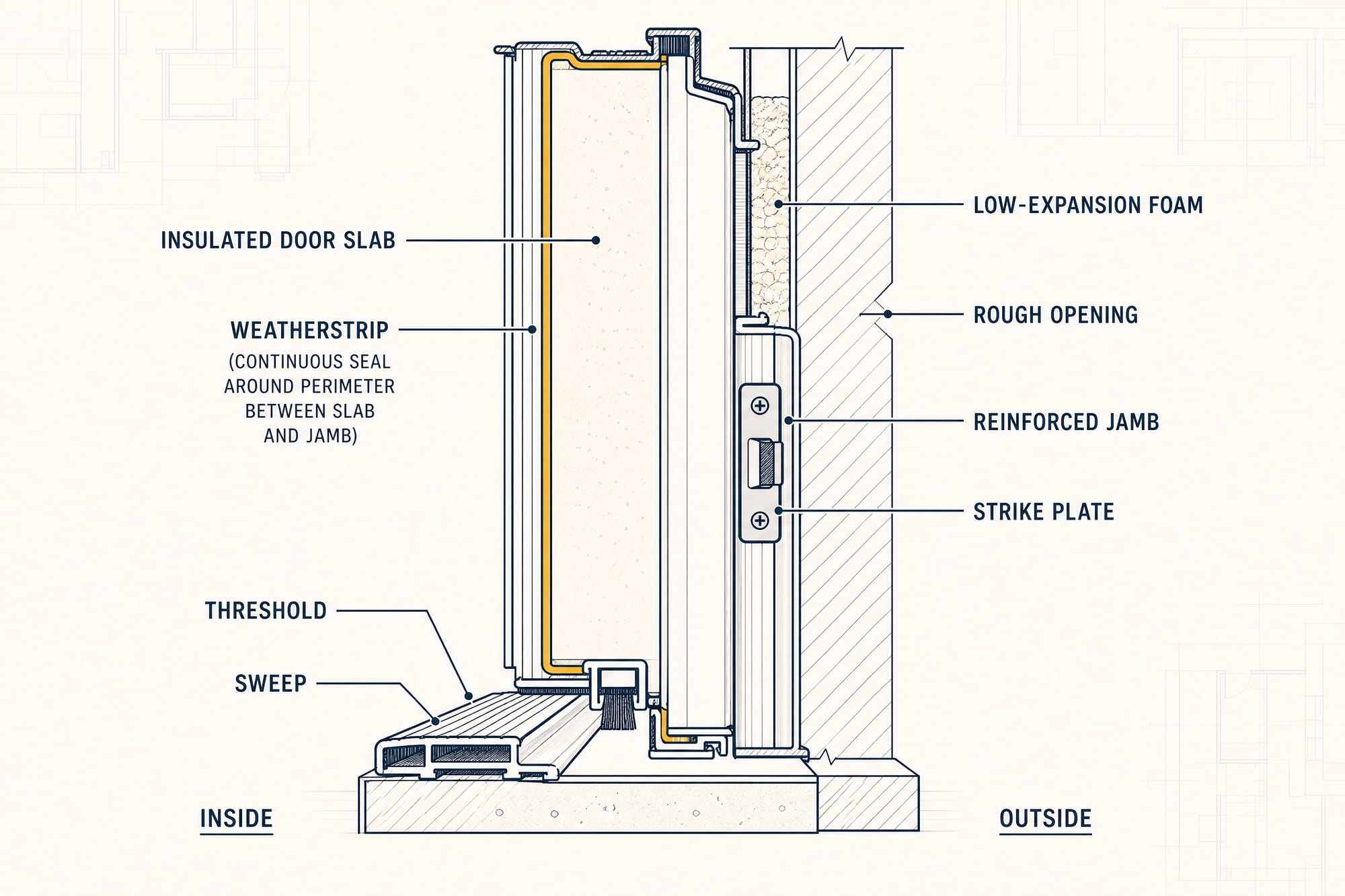
On an entry door, the lock, the jamb, and the strike matter more than the slab material. That’s the part the pitch usually skips while it sells you a slab.
Steel is generally the strongest slab against forced entry, and fiberglass is solid and well ahead of wood. But most kicked-in doors don’t fail at the slab — they fail at the strike, where a short screw pulls out of thin jamb wood.
What actually hardens a door:
- A multi-point lock that pulls the door tight at several points along the edge, not just at one deadbolt.
- A reinforced strike plate with 3-inch screws driven into the framing behind the jamb — not the half-inch screws that ship in the box.
- A sound, square jamb so the latch seats fully every time.
If a quote sells you a heavy slab and says nothing about the strike or the screws, that’s the question to put back to them.
The energy stuff that matters — weatherstrip, threshold, glass
A door’s insulation number is the , and most of a door is opaque, so barely applies unless it has a lot of glass. It carries the same label your windows do.
For a mostly-solid door, chase the U-factor. For NC — most of the state sits in ENERGY STAR’s South-Central zone — an opaque ENERGY STAR door needs a U-factor at or below the figure below.
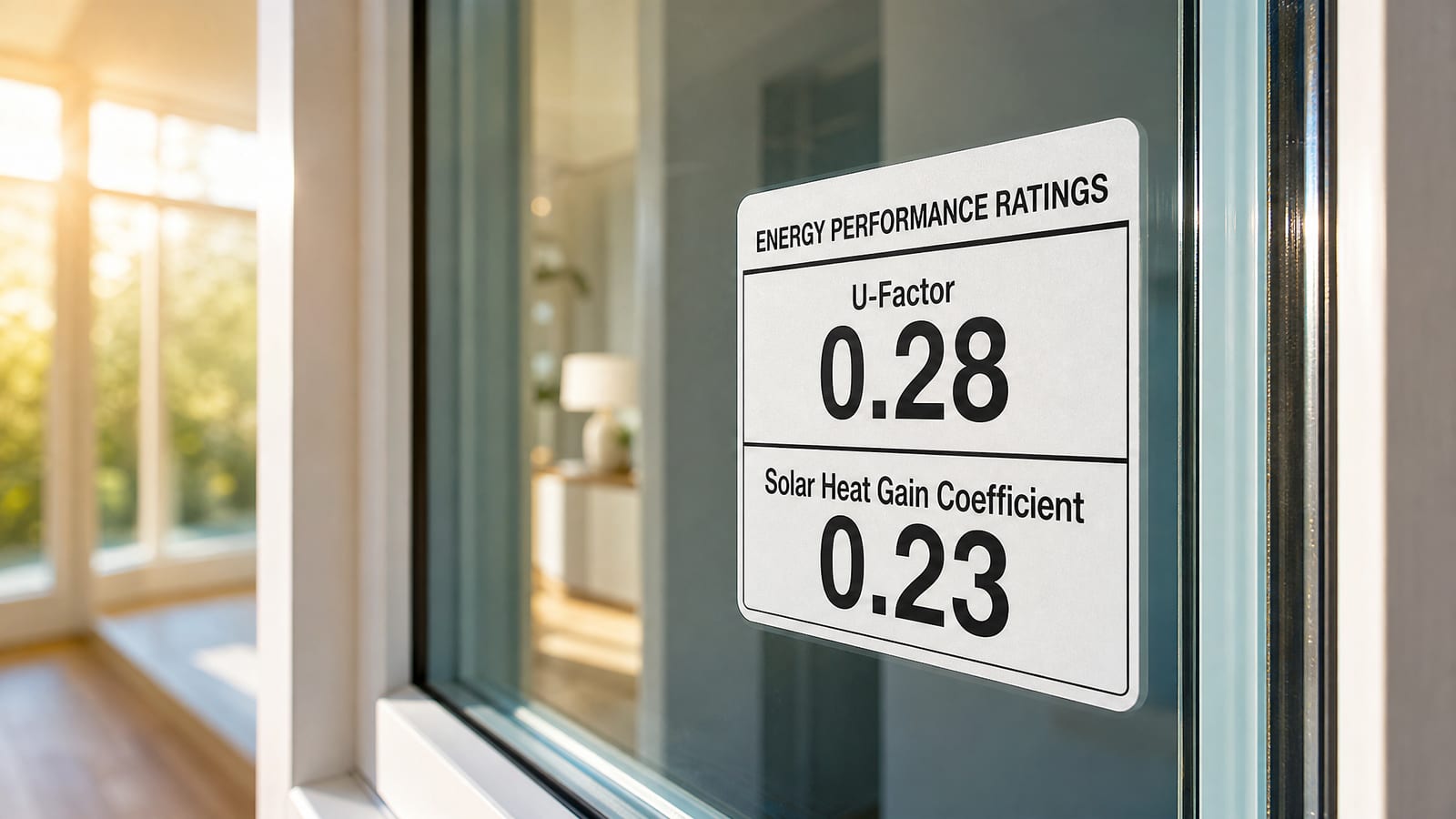
A door with a lot of glass (more than half its face) is judged differently — for NC that’s a U-factor at or below 0.28 and SHGC at or below 0.23. The glass logic is the same one your windows use, so if you’ve read how to read the NFRC label, it carries straight over.
But the rating on the slab isn’t the whole story. Two things you can’t see on a label decide whether the door actually feels tight:
- Weatherstripping that compresses evenly all the way around when the door closes. A premium slab with a tired gasket still drafts — the gasket never makes the sales sheet, and it’s the part that decides whether you feel the wind.
- The threshold and sweep at the bottom, adjusted so they meet the sill without dragging.
A high U-factor door installed with an unsealed perimeter is a drafty door. The label is the floor; the install is the ceiling.
What NC humidity and a south-facing sun do to a front door
Heat and moisture are the two things that age an NC front door fastest — and a dark door on a sun-facing wall gets both at once. This is where material choice actually earns its keep.
A solid wood slab absorbs moisture. In a humid NC summer it can swell enough to stick or bind, then shrink back in winter. That’s the door that latches in January and fights you in July.
A dark door on a south or west wall runs hot in direct sun. On wood that heat drives more warp; even on other materials a very dark color soaks up more of it.
What drives the price of an installed entry door
Two quotes on the same doorway can differ by thousands because of real scope, not padding. The levers, biggest movers first:
- Material and glass. A basic steel prehung and a fiberglass door with sidelights and a transom aren’t the same job. Decorative or sidelight glass adds cost fast.
- Slab-only vs full-frame. Swapping the slab in a sound frame is cheaper than replacing the whole frame — which you must do if the jamb or sill is rotted.
- Hidden sill or jamb rot. If the structure’s gone, you fix it before hanging a door. Labor jumps here (commonly ~$500–$800+ vs a ~$300–$470 basic set).
- The lock package. A multi-point lock and reinforced strike cost more than a single deadbolt — and they’re the security that matters.
- Opening changes, finishing, and haul-off. Widening the opening, painting/staining, and pulling the old door are all real line items.
Get every one of those named on the quote. A door that’s cheap because it skips rot repair or the strike upgrade isn’t cheap — it’s a bill deferred.
The install detail that rots your entry
The most expensive front-door mistake isn’t the door — it’s the threshold set without a sill pan. It’s the door version of a rotted window sill, and it starts hidden.
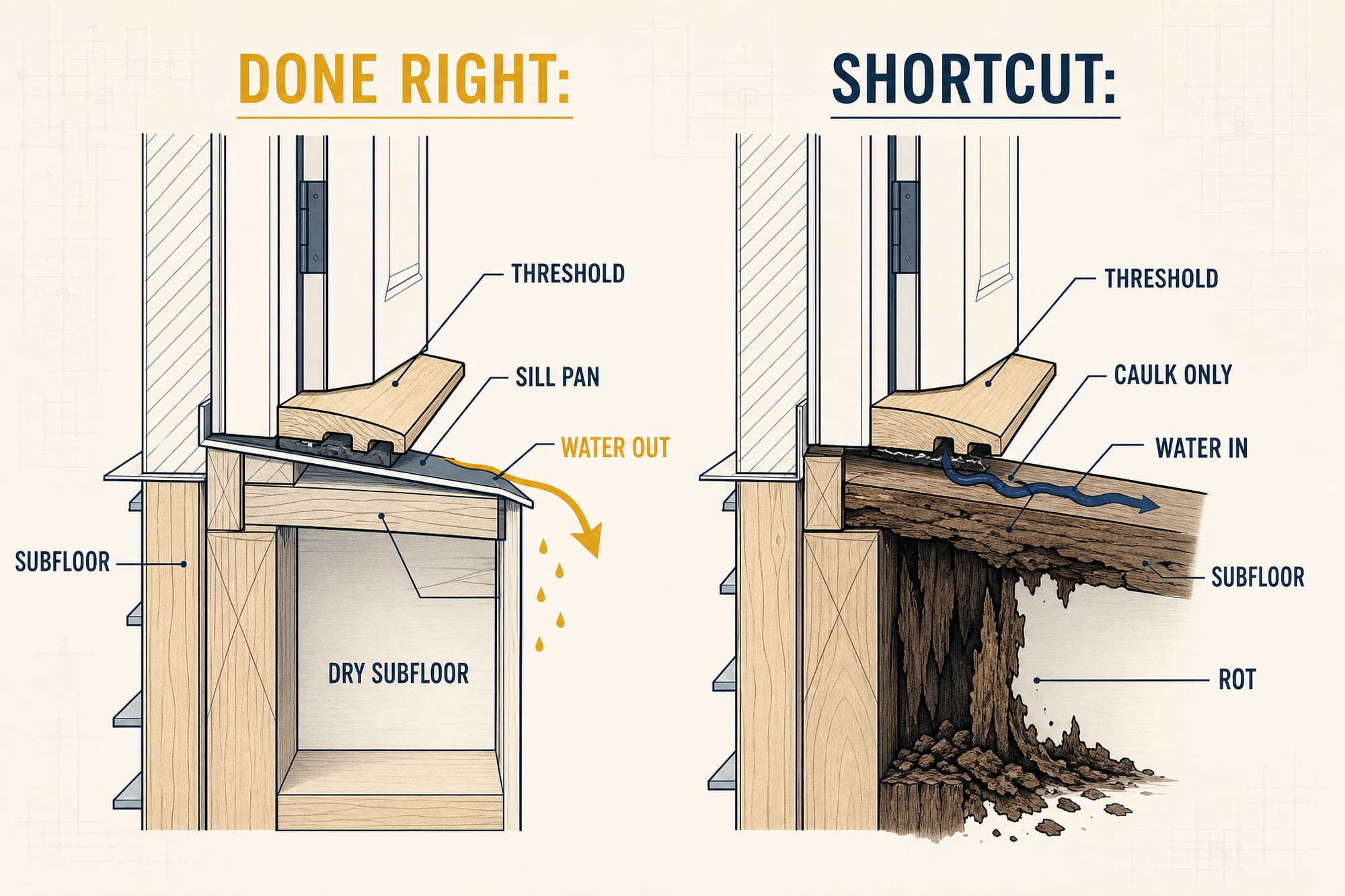
Without a proper sill pan under the threshold, wind-driven rain gets beneath the door and rots the subfloor and framing. The threshold has to be set in sealant, back-dammed, and the whole unit set plumb, level, and square so water drains out, not in.
If a quote is cheap because it sets the door on a bead of caulk and skips the sill pan, that’s not a saving — it’s a rot bill a year or two out. Ask whether the threshold gets a sill pan.
Get a real number for your doorway
A range tells you whether a quote’s in the right ballpark — it can’t price your doorway. That depends on the material, the glass, whether the frame is sound, and whether the sill’s hiding rot.
If you’re weighing a door against your windows or a patio door on the same project, it helps to price them together — same crew, same trip. Knowing what windows cost in NC puts the door number in context.
And if you want a no-pressure second opinion on a quote you already have, have me look at it. I’ll check the sill for rot, name the U-factor and lock package you actually need, and let you decide.
Sources, Verification & Fact-Checking verified July 2026
Every load-bearing fact on this page is sourced and verified against a primary authority.
Verified July 2026 via direct review of the cited authority — the links open the controlling source so you can check it yourself rather than take our word.
- Entry-door material trade-offs (steel vs fiberglass vs wood): insulation, durability, maintenance, weak spots. Steel foam-core ~R-5 to R-6, strong but dents/rusts once the coating is breached; fiberglass ~R-5 to R-8 (premium ~R-10), resists rot/swell/warp/dent and doesn’t absorb moisture — the durability-to-maintenance winner in a humid climate; wood ~R-2 to R-4, best looks but highest upkeep and vulnerable to warp/swell/rot without an overhang. R-values are typical ranges that vary by product and thickness — treat as typical, not a spec sheet, and read the NFRC label on the specific door for its certified numbers.
- Entry-door security depends more on the lock, jamb, and strike than the slab material. A multi-point lock, a reinforced strike plate, and 3-inch screws into the framing do more against forced entry than the door skin; steel is the strongest slab but a short-screwed strike still fails.
- Doors carry the same NFRC label as windows; U-factor is the number that matters most because most of a door is opaque, so SHGC is “No Rating” for a fully opaque door. (view source — NFRC.)
- ENERGY STAR v7.0 door criteria (effective Oct 23, 2023): an opaque door needs U-factor ≤ 0.17 in all zones; a mostly-glass (>½-lite) door in NC’s South-Central zone needs U-factor ≤ 0.28 and SHGC ≤ 0.23. North Carolina spans IECC zones 3A/4A/5A and falls in the South-Central zone for ENERGY STAR purposes. (view source — energystar.gov.)
- Installed entry-door cost bands (~$1,200–$8,000+): basic steel prehung ~$1,200–$2,200; upgraded steel/fiberglass ~$2,200–$3,800; premium fiberglass with glass/sidelights/transom ~$3,800–$8,000+; labor ~$300–$470, more (~$500–$800+) if the frame/sill is rotted. Broad national estimates aggregated from 2025–2026 contractor cost guides, not NC quotes — NC labor and coastal/impact upgrades will move them; verify locally before treating any figure as your price.
- An entry door set without a sill-pan flashing lets wind-driven rain under the threshold and rots the subfloor — the door equivalent of a rotted window sill. The threshold must be set in sealant, back-dammed, and the unit set plumb, level, and square so water drains out; a rotted existing sill means a full-frame job, not a slab swap.