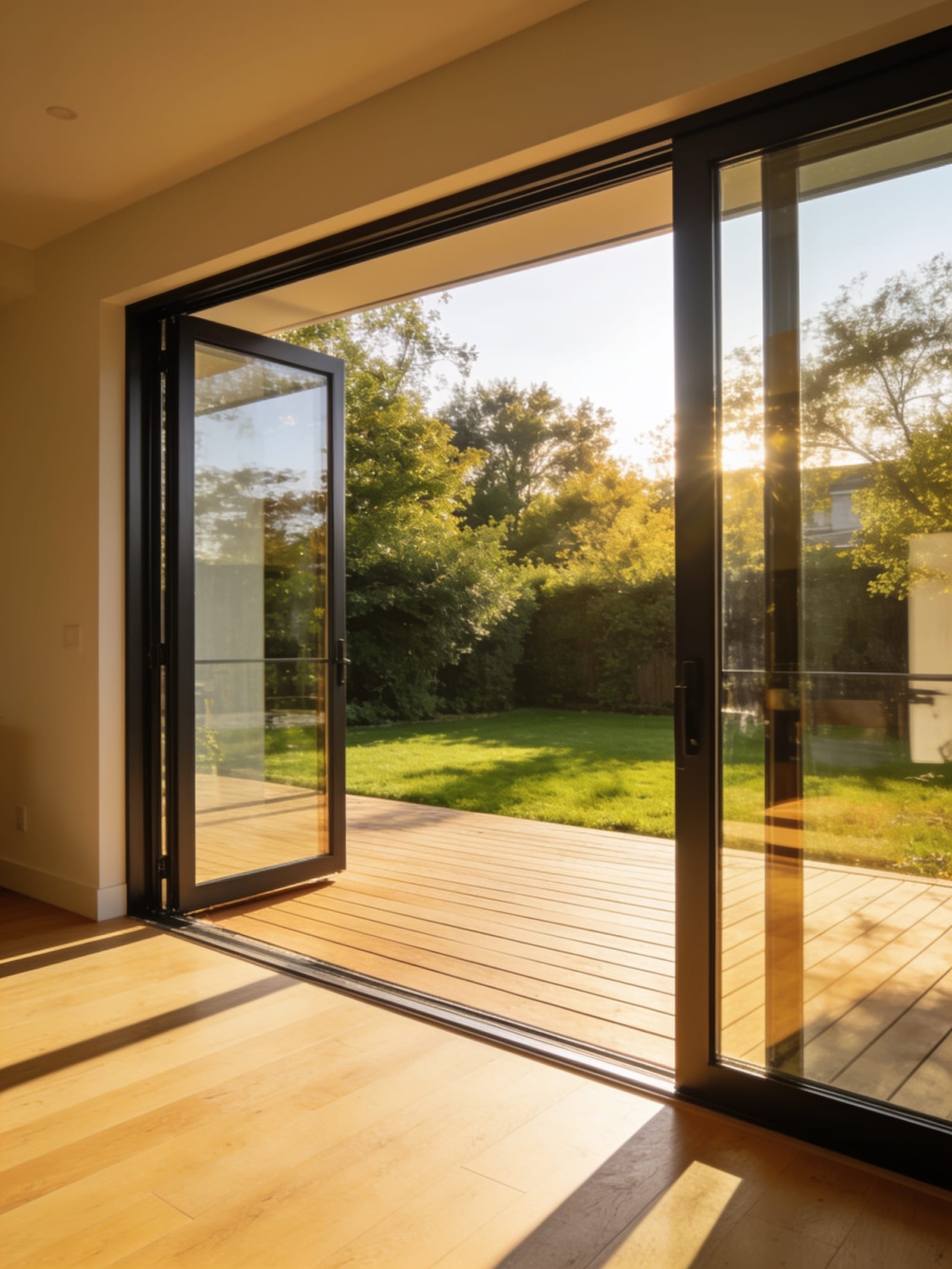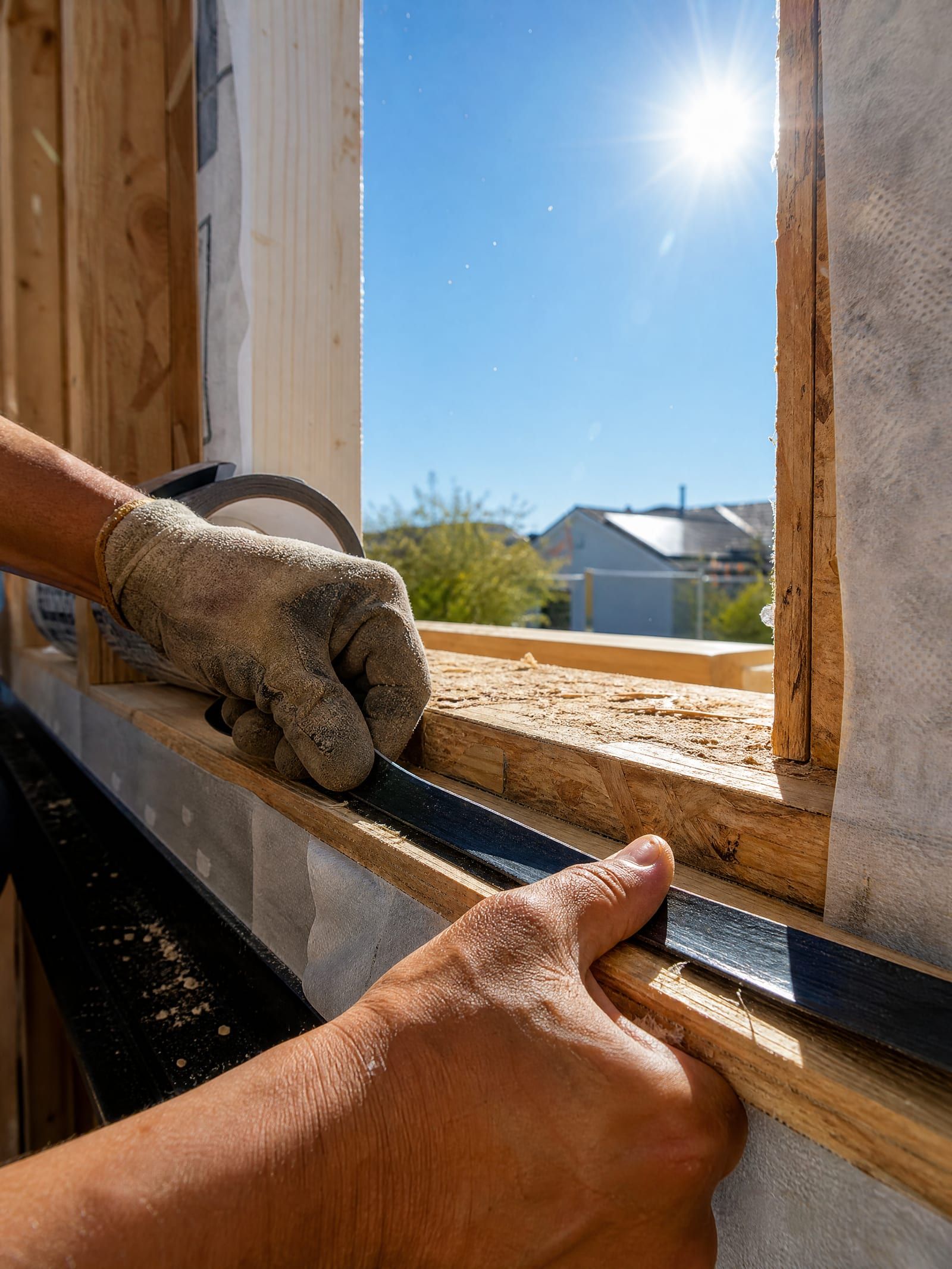



The old slider drags, fogs, and whistles. And somewhere in the replacement conversation, the daydream shows up: maybe this is finally the moment for the French doors you’ve always liked.
Maybe it is. But bring a tape measure — because half the patio-door conversations I have start with style and end with the tape, and the room usually votes first.
Here’s the honest version up front: this isn’t a quality contest. Sliding and French are both real, grown-up doors, and each one wins specific scenarios outright.
Sliders save every inch of swing room, start cheaper, and give you the biggest uninterrupted glass. French doors open the entire doorway, seal like a refrigerator when closed, and suit a traditional North Carolina house the way a slider never quite does.
Six factors decide it — and then one truth outranks all six, which is that whichever style you pick, the glass package and the install are what decide whether it drafts and fogs in five years.
Sliding or French patio door? Tight room, tighter budget, biggest glass: sliding. Full-width opening, classic look, compression seal: French. The costs overlap more than people think, and either can be efficient and secure done right — here’s the six-factor honest comparison.
What’s the real difference between sliding and French doors?
A slider glides in the plane of the wall. A French door swings through the room. Every practical difference between them — space, cost, light, ventilation, security, style — follows from that one mechanical fact.
Those are the six factors, and here’s the whole comparison in one look. Notice that neither column sweeps. That’s not diplomacy — it’s the actual scoreboard:
| Sliding | French (hinged) | |
|---|---|---|
| Space needed | None — glides in the wall plane | Real swing clearance that stays furniture-free |
| Installed cost | Usually lower to start | Usually higher — more frame and hardware |
| Glass & view | Biggest uninterrupted glass, one wide lite | More frame in the view, classic divided look |
| Ventilation & pass-through | One panel's width, ever | The entire doorway opens |
| Security & seal | Modern multi-point locks and anti-lift hardware close the gap | Compression seal + multi-point locks — genuinely tight |
| Best-fit style | Modern lines, maximum glass, tight rooms | Traditional NC homes, formal openings |
Space needed
- Sliding
- None — glides in the wall plane
- French (hinged)
- Real swing clearance that stays furniture-free
Installed cost
- Sliding
- Usually lower to start
- French (hinged)
- Usually higher — more frame and hardware
Glass & view
- Sliding
- Biggest uninterrupted glass, one wide lite
- French (hinged)
- More frame in the view, classic divided look
Ventilation & pass-through
- Sliding
- One panel's width, ever
- French (hinged)
- The entire doorway opens
Security & seal
- Sliding
- Modern multi-point locks and anti-lift hardware close the gap
- French (hinged)
- Compression seal + multi-point locks — genuinely tight
Best-fit style
- Sliding
- Modern lines, maximum glass, tight rooms
- French (hinged)
- Traditional NC homes, formal openings
The rest of this page walks each factor honestly, then answers the question underneath all of them: what actually decides whether the door you pick still feels good in year five.
Which door fits a small room? (The swing test)
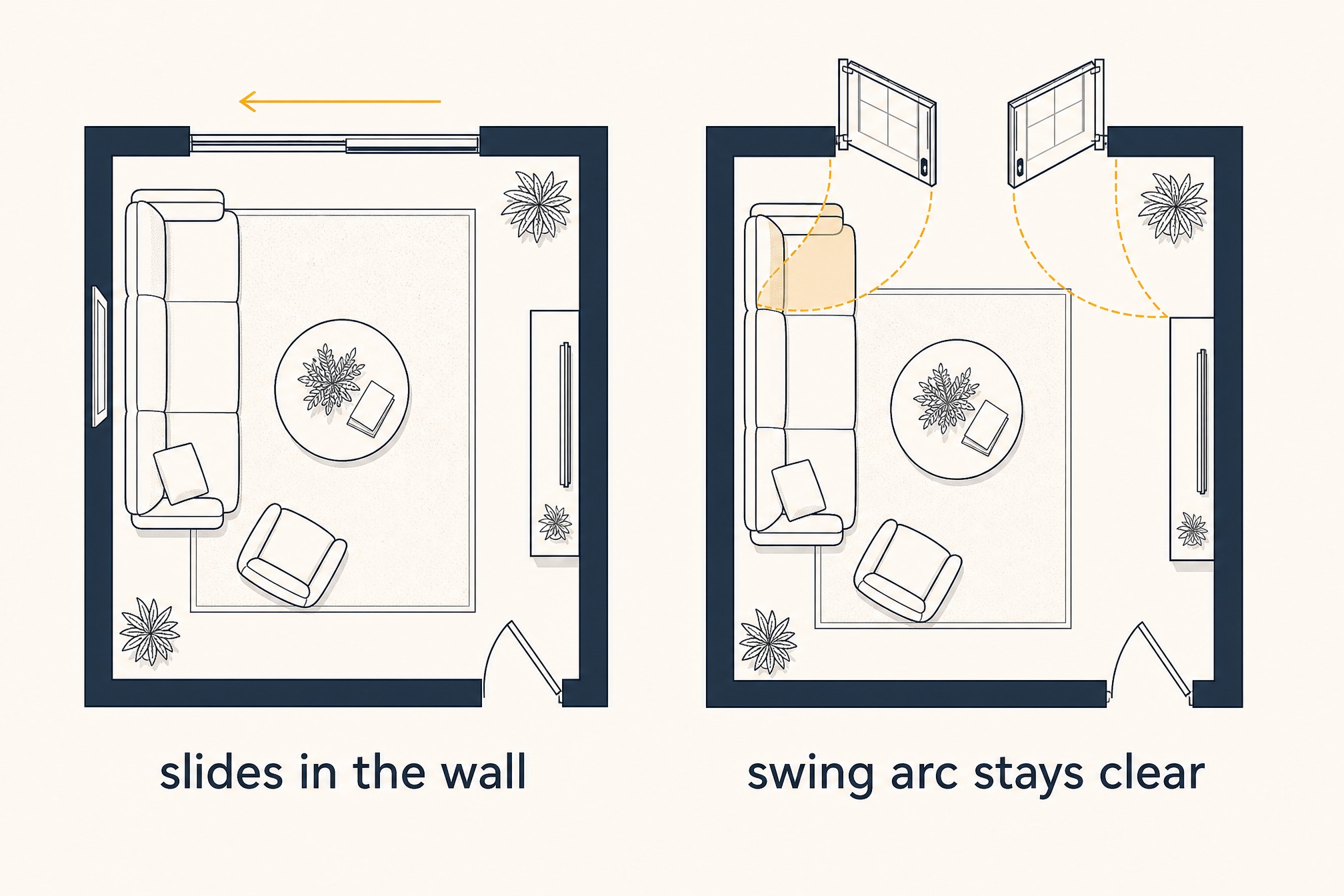
Sliding — and this is the factor that decides most rooms before style gets a vote. A slider needs zero floor. A French door claims a real arc of clear space, and that arc has to stay clear forever: no sectional drifting into it, no dining table inching over, no dog bed.
The rule of thumb is simple, because it’s just geometry: each panel needs a furniture-free arc about as deep as the panel is wide.
Common French panels run roughly 24 to 36 inches wide, so plan on that much clear floor — call it 30 inches and up for a typical panel — kept clear on every side a door swings. Your actual number is your actual panel width, which is why the tape measure beats any rule of thumb.
So here’s the swing test, and it costs you two minutes. Measure your panel width, then swing that distance out from the opening in a quarter-circle on the actual floor. Painter’s tape works. Stand back and look at what’s inside the arc.
If the answer is “the couch,” the room just voted. If the answer is “nothing, and it never will be,” French is genuinely on the table.
This is also the moment to validate the instinct you probably already had. People suspect the fancier door gets pushed regardless of fit. The tape measure is your defense — a door that fights your furniture every day is a bad buy at any price, in either style.
Which costs more, sliding or French?
They’re closer than the reputations suggest — until the French options start stacking. Commonly, a sliding patio door runs roughly $1,200–$4,000 installed, and a French (hinged) door runs roughly $1,300–$5,500. Those are broad national bands, not an NC quote — verify locally before you compare them to anything.
Look at the floors of those ranges: nearly identical. An entry French door and a mid-grade slider can land on the same line of the same quote. The gap opens at the top, and it opens for mechanical reasons, not prestige ones.
A French set simply carries more: more frame, hinges instead of rollers, compression weatherstrip, multi-point locks that pull the panel tight at several points, and often two active panels’ worth of hardware. More material, more assembly, more install care. That’s the price gap — built, not branded.
Under either style sits the same real labor — commonly around $400–$1,400 to set the door plus $100–$500 to pull and haul off the old one, national figures again.
If price is the deciding factor for you, don’t decide it here. The full breakdown — what “installed” should include, the hidden sill-work line, the whole cost anatomy — lives on the patio-door cost page; this page borrows its numbers rather than rebuilding them. And when the bids come in, here’s how to tell a fair quote from a padded one.
Which wins for light, views, and ventilation?
Each one wins one — cleanly.
- Glass and view: the slider. A sliding door is mostly glass by design — one wide, uninterrupted lite with minimal frame. If the whole point of the opening is the view beyond it, nothing in the French column matches a big clean pane of low-frame glass.
- Ventilation and pass-through: the French door. A slider can only ever open one panel’s width — half the doorway, forever. A French pair swings the entire opening clear. Both panels open is the difference between “a door” and “a wall that leaves”: furniture goes through, the party spills out, the wheelbarrow doesn’t get turned sideways.
- Light overall: closer than you’d think. Both styles are glass doors. The slider gives you more glass area; the French pair gives you the divided, traditional light people fall for. This one is taste, not physics.

So ask which one you’d actually use. If the door mostly stays shut and frames a view, the slider’s glass wins the daily experience. If the door is how the house breathes on a good evening, the full-width French opening is the feature you’ll touch every week.
Which is more secure — and which seals tighter?
Closed, a French door is genuinely tight — and modern quality sliders have closed more of the gap than their reputation admits.
Start with the French side, because the mechanism is satisfying. A hinged door closes against its frame on compression weatherstrip, and multi-point locks pull it snug at several points along the edge — the refrigerator-door effect. Compression sealing is simply a strong way to close a gap, which is why French doors carry their tight-seal reputation honestly.
A slider seals differently — the panel moves in a track, so it relies on brush or fin seals and a lock that draws the panel to the jamb. Older basic sliders earned their drafty, liftable reputation.
But that reputation describes old, basic doors. A modern quality slider carries multi-point locking and anti-lift hardware — the same mechanism that improves security also pulls the panel evenly into the frame for a tighter seal, and it’s why the flip-it-off-the-track story belongs to a different era of product.
The honest read from the trade: a compression-sealed French door still closes tight, and a good modern slider has narrowed the gap enough that the deciding factor is the specific door’s build and install, not the category.
Two honest boundaries before you weigh security:
- No efficiency percentage from me, for either style. That number depends on the specific door’s glass and build, not the category — and it’s on the unit’s label if you want it.
- Security is a hardware question before it’s a style question. Ask any specific door two things: what’s the lock package, and what keeps the panel in its track or frame. Judge the answers, not the category.
Which style suits your NC house?
Pick by scenario — because the scenarios pick cleanly.
- Tight room or tight budget → the slider. Zero swing clearance, lower starting price, no contest.
- Traditional or Craftsman NC home → French. A hinged pair suits a 1920s Winston-Salem foursquare or a brick Greensboro ranch’s formal side the way a big modern lite doesn’t.
- Entertaining and open flow → French. The full doorway opens; the porch becomes part of the room.
- Maximum glass toward a view → the slider. One wide, uninterrupted pane pointed at the trees.
- A busy family thoroughfare → the slider, quietly. Nothing swings into anyone; nothing blows shut.
North Carolina porch life is the real tiebreaker here more often than people expect. If your patio or screened porch is a three-season room — and in most of NC, it is — think about how the door behaves during the months the opening is basically a doorway to another living room.
What actually decides year five?
Not the style. The glass package and the install. This is the answer to the fear underneath this whole comparison — “whichever one I pick, will it draft and fog in five years?” — and the honest answer is that the style has almost nothing to do with it.
Either door lives or dies on the same two things a window does:
- The glass. A quality with the right Low-E coating and gas fill — the same double-pane logic that runs your windows runs your door glass too.
- The install. An opening set square, flashed, and sealed, because the install decides more than the brand does.
A beautiful door set out of square drags in a year. A well-set mid-range door glides for decades.
That’s also why the old slider failed, by the way. If yours has fog between the panes you can’t wipe off, that’s a dead seal, not dirty glass — the door version of the foggy-window story.
So spend your decision energy in this order: room first (the swing test), lifestyle second (view or pass-through), style third — and then put the money you were about to spend agonizing between styles into the glass and the installer. Before you sign anything, run the bid past the quote red flags.
Pick the door with your room. Protect year five with the install. And if you want a second set of eyes on the opening before you commit, a no-pressure consult with a tape measure settles it in one visit — including the answer where the style you already wanted happens to be the right one!
Sources, Verification & Fact-Checking verified July 2026
Every load-bearing fact on this page is sourced and verified against a primary authority.
Verified July 2026 via direct review of the cited authority — the links open the controlling source so you can check it yourself rather than take our word.
- Installed cost bands: sliding roughly $1,200–$4,000; French roughly $1,300–$5,500; labor roughly $400–$1,400; haul-off roughly $100–$500. Reused verbatim (values and hedges) from the live, fact-checked patio-door cost page — national ranges, not an NC quote, verify locally. No new price figures are introduced on this page. (See the fact-checked cost page, which ties these to current 2026 industry cost guides.)
- French swing clearance ≈ the panel’s width (common panels ~24–36 in., so plan on ~30 in.+ of furniture-free arc per active panel): the clearance a hinged panel needs is set by geometry — an arc about as deep as the panel is wide — so the working number is your measured panel width. Consistent with the ~30 in. figure the cost page already carries. (view source — DOE Energy Saver, exterior doors)
- Compression seal (French) closes tight; modern quality sliders with multi-point locks and anti-lift hardware have narrowed the gap; the deciding factor is the specific door’s build and install, not the category: multi-point locking pulls the panel evenly into the frame, improving both seal and security over old single-latch sliders. No efficiency-percentage claim is made for either style. (view source — DOE Energy Saver, windows & doors weatherization)
- Security: French doors use multi-point locks; modern sliders add multi-point locking and anti-lift hardware, retiring the flip-off-the-track vulnerability of old basic doors. A qualitative hardware distinction only — no crime statistics or fear numbers. Ask any specific door what lock package and anti-lift hardware it carries rather than judging by style.
- Slider = larger uninterrupted glass; French = full-doorway opening / ventilation / pass-through. A qualitative property of the two designs, stated without numbers.
- The hybrid exists and is generically sold as a “sliding French door” (or “French sliding patio door”): a slider styled with the wider stiles and rails of a hinged pair, offered across most major manufacturer lineups. Ask for it by that category name and expect the wider-rail look on a gliding panel.
- Foggy patio-door glass = a failed IGU seal, not dirty glass: when the edge seal fails, moisture condenses between the panes and can’t be wiped away — the door version of the foggy-window story. See the foggy-window page for the full explanation.