
When someone asks me if fiberglass is “worth it,” my honest answer starts with a question of my own: how long are you staying in the house?
The fiberglass quote is meaningfully higher than the vinyl one, and what that extra money buys depends almost entirely on the answer.
Fiberglass is the best-performing frame material there is. But “best” and “right for your house” aren’t the same thing, and I’d rather tell you where the line sits than sell you up to a premium you don’t need.
What makes fiberglass different (the stability story)
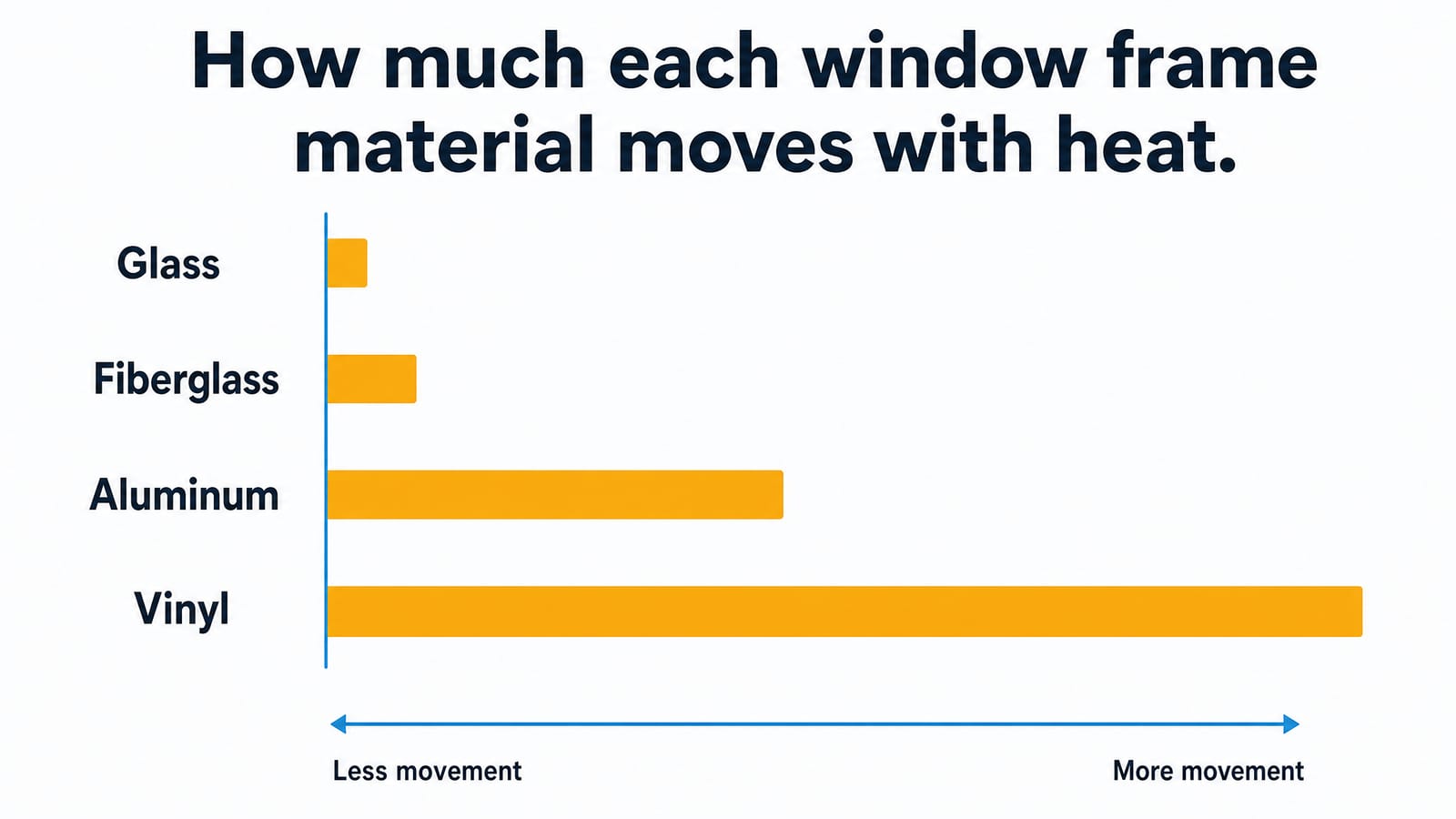
Fiberglass is pultruded glass fiber, and it expands at nearly the same rate as the glass pane — the lowest thermal movement of any frame material. That single fact is the whole performance case, so it’s worth unpacking.
Pultrusion is the manufacturing part: glass strands are pulled (“pull-truded”) through resin and a heated die into a rigid, dense frame profile. The result is a material that’s dimensionally stable — it barely grows or shrinks as the temperature swings.
Vinyl, by contrast, has the highest thermal movement of the common frame materials. It expands and contracts the most across a hot NC summer and a cold winter.
Why does that matter? Because the frame and the glass move together. Glass has a very low coefficient of expansion, and fiberglass tracks it closely, so the glass-to-frame seal doesn’t get stretched and squeezed year after year the way it does on a frame that moves more.
Fiberglass is also several times stronger and more rigid than vinyl, which is why it can hold a slim, stable profile on a big opening. Strong, stable, and quiet about it.
How long do fiberglass windows last?
A fiberglass window typically lasts 40 to 50 years or more — it’s the longest-lasting frame material there is. It resists warp, rot, rust, and corrosion, which matters in humid, coastal-adjacent North Carolina where those are the failures that end a frame’s life.
If “buy it once” is the goal, this is the frame that gets you closest — assuming your answer to my opening question was measured in decades, not moving boxes.
That said, I’ll flag the same thing I’d flag on any material page: a great frame installed badly outlives its warranty on paper only. A fiberglass window that isn’t plumb, level, square, flashed, and insulated in the rough opening will fog and leak like anything else.
The 40-to-50-year number assumes the install was done right — which is exactly why you’re right to weigh installer over brand.
Why fiberglass seals stay tight
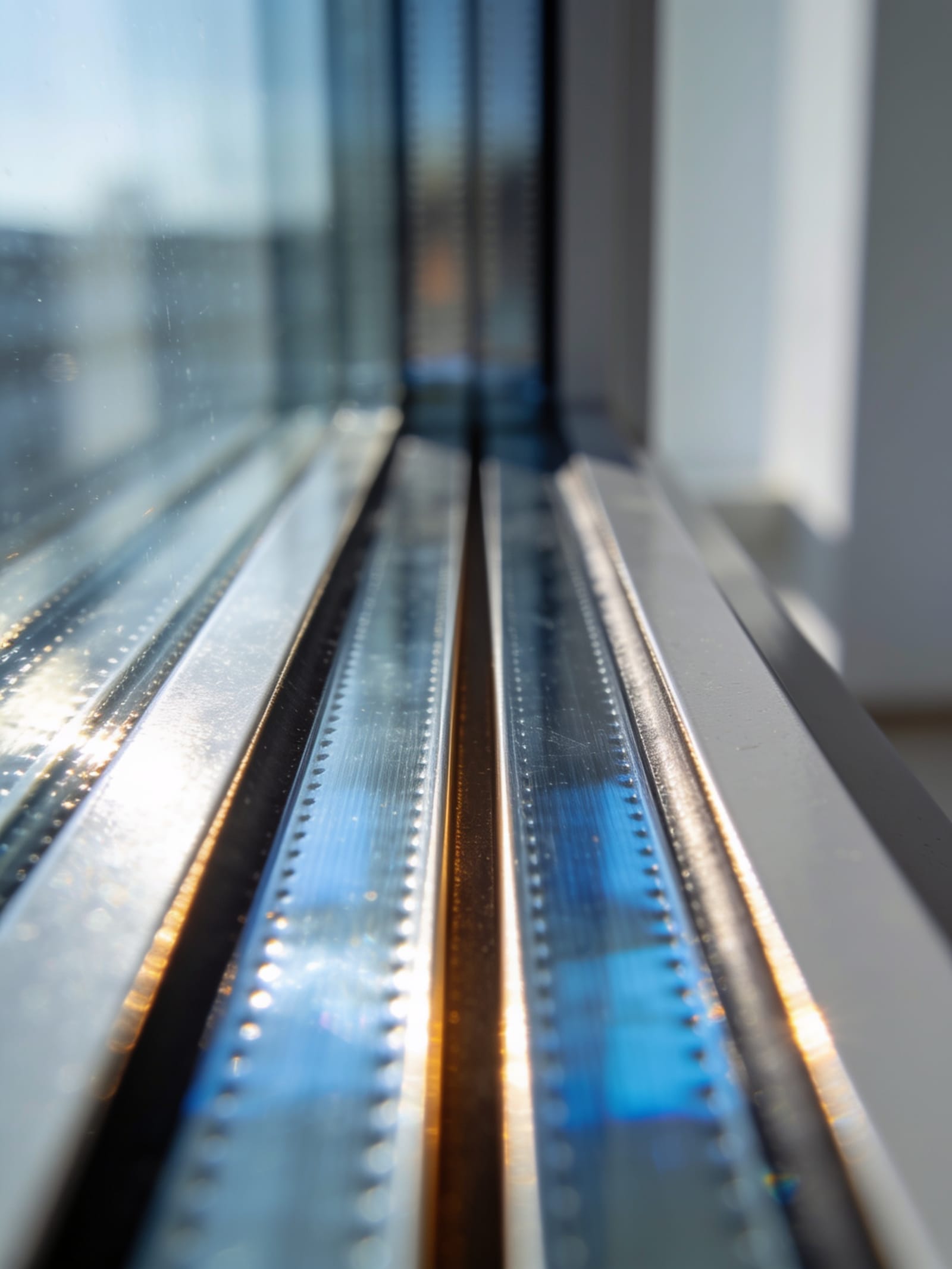
Low thermal movement means less seal stress over decades, which means fewer foggy-pane failures down the road. That foggy look — condensation between the panes you can’t wipe off — is a failed edge seal on the .
The slow expansion-and-contraction cycle of a high-movement frame is one thing that wears those seals out over the years.
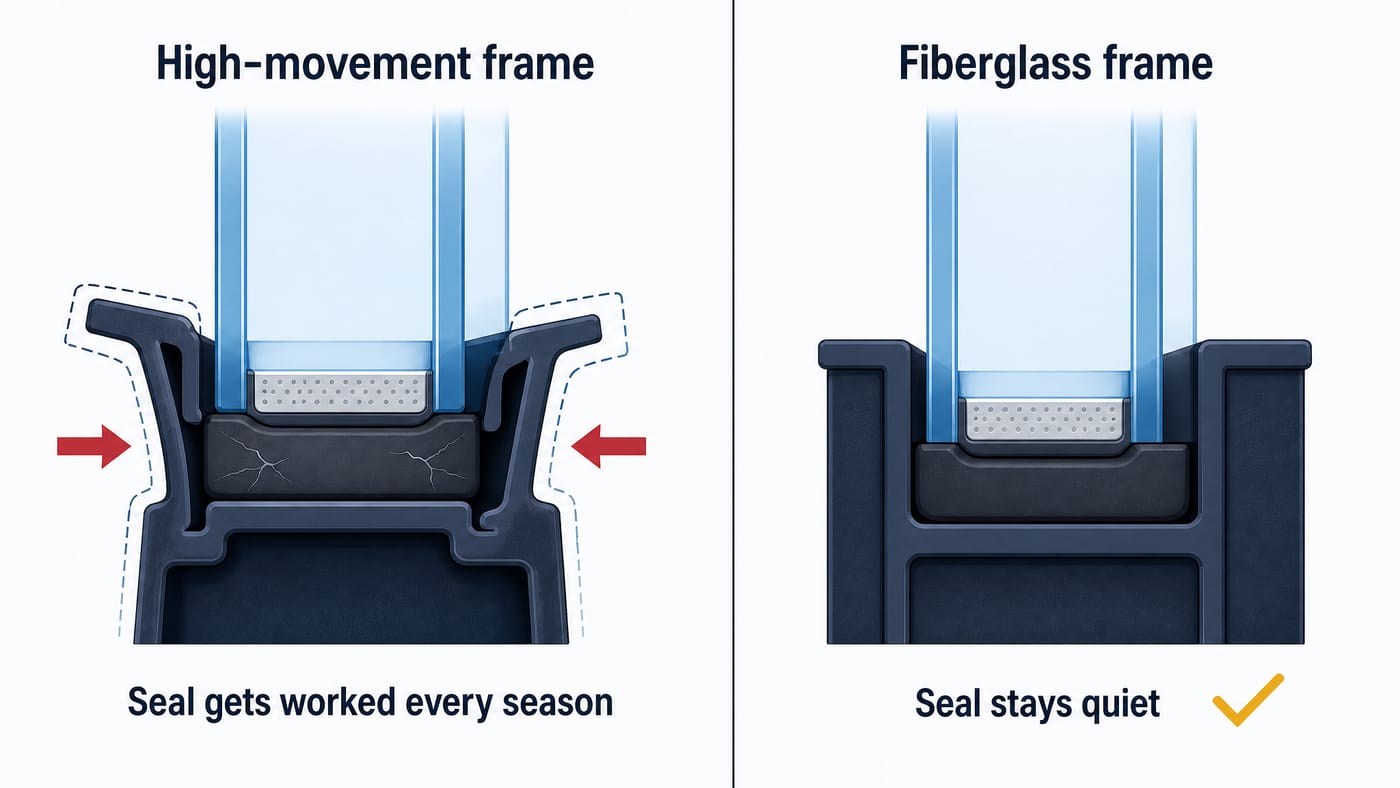
Fiberglass barely moves, so the seal barely gets worked. Pair that stable frame with a coating and an argon fill and the whole assembly holds its performance longer.
That’s the durability that actually matters to you — not a spec-sheet brag, but fewer fogged panes fifteen years out. (Here’s the failed-seal explainer, and if you want to see how frame stability shows up on the label, that’s what the energy numbers are telling you.)
The one real knock
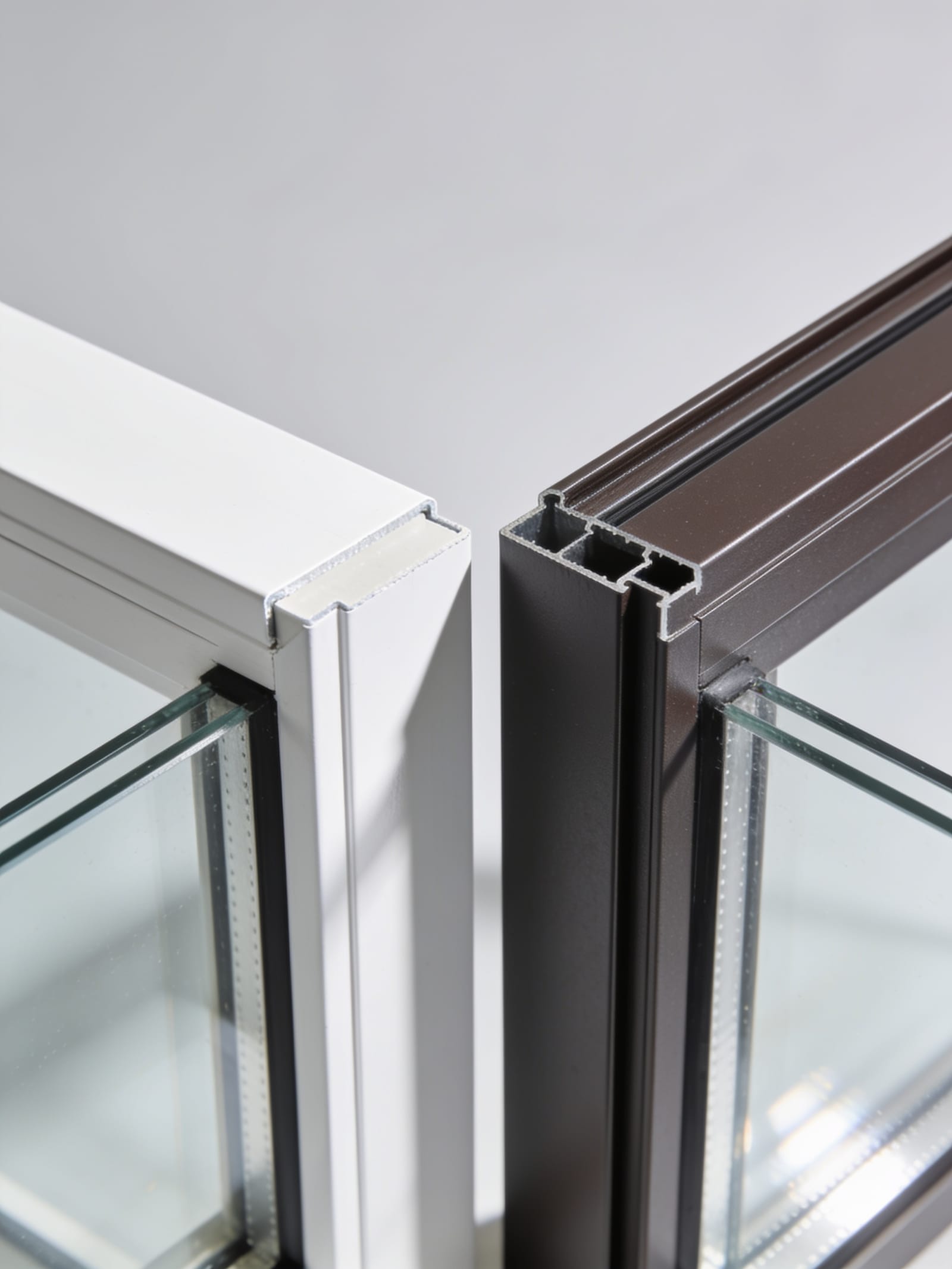
Fiberglass corners are mechanically fastened, not fusion-welded the way premium vinyl corners are. On vinyl, the corners are heat-welded into a single continuous piece. On fiberglass, they’re joined with fasteners and sealant. That’s the honest knock — and it’s a minor one.
I name it because a small honesty buys more trust than a glossy page that pretends a product has no trade-offs. In practice, a well-made mechanically fastened fiberglass corner is not a weak point you’ll ever notice, and the frame’s dimensional stability more than carries it. But you should hear the trade-off from me first, and plainly — that’s what earns the trust.
Can you get a dark exterior without warping?
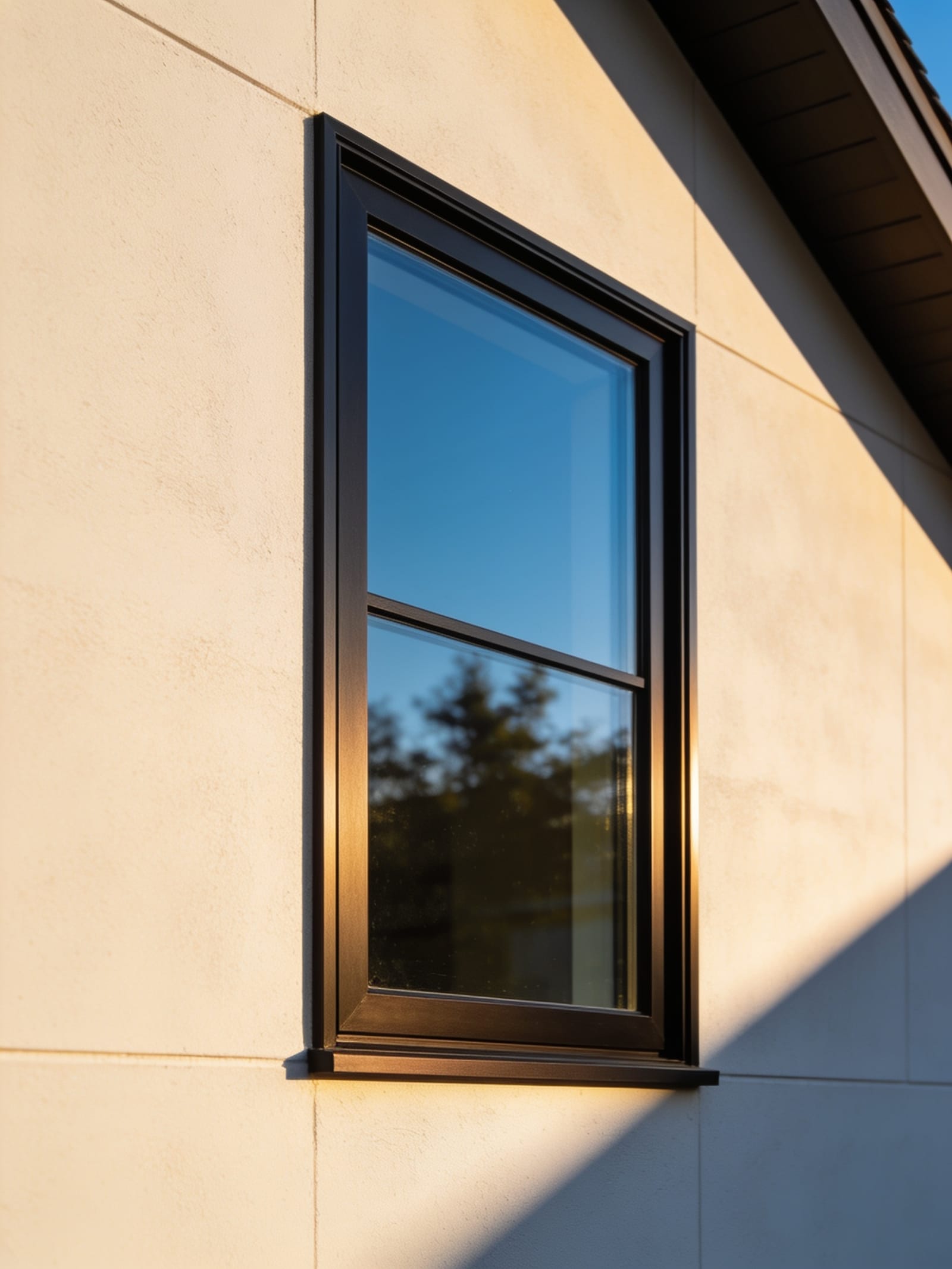
Yes — and this is a genuine fiberglass advantage over dark vinyl on full-sun walls. Fiberglass takes color and cladding well and can be painted, so a dark exterior is on the table without the warp risk.
Where dark vinyl absorbs solar heat and can soften, bow, or twist on a south- or west-facing elevation, fiberglass holds its shape.
If you want a dark exterior on a sunny NC wall and you want it to stay flat, that’s one of the clearest cases for paying the premium. (Here’s why a dark vinyl frame warps where fiberglass doesn’t — good vinyl makers mitigate it with additives and reinforcement, but many still steer you toward lighter colors on the hottest walls.)
NC homeowner takeaway: the “dark vinyl always warps” line you’ve probably heard online is overstated — quality vinyl in a lighter color is fine on most walls. But on a full-sun south or west elevation with a dark color, that warning has real teeth, and fiberglass is the frame that removes the worry.
When is the premium actually worth it?
Fiberglass is the best-performing frame — but the premium only earns its keep in specific situations. Here’s the honest boundary.
Fiberglass typically runs somewhat more than a comparable vinyl window. The head-to-head dollars live on the pages below, and I’d keep this decision on the situation, not the sticker.
It’s worth paying for when:
- You’re staying long. The 40-to-50-year lifespan and decades of tight seals pay off over a long stay, not a short one.
- You’ve got large or structural openings. Fiberglass is rigid enough to span big openings cleanly where vinyl flexes.
- You want a dark exterior on a full-sun wall without the warp risk vinyl carries.
- You simply want maximum seal life and “buy it once” is the priority.
Skip it — and buy a good vinyl instead — when:
- You’re not staying long enough to bank the longevity.
- Your openings are standard size and a quality vinyl does the job.
- Budget is tight and the premium would come out of the install or the glass package, which matter more.
How much more? National cost guides put fiberglass somewhere between a modest step up and roughly double a comparable vinyl window, depending on whose data you read and which grades you line up.
On the narrow end, This Old House’s 2025 homeowner survey found fiberglass averaging about 15–20% more than vinyl per window. On the wide end, cost guides like HomeGuide put fiberglass at 50–100% more than a comparable vinyl unit.
That’s a wide band because “comparable” is doing a lot of work — a premium vinyl and a builder-grade fiberglass can nearly meet in the middle.
I won’t quote you an NC dollar figure here, because a real number depends on your openings, glass package, and installer. What windows cost in NC is where the local dollars live.
The point for this decision is simpler: the premium is real, it’s meaningful, and it only earns its keep in the situations above.
If your real question is the head-to-head, is fiberglass worth the upgrade over vinyl settles it, and compare all the frame materials puts fiberglass next to composite, vinyl, and the rest. If fiberglass is more than you need but you want most of its stability, composite is the honest step down. For actual dollars, what windows cost in NC is the place.
A consult is the cheapest way to find out whether the fiberglass premium actually pays off for your house — your stay, your walls, your openings.
It ends where this page began: how long are you staying? Bring the answer, and the rest of the decision mostly makes itself. Book a no-pressure consult.
Sources, Verification & Fact-Checking verified July 2026
Every load-bearing fact on this page is sourced and verified against a primary authority.
Verified July 2026 via direct review of the cited authority — the links open the controlling source so you can check it yourself rather than take our word.
- Fiberglass has the lowest thermal movement of the common frame materials; it expands at nearly the same rate as the glass pane, so glass-to-frame seals stay tight. The U.S. Department of Energy describes fiberglass window frames as dimensionally stable, with air cavities that can be filled with insulation, giving them superior thermal performance to wood or uninsulated vinyl. That vinyl, by contrast, has the highest thermal movement of the common frame materials is industry consensus rather than a verbatim DOE ranking — held as directional. (view source — U.S. Dept. of Energy, Building Science Education)
- Fiberglass is dimensionally stable and can be painted, so it takes a dark exterior without the warp risk dark vinyl carries on full-sun walls. The U.S. Department of Energy lists fiberglass frames as dimensionally stable and paintable; dark vinyl absorbs more solar heat and can soften or bow on south/west full-sun elevations. (view source — U.S. Dept. of Energy, Building Science Education)
- Fiberglass is pultruded glass fiber and is the strongest, longest-lasting frame material — roughly 40–50+ years, resisting warp, rot, rust, and corrosion. The 40–50-year lifespan is a broad, commonly cited durability range rather than a figure any single authority certifies, and it’s not an NC-specific warranty term — treat it as directional.
- Fiberglass is several times stronger and more rigid than vinyl and can span larger openings. The direction is well supported by material properties; we hold it to “several times stronger” rather than a precise multiple, because no primary authority confirms a specific multiplier.
- Fiberglass carries a real cost premium over comparable vinyl — roughly 15–20% on the narrow end up to 50–100% on the wide end, nationally. This Old House’s 2025 homeowner survey found fiberglass averaging about $651 per window vs $558 for vinyl (~17% more); broader cost guides such as HomeGuide report fiberglass running 50–100% more than a comparable vinyl unit. The band is wide because it depends on which grades are compared, and it is a national range, not an NC quote — NC dollars are deferred to the cost page. (view source — This Old House · view source — HomeGuide)
- Window frame material matters less than a correct install (plumb, level, square, flashed, insulated). The U.S. Department of Energy puts it plainly: “windows are only as good as their installation” — improper installation lets in water and air (even tiny cracks around the frame cause substantial heat loss), invites condensation damage, and skipping the manufacturer’s instructions can void the warranty; installation belongs with skilled, trained installers (ASTM E2112). (view source — U.S. Dept. of Energy, Building Science Education: Correct Window Installation Methods)