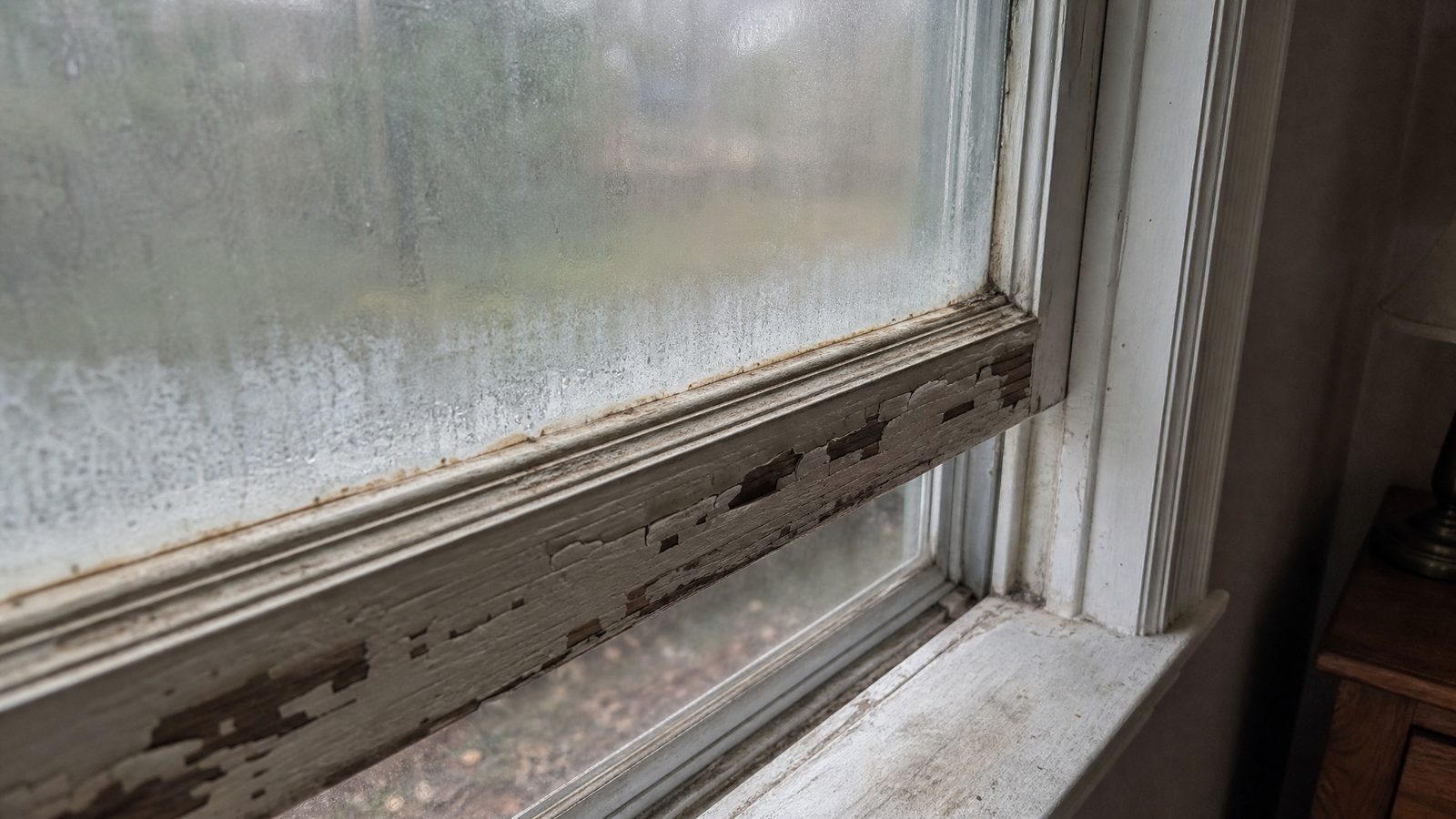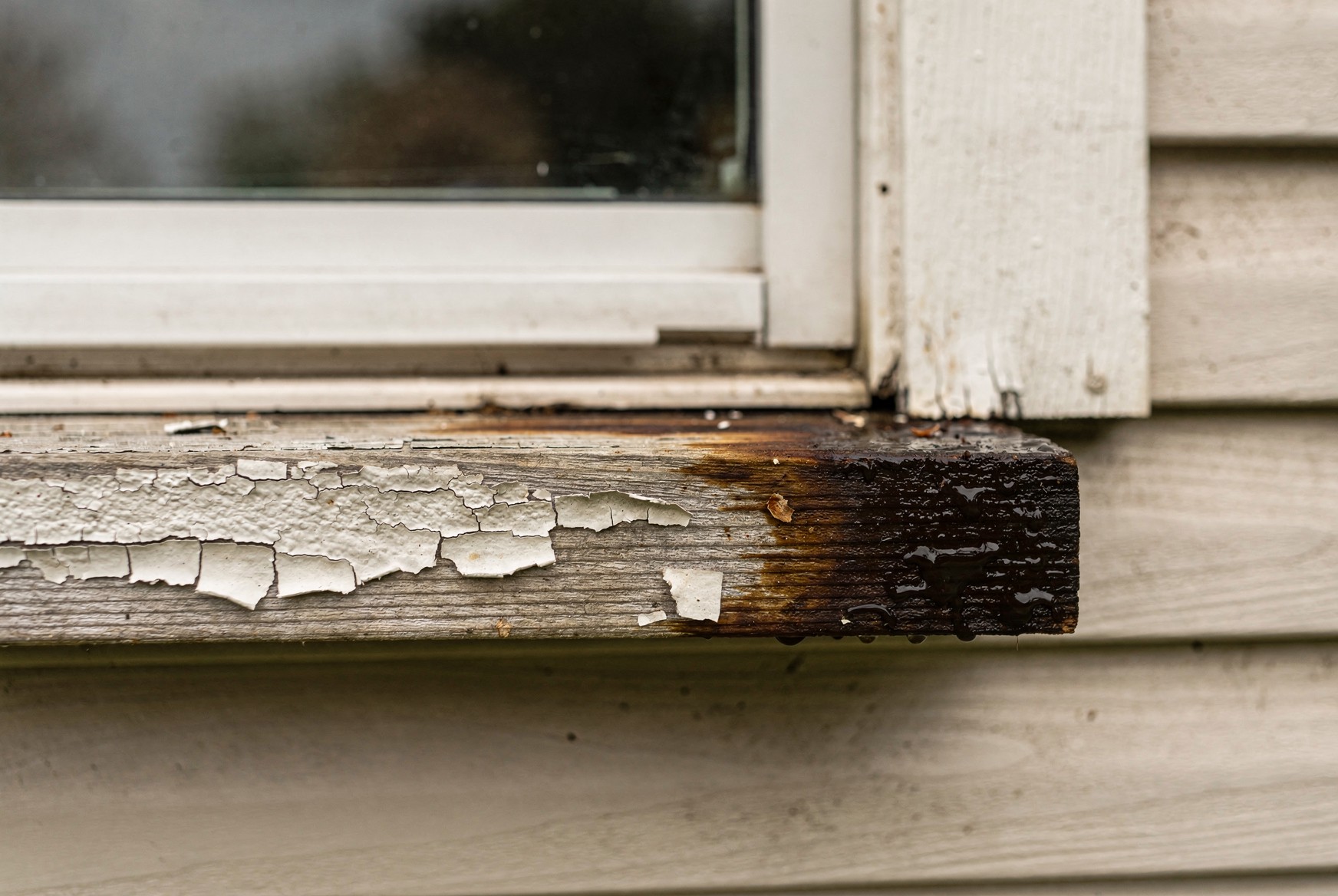




If it’s raining right now and there’s already a towel on the sill — good. Leave it. Put a bucket under the drip and do one more thing before anything else: film the leak while it’s running.
Thirty seconds of phone video showing exactly where the water appears is worth more than an hour of anyone’s dry-day inspection. An active leak is diagnostic gold. A dry one is miserable to find.
Now the part of this that no ranking page says plainly. In a forum thread about a window doing exactly what yours is doing, a window and door installer with ten years in the trade opened with what he’d seen: roofs leaking and the water coming out at a window inside — “lots.” Another tradesman agreed — “so many roofs are the actual problem when people call about leaking windows” — and the installer put a number on his own experience:
“9 times outta 10 it was the roof from my experience.”
That’s one installer’s count from his own calls — an experience, not a statistic. But it matches how nearly every leak story I’ve traced actually ended: a roof, an attic vent’s flashing, a gutter, a crack in the brick. Everything but the window everyone was staring at.
Why is water leaking around your window when it rains? Because water travels down. It can get in at the roof, a flashing gap, a siding joint, or a crack in the wall above — then run inside the wall until it hits the first horizontal ledge that catches it: your window frame. So the window is where the water shows up, not necessarily where it gets in. Trace the source before you pay to fix (or replace) the window. Here’s the triage, in order.
Where is the water actually showing up?
Start at the glass and work outward and up: the seal, then the sash and weep holes, then the frame joints, then the flashing above, then the wall itself. Each location points to a different entry mechanism — and a different fix, often a different trade.
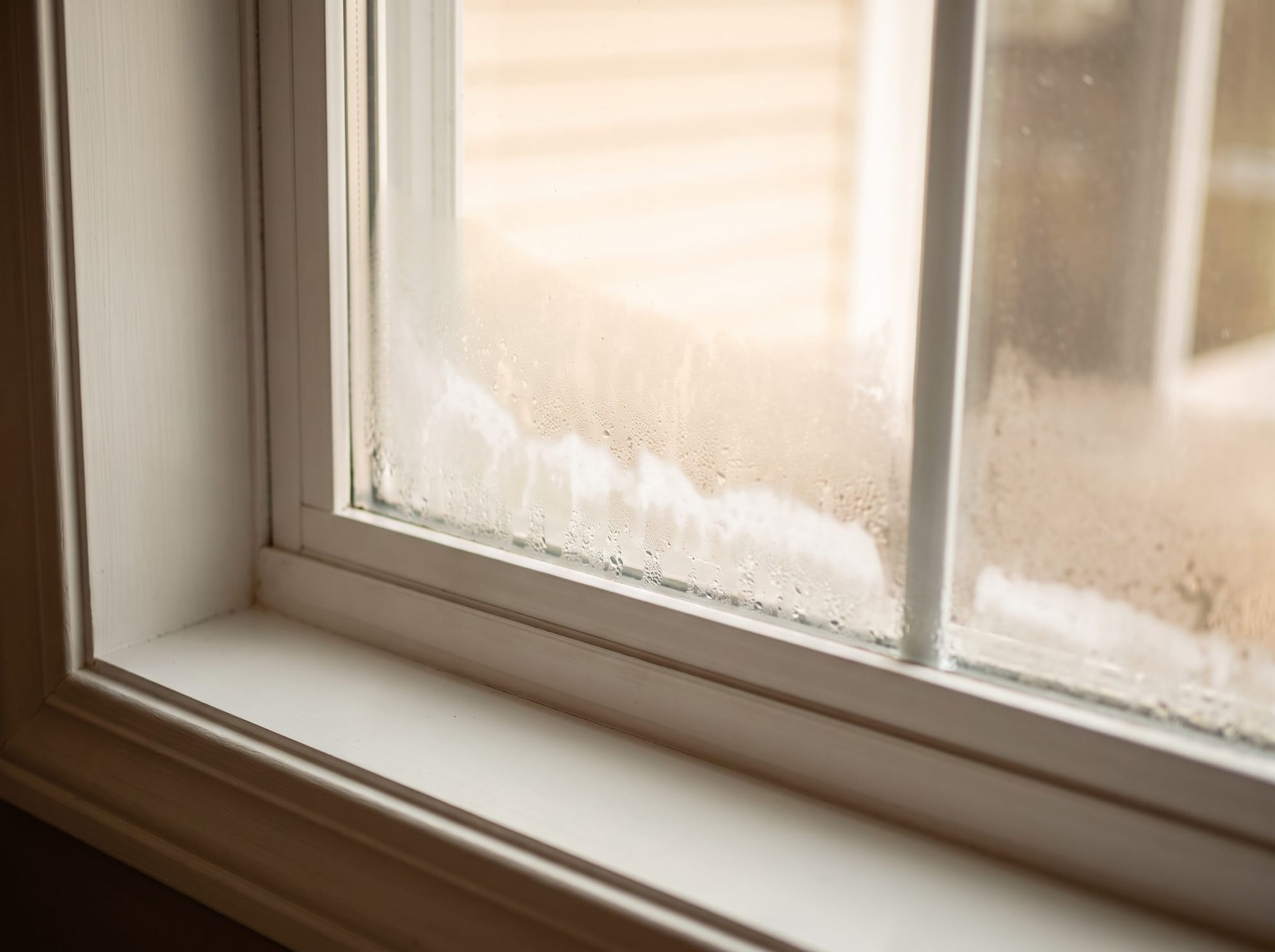
- Between the panes — fog, not drips. A hazy or misty is a failed edge seal. It fogs; it doesn’t pour water. That’s a sealed-unit swap, not a leak — the foggy-window page owns it.
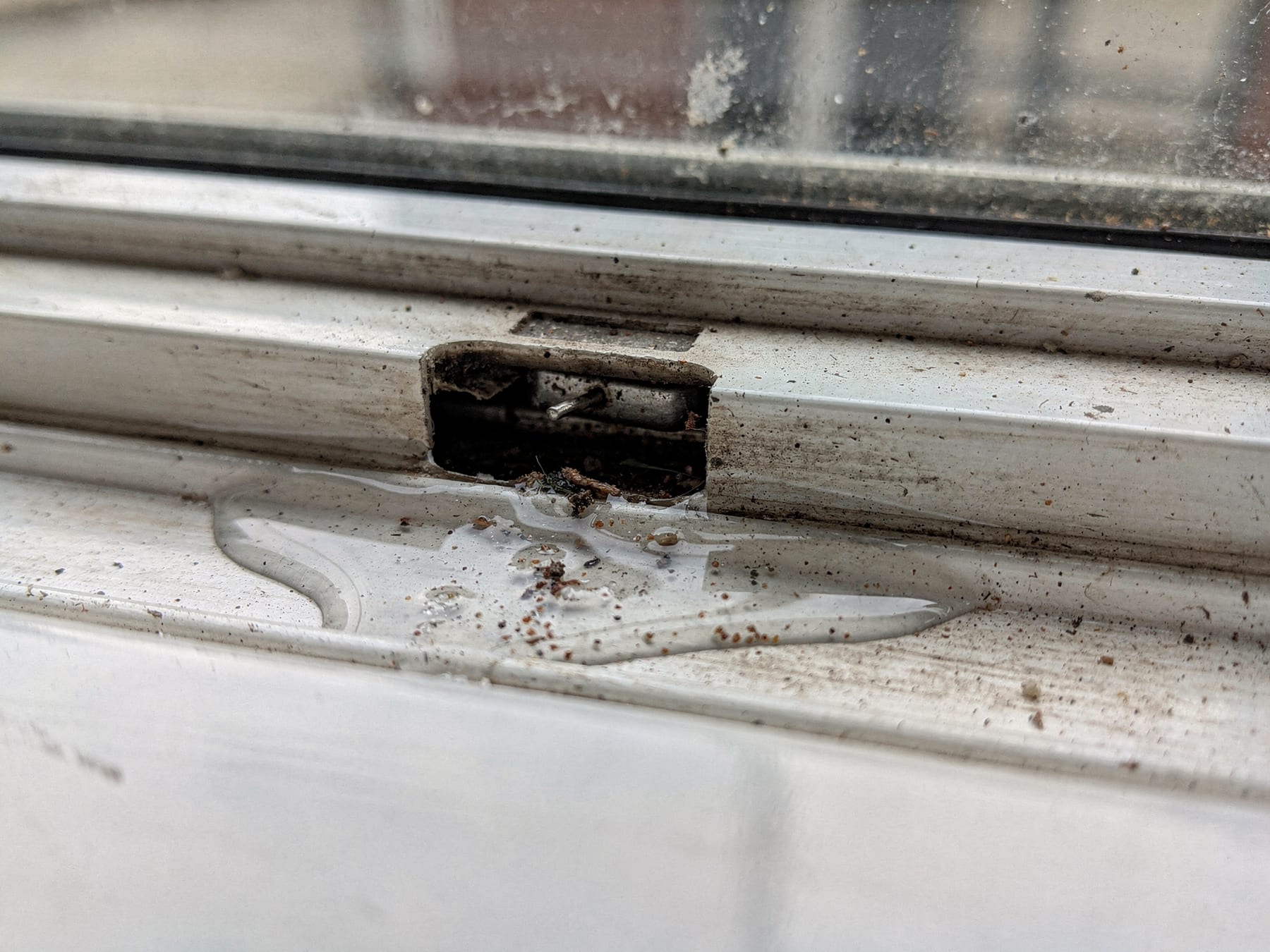
- Water pooling in the bottom track during wind-driven rain. Usually not a leak at all — it’s clogged weep holes. This one you can fix yourself in five minutes (next section but one).
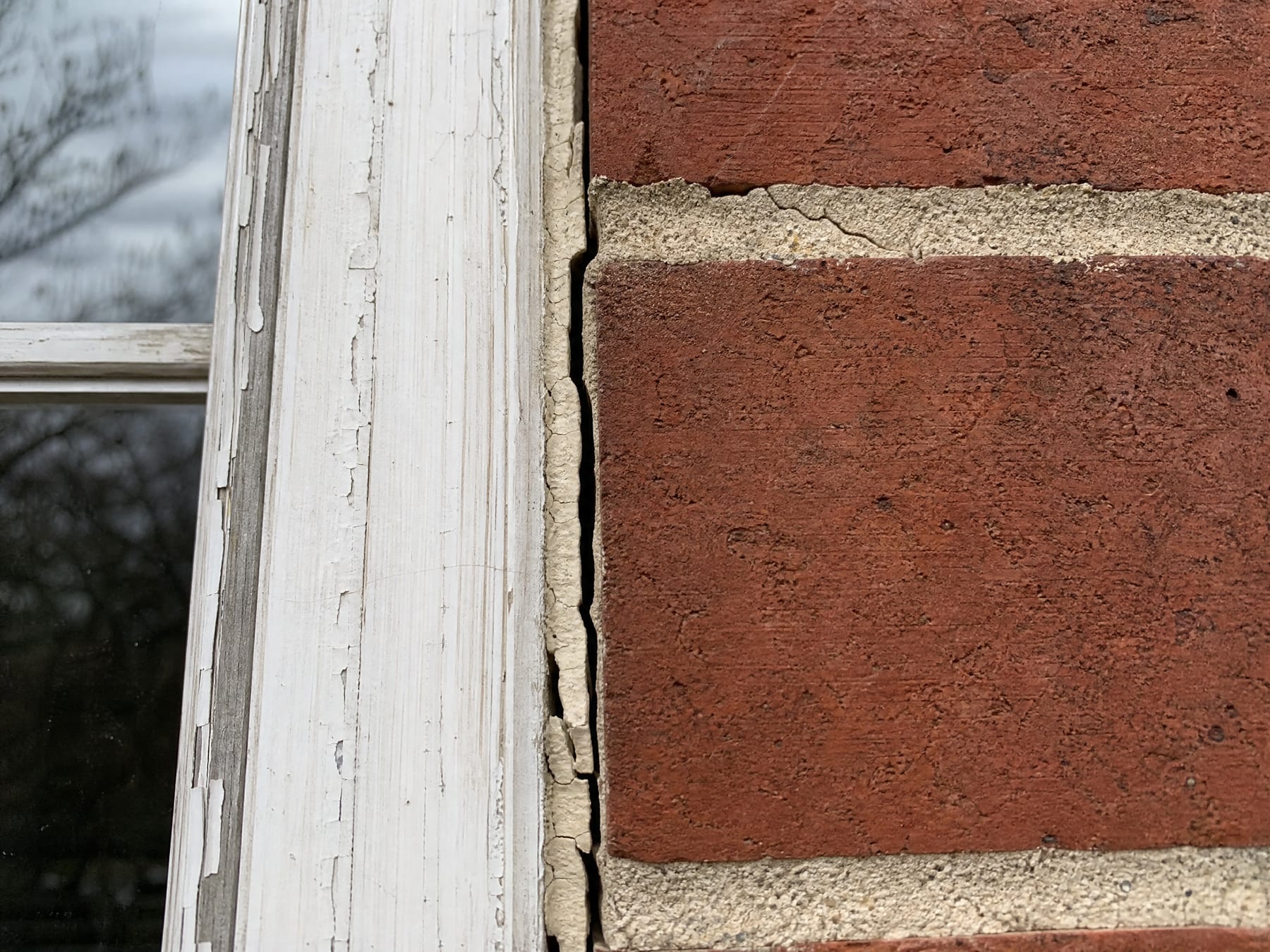
- Seeping at the frame joints, or where frame meets wall. On older wood or brick homes, this is a failed sealant joint or the masonry itself — a caulk joint done right, or a mason.
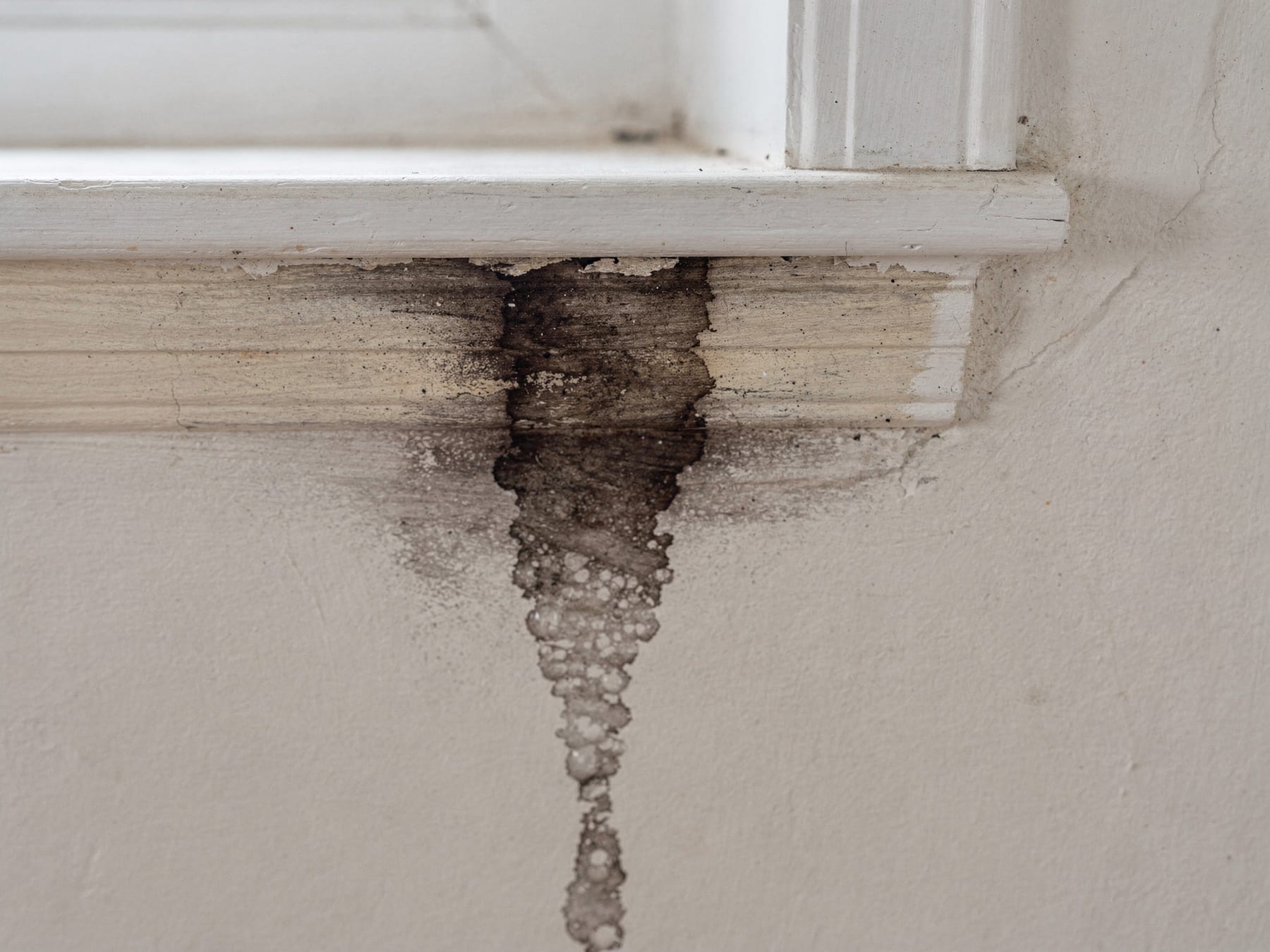
- Bottom corners of the frame, or the wall below the sill. Water getting past where a sill pan or install flashing should be — an installation problem, and the bad-install-signs page has the full tell catalog.
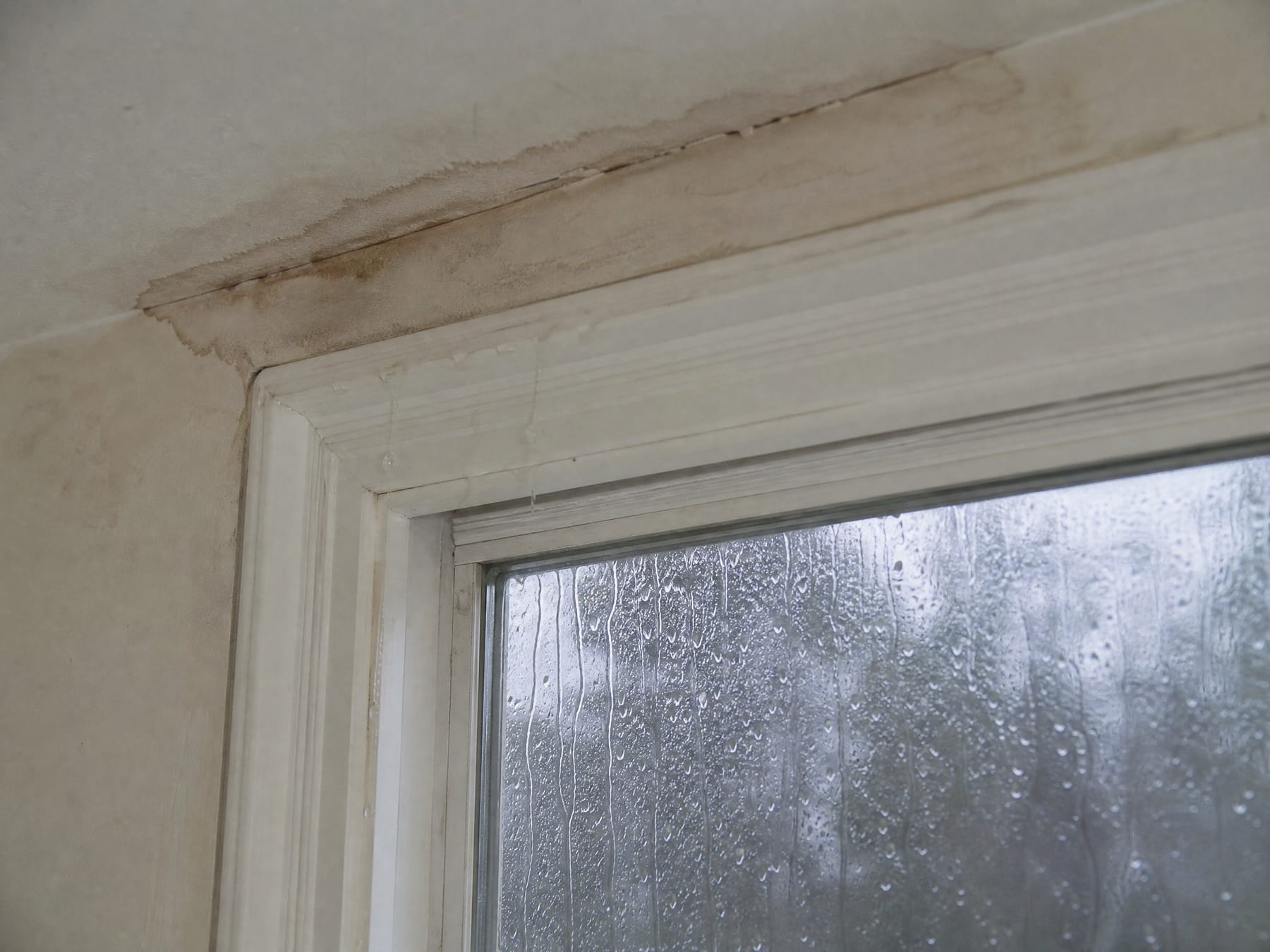
- The top of the frame. The big one. Drips at the head of the window almost always start above the window — which is why it gets its own section next.
| What you see | What it looks like | Likely source | Who fixes it |
|---|---|---|---|
| Fog or haze between the panes, never liquid | 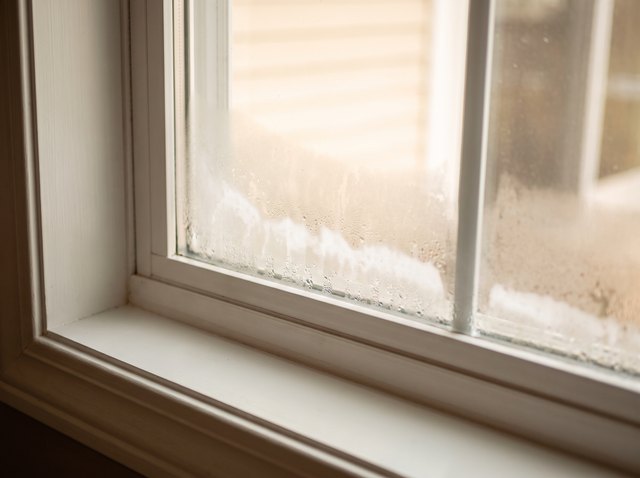 | Failed IGU edge seal — not a water leak | A glass shop — sealed-unit swap, window stays |
| Bottom track fills during wind-driven rain | 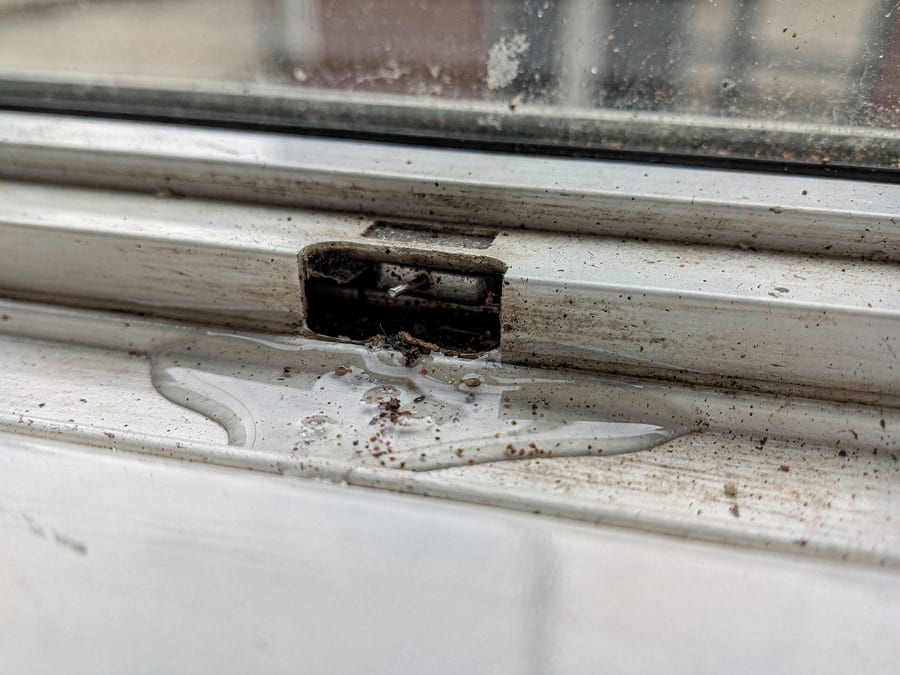 | Clogged weep holes blocking the built-in drainage | You — a pipe cleaner and five minutes |
| Drips from the top of the frame in hard rain | 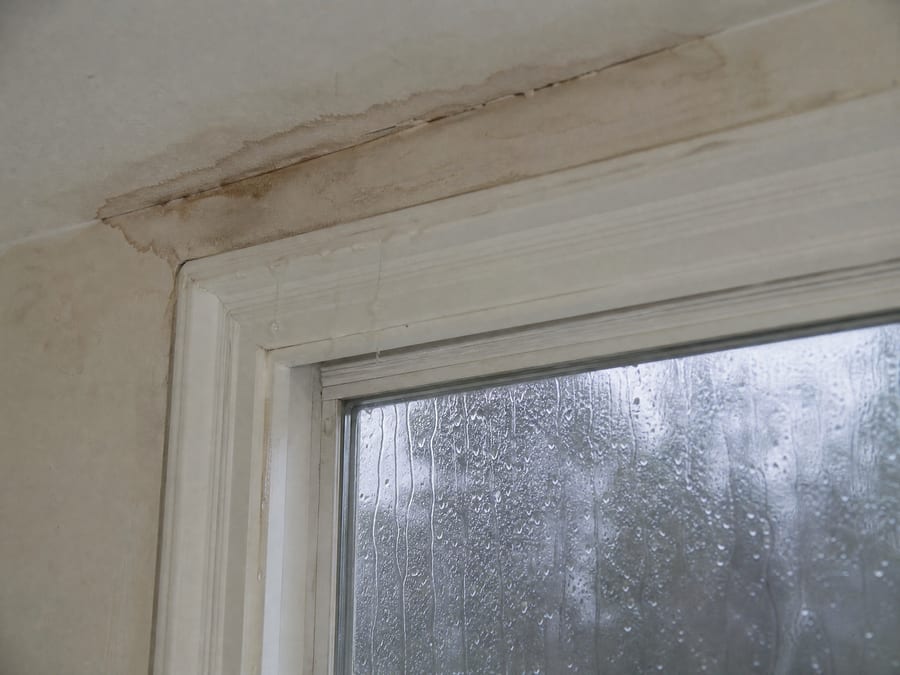 | Head flashing, housewrap, gutter, wall, or roof above | Roofer, siding contractor, or a water-intrusion specialist — often not a window company |
| Water at the bottom corners or the wall below the sill | 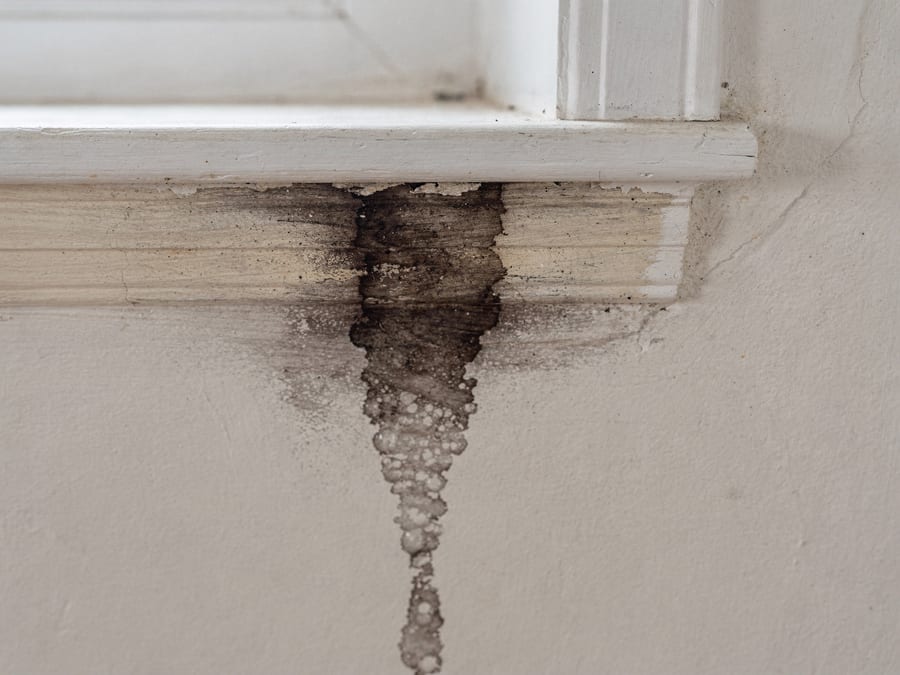 | Sill pan or install flashing that failed — or was never there | A window installer — this is an install conversation |
| Seeping at frame joints on an older wood or brick wall | 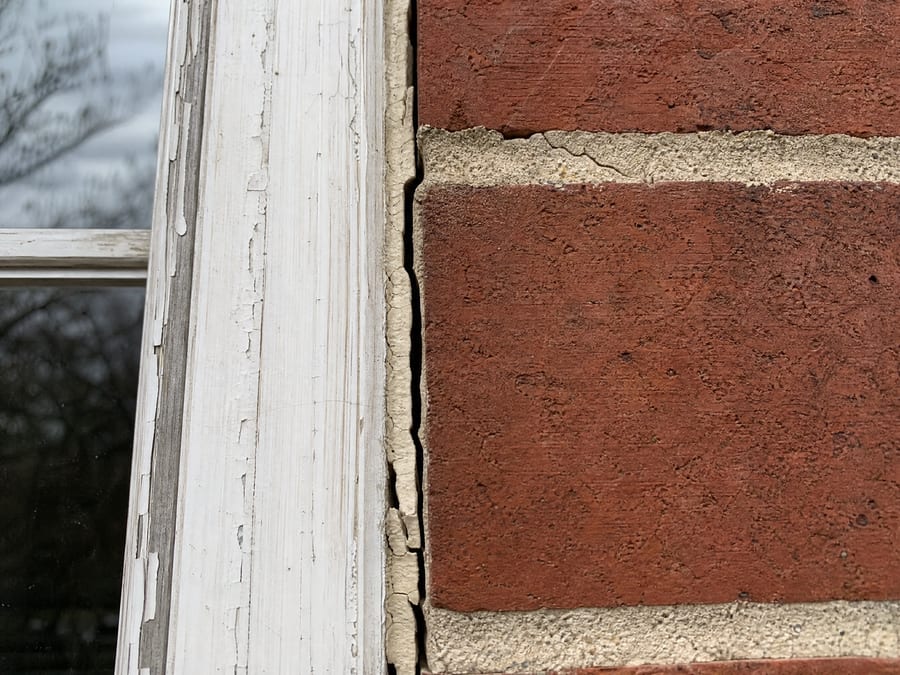 | Failed sealant joint, or cracked mortar above | A careful re-caulk — or a mason |
Fog or haze between the panes, never liquid
- What it looks like
-
- Likely source
- Failed IGU edge seal — not a water leak
- Who fixes it
- A glass shop — sealed-unit swap, window stays
Bottom track fills during wind-driven rain
- What it looks like
-
- Likely source
- Clogged weep holes blocking the built-in drainage
- Who fixes it
- You — a pipe cleaner and five minutes
Drips from the top of the frame in hard rain
- What it looks like
-
- Likely source
- Head flashing, housewrap, gutter, wall, or roof above
- Who fixes it
- Roofer, siding contractor, or a water-intrusion specialist — often not a window company
Water at the bottom corners or the wall below the sill
- What it looks like
-
- Likely source
- Sill pan or install flashing that failed — or was never there
- Who fixes it
- A window installer — this is an install conversation
Seeping at frame joints on an older wood or brick wall
- What it looks like
-
- Likely source
- Failed sealant joint, or cracked mortar above
- Who fixes it
- A careful re-caulk — or a mason
Run the list top to bottom on your window. If you land on the highlighted row, keep reading — that’s the case where the window is most likely innocent.
Why a window leaking from the top usually isn’t the window
Because water runs downhill inside walls. When drips appear at the head of the frame during hard rain, the entry point is almost always higher — the head flashing, the housewrap lap above the window, a wall crack, an overflowing gutter, or the roof.
A wall sheds water like shingles: each layer of flashing and housewrap laps over the one below, so water riding down the wall stays outside.
When a lap above your window is missing, torn, or reversed, water slips behind the housewrap. Then it rides down inside the wall until your window frame catches it.
That’s not my theory — it’s what building-science experts concluded in a case just like this: a new condo leaking at the head jamb in storms, where repeated caulk-and-tape repairs failed. Their read: probably no head flashing, or head flashing installed poorly, with water traveling behind the housewrap above the window.
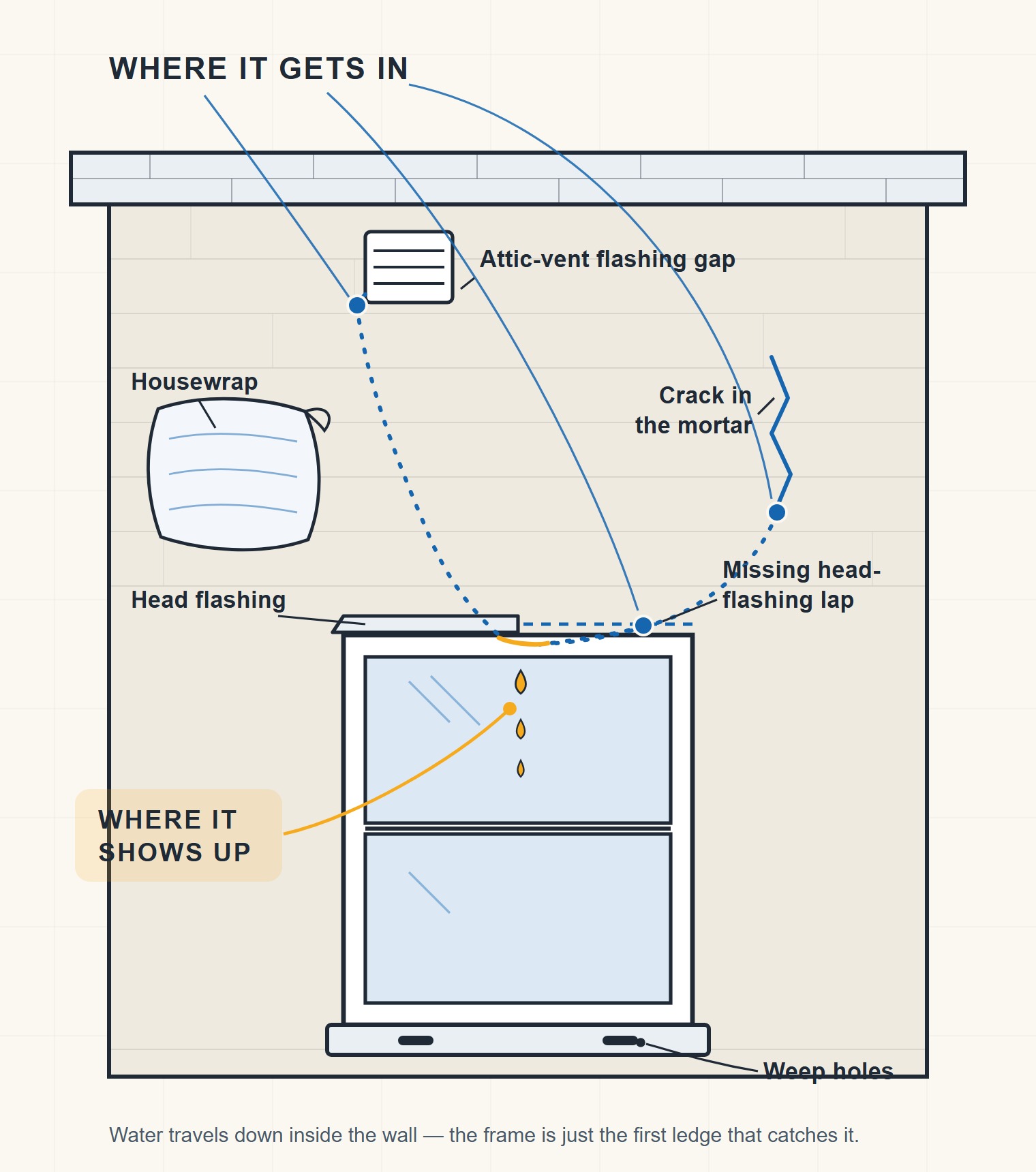
And the real endings from real threads back it up. One homeowner re-caulked everything and opened drywall before finding it was the flashing on an attic vent — ten dollars of caulk and a patch of drywall later, dry. Another’s “window leak” was gutter pitch. A third traced it to the window a floor up, leaking at its bottom and trailing down the outside wall behind the stucco.
None of those windows needed replacing. All of those homeowners had been staring at a wet window.
Check the weep holes before you blame the window
Sash windows are designed to catch some water and drain it back outside — through small slots called weep holes at the bottom of the frame. Water sitting in the bottom track during a storm isn’t a leak. It’s the window doing its job. It becomes a leak when the drains clog.
Weep holes are the little openings on the exterior bottom edge of vinyl and aluminum window frames — standard on sliders, double-hungs, and other sash windows that can collect water. Blocked, the track fills until water finds the inside of your wall instead.
It happens more than you’d think. One homeowner found his weeps packed with construction debris — nails, drywall mud, wood chips — from the original install. Another said it flat: “Mine were clogged and water ran into the house.”
Three-step check, five minutes:
- Find them. Look along the outside bottom edge of the frame for small slots, usually two.
- Test them. Pour a little water into the bottom track. It should dribble back out through the weeps. If it sits, they’re blocked.
- Clear them gently. A pipe cleaner or a flat screwdriver swept side to side — clear the slot without enlarging it.
And never, ever caulk over weep holes. One commenter’s warning to a homeowner about to re-caulk everything: caulk over the weeps and “they’ll rot out and you won’t know it’s happening until it’s way too late.”
What to do while it’s still raining
Contain the water, protect the finish, and document the leak while it’s active. In order:
- Towel in the track, bucket under the drip. Move anything water can ruin. Slide a towel under the sill’s edge so runoff doesn’t strip the finish or wick into the wall below.
- Film it. Video the drip point, the path the water takes, and the wall above — inside, and outside if you can do it safely from the ground. Active leaks show you their path. Dry ones make you guess.
- Don’t caulk anything wet. Caulk over a wet joint traps water in the wall and erases the evidence a pro needs. It’s the classic panic move, and it makes the real repair harder.
- Don’t caulk the weep holes. In a storm, water visibly draining out of little slots looks like a leak. It’s the drainage working. Sealing it turns a non-problem into a rot problem.
That’s the whole in-storm job. The diagnosis happens after, on a dry day — with a hose.
How to find it for sure once it’s dry
A garden hose, a helper inside, and more patience than feels reasonable — bottom-up, one zone at a time. This is the method pros actually use, and almost nobody writes it down properly:
- Put a helper inside with a flashlight and a dry paper towel, watching the window and the wall around it.
- Start low. Wet only the sill area first. If you start at the top, water runs over everything below it and you learn nothing.
- Give each zone real time — minutes per zone, not seconds. Leaks that take twenty minutes of rain to appear take that long under a hose too.
- Move up in stages: sill, then each side jamb, then the head, then the wall above the window, then higher — the gutter line, the roof edge.
- When the helper sees water, stop. The zone you just wet contains the entry point — or the path from it.
One honest limit: a leak that only shows in wind-driven rain may not reproduce under a gentle hose. A pro in one of these threads gave the honest ceiling on certainty — sometimes siding has to come off to inspect the flashing and housewrap directly.
If your hose test comes up dry on a window that leaks every sideways storm, that’s the conversation to have.
North Carolina gives you plenty of test material either way. A Piedmont thunderstorm throwing rain sideways is a different load than a slow soaker — note which kind of rain leaks. Wind-driven-only points high and outside; every-rain points at the window’s own joints and drainage.
Who do you call for a leaking window?
The trade that owns where the water gets in — which is exactly why you triage first. “Who to call for a leaking window” is one of the most-searched questions in this topic, and it’s the one a window company’s blog structurally can’t answer. Here’s the honest router:
- You, first. Clogged weeps and a failed exterior caulk joint are homeowner fixes. Check both before paying anyone.
- A glass shop (glazier) — if the “leak” is fog between the panes or a cracked pane. That’s glass, not water intrusion, and a broken pane has its own page.
- A window installer — when triage traces water to the unit or its opening: bottom corners, the wall below the sill, or a window that leaks at its own joints in every rain. If the install is recent, read the bad-install-signs playbook first — this may be a labor-warranty conversation, not a bill.
- A roofer — for top-of-frame drips in hard rain, especially with any ceiling or attic staining. Check the attic above the leak after the next rain; pros in these threads have seen plenty of roof leaks exit at a window.
- A siding contractor or water-intrusion specialist — when the wall above is the suspect and nobody can pin it down. As one commenter put it about a leak just like this: find a company that specializes in water intrusion, because “if the window isn’t broken there is no need to replace it.”
- A mason — on brick homes. Cracked mortar joints route water into walls, and the fix is re-pointing, not a window.
One more thing worth saying kindly: homeowners in these threads are sometimes frustrated that window installers decline leak-repair jobs. That’s not dodging — installation and water-intrusion diagnosis are genuinely different businesses. A company that installs windows can honestly pass on a leak whose source isn’t the window.
When it is the window — or the install
Sometimes the triage lands on the window after all — and then the honest fork matters. Water traced to the unit itself, or to the opening it sits in, is one of three conversations:
- Rot. If the sill or frame gives under a screwdriver, the leak has been feeding it a while. The rotted-sill page owns that fork — small localized rot has a real epoxy repair; rot into the frame is the one genuine replace signal.
- The install. Water at the bottom corners, a wall stain below the sill, or a leak that returns after every re-seal points at flashing and sill-pan work that failed or never happened. That’s bad-install-signs territory — and possibly the installer’s labor warranty, not your wallet.
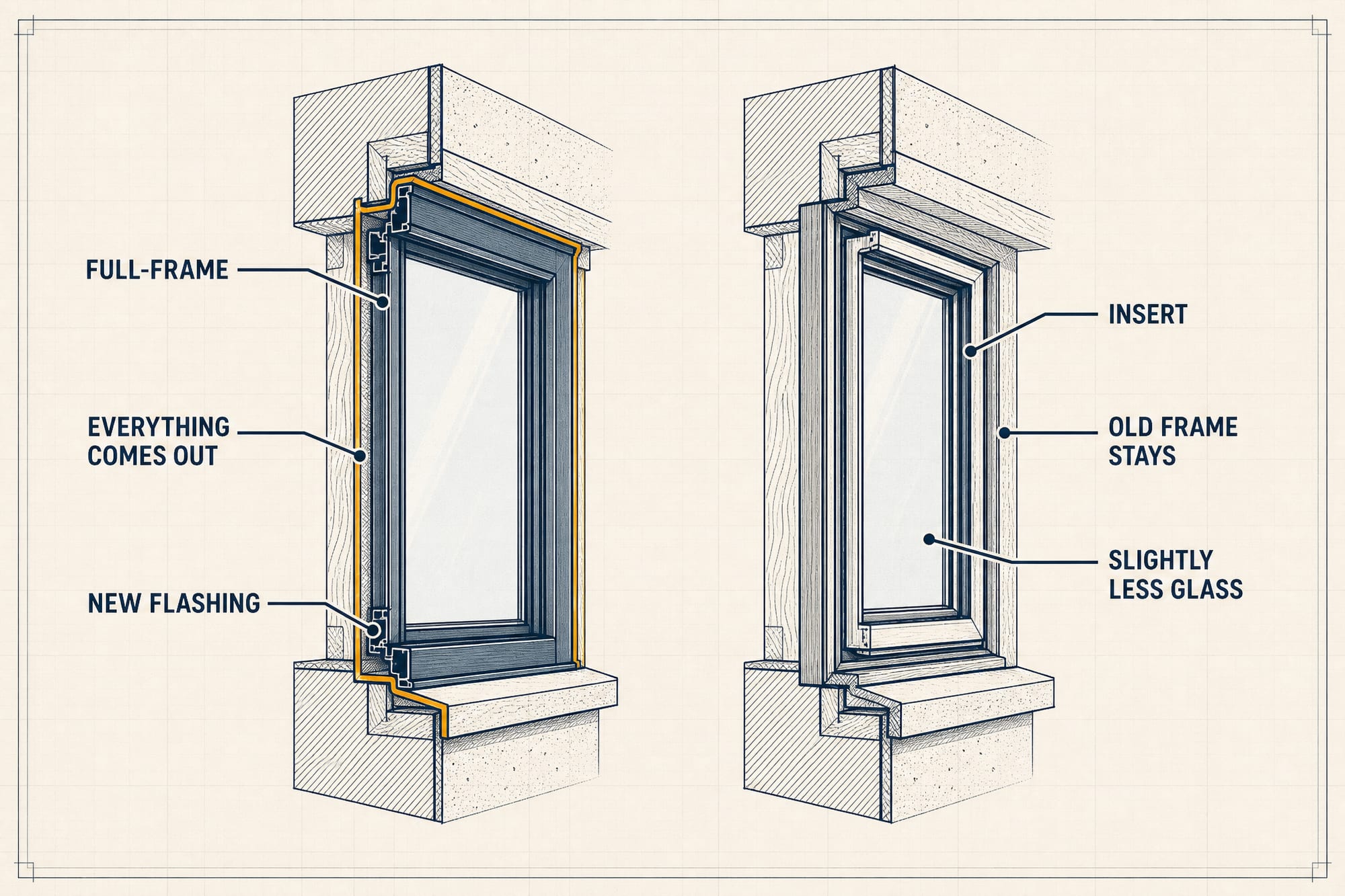
- The opening. When fixing the install means opening the wall anyway, the honest question becomes whether to do it once, properly. A replacement is how new flashing and a sill pan actually get in; full-frame vs insert walks that decision.
And if the leak turns out to be the roof, the gutter, or the mortar? Then you don’t need a window at all — you need the right trade and a smaller check. I sell windows, and I’d rather tell you that than sell you one that leaves the real hole open.
The method, one more time: film it wet, triage by location, test the weeps, hose-test it dry, and let where the water gets in pick who you call. The repair-or-replace hub sorts every other window problem the same way — and if you want a second pair of eyes on your video, send it over.
Sources, Verification & Fact-Checking verified July 2026
Every load-bearing fact on this page is sourced and verified against a primary authority.
Verified July 2026 via direct review of the cited authority — the links open the controlling source so you can check it yourself rather than take our word.
- ”Most window leaks aren’t the window” — presented as attributed practitioner experience and the pattern of documented cases, never as a statistic. The anchor quote — “9 times outta 10 it was the roof from my experience” — is one window/door installer’s own count (ten years installing windows and doors), given in a public forum thread that ranks organically for this exact question after another tradesman observed that “so many roofs are the actual problem when people call about leaking windows.” The same thread carries the water-intrusion routing advice (“If the window isn’t broken there is no need to replace it”). (view source — r/handyman thread)
- Top-of-frame leaks trace to head flashing and water traveling behind the housewrap above the window — installation-level water management, not window-unit failure. Expert consensus in a Green Building Advisor Q&A on wind-driven-rain leakage at a head jamb: “There was probably no head flashing installed or they installed it poorly,” with housewrap fine when “installed properly, and the penetrations flashed accordingly.” (view source — Green Building Advisor Q&A)
- Shingle-lap flashing doctrine (each layer of flashing and housewrap laps over the one below, integrated with the wall’s water-resistive barrier, so water sheds down and out): per U.S. Department of Energy Building Science window-installation guidance — the same source behind the bad-install-signs page. (view source — DOE Building Science, Correct Window Installation Methods)
- The six-failed-repairs story (a homeowner’s 1920 brick house with three dripping windows; the replying commenter’s own brick apartment building — three years of failed fixes, a mortar crack five feet above a different window, dry for the 14 years since re-pointing) and the “call a mason and not a window guy” routing: first-person accounts in a public forum thread. (view source — r/HomeImprovement thread)
- Weep holes — what they are, that sash-style windows are designed to collect and drain water, that sealing them causes water damage and hidden rot, and the gentle-cleaning method: corroborated three ways — a sealant manufacturer’s public guidance, first-person homeowner reports (clogged weeps running water into the house; construction debris found blocking them; the pour-water test), and the warning against caulking over them. (view source — GE Sealants, window weep holes; view source — r/HomeImprovement thread; view source — r/homeowners thread)
- Real-case endings cited in the body (attic-vent flashing found after re-caulking and drywall work — “$10 in caulk and $40 in drywall”; gutter pitch; the window above leaking at its bottom; the methodical wet-it-in-sections hose test; “do not let someone just come in and put caulk around it”): first-person accounts in the forum threads above plus one additional. (view source — r/Home thread)
- Homeowners-insurance answer (sudden, accidental events generally covered; lack-of-maintenance and gradual wear excluded): per the Insurance Information Institute’s homeowners coverage guide — windstorm and accidental discharge or overflow of water sit on the standard covered-perils list, while the same guide states plainly that policies do not cover “damage due to lack of maintenance” or gradual wear and tear. Policies differ; the FAQ tells readers to check their own. The ask-can-count-as-a-claim caveat is homeowner-reported folklore, presented hedged as exactly that — no primary source confirms it. (view source — Insurance Information Institute, which disasters are covered)
- Repair costs: deliberately direction-only (“finding the source is the cost driver”). No citable primary published usable repair-cost bands for this query set as of this review, so the page states the cost logic without inventing numbers.