

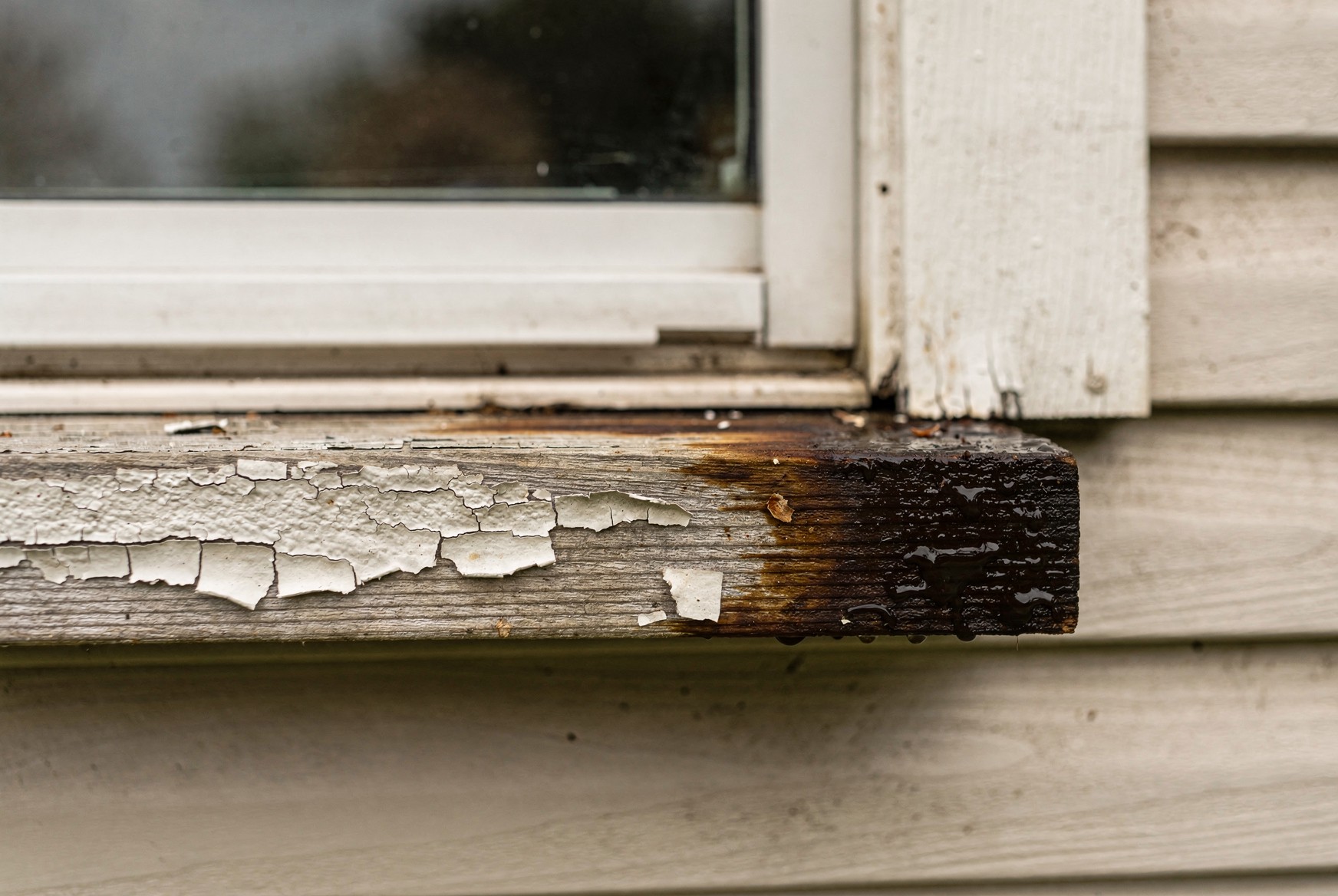
Press your thumb into the sill. If it gives, this page is for you.
I’ve told you a drafty window is fixable. A stuck window is fixable. A foggy pane is swappable. Rot is where that streak ends — sometimes.
Of everything on this site, rot is the one problem I most want to see in person. Not because it’s always bad news, but because it’s the one problem that can’t be talked into being smaller than it is. Wood is either sound or it isn’t, and no amount of optimism changes what the screwdriver finds.
So here’s the honest version, in the order that saves you the most money: how to tell if it’s really rot, the small-rot case where a repair is genuinely real, the line where replacement wins — and why, when it wins, it has to be the full-frame kind.
Is a rotted sill a repair or a replacement? Small and localized: often a real epoxy repair — cut to sound wood, harden, rebuild. Spread past a small patch or into the frame: the one window problem that genuinely means replacement — full-frame, so the rot leaves the wall with the old window. Here’s how to tell which one you have.
How do you tell if it’s really rot — and how far it goes?
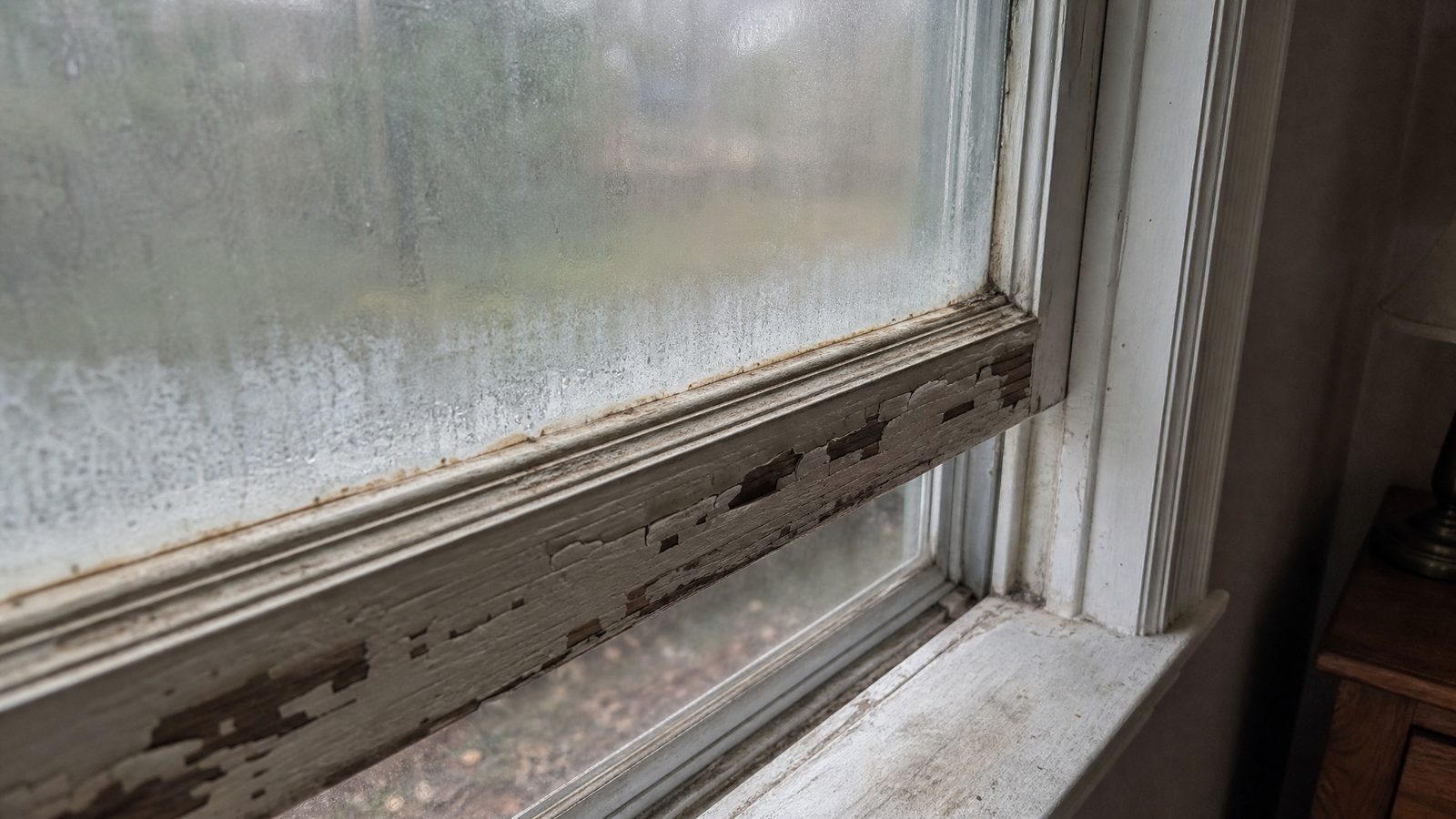
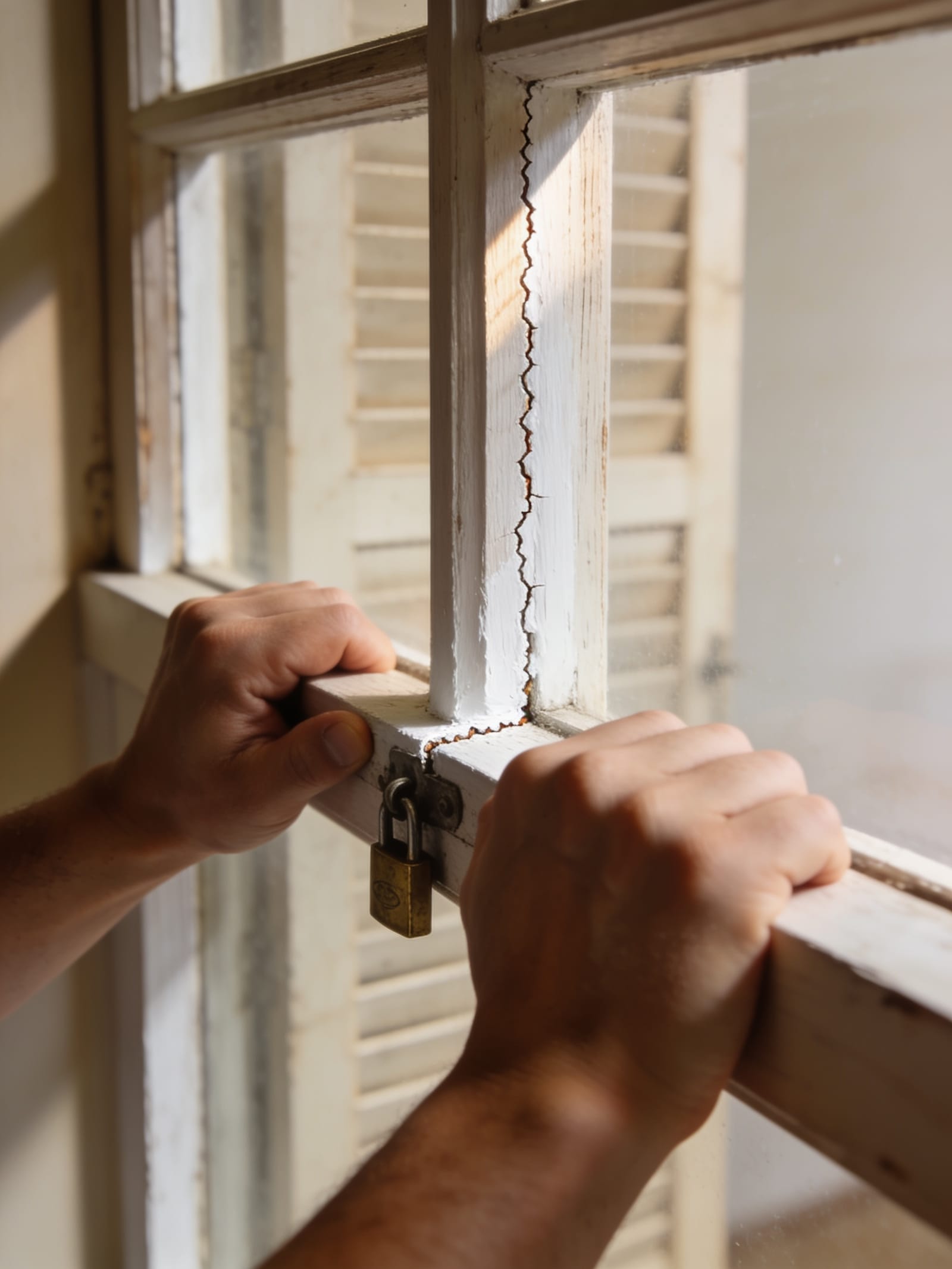
Probe it. Solid wood pushes back — rot gives. Take a screwdriver and press the tip into the sill, working corner to corner. Sound wood resists you. Decayed wood lets the tip sink with almost no argument, even when the painted surface looks fine.
That last part is the trap. Paint is rot’s favorite disguise — a sill can hold a clean paint film over wood the consistency of damp cork.
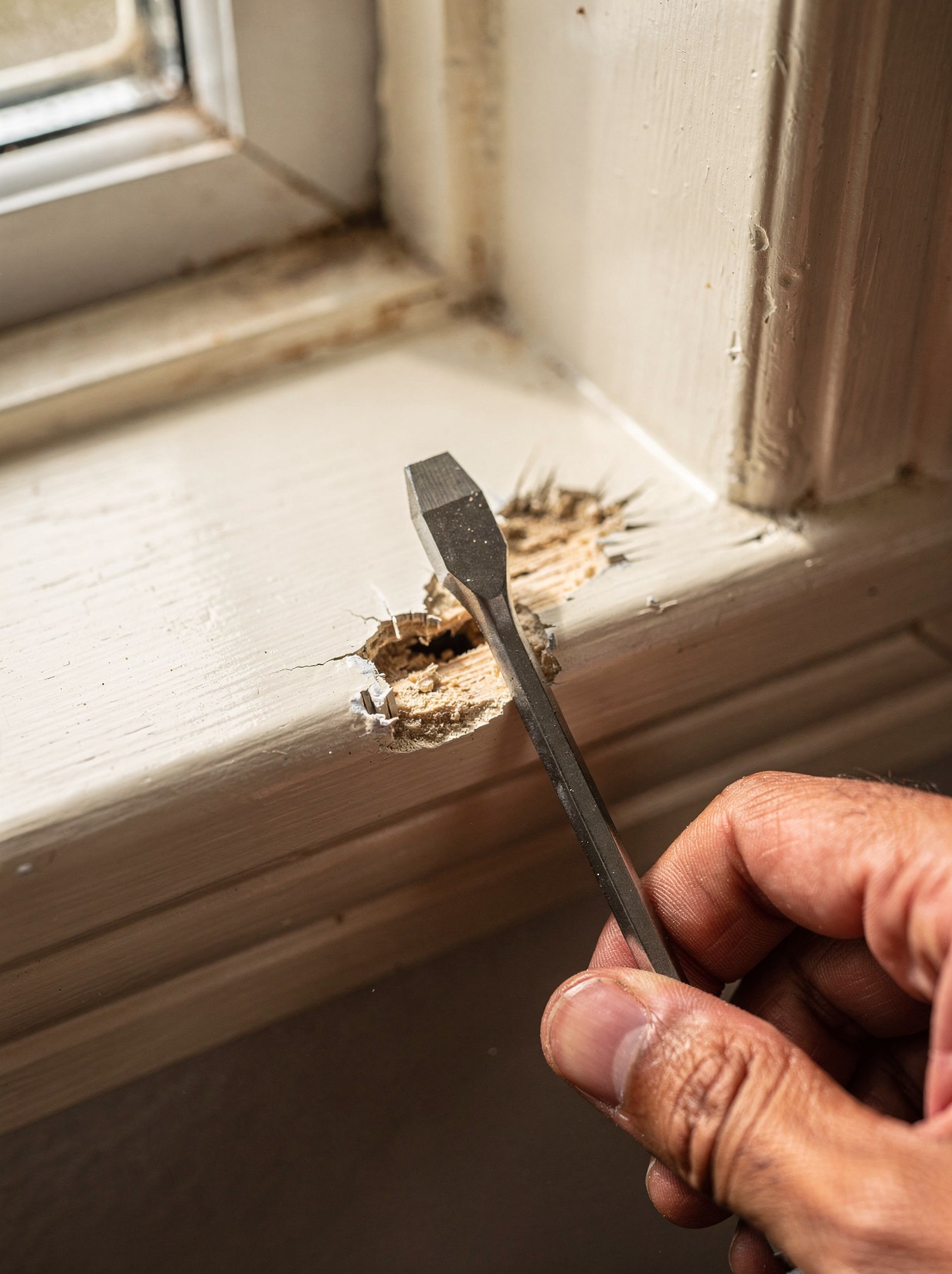
While you’re there, read the rest of the evidence. Rot rarely travels alone:
- The probe test — the screwdriver sinks, or the wood flakes and crumbles at the tip.
- Bubbling or flaking paint — moisture pushing up from underneath, breaking the film’s grip.
- Dark staining after rain — a corner that stays wet-looking when the rest has dried.
- Soft interior trim — the stool or casing inside gives at the corners, meaning water made it past the sill.
- A musty corner — damp wood in a closed wall has a smell, and it’s usually the first thing you notice and the last thing you trust.
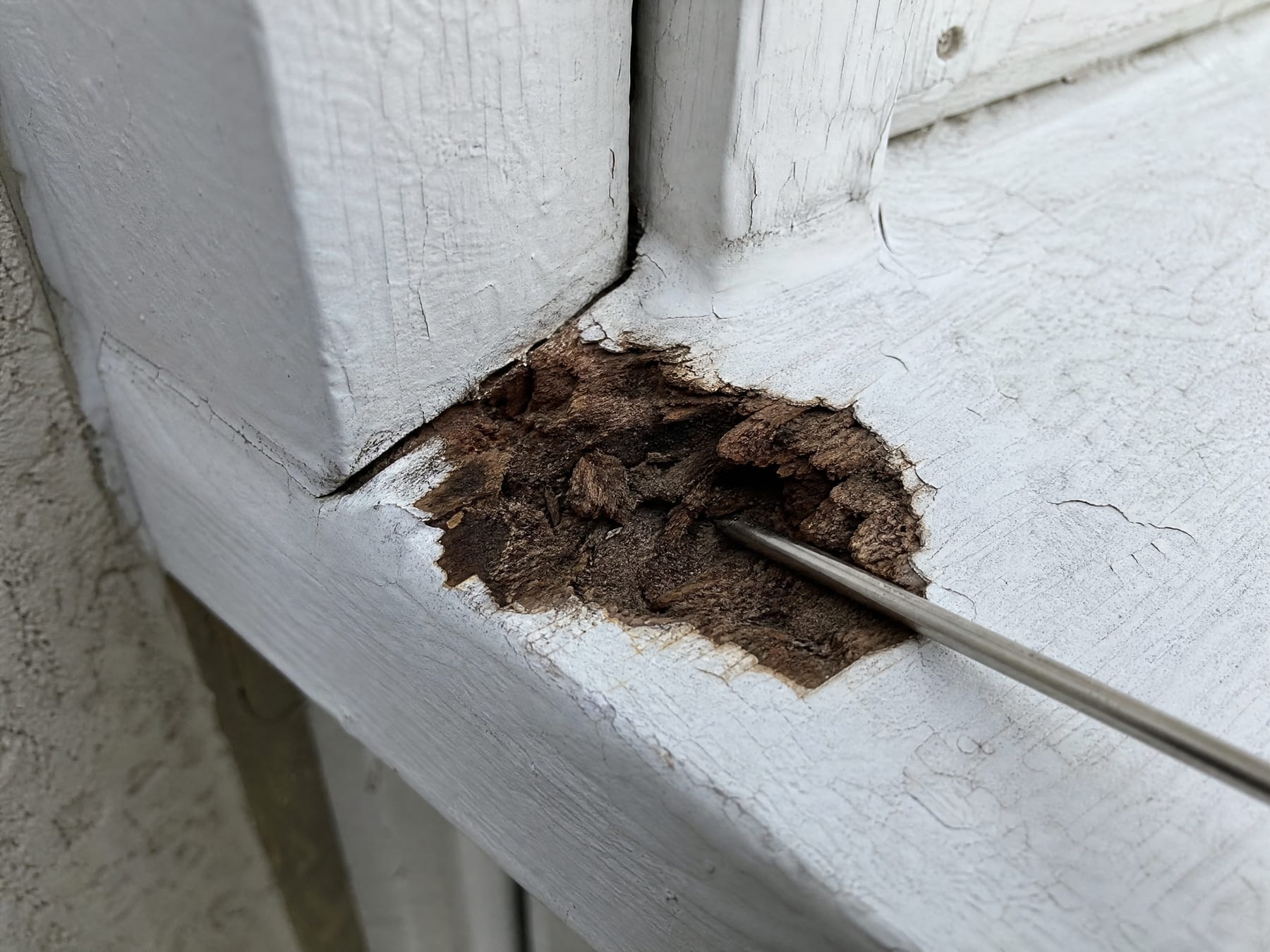
Then map it. Probe every few inches along the sill, then up the lower corners of the . What you’re drawing is a boundary: where does soft become solid again?
That boundary is the whole decision. A soft spot the size of your palm at one end of the sill is a different conversation than softness that runs the sill’s length or climbs into the frame.
When is epoxy a real fix?
When the rot is small, localized, and caught early — a proper epoxy repair is legitimate and durable, not a hack. This surprises people coming from a replacement-windows site, so let me say it plainly: small sill rot has a real fix, and it’s a fraction of the cost of a new window.
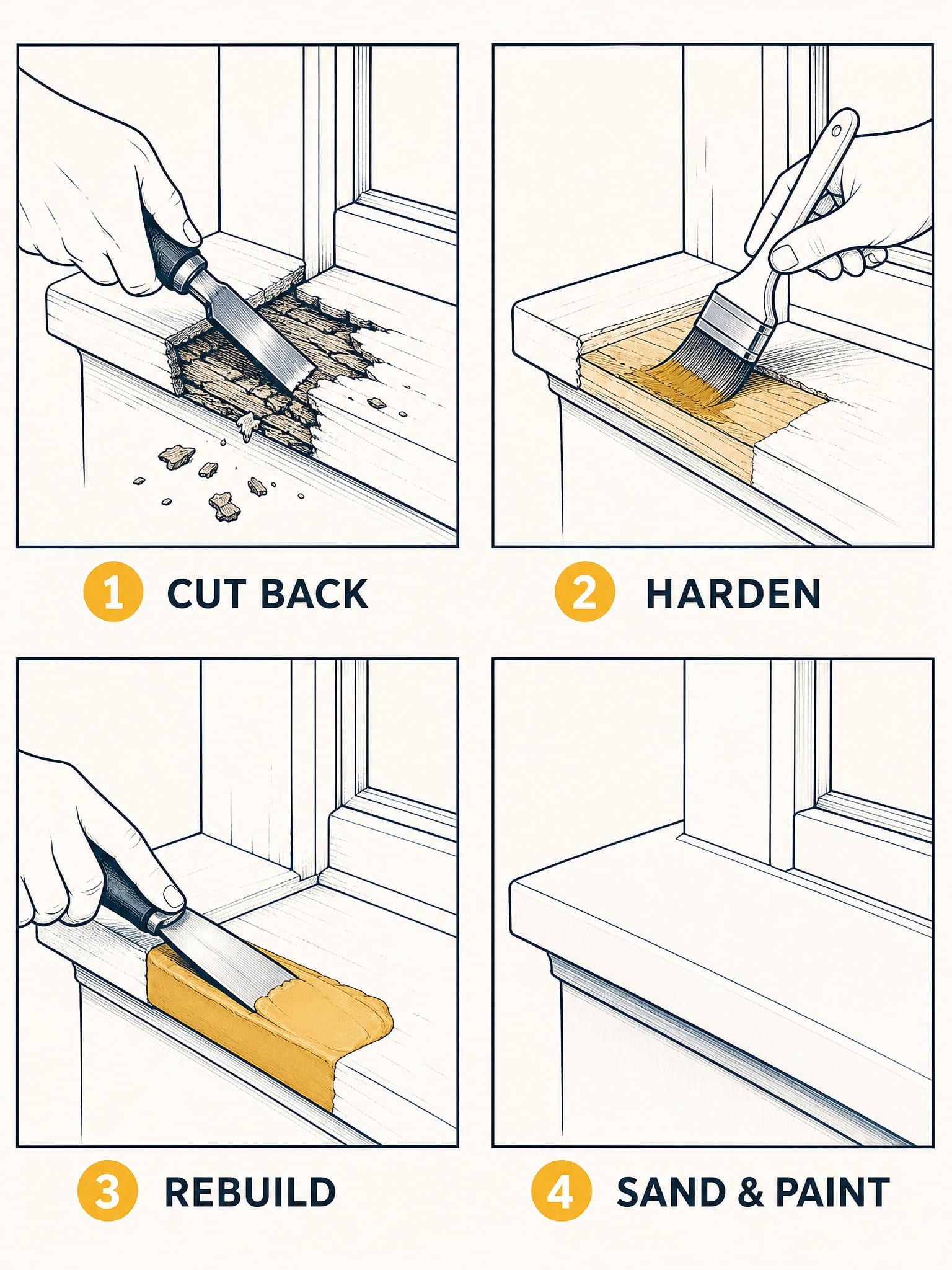
The method matters, because there’s a right version and a cosmetic version:
- Cut back to sound wood. All the punky, crumbling material comes out — chisel and scrape until the screwdriver meets resistance everywhere.
- Harden what’s left. A liquid, two-part wood consolidant soaks into the marginal fibers at the edges and firms them into a solid base. The industry reference here is Abatron’s LiquidWood — a low-viscosity epoxy that wicks into soft fibers and cures them hard; System Three’s Rot Fix does the same job.
- Rebuild with two-part epoxy. A structural epoxy filler putty — Abatron’s WoodEpox is the companion to LiquidWood, System Three’s SculpWood the companion to Rot Fix — packs into the void and gets shaped to the sill’s profile. It cures harder than the original wood, doesn’t shrink, and handles weather.
- Sand, prime, paint. Done right, you won’t find the repair in two years — and neither will water.
What’s the difference between this and wood filler? Ordinary filler is cosmetic — it fills a cavity and takes paint, but it doesn’t consolidate compromised wood and it doesn’t live long in the wet-dry cycle of an exterior sill. Filler and fresh paint are how rot hides. Epoxy after cutting to sound wood is how rot ends.
The rule of thumb I use for “small enough”: if the rot is confined to something like a tenth of the sill or less, epoxy is on the table. That’s a heuristic, not a code line — the real test is whether you can reach sound wood on every side of the repair.
One honest condition, and it’s non-negotiable: find the water first. Rot is a symptom. Somewhere above that soft spot is a failed caulk joint, torn flashing, a clogged gutter, or a splash line that keeps the wood wet. Patch the wood without stopping the water and you’re renting the repair, not owning it.
The two brands named above are the established consolidant-plus-filler systems, not the only ones — the method is what matters more than the label. Match a consolidant to its companion filler, and skip ordinary wood filler for anything structural.
One deliberate omission: you won’t find a repair price on this page. Rot-repair costs swing too widely with how far the decay ran and who does the work to quote honestly, so this page stays with the only cost claim that’s always true — a real epoxy repair is a fraction of replacing the window.
When does rot mean replacement?
When the softness runs past a small patch, reaches the frame or casing, or turns up at anything structural — replacement wins, and it wins honestly. This is the line, and it’s worth being precise about why it exists.
Past a certain spread, repair stops being repair and becomes chasing:
- You epoxy the sill, and next season the casing corner goes soft.
- You rebuild the corner, and the paint bubbles under the stool.
- Each patch is real, and each one loses.
Every patch loses because the water keeps winning. By the time rot shows on the surface in multiple places, it has usually been traveling inside the wood and the wall for years.
Three findings take epoxy off the table for me:
- Spread — softness at multiple points along the sill, or a soft zone too wide to reach sound wood around.
- Depth — the probe reaches the frame or the casing behind the sill. The sill is a part; the frame is the window’s skeleton.
- Structure — softness in the framing around the opening, or a sill that has visibly dropped or cupped. That’s a wall conversation, not a window part.
Here’s the part I want to say carefully, because every other page in this cluster told you “you probably don’t need new windows” — and that advice was honest. This page is where the honesty points the other way.
A contractor who looks at frame-deep rot and recommends replacement isn’t upselling you. Over real rot, that’s the correct call. The credibility this site spent telling you to repair your drafts and your stuck sashes gets cashed right here: when I say replace, it’s because the wood already voted.
If you’re weighing what that decision costs, what replacement costs when rot wins has the honest ranges. And if you’re still not sure your problem is rot at all, the full repair-or-replace test sorts every window problem, not just this one.
Can’t I just put an insert over a rotted frame?
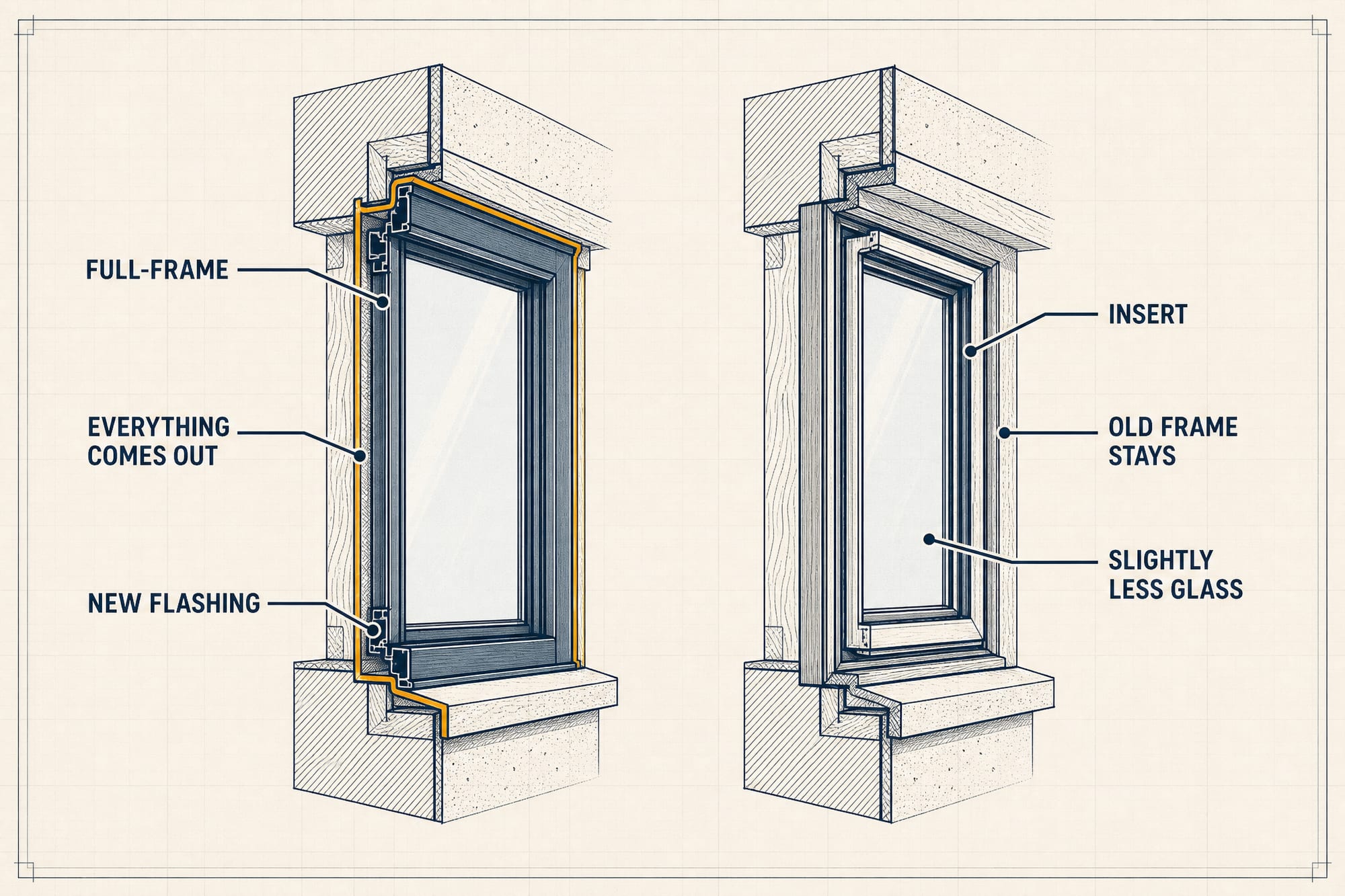
No — and this is the single most expensive misunderstanding in window replacement. An insert slides a new window into your existing frame. If that frame is rotted, the insert seals wet, failing wood inside your wall behind brand-new vinyl.
The rot doesn’t stop. The water source that fed it is still there. The decay keeps eating the sill, then the framing, then the sheathing around the opening — except now there’s no bubbling paint to warn you, because the evidence is behind a window that looks perfect.
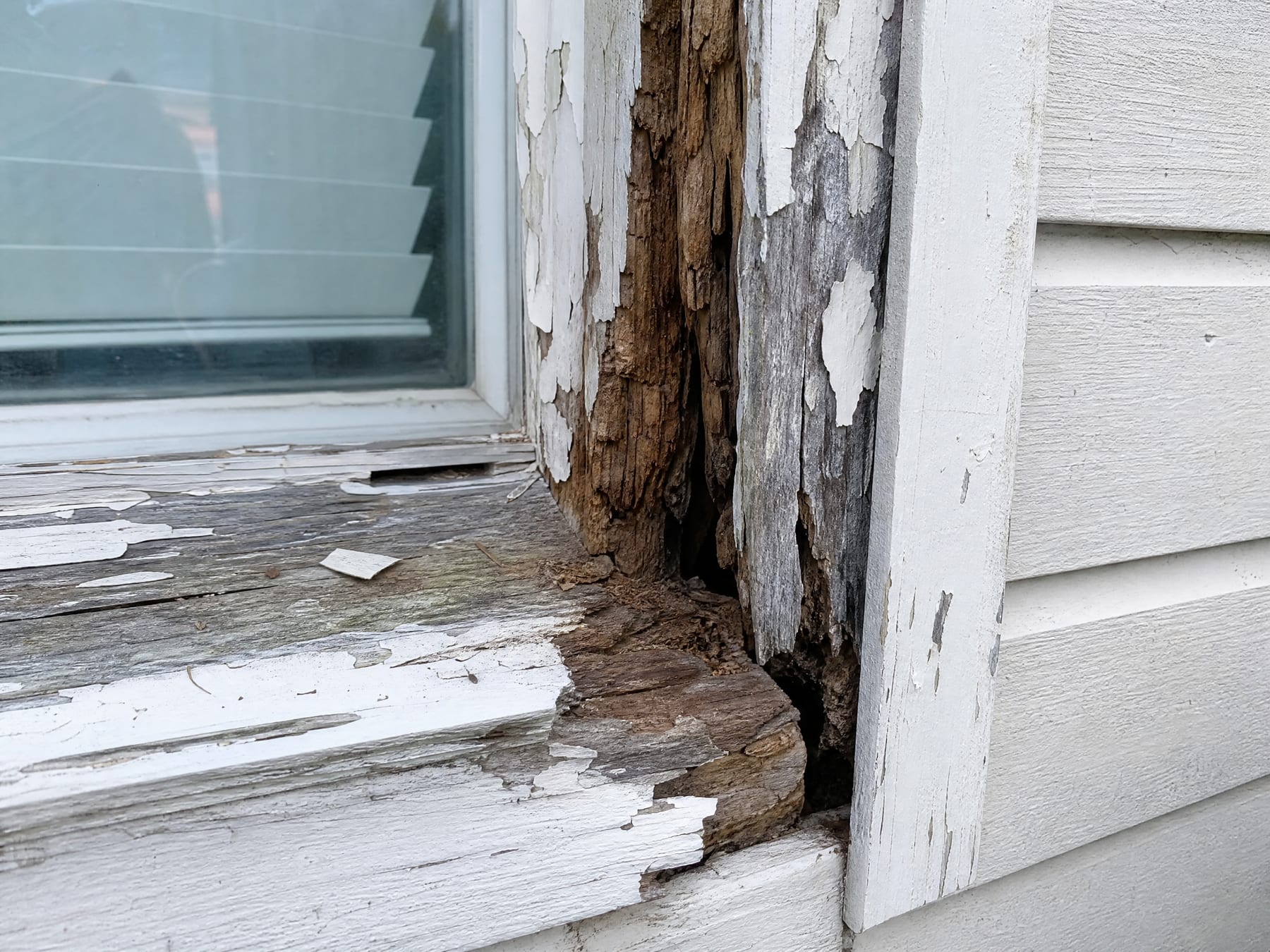
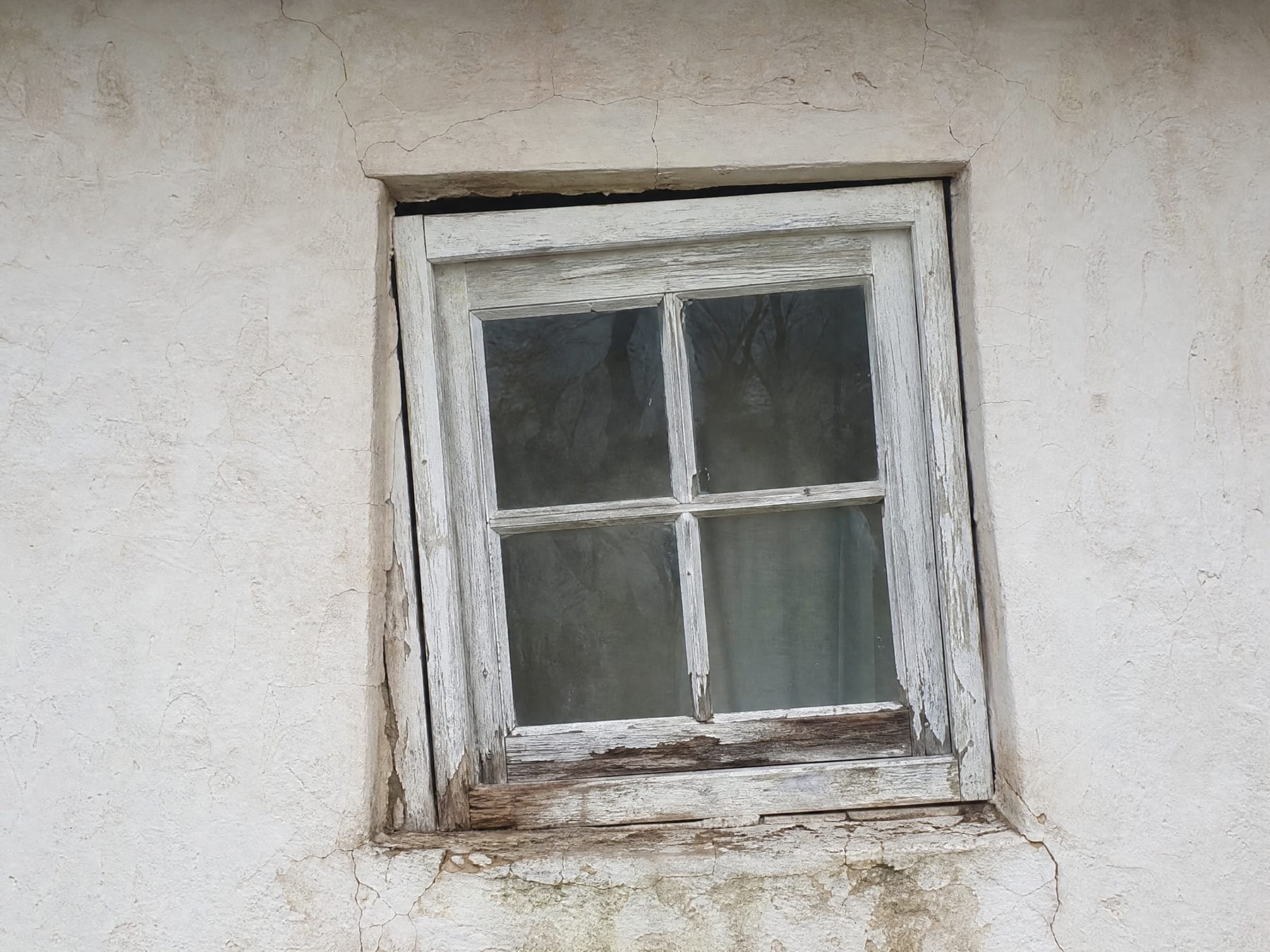
| What the probe found | What it looks like | What it means | The honest move |
|---|---|---|---|
| Localized sill rot — small, boundaries reachable | 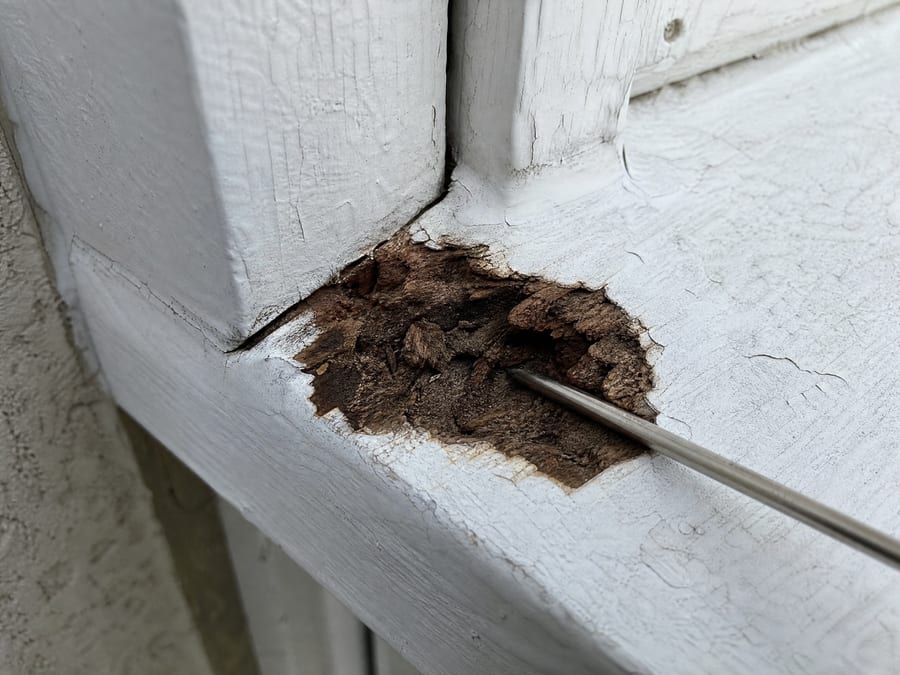 | The sill lost a battle, not the war | Cut, harden, epoxy — and stop the water |
| Rot into the frame or casing | 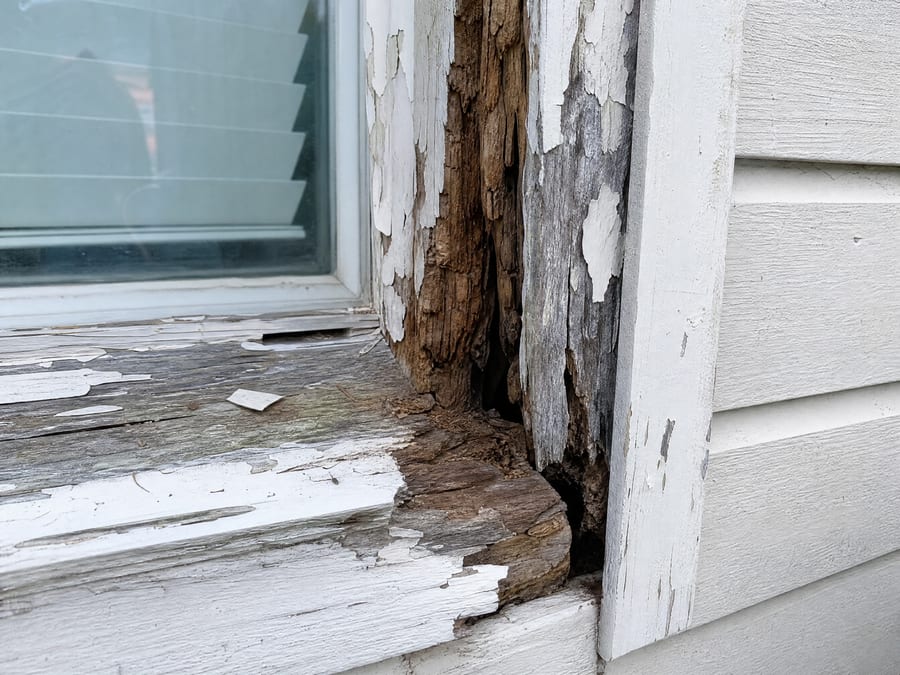 | The window’s structure is compromised | Full-frame replacement — the rot leaves with the frame |
| Rot plus out-of-square, or a long leak history | 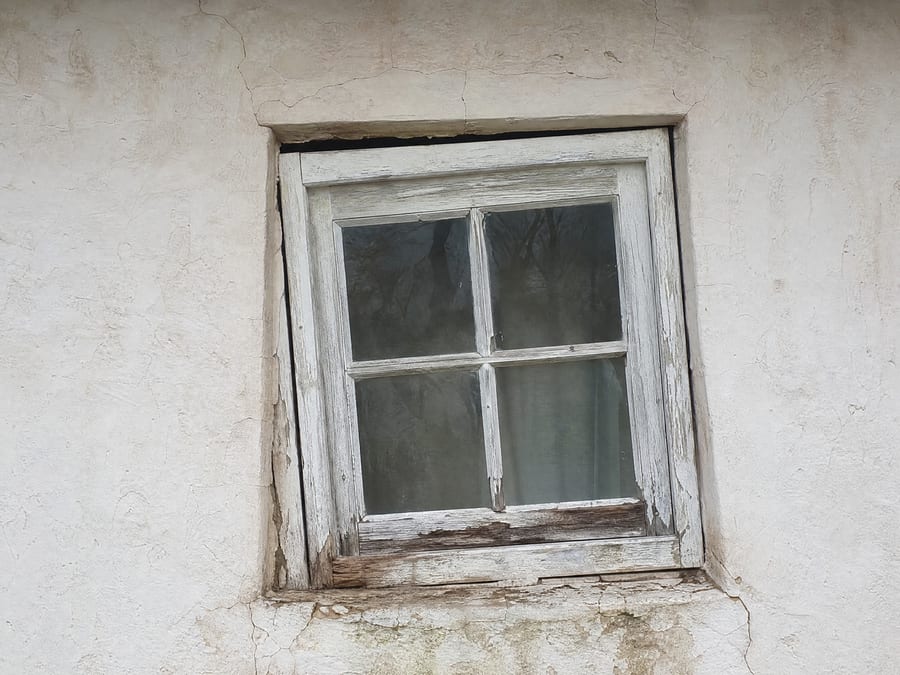 | The opening itself needs rebuilding | Full-frame — and have the opening inspected while it’s bare |
Localized sill rot — small, boundaries reachable
- What it looks like
-
- What it means
- The sill lost a battle, not the war
- The honest move
- Cut, harden, epoxy — and stop the water
Rot into the frame or casing
- What it looks like
-
- What it means
- The window’s structure is compromised
- The honest move
- Full-frame replacement — the rot leaves with the frame
Rot plus out-of-square, or a long leak history
- What it looks like
-
- What it means
- The opening itself needs rebuilding
- The honest move
- Full-frame — and have the opening inspected while it’s bare
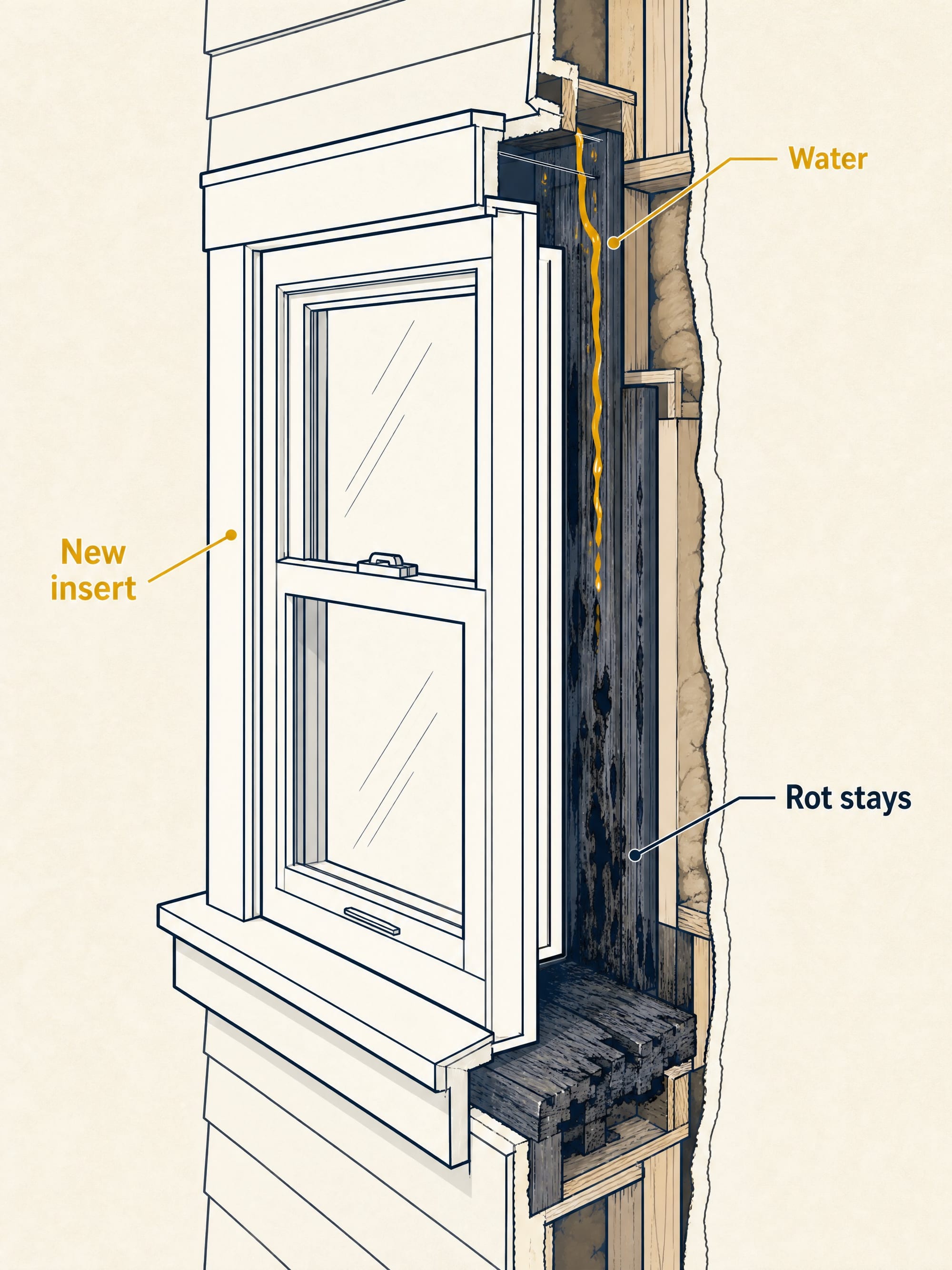
This is why full-frame replacement exists. A job strips the opening to the bare rough framing, which means the rotted wood physically leaves your house.
The opening gets inspected, any damaged framing gets corrected, and new flashing and a sill pan go in so the water that caused all this gets managed instead of invited back.
An insert can’t do any of that, because an insert never opens the wall.
The full decision between the two methods — including the case where the insert is the honest, cheaper answer on a healthy frame — lives at why rot forces a full-frame install. Short version: your frame’s condition picks the method, and rot is the loudest vote a frame can cast.
What’s the egress catch when you replace a bedroom window?
If the rotted window is in a bedroom, its replacement cannot shrink the clear opening below North Carolina’s emergency-escape minimums. This is a life-safety requirement, and it’s the detail most likely to be missed in exactly this situation — because a like-for-like replacement usually needs no permit in NC, which means no inspector ever checks the new opening.
Bedrooms, basements, and habitable attics need at least one , and a full-frame replacement with a thicker frame, or a switch to a different window style, can quietly reduce the clear opening a person has to fit through.
Measure the replacement’s clear opening before you order it, and ask the installer — in writing — to confirm the new unit meets NC egress in every bedroom it’s going into. The full picture, including when a size change triggers a permit, is on the NC window permits page.
What would I do at your window?
The same three steps, in the same order — and you can run them before anyone else does:
The 3-Step Rot Check
- Probe it. Screwdriver into the sill and lower casing corners, every few inches. Solid pushes back. Soft is rot.
- Trace the water. Look up: failed caulk, torn flashing, an overflowing gutter, a splash line. The rot’s source is always upstream of the rot.
- Map how far it runs. Find the boundary where soft becomes solid. Palm-sized and sill-only: epoxy conversation. Into the frame, or no boundary you can find: replacement conversation.
The boundary is the decision. Everything else is details.
Then the honest fork: small and contained, and I’d tell you to fix it for a fraction of what any replacement costs — the same way I’d tell you to fix a draft instead of replacing the window that has one.
Past the line, and I’d tell you that too, straight — full-frame, rot out of the wall, water source corrected, and an opening that’s actually dry under the new unit.
Rot hides under paint and behind trim, which is why this is the one problem on this site I’d rather see than diagnose by description. But run the three steps first. You’ll walk into any conversation — with me or anyone else — already knowing which one it is.
Sources, Verification & Fact-Checking verified July 2026
Every load-bearing fact on this page is sourced and verified against a primary authority.
Verified July 2026 via direct review of the cited authority — the links open the controlling source so you can check it yourself rather than take our word.
- Probe test and rot indicators (screwdriver probe, bubbling paint, staining, soft trim, musty corner): standard diagnostics consistent with Fine Homebuilding and This Old House-class rotted-sill repair guidance (e.g., Fine Homebuilding, “Rotten-Sill Repair” and “Fixing Rotted Windowsills”).
- Epoxy repair method (cut to sound wood, apply a two-part consolidant, rebuild with a structural two-part epoxy filler, shape and paint): the standard restoration method. The named systems — Abatron LiquidWood (consolidant) + WoodEpox (filler), and System Three Rot Fix + SculpWood — are the established two-part systems for structural exterior wood repair. Sources: Old House Journal, “Working With Abatron Epoxies”; Fine Homebuilding forum and articles documenting LiquidWood + WoodEpox for window-sill repair; Abatron / System Three product documentation.
- Wood filler is cosmetic; a structural two-part epoxy is the real exterior repair: consistent across the repair sources above — consolidant-plus-filler bonds into and rebuilds compromised wood and survives the wet-dry cycle in a way ordinary filler does not.
- Rule of thumb — rot confined to roughly a tenth of the sill may be epoxy-repairable; beyond that, full-frame: a practitioner heuristic, not a code line — stated and kept hedged in the body as a rule of thumb, with the real test being whether sound wood can be reached on every side of the repair.
- Insert over a rotted frame buries wet, failing wood; rot means full-frame; full-frame opens the rough opening for inspection, framing correction, flashing, and a sill pan: corroborated by This Old House (“Full-Frame vs. Insert Window Replacement,” thisoldhouse.com), Renewal by Andersen and Marvin install guidance, and the BC Housing / FenBC Best Practices for Window and Door Replacement in Wood-Frame Buildings.
- NC egress values — 4.0 sq ft net clear escape opening, 22 in height, 20 in width, 44 in max sill (2018 NC Residential Code R310.2.1, NC-AMENDED): verified against the ICC-hosted 2018 NC Residential Code (NCRC2018 R310.2.1) and the NC OSFM formal interpretation dated April 9, 2019. The national IRC 5.7 sq ft / 24 in figures are explicitly NOT North Carolina’s escape-opening requirement. (view source — 2018 NC Residential Code R310.2.1, ICC Digital Codes)
- Like-for-like replacement usually needs no permit in NC (so no inspector checks egress on a swap): per N.C.G.S. 160D-1110 — stated here as a pointer; the full statute breakdown lives on the NC window permits page.
- Rot-repair and sill-replacement costs: deliberately absent — direction-only (“a fraction of replacement”). Rot-repair pricing swings too widely with spread and labor to state an honest band.
- Story callout (“the sill that looked brand new”): a representative version of the recurring “fresh paint over punk wood found during a measure” report-back common on building forums; told as a pattern, not a single sourced thread.