


Two quotes, same house, same windows — thousands apart. Before you blame anyone, look for one word on each page: full-frame or insert.
When two window quotes don’t match, the first thing I look for isn’t the brand or the glass package. It’s that word. Because those two quotes may not be describing the same job — and once you see which is which, the gap usually stops looking suspicious and starts looking like a question you can actually answer.
Here’s the part nobody puts on the paper: the method isn’t a preference, and it isn’t an upsell tier. It’s a diagnosis. Your window frame already made the call — the quote is just supposed to read it correctly.
This page hands you the same checks I run at the opening, so the window decides. Not the paperwork.
Full-frame or insert replacement? Insert, if the existing frame is sound, square, and dry — it’s less work and less money, and on a healthy frame it’s the honest call. Full-frame, if there’s rot, racking, or a size or style change — it’s the whole opening, rebuilt. The frame’s condition decides. The test is below.
What’s actually different between the two?
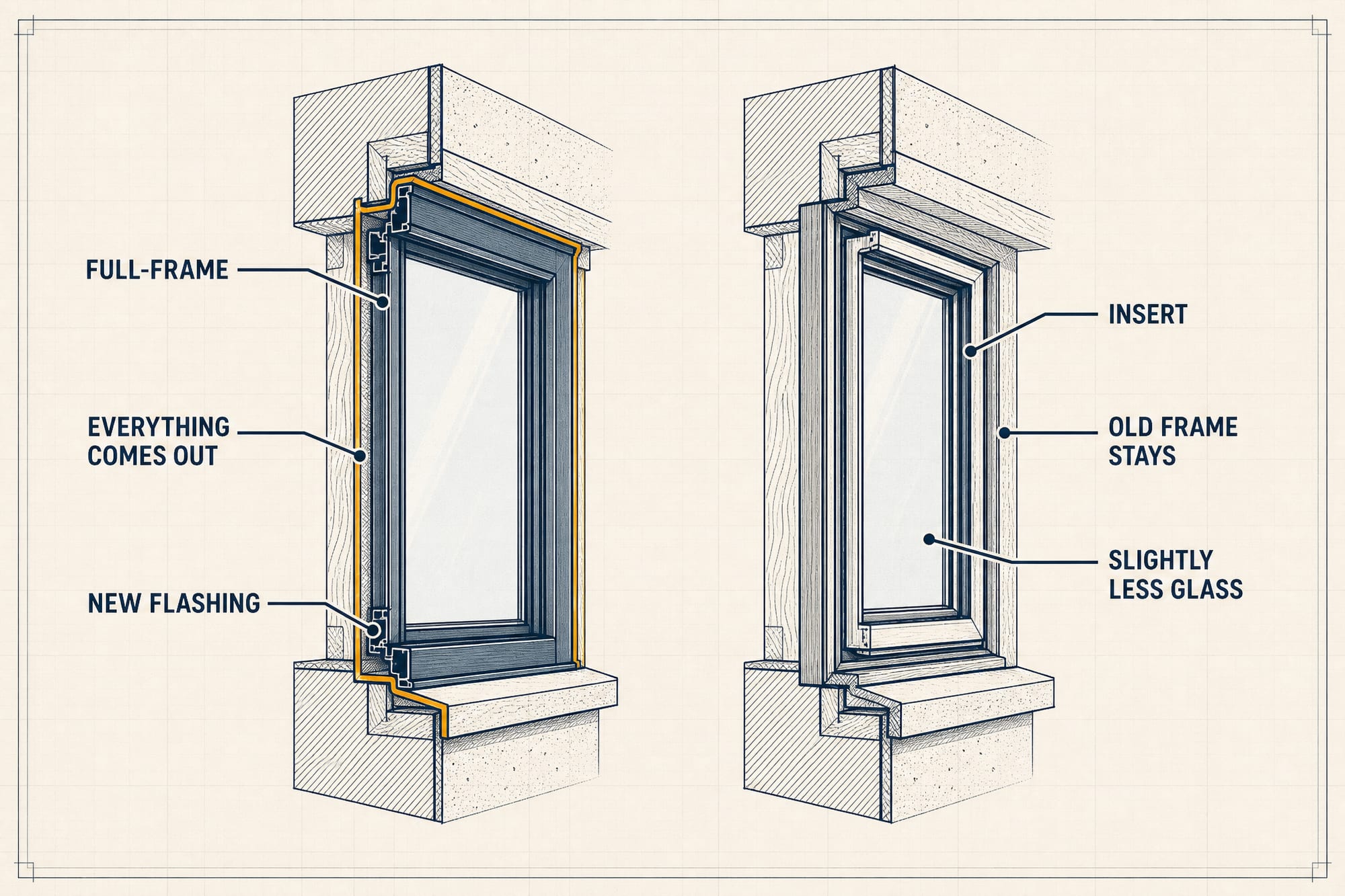
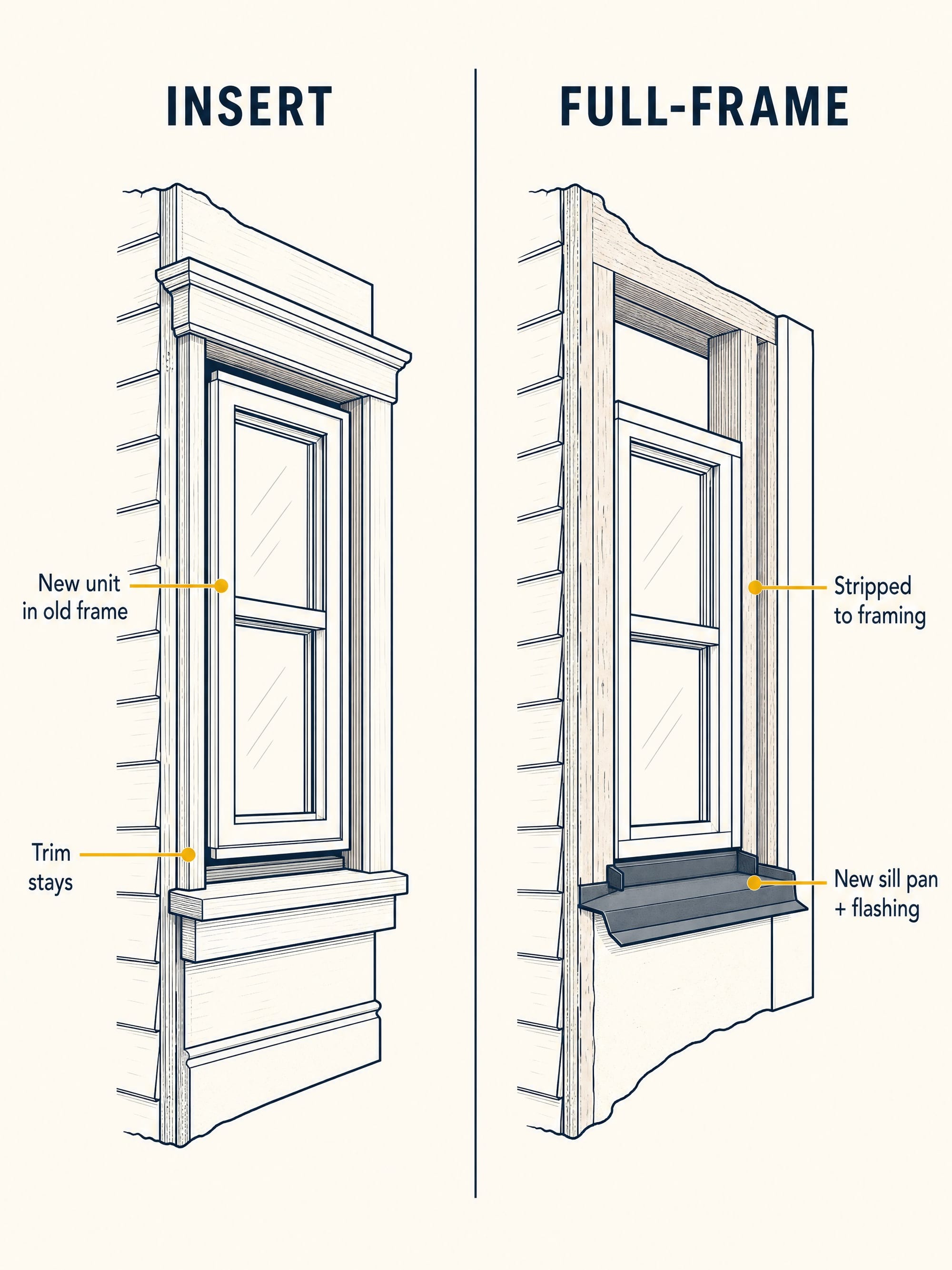
An insert slides a new window into your old frame. A full-frame replacement strips the opening to the bare framing and rebuilds all of it. That single sentence explains most of the price gap.
With an insert — you’ll also hear “pocket” or replacement — the crew removes the old sash, hardware, and stops, and the new unit nests inside the existing frame. Your interior trim, exterior trim, and siding never move.
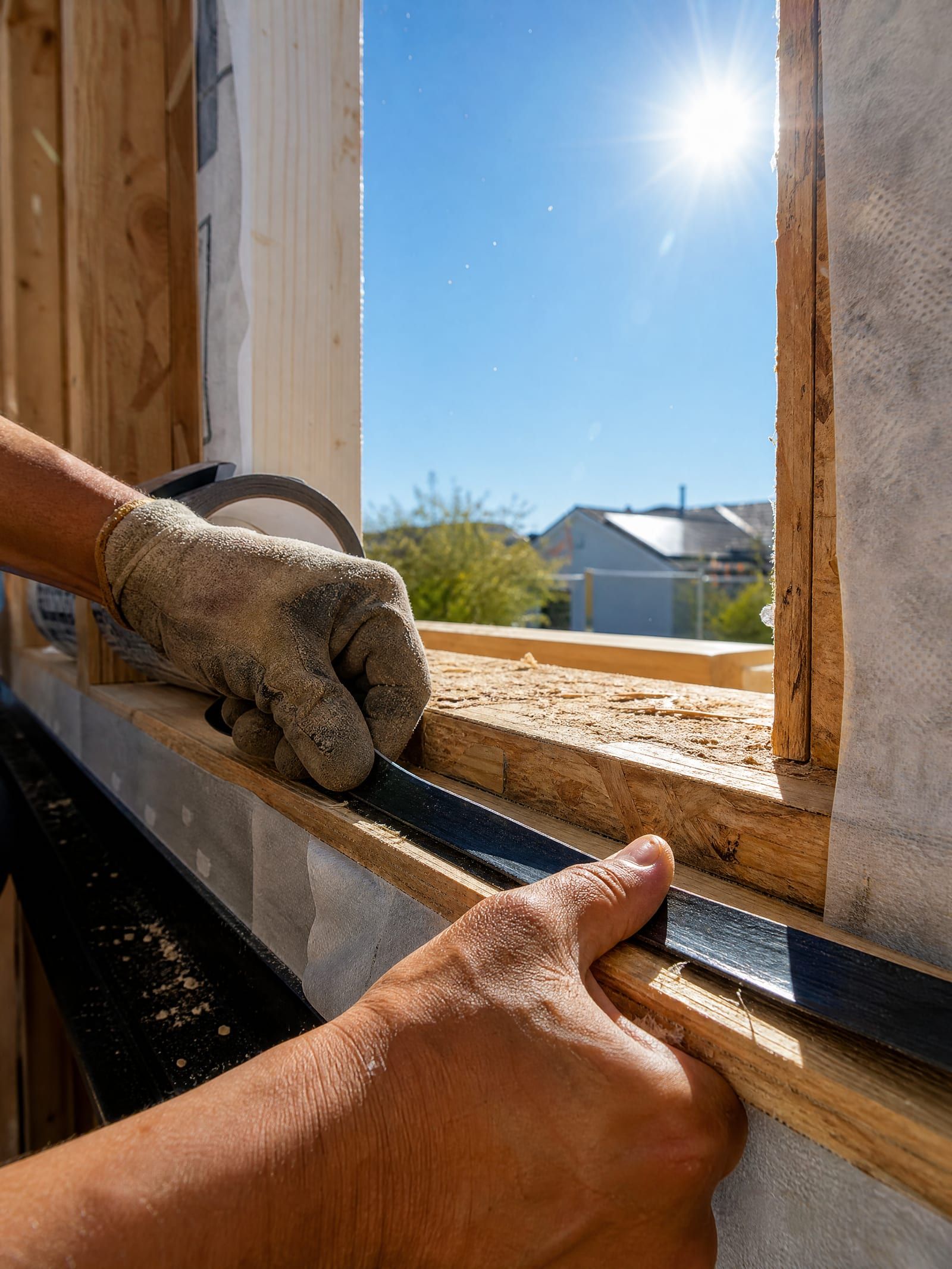
With full-frame, everything comes out: sash, frame, sill, usually the trim too, down to the .
Then the opening gets inspected, a new and flashing go in, the gap gets insulated, and new trim finishes it inside and out.
| Insert (pocket) | Full-frame | |
|---|---|---|
| What's removed | Sash, stops, hardware — the old frame and trim stay | Everything, down to the rough opening |
| What it fixes | The window unit itself | The unit, plus hidden rot, bad flashing, and air leaks in the opening |
| Glass area | Slightly smaller — new frame sits inside the old one | Full size for the opening |
| Disruption and time | Less — trim and siding untouched | More — trim comes off, walls get opened up |
| Relative cost | Less | More — the scope is simply bigger |
| When it's right | Sound, square, dry frame; same size and style | Rot, racking, out of square, chronic leaks, or a size/style change |
What's removed
- Insert (pocket)
- Sash, stops, hardware — the old frame and trim stay
- Full-frame
- Everything, down to the rough opening
What it fixes
- Insert (pocket)
- The window unit itself
- Full-frame
- The unit, plus hidden rot, bad flashing, and air leaks in the opening
Glass area
- Insert (pocket)
- Slightly smaller — new frame sits inside the old one
- Full-frame
- Full size for the opening
Disruption and time
- Insert (pocket)
- Less — trim and siding untouched
- Full-frame
- More — trim comes off, walls get opened up
Relative cost
- Insert (pocket)
- Less
- Full-frame
- More — the scope is simply bigger
When it's right
- Insert (pocket)
- Sound, square, dry frame; same size and style
- Full-frame
- Rot, racking, out of square, chronic leaks, or a size/style change
Neither one is the “cheap version” of the other. They’re different scopes of work for different openings. The question is only ever which one your opening needs.
Why does the method move the quote so much?
Scope of work. A full-frame quote isn’t padded — it’s carrying line items the insert job genuinely doesn’t have.
Think about what full-frame adds that an insert never touches:
- Tear-out to the rough opening, plus hauling the debris.
- Inspecting and correcting the framing.
- A new sill pan and flashing tied into the wall’s .
- Fresh insulation in the gap.
- Interior and exterior trim, cut and finished on every window.
An insert skips nearly all of that. Same window, a fraction of the labor and materials around it.
So when one quote says insert and the other says full-frame, the gap is mostly the job description, not the markup. Full-frame costs meaningfully more because it is meaningfully more.
To put loose numbers on it: This Old House pegs insert (pocket) replacements at roughly $100 to $400 per window and full-frame at roughly $180 to $1,500 per window. Read those as wide national bands, not a quote — the ranges overlap, and window size, frame material, and your specific opening move the real figure more than the method label does.
The takeaway isn’t a dollar amount. It’s the direction: the same window costs more to install full-frame because full-frame is a bigger job.
The honest comparison isn’t “cheap quote vs expensive quote.” It’s “does my opening need the bigger scope, or am I paying to rebuild a hole that’s fine?” That’s a condition question — so let’s check the condition.
The condition test: how I decide at the window
Three checks, five minutes, no ladder. This is what I do at an opening before the method question gets an answer, and you can run all three yourself before anyone else stands in your kitchen.
The 3-Check Opening Test
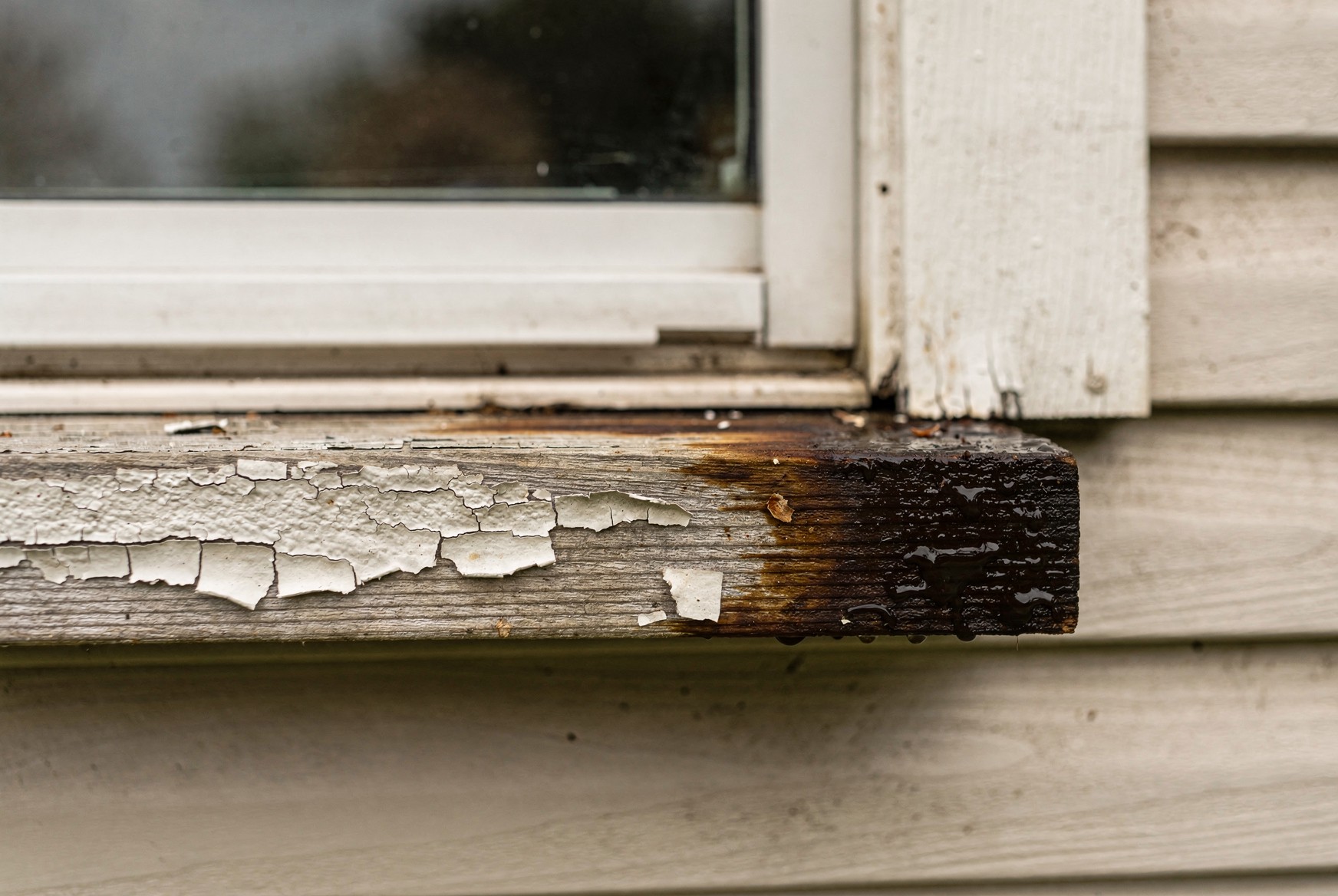
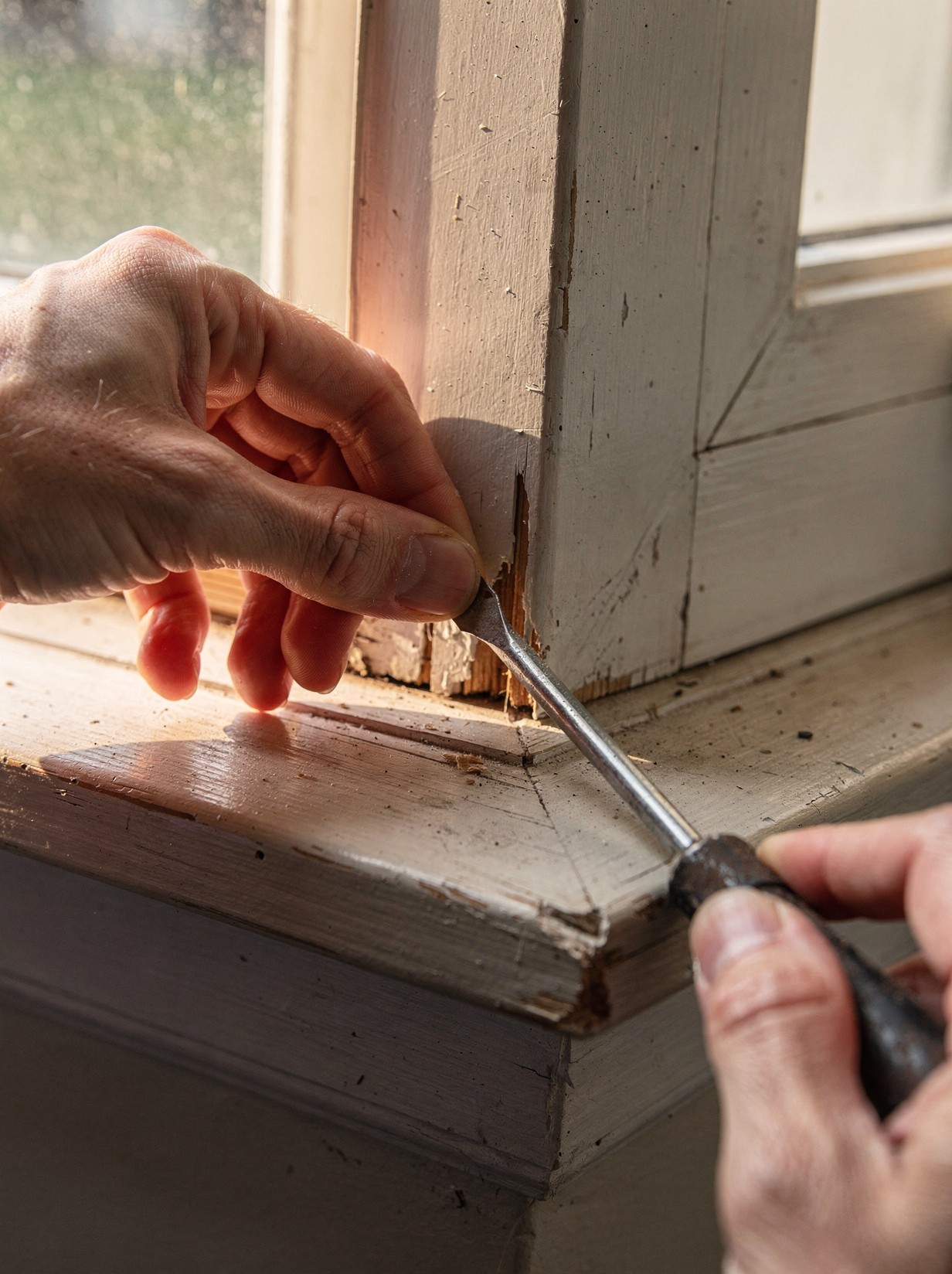
- Probe the sill. Press a screwdriver tip into the sill and the lower frame corners. Solid wood pushes back. Soft, punky wood that gives under the tip is rot — and rot changes the method. Check outside corners especially.
- Measure both diagonals. Corner to opposite corner, twice. If the two numbers land within roughly a quarter inch of each other, the opening is square enough for a standard replacement. A bigger gap means the frame has racked.
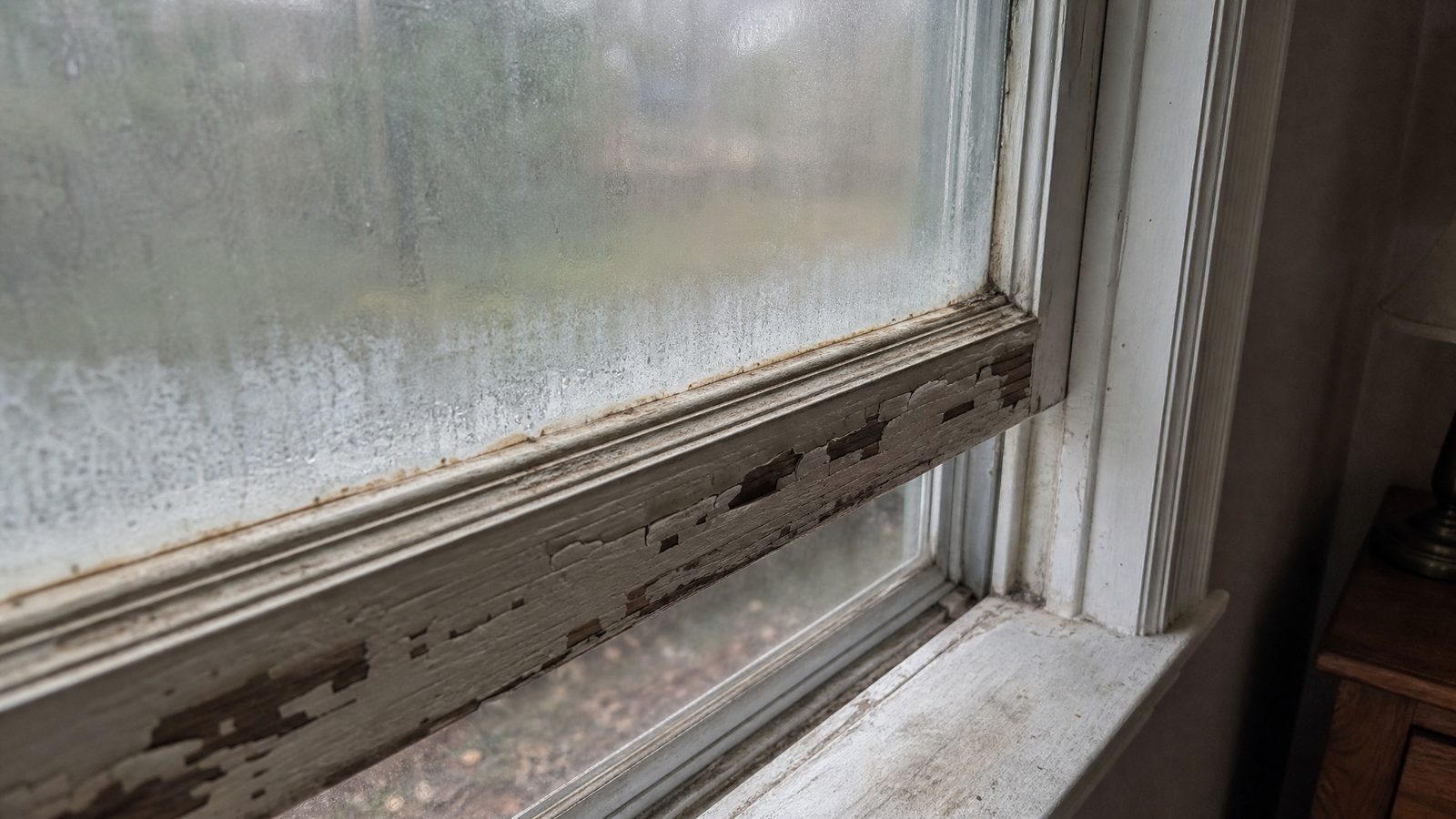
- Look for water signs. Bubbling or flaking paint at the frame, dark staining that shows up after rain, soft interior trim, a musty corner. Water leaves a paper trail — read it before you buy anything.
Pass all three and an insert is on the table. Fail any one and you’re in full-frame territory.
That’s the whole test. No sales training required — a screwdriver and a tape measure outvote any pitch, in either direction.
If check one turned up soft wood, stop here and read when rot forces full-frame — that’s the deep version of the worst-case answer, and it’s the one problem on this list that can’t be talked into being smaller than it is.
When is an insert the honest, cheaper answer?
When the frame passes: sound wood, square opening, no water history — and you’re keeping the same size and style. On that opening, an insert isn’t a corner cut. It’s the correct scope, and paying for full-frame there is paying to rebuild what’s already right.
This matters, because plenty of readers land here braced to hear that the cheaper quote is hiding something. Sometimes it is — that’s the next section. But on a healthy frame, the insert is the honest recommendation, and this page is allowed to say so.
You keep your trim. You keep your siding intact. The crew is in and out faster, and the number at the bottom of the quote is smaller because the work is smaller.
Two real trade-offs come with it, and you should hear them before you sign:
- Slightly less glass. The new frame nests inside the old one, so the daylight opening shrinks a little on every side. This Old House puts it plainly — an insert “slightly reduce[s] the overall glass area,” which can trim a bit of natural light versus full-frame. How much depends entirely on your window; published “inches per side” figures are all over the map, so on a small window it’s worth eyeballing yours before you decide rather than trusting a number off the internet.
- The old frame’s leaks stay. An insert doesn’t touch the gap between your old frame and the wall. If that joint leaks air now, it leaks air after — the insert replaces the window, not the hole it sits in.
Neither trade-off is a dealbreaker on a sound frame. They’re just the fine print that belongs above the signature line, not after it.
When does an insert quietly bury a problem?
When the frame already failed the test — rot, racking, out of square, or a history of leaks — an insert covers the problem without curing it. New vinyl on the outside, the same failing wood underneath.
This is the one scenario where the cheaper method genuinely costs more. Rot doesn’t stop because it got dark. Wet wood keeps softening behind the new unit, the leak keeps feeding it, and the wall keeps paying — invisibly now, because the evidence is sealed behind a window that looks brand new.
And if you sell the house before it surfaces, the next owner inherits it.
I want to be careful here, because this is where readers start assigning motives. A contractor who quotes an insert usually isn’t hiding anything — most openings are sound, and on a sound opening the insert is right.
The failure mode isn’t dishonesty. It’s a method chosen off the tape measure instead of off the sill. Nobody probed, nobody pulled the trim, and the quote assumed a healthy frame that wasn’t.
That’s exactly why the three-check test exists. If your sill gave under the screwdriver, the kind quote and the correct quote are different documents. Rot means full-frame — because the rot has to come out of the wall with the old frame, and an insert leaves both right where they are.
Which one is right for your house — the short version?
Four lines. This is the whole decision:
- Sound frame, same size and style → insert. The honest, cheaper call.
- Any rot in the sill or frame → full-frame. The rot leaves with the old frame — here’s why.
- Out of square, racked, or a leak history → full-frame. New windows don’t fix old holes.
- Changing the size or style of the opening → full-frame, plus a permit — size changes are a trigger in NC.
If you’re still upstream of this — not sure the windows need replacing at all — run the repair-or-replace test first. Plenty of “replacement” problems are repairs wearing a costume, and the honest worth-it math is worth running before any method question.
For everything else that happens after the method is chosen — flashing order, shimming, foam, the red flags of a rushed job — the full NC installation picture covers it. And what replacement actually costs in NC puts honest ranges around whichever scope your openings need.
The method question is the rare one in this business with a genuinely objective answer. The window already knows. Probe the sill, pull the tape across the diagonals, read the paint — and let your opening pick its own quote.
Sources, Verification & Fact-Checking verified July 2026
Every load-bearing fact on this page is sourced and verified against a primary authority.
Verified July 2026 via direct review of the cited authority — the links open the controlling source so you can check it yourself rather than take our word.
- Insert vs full-frame definitions, when each is right, and full-frame’s access to inspect the opening / add flashing and a sill pan: This Old House, “Full-Frame vs. Insert Window Replacement.” thisoldhouse.com. Corroborated for the “insert over a damaged frame isn’t recommended; full-frame exposes the rough opening for flashing and a sill pan” point by Renewal by Andersen and Marvin install guidance, and by the BC Housing / FenBC Best Practices for Window and Door Replacement in Wood-Frame Buildings.
- Per-window cost bands (insert roughly $100–$400; full-frame roughly $180–$1,500) — cited as national ranges, not a quote: This Old House, same article. thisoldhouse.com. Bands are wide and overlapping by design; the page states them as direction, not a price.
- Diagonals within roughly a quarter inch = square enough for a standard replacement: widely recognized installer method (This Old House, Lowe’s, Home Depot measuring guides); consistent with KB installation.md §4. Hedged “roughly.”
- Insert slightly reduces glass area: This Old House (“insert replacements also slightly reduce the overall glass area”). thisoldhouse.com. No reliable “inches per side” figure exists — published claims range from under an inch to several inches — so the page keeps “slightly” and tells the reader to measure their own window.
- An insert leaves the old frame’s air leaks in place (it replaces the window, not the gap around it): the insert nests inside the existing frame, so the joint between that old frame and the wall is never touched — consistent with the insert-scope description above.
- Rot rule of thumb (small localized sill rot may be epoxy-repairable; beyond that, full-frame): the deeper version of this call lives on the rotted-sill page rather than being restated with a percentage here; kept hedged.
- Size/style change triggers a permit in NC: stated as a pointer only; values and statute live on the permits page (KB: nc-window-permits-code.md, N.C.G.S. 160D-1110). No egress or threshold numbers restated here by design.
- Story callout (“when the trim comes off”): composite of the recurring building-forum report-back (Fine Homebuilding and DIY threads) in which an insert plan flips to full-frame once the trim is pulled and the sill probes soft. Told as a representative pattern, not a single sourced thread.