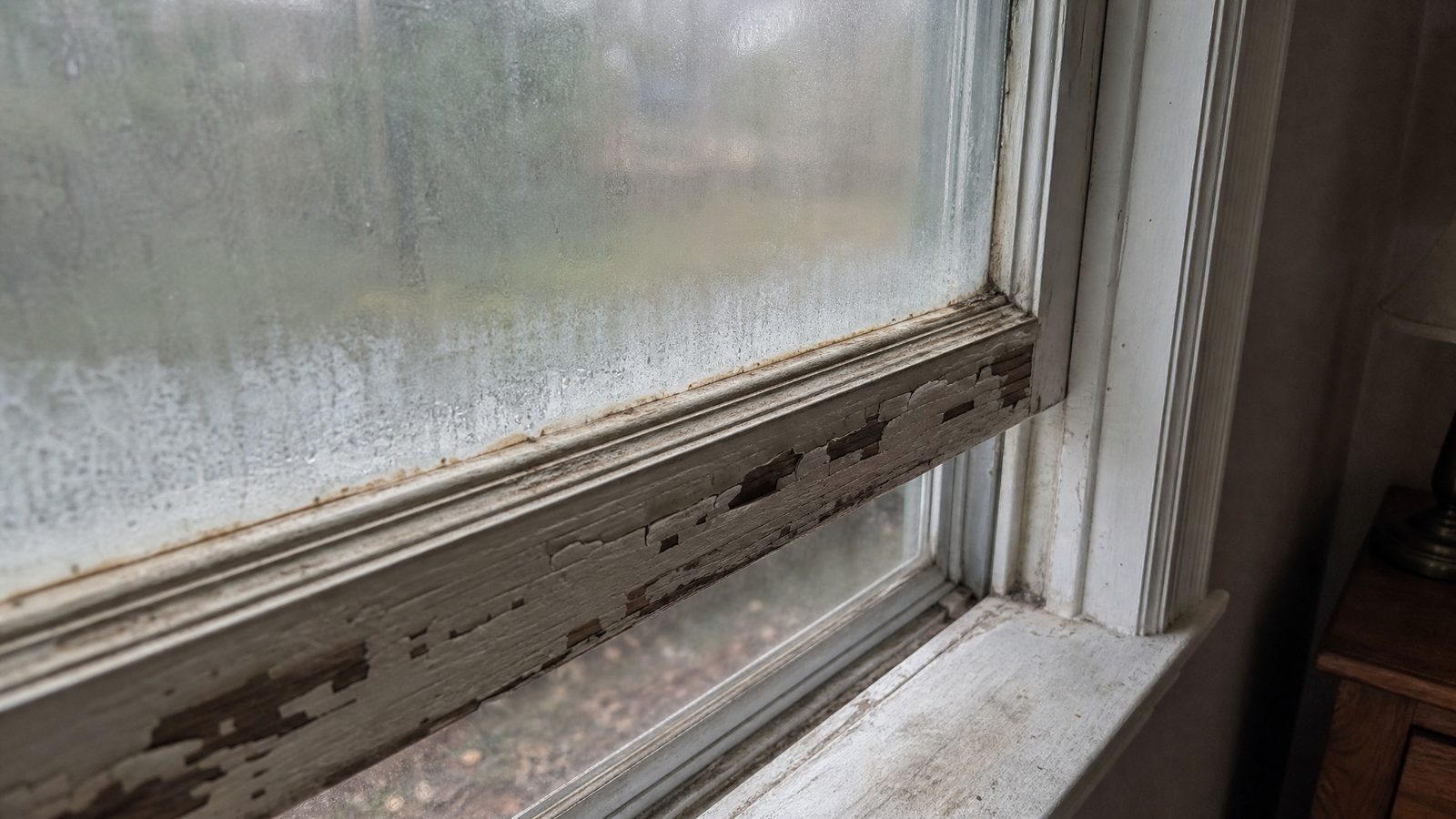




You’ve got the quote on the table and one question: is this worth it — or am I buying the most expensive draft-stopper in North Carolina?
You’ve probably already run the calculator on your energy bill. Whether that math closes comes down to one thing nobody at the table asks first: what are you replacing? Tired single-pane and failed, foggy units are where the savings get real and the payback shows up. Sound, decent double-pane is where the bills alone rarely close it.
This is the question I’d rather answer honestly than profitably. So let’s do that.
Are replacement windows worth it? It rides on what you’re replacing. Over single-pane or failed windows: often a clear yes — real energy savings and comfort, paying back over time. Over sound, decent windows: the bills alone rarely close it fast, so the answer leans on comfort and resale. The honest move is to stop asking “will they pay for themselves fast?” and start asking “how wide is the gap between what I have and a genuinely good window?” The wider that gap, the clearer the yes.
The honest energy math (it rides on what you’re replacing)
Windows are responsible for 25–30% of a home’s heating and cooling energy — so what you save rides on how leaky your current ones are. Replace sound, decent double-pane and the bill barely moves. Replace tired single-pane or failed, foggy units and you’re clawing back a big slice of that 25–30% — real money, year after year.
Run the same numbers on your own bill. Take your actual annual heating-and-cooling spend, figure the share your current windows are bleeding, and multiply by the years you’ll stay.
Over single-pane, that’s a large number — and a genuine payback, just a patient one.
Over decent windows, it’s a smaller offset. Either way, run it on your bill, not a sales chart.
ENERGY STAR puts real numbers on it. Replacing single-pane windows with certified ones lowers household energy bills by an average of up to 13% nationwide — worth roughly $101–$583 a year, depending on where you live:
- Cold zones — about $200–$465 a year
- Moderate zones — about $126–$319 a year
- Hot zones — about $111–$235 a year
But that 13% is an average — and averages hide the spread.
Swap single-pane or failed units for a premium, both-seasons glass package and you land well above it: window makers estimate 20–40% off heating and cooling for that kind of retrofit. Homes with sound double-pane land below it.
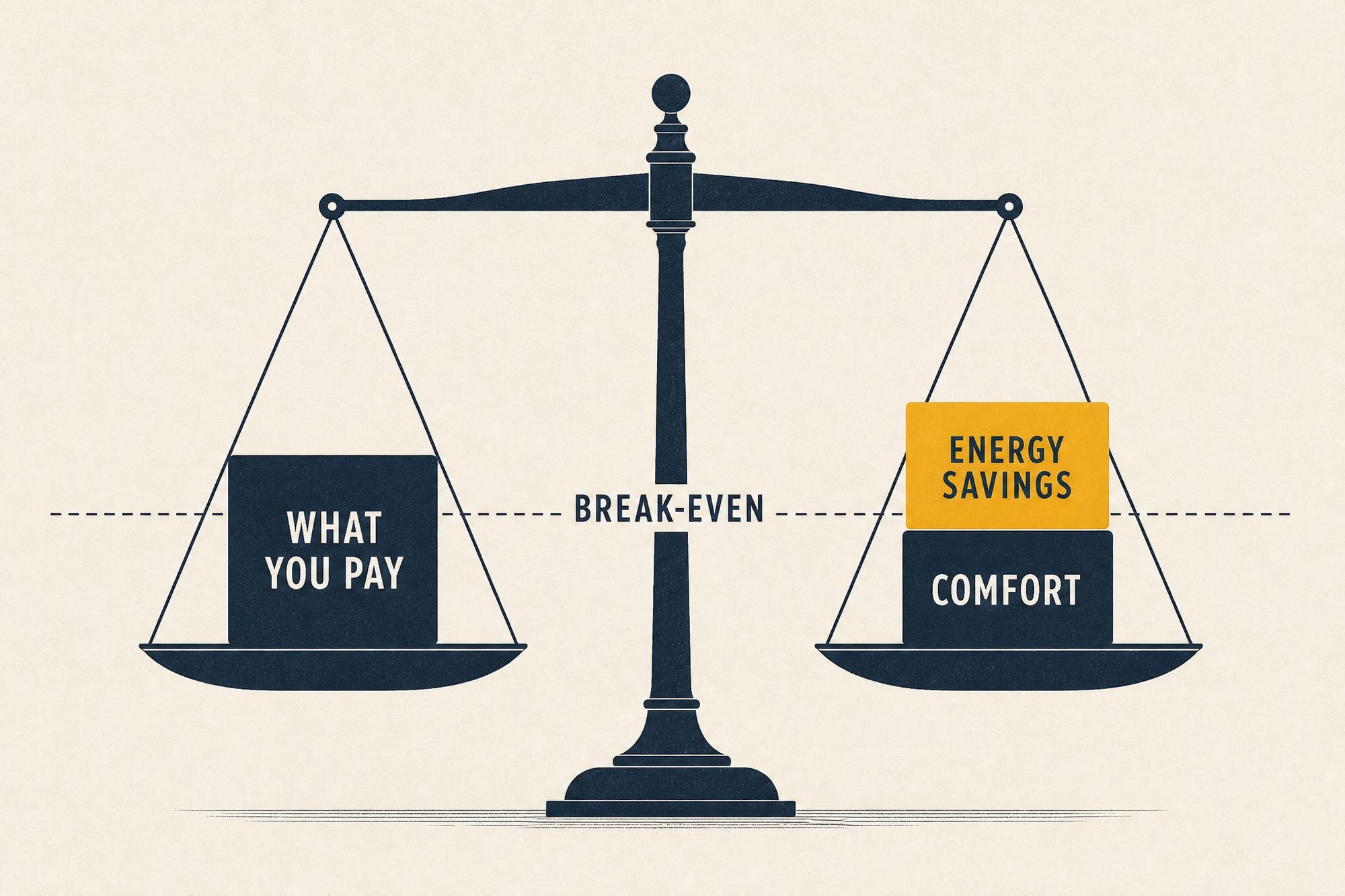
The wider your gap, the bigger your number.And the honest target isn’t “free” — it’s break-even. Land near break-even over the years you’re in the house, and every winter you didn’t sit under a blanket — and every July the west room stayed usable — came at no net cost.
Windows are one of the few upgrades that pay you in two currencies at once: lower bills and daily comfort.
National figures, not an NC quote — run your own bill through the math above.
Now the internet’s worst-case example: one homeowner ran his payback at 75 years and asked, reasonably, whether he’d need to outlive his own house first. Fair — but that’s the floor, the number you get replacing already-decent windows on a mild bill. Start from single-pane or failed units and the same tape runs a lot shorter.

What new windows actually buy you
Comfort is the real product — and on the right retrofit, the savings come with it. Once you stop asking windows to pay for themselves on bills alone, the full return comes into focus — and much of it is the kind you feel every day.

- The west room in July. A modern glass package with the right keeps afternoon sun from cooking a room. If one room is unusable by 4pm, that’s the return you’ll actually feel.
- The cold coming off the glass. A lower means you can sit next to a January window without a blanket.
- Quiet. A tight, modern and fresh weatherstripping take a real bite out of road noise.
- Condensation that wipes away. That kind is usually your humidity, not the window. Fog between the panes means a failed seal — a new sealed unit ends it.
- Windows that open, stay up, and lock. Function is safety and sanity, and it’s the most underrated line on this list.
- Curb appeal. New windows read from the street, inside and out.
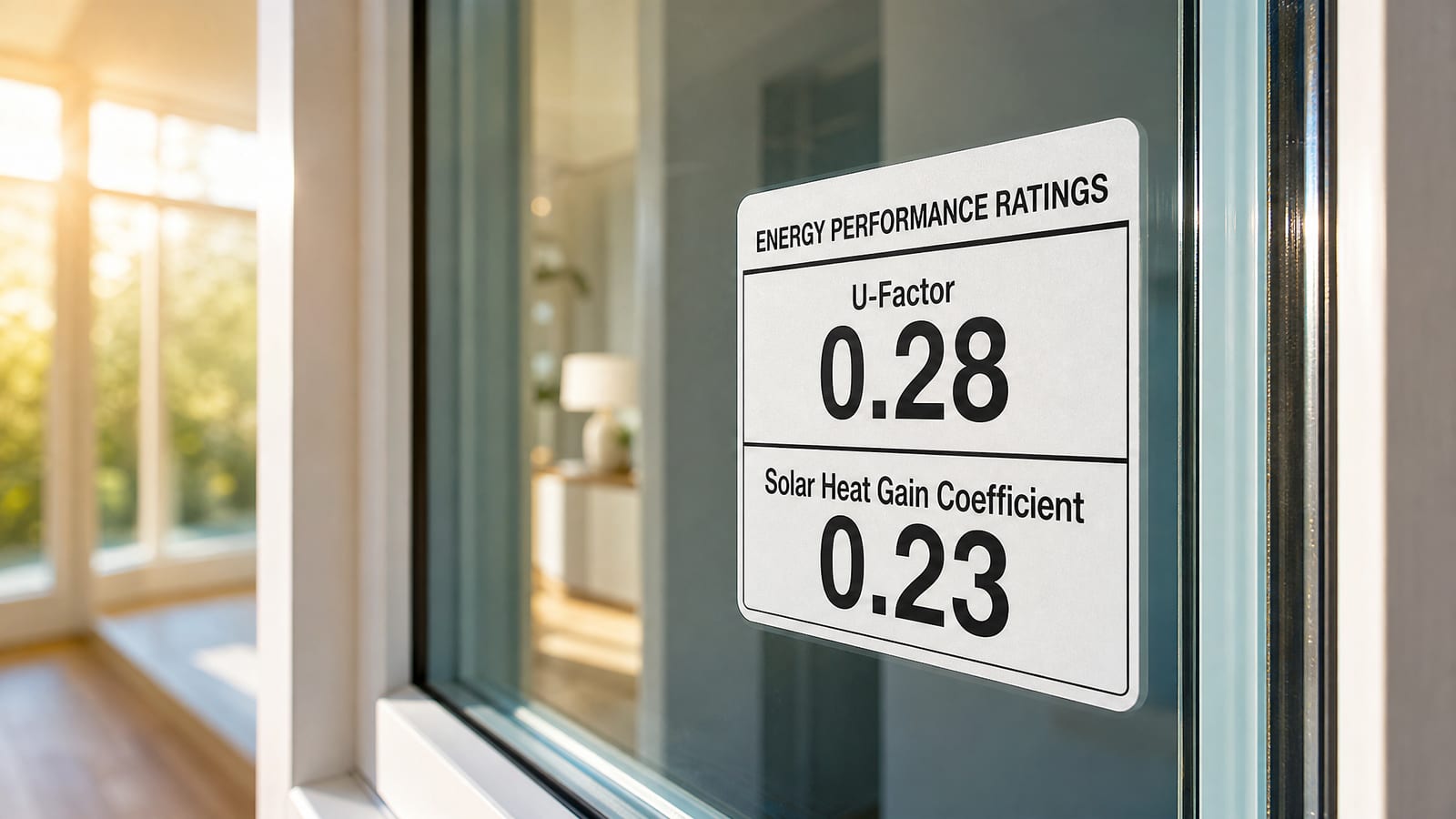
The numbers behind those comfort claims live on the label. Here’s the ratings behind the comfort claims if you want to see what U-factor and SHGC actually measure.
| What you're buying | What's realistic | How to weigh it |
|---|---|---|
| Energy savings | 10–40% off heating & cooling depending on what you're replacing — real payback over time, biggest over single-pane or failed units | The wider the gap to a good window, the more this counts |
| Comfort | The biggest change you'll feel: no cold wall of glass, no roasting west room | This is the product. Weigh it like one |
| Noise | A real reduction with a quality IGU and tight install — not silence | Worth a lot near a busy road; worth less on a quiet street |
| Function & safety | Windows that open, stay open, and lock | If yours are painted shut or won't stay up, this alone can justify the job |
| Resale recovery | A majority share of cost back at sale — recovery, not profit | An offset that shrinks the true cost of everything above |
Energy savings
- What's realistic
- 10–40% off heating & cooling depending on what you're replacing — real payback over time, biggest over single-pane or failed units
- How to weigh it
- The wider the gap to a good window, the more this counts
Comfort
- What's realistic
- The biggest change you'll feel: no cold wall of glass, no roasting west room
- How to weigh it
- This is the product. Weigh it like one
Noise
- What's realistic
- A real reduction with a quality IGU and tight install — not silence
- How to weigh it
- Worth a lot near a busy road; worth less on a quiet street
Function & safety
- What's realistic
- Windows that open, stay open, and lock
- How to weigh it
- If yours are painted shut or won't stay up, this alone can justify the job
Resale recovery
- What's realistic
- A majority share of cost back at sale — recovery, not profit
- How to weigh it
- An offset that shrinks the true cost of everything above
If you’re replacing anyway, don’t settle for the weaker window
The upcharge from a mediocre window to a genuinely good one is small next to the total — the performance gap between them is not. Once you’ve decided to replace, the real fork isn’t whether to spend; it’s whether the glass you buy earns it back.
A window that only fights winter — a low U-factor — but bakes all summer leaves half the savings and half the comfort on the table. In North Carolina, where cooling is the bigger bill, you want a glass package that does both jobs: a low U-factor for the January cold off the glass and a low SHGC for the July sun.
That two-season window is the one that pushes your bill toward the top of the savings range instead of the bottom — and pays you back in comfort every day in between.
So even when the math lands at break-even — or just short of it — the better window is still the right buy. You’re not choosing between profit and loss; you’re choosing which version of “roughly even” comes with a quiet, comfortable, good-looking house for the years you’re in it.
Saving a little upfront on a weaker unit usually costs more in bills and comfort before you’re done.
The resale piece — what you get back
At resale, window replacement typically returns a majority of what you spent — recovery, not profit. Remodeling-industry cost-vs-value reports have consistently put window replacement’s resale recovery in the same broad band for years: most of a dollar back, not a dollar-plus.
The current Cost vs. Value 2025 report (Zonda Media, in partnership with the Journal of Light Construction) puts national vinyl window replacement recovery at roughly 68–76% of project cost at resale, with regional figures spread across that band.
That’s a majority-share recovery, not a dollar-for-dollar return, and it moves some by region and report year.
The right way to use that number: subtract it from the sticker. If a project costs you a hypothetical amount and resale hands back most of it when you sell, the true cost of the comfort you bought is the gap between those numbers.
That’s a much fairer frame than “will they pay for themselves” — and it’s why staying seven-plus years changes the answer.
When replacement is NOT worth it (yet)
If the frames are sound and the problems are fixable, repair first. This is the part most cost pages skip, so I’ll give it real space: plenty of “worth it?” askers don’t need new windows yet.
- A drafty window with a sound frame is usually a weatherstripping and sealing job — the draft you can fix for a few dollars, not a five-figure decision.
- A sash that won’t stay up is typically a balance replacement, not a window replacement — here’s the stuck-window fix.
- One or two fogged panes in otherwise-healthy windows can take an IGU (glass-pack) swap instead of whole new units.
- You’re moving within a few years and nothing has structurally failed. The next owner’s tastes are unknowable. The comfort years are ones you won’t be there for.
National cost guides put a single balance replacement at roughly $75–$300 (a pair, both sides of one window, about $150–$500), and an IGU (glass-pack) swap at roughly $250–$800 installed depending on size and glass type. Both are a fraction of full window replacement, and national ranges rather than an NC quote.
The full sorting logic — fine, fixable, or failing — lives at you might not need new windows at all.
If your windows land in “fixable,” you just saved the price of this entire article’s subject, and I’d rather tell you that than sell you.
When it clearly IS worth it
When failure is structural, widespread, or you’re buying comfort you’ll use for years — the math changes. The clear cases:
- Failed seals across many units. Fog between panes in half the house isn’t a repair situation anymore. It’s a replacement queue.
- Rot in the frames or sills. Once water is in the wood, patching chases a moving target. That’s a full-frame conversation.
- A single-pane whole house. The comfort gap and the energy math both hit their best case here — this is where the 20–40% savings and the fastest payback actually live.
- Chronic function failure. Painted shut, won’t lock, won’t stay open — across the house, that’s a living-quality and egress-safety problem.
- You’re staying 7+ years. Every comfort return compounds, and the resale offset is still there at the end.
How to run the decision for your house
Four questions, honestly answered, settle almost every case. Sit at the same table where the quote is and work through them:
The 4-Question Worth-It Check
- How long will you stay? Under about 3 years: lean repair-first. Over 7: comfort returns compound.
- What’s actually failing? Sound frames + fixable problems = repair. Rot, widespread seal failure, single-pane = replace.
- What are you buying — bills or comfort? If the pitch is savings, re-run the math on your own bill. If it’s the west room in July, that’s real.
- What would repair cost instead? Get that number too. A fair comparison needs both sides priced.
Save this — it’s the whole decision in four lines.
If the answers point at replacement, your next stop is the full NC cost picture so the numbers you compare are honest ones. Then sanity-check the quote itself before you sign anything.
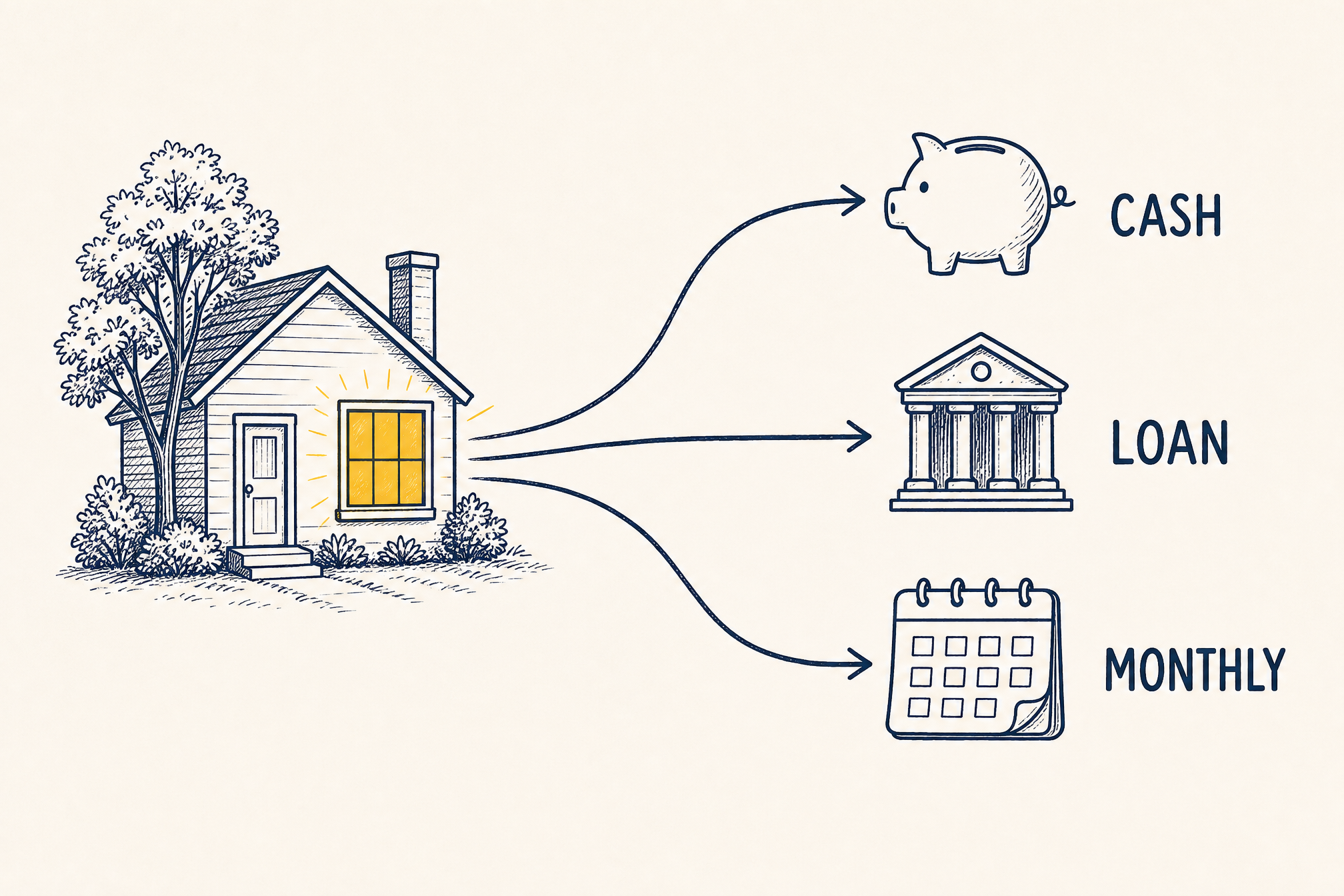
If paying over time is part of the picture, read the honest financing picture first — the monthly payment is where the real total likes to hide.
And if you’d rather run the four questions with someone who does this for a living, that’s exactly what a no-pressure second opinion is for. Including — and I mean this — the answer where you keep the windows you have!
Sources, Verification & Fact-Checking verified July 2026
Every load-bearing fact on this page is sourced and verified against a primary authority.
Verified July 2026 via direct review of the cited authority — the links open the controlling source so you can check it yourself rather than take our word.
- Windows drive 25–30% of home heating & cooling energy: US DOE (Energy Saver) attributes 25–30% of residential heating and cooling energy use to heat gain and loss through windows — the basis for why replacing single-pane or failed units recovers a meaningful slice of the bill. (view source — DOE Energy Saver, Update or Replace Windows)
- Energy savings (ENERGY STAR 13% average; $101–$583/year): ENERGY STAR states certified replacement windows lower household energy bills by an average of up to 13% nationwide (single-pane replacement), with annual savings of roughly $101–$583/year (about $200–$465 cold-climate, $126–$319 moderate, $111–$235 hot), climate-zone dependent — a national average, not an NC-specific number. (view source — ENERGY STAR, Windows Savings)
- 20–40% best-case savings (single-pane or failed → premium, both-seasons glass): a window-manufacturer/industry estimate for the top-of-range retrofit — not an NFRC-verified or per-home guarantee, and entirely dependent on the windows being replaced. It sits above ENERGY STAR’s 13% average because that average blends in lower-gap replacements, and stays within DOE’s 25–30% window-loss share. Presented as a best case, not a promise.
- Federal 25C window tax credit expired 12/31/2025: P.L. 119-21 (One Big Beautiful Bill Act) accelerated the termination of the IRC §25C credit; the IRS confirms improvements like windows placed in service after 12/31/2025 are no longer eligible. (view source — IRS, Energy Efficient Home Improvement Credit)
- Resale recovery (majority-share, not profit; roughly 68–76% nationally for vinyl): the Cost vs. Value 2025 report (Zonda Media / Journal of Light Construction) puts national vinyl window replacement cost-recouped in this band, with regional figures spread across it — directional, moves by region and report year. (view source — Cost vs. Value 2025, JLC — site returned a bot block on automated fetch; verify in browser)
- Comfort mechanics (U-factor, SHGC, IGU seal failure): NFRC label definitions and ENERGY STAR climate-zone criteria — the same verified basis as the site’s energy-ratings reference. (view source — NFRC; view source — ENERGY STAR criteria)
- Repair-first cost comparisons (balance replacement about $75–$300 single / $150–$500 pair; IGU glass-pack swap about $250–$800 installed): national cost-guide aggregates (Angi/Fixr/HomeGuide-class sources), presented as wide national ranges, not an NC quote — full window replacement remains materially more expensive than either repair.