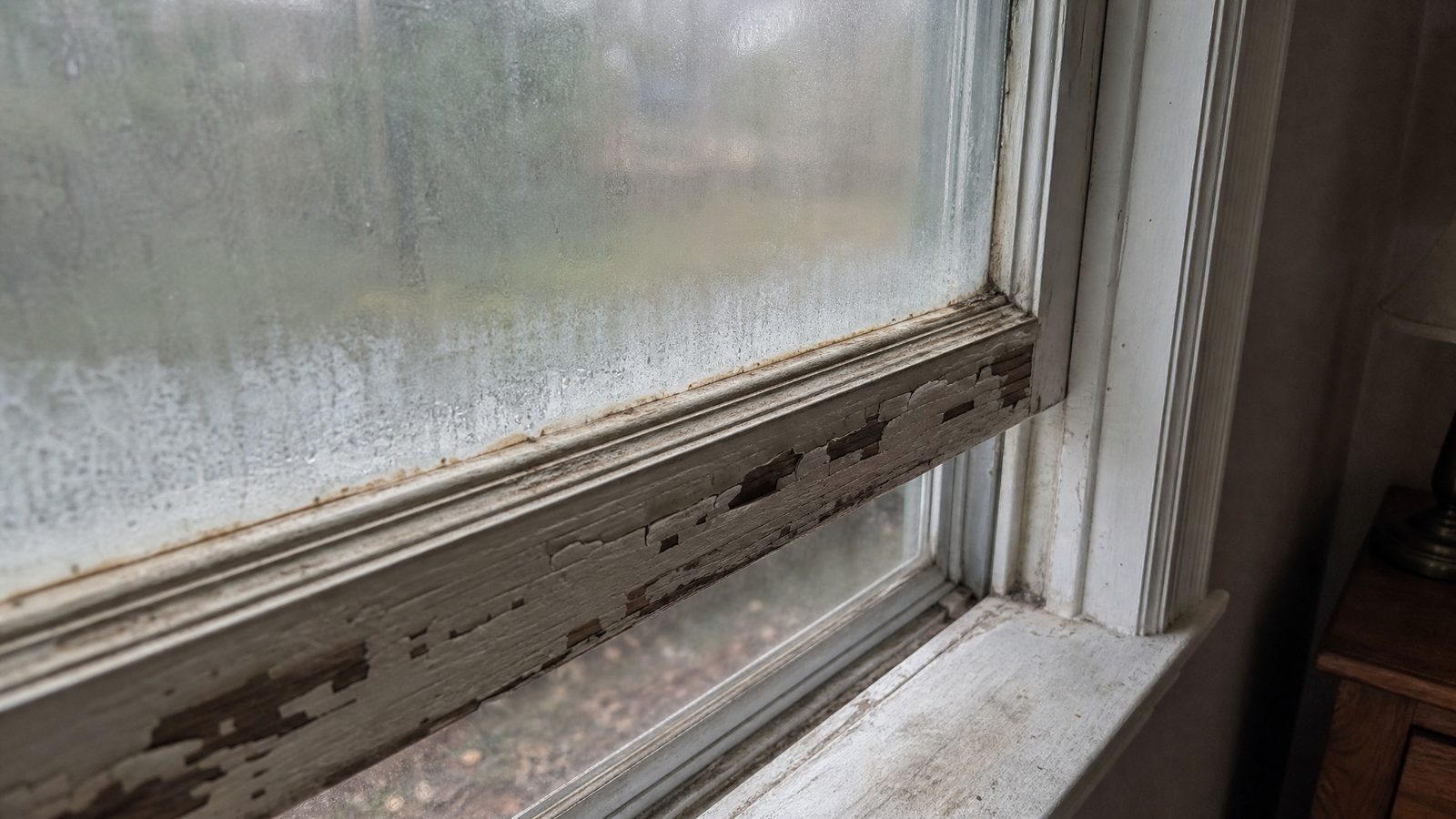


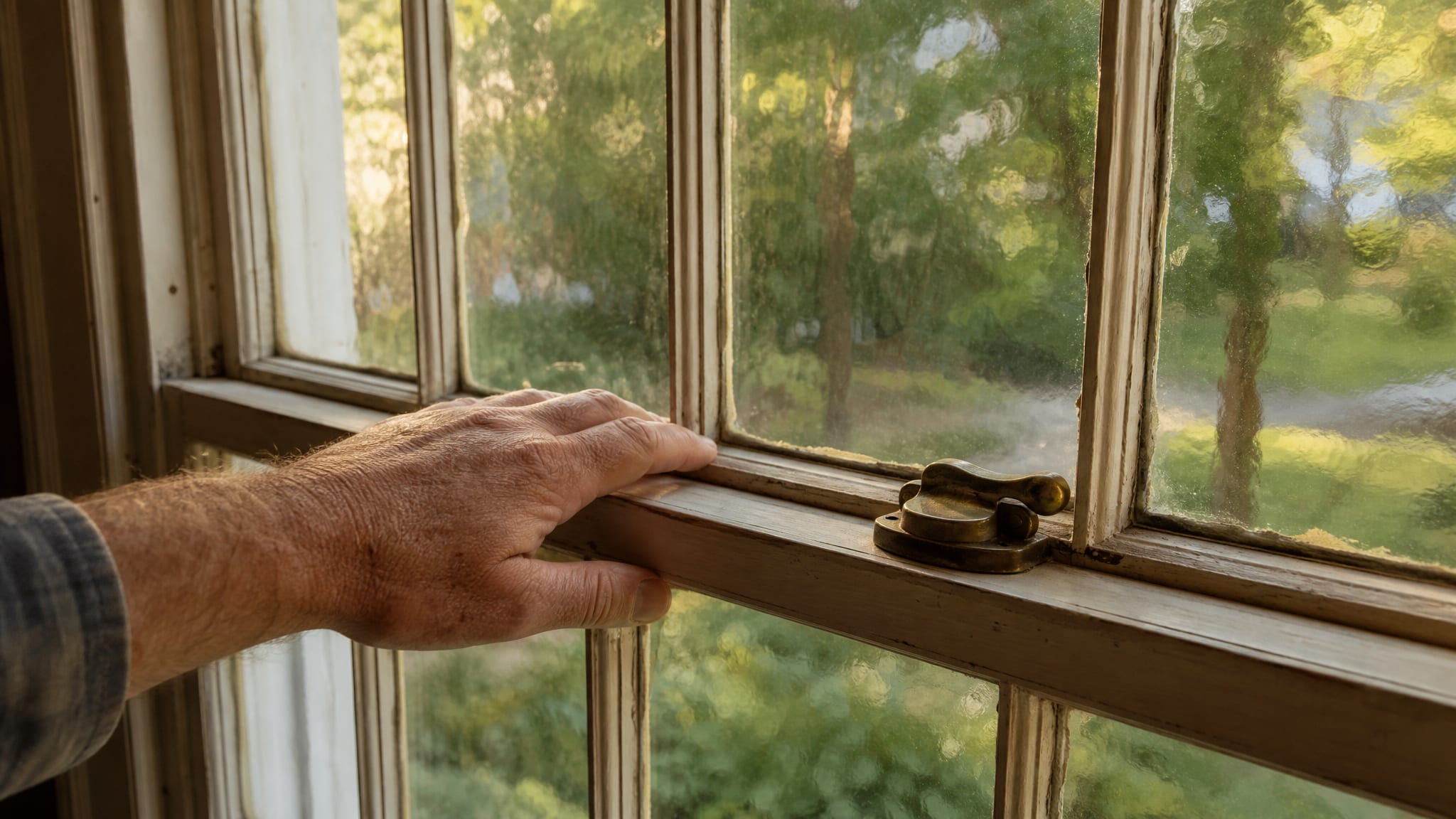
You just bought the old house. Original wavy-glass windows, the kind that ripple the view a little. And someone — a salesman on a walk-through, or a neighbor with a horror story — has told you they all have to go.
Before you believe that, let me tell you what I’d check first. Because in most older NC homes, the honest answer runs the other way.
Should you restore or replace the old wood windows in an NC older home? Usually restore. Original sash was milled from old-growth wood you can’t buy anymore, a sound frame gets repaired part by part for generations, and a restored sash plus a good storm window rivals a new double-pane for a fraction of the cost.
Replace when the wood already lost — rot deep into the frame, a sash badly altered or missing, or a safety problem a repair can’t reach. And if you’re in a local historic district, check the rules before you touch anything.
Are your old wood windows worth saving?
In an older NC home, usually yes — and not for nostalgia. The wood itself is better than what a new window is made of.
Sash built before roughly 1940 was milled from old-growth timber — heart pine, cypress, dense fir — cut from slow-grown trees with tight rings. That wood is harder, more stable, and far more rot-resistant than the fast-grown lumber on a shelf today. It’s why so many century-old sash are still sound.
The National Park Service’s Preservation Brief 9 makes the same point: original wood windows are usually repairable, and repair is the default the preservation world reaches for first.
There’s a second thing you already own that a new window only imitates. The wavy glass. The true divided lites — real muntins holding separate panes, not a plastic grille snapped onto one sheet. Proportions drawn for that house. A vinyl insert can’t give those back, and it charges you to take them away.
And the repairs are fixable with parts. A broken sash cord is a length of rope. A cracked pane is a piece of glass and some glazing putty. A stuck sash is usually paint and a little patience.
You can keep an old wood window alive one small part at a time — a very different relationship than the one you’ll have with a sealed unit years from now.
Are old single-pane windows really that inefficient?
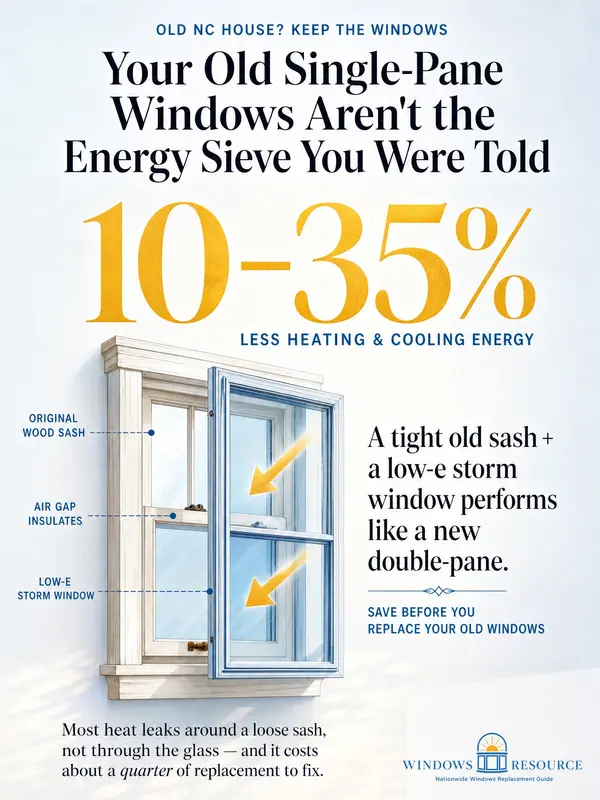
Less than you’ve been told. The heat isn’t mostly leaving through the glass — it’s leaking around a loose sash, and that’s the cheap part to fix.
This is the myth that sells the most replacement windows, so it’s worth slowing down on. A single pane does insulate worse than a double-pane. But in a real old window, most of the actual heat loss is air infiltration — gaps around a sash that no longer seals — not the pane itself.
Weatherstrip that sash so it closes tight, then add a storm window over it, and you’ve closed the leak and added an insulating air gap. Now you’re in a very different place.
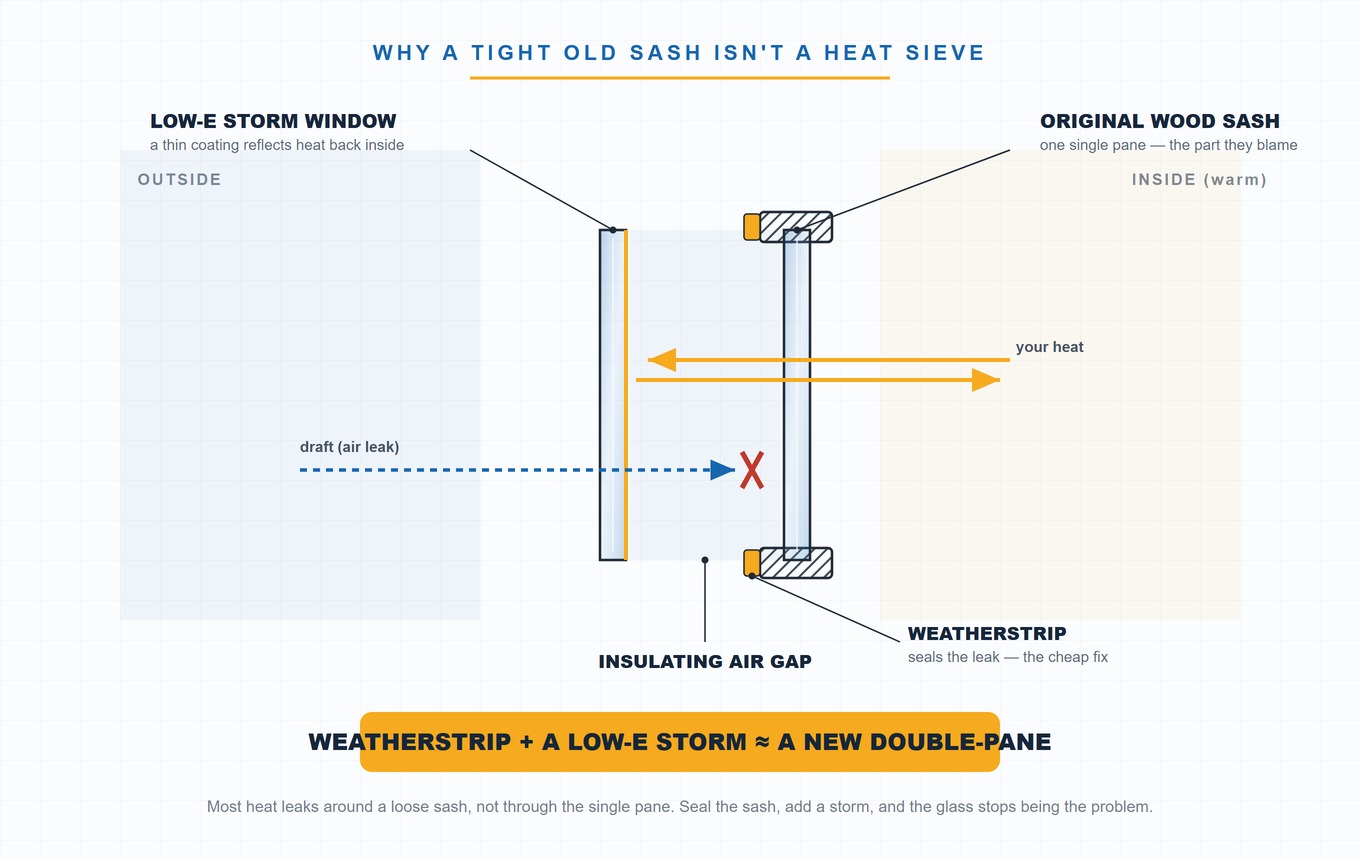
This isn’t just a preservation talking point — it’s been measured. In a calorimeter study at Lawrence Berkeley National Laboratory, a deliberately leaky wood sash paired with a low-e storm window performed about the same as a new low-e replacement window.
The National Park Service says it plainer still: a historic wood window with a good storm window should thermally outperform a cheap double-glazed metal replacement — wood insulates far better than metal, and old sash carry a lot of wood.
The U.S. Department of Energy’s field research puts a number on the storm-window half of that:
That’s the part most people never hear: the cheap fix does most of the work. A neighbor’s roof and wall leaks probably cost her more than her single-pane windows ever did — windows just get the blame because you can feel them.
NC Homeowner Takeaway. The “old windows are energy sieves” line isn’t a lie, it’s an exaggeration. A bare, unsealed single-pane is wasteful. A weatherstripped one behind a low-e storm is not — and that path costs a fraction of replacement. If comfort and bills are your real worry, start there. Our storm-windows guide walks the options.
What does it cost — restore, reglaze, or replace?
Restoration almost always costs less than replacement, and buys more years. Here’s the honest shape of it, per window.
These are market ranges, not quotes — what a real job costs swings with how far the work goes and who does it. Treat every number here as a starting frame to check locally, not a promise.
| Restore | Reglaze | Replace |
|---|---|---|
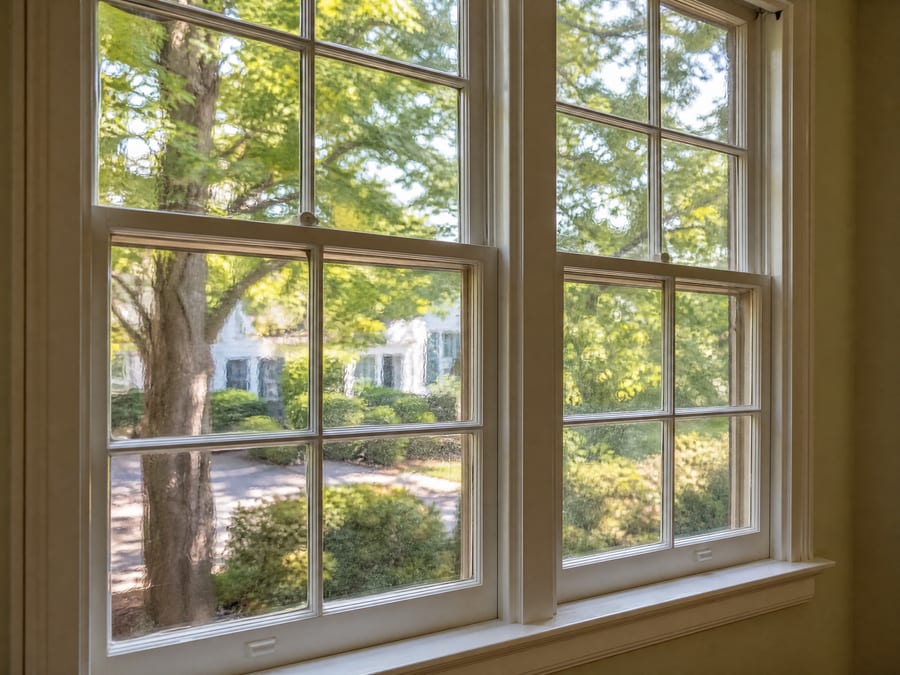 | 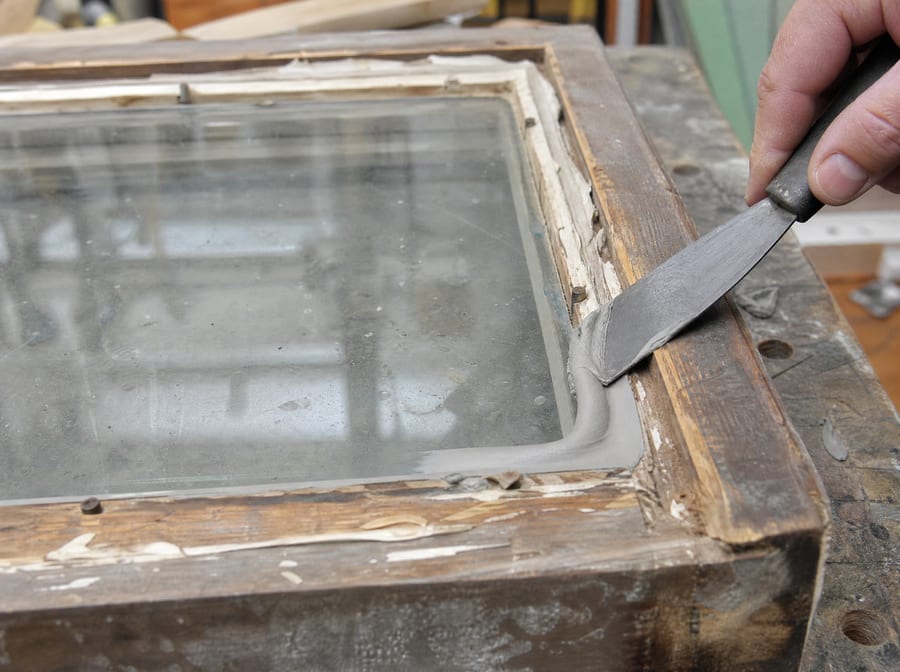 | 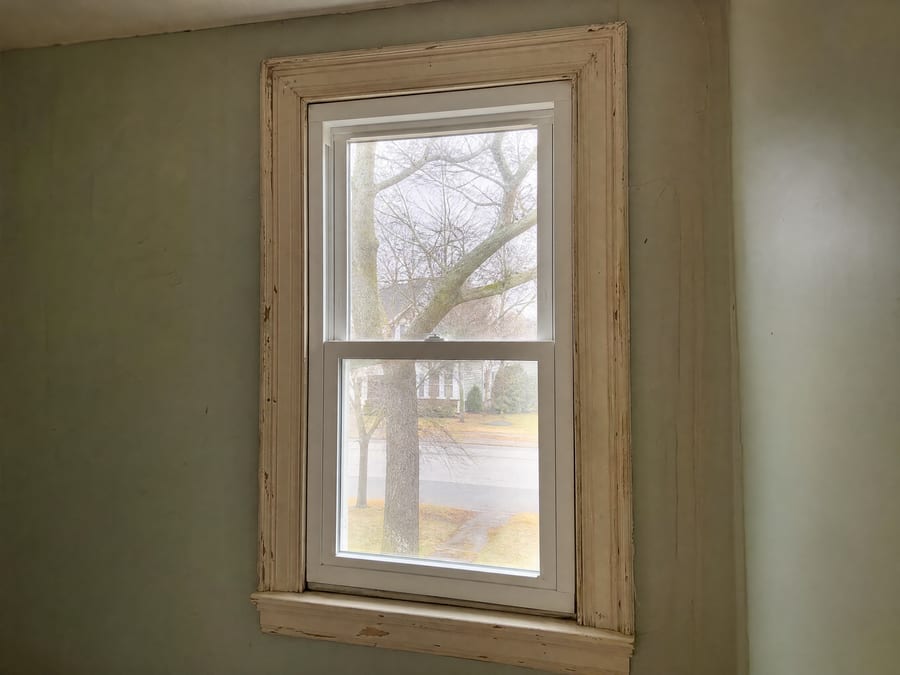 |
| Refurbish the existing sash — reputty, weatherstrip, free it up, re-cord | Rebuild the glazing and seal a tired sash back to weathertight | Remove the old window, install a new unit |
| Roughly $300–$550 basic; $600–$1,000+ if rot or heavy work | Lower end of restoration — often a few hundred dollars | Commonly $600–$2,000+ installed, wood higher |
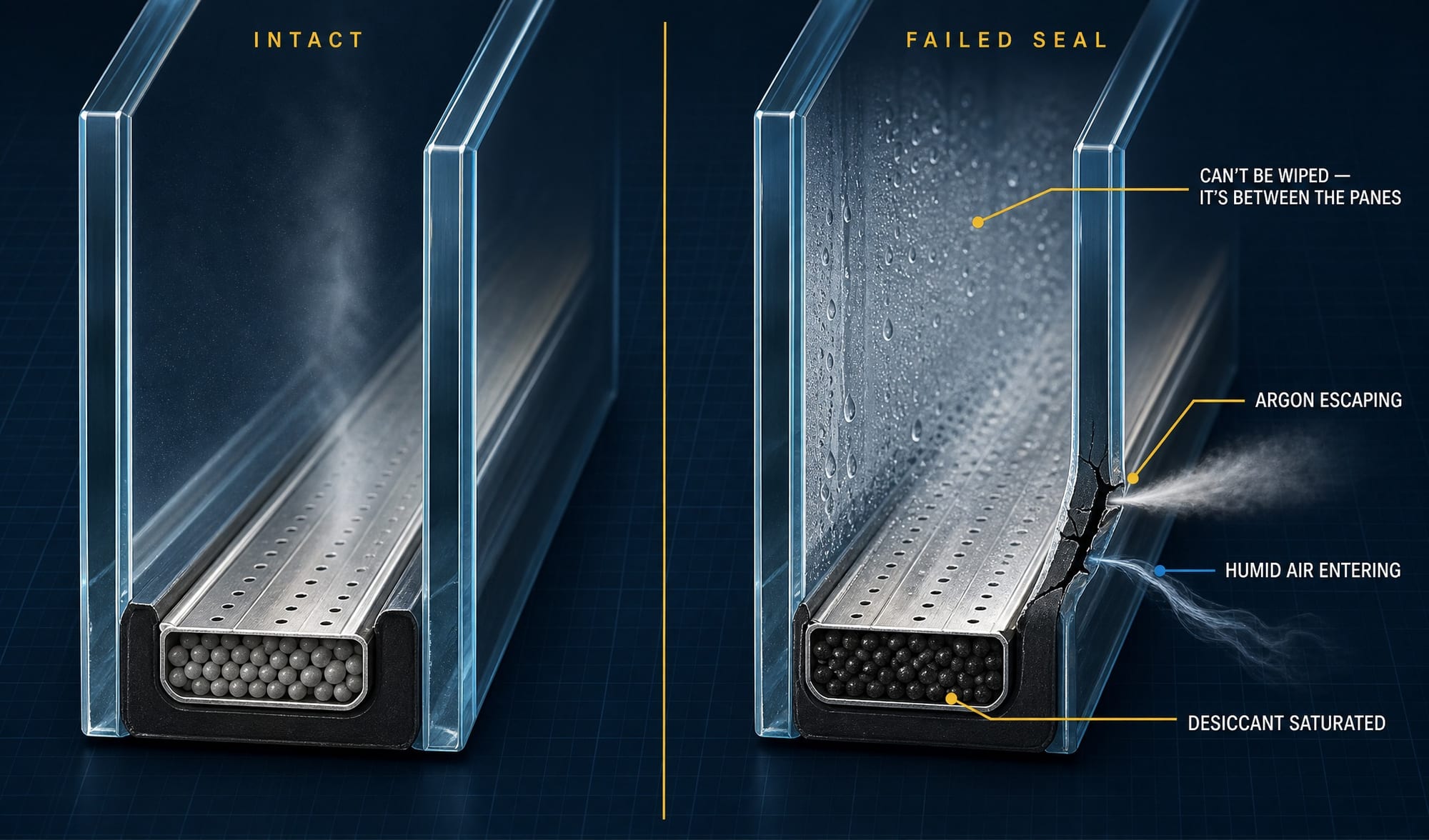
| Indefinite with upkeep — the frame outlives all of us | Adds decades to the sash you have | New sealed unit; IGU seals often fail in 15–30 years |
| Keeps the wavy glass, the lites, the proportions | Keeps everything original | New look; a like-for-like wood match is possible but costs more |
- Reglaze
-
- Replace
-
Refurbish the existing sash — reputty, weatherstrip, free it up, re-cord
- Reglaze
- Rebuild the glazing and seal a tired sash back to weathertight
- Replace
- Remove the old window, install a new unit
Roughly $300–$550 basic; $600–$1,000+ if rot or heavy work
- Reglaze
- Lower end of restoration — often a few hundred dollars
- Replace
- Commonly $600–$2,000+ installed, wood higher
Indefinite with upkeep — the frame outlives all of us
- Reglaze
- Adds decades to the sash you have
- Replace
- New sealed unit; IGU seals often fail in 15–30 years
Keeps the wavy glass, the lites, the proportions
- Reglaze
- Keeps everything original
- Replace
- New look; a like-for-like wood match is possible but costs more
The rule of thumb I’d hand you: if a real restoration quote lands near half of what full replacement costs and the frame is sound, restoration usually wins on both money and lifespan. When a fogged replacement unit’s seal fails in year 18, you replace the whole thing again. When a restored sash needs work in year 18, you reputty it.
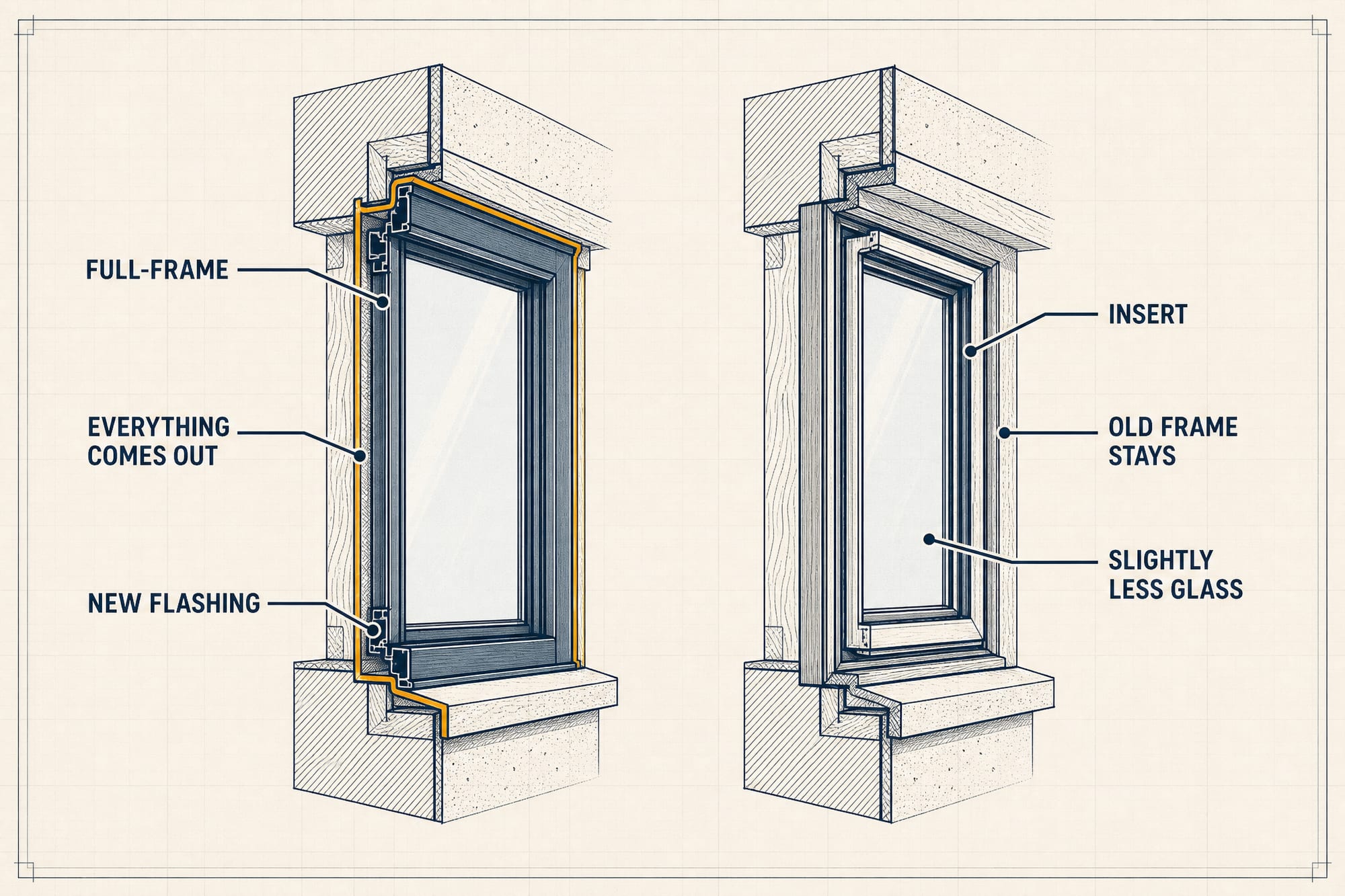
If you do land on replacing some, don’t put an insert over an old frame you haven’t checked — that’s covered in full-frame vs insert, and the honest cost ranges live on the window cost page.
When is an old window truly beyond repair?
When the wood already lost. Some old windows genuinely should be replaced, and pretending otherwise would make me exactly the kind of one-note pitch I’m telling you to distrust.
Every other page in this cluster tells you to fix your drafty, stuck, or foggy windows instead of replacing them. That advice is honest. So is this: sometimes replacement is the right call.
Here’s when I’d stop trying to save it:
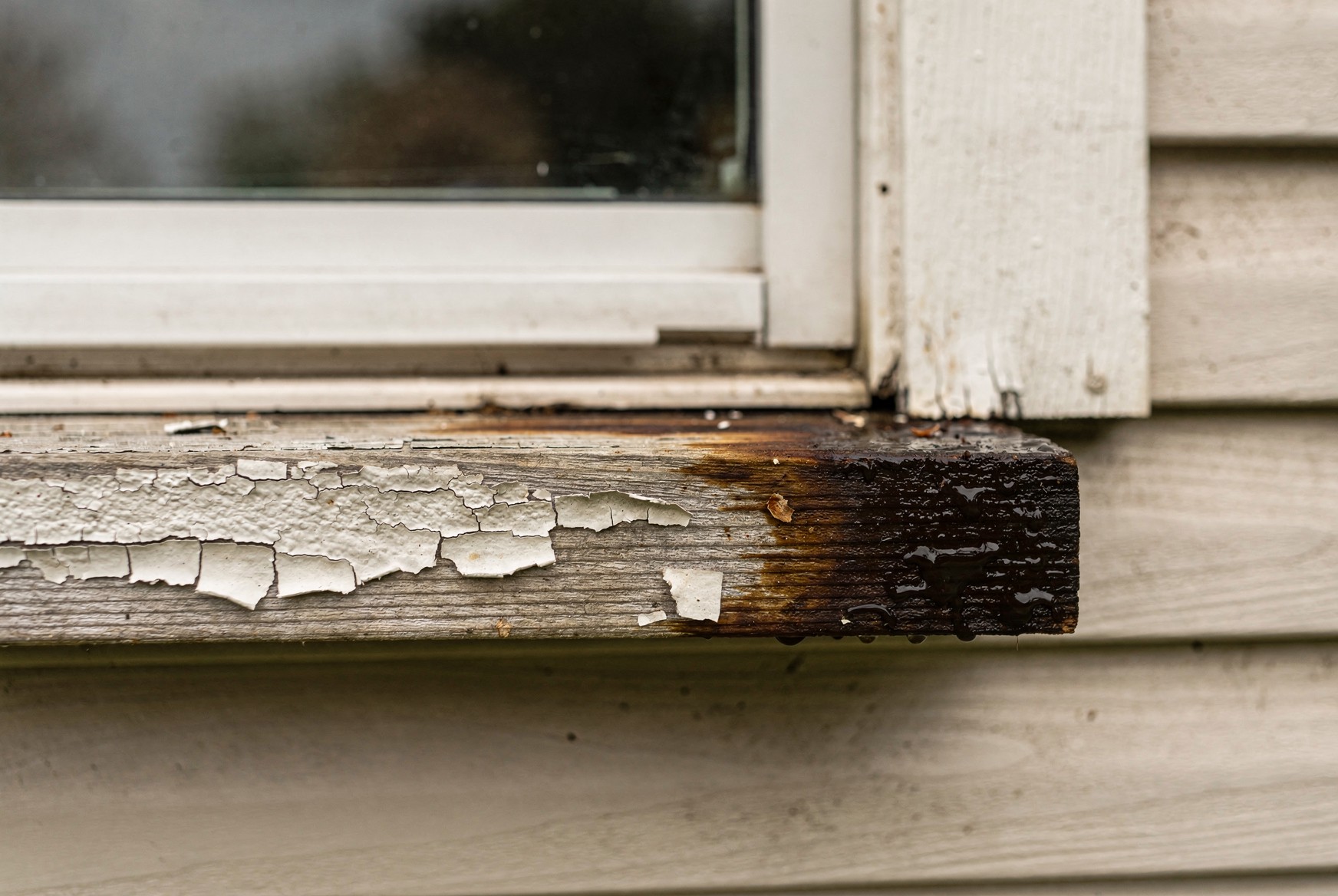
- Rot past the sill and into the frame. A soft sill can often be epoxied back to sound. Rot that’s run deep into the frame is a different animal — that’s a full-frame replacement, so the bad wood leaves the wall.
- The sash is gone or badly butchered. If the original was ripped out decades ago and replaced with a 1970s aluminum unit, there’s no historic sash to save — you’re choosing a new window either way.
- Safety or health you can’t reach. Old glazing paint can contain lead, a bedroom escape opening may not meet code (below), or a room is genuinely miserable no repair fixes.
A contractor who looks at frame-deep rot and says replace isn’t upselling you — over dead wood, that’s the correct call. The whole reason “you can fix most of these” is worth believing is that I’ll also tell you which ones you can’t. Both are the same honesty pointed in different directions.
Do you need permission to change windows in an NC historic district?
Often, yes — and this is the part national guides skip. In a local NC historic district, you may legally need approval before you touch the windows, and vinyl is frequently a no.
First, the distinction that trips people up. Being listed on the National Register of Historic Places alone rarely restricts what you, a private owner, do with your own windows. What triggers real rules is a local historic-district overlay — a zoning designation your city enforces — or a state or federal tax-credit rehab, which follows the Secretary of the Interior’s Standards.
If you’re in a local district, most NC cities require a before you replace windows.
The NC window permits page covers how COA review sits alongside building permits.
The egress catch when you swap a bedroom sash
If the old window is in a bedroom, its replacement can’t shrink the escape opening below North Carolina’s minimums — and because a like-for-like swap usually needs no permit, nobody inspects it but you.
This is easy to miss in exactly this situation. A pre-war house often has tall, narrow original sash. Swap in a modern unit with a thicker frame, or change the window style, and you can quietly shrink the clear opening a person has to climb through in a fire.
Measure the replacement’s clear opening before you order, and get the installer to confirm in writing that every bedroom unit meets NC egress. A restored original sash usually keeps the opening it already had — one more quiet point in restoration’s favor.
What I’d do at your window
Run it in this order, and you’ll walk into any conversation — with me or anyone else — already knowing the answer:
- Probe the frame and sill. Solid wood pushes back on a screwdriver; rot gives. Localized soft spots are repairable. Frame-deep rot is the one real replace signal.
- Test the sash, not the glass. Does it move, and can it seal? A stuck or drafty sash is a weatherstrip-and-a-Saturday fix, not a reason to replace.
- Price restoration against replacement — with lifespan in it. If restoration lands near half of replacement and the frame is sound, restoration usually wins twice.
- Check your district before you decide. If you’re in a local historic district, the COA rules may make the decision for you. Find out first.
If the frame is sound — and in an older NC home it usually is — I’d tell you to keep those windows, weatherstrip them, and put good storm windows over them. You’ll get most of the comfort of new windows, keep the character you can’t buy back, and spend a fraction of the money.
And if the wood already lost, I’d tell you that straight, too. That’s the whole point of asking someone who isn’t selling you only one answer.
Sources, Verification & Fact-Checking verified July 2026
Every load-bearing fact on this page is sourced and verified against a primary authority.
Verified July 2026 via direct review of the cited authority — the links open the controlling source so you can check it yourself rather than take our word.
- Repair-first default and the repair-class approach (original wood windows are usually repairable; retention and repair recommended “whenever possible”; Repair Class I / II / III = maintenance, stabilization, parts replacement): National Park Service, Preservation Brief 9: The Repair of Historic Wooden Windows (nps.gov PDF). Live-fetched July 2026; the brief states “Technical Preservation Services recommends the retention and repair of original windows whenever possible” and defines the three repair classes verbatim.
- Old-growth wood is denser and more rot-resistant (pre-~1940 sash from slow-grown, tight-ring timber; can last for generations with maintenance): preservation consensus, confirmed via grounded search against NPS and NC preservation-commission guidance (pre-1940 windows “noted for their high-quality, dense wood and individual, repairable parts”). This durability point is craftsman/preservation consensus, not a single NPS Brief 9 line.
- Thermal parity — a tight wood prime sash + low-e storm performs close to a new low-e double-pane: Lawrence Berkeley National Laboratory calorimetric study, J.H. Klems, Measured Winter Performance of Storm Windows (LBNL-51453, 2002; ASHRAE Transactions 2003) — prime/low-e-storm combinations measured “very similar” to a low-e double-pane replacement. Corroborated by NPS Preservation Brief 9 (fetched): a historic wood window with a high-quality storm window “should thermally outperform a new double-glazed metal window which does not have thermal breaks” (single-glazed wood U ≈ 0.88–0.99 → ≈ 0.44–0.49 with a storm, vs ≈ 0.6 for non-thermal-break double-glazed metal). Klems primary PDF not fetched live (repository blocked); named and report-numbered, anchored to the fetched NPS brief.
- Low-e storm windows cut heating/cooling energy roughly 10–35% at about a quarter the cost of replacement: U.S. Department of Energy / EERE storm-window field study — energy.gov. Already verified in our repair-or-replace cluster fact-check (claim 4); reused here.
- Cost bands — restoration ($300–$550 basic, $600–$1,000+ with rot), reglaze (a few hundred), replacement ($600–$2,000+ installed, wood higher): directional market ranges, verified for order-of-magnitude via grounded search against 2025 U.S. market aggregates (basic refurb ~$300–$600, moderate $600–$1,000, extensive $1,000–$1,500+; wood replacement averaging ~$1,400, range ~$1,000–$1,800). Stated in-body as ranges to verify locally, not quotes; aggregator pages are not cited as authority.
- Sealed insulated-glass-unit (IGU) seals commonly fail in ~15–30 years, often unrepairable: industry/preservation consensus confirmed via grounded search — typical IGU seal life ~10–25 years (budget units sooner, premium 25–30+); fogging between panes is the classic sign of a failed hermetic seal. Kept hedged; cross-referenced with our foggy-seal page.
- Repair-vs-replace rule of thumb (repair near ~40–50% of replacement → lean repair): a practitioner heuristic, not a sourced code threshold — kept framed as a rule of thumb in the body.
- NC egress values — 4.0 sq ft net clear escape opening, 22 in height, 20 in width, 44 in max sill (2018 NC Residential Code R310.2.1, NC-AMENDED): verified against the 2018 NC Residential Code and matched to the site’s protected-facts registry (
nc-egress-r310). The national IRC 5.7 sq ft / 24 in figures are explicitly NOT North Carolina’s escape-opening requirement. - NC historic-district COA rules (a local historic-district overlay requires a Certificate of Appropriateness; Raleigh RHDC generally allows historic wood windows to be replaced only in kind — new wood matching the original; Wilmington, Durham, Asheville and New Bern commissions prefer repair, then a matching wood/approved replacement; vinyl commonly rejected; National-Register listing alone rarely restricts a private owner absent federal funding/permits; state/federal tax-credit rehabs follow the Secretary of the Interior’s Standards, administered by NC SHPO): verified via grounded search against the Raleigh Historic Development Commission, the Wilmington/Durham/Asheville/New Bern preservation commissions, NC SHPO, and the National Park Service. Regulatory specifics vary by city and change — the body directs readers to confirm with local preservation staff. City-specific guideline pages bot-blocked direct fetch; no single city URL cited.
- Story callout (“the hundred-year-old sash that outlasted the new ones”): a representative version of the recurring “restored original sash outlives the newer replacements” report-back common on old-house forums; told as a pattern, not a single sourced thread.