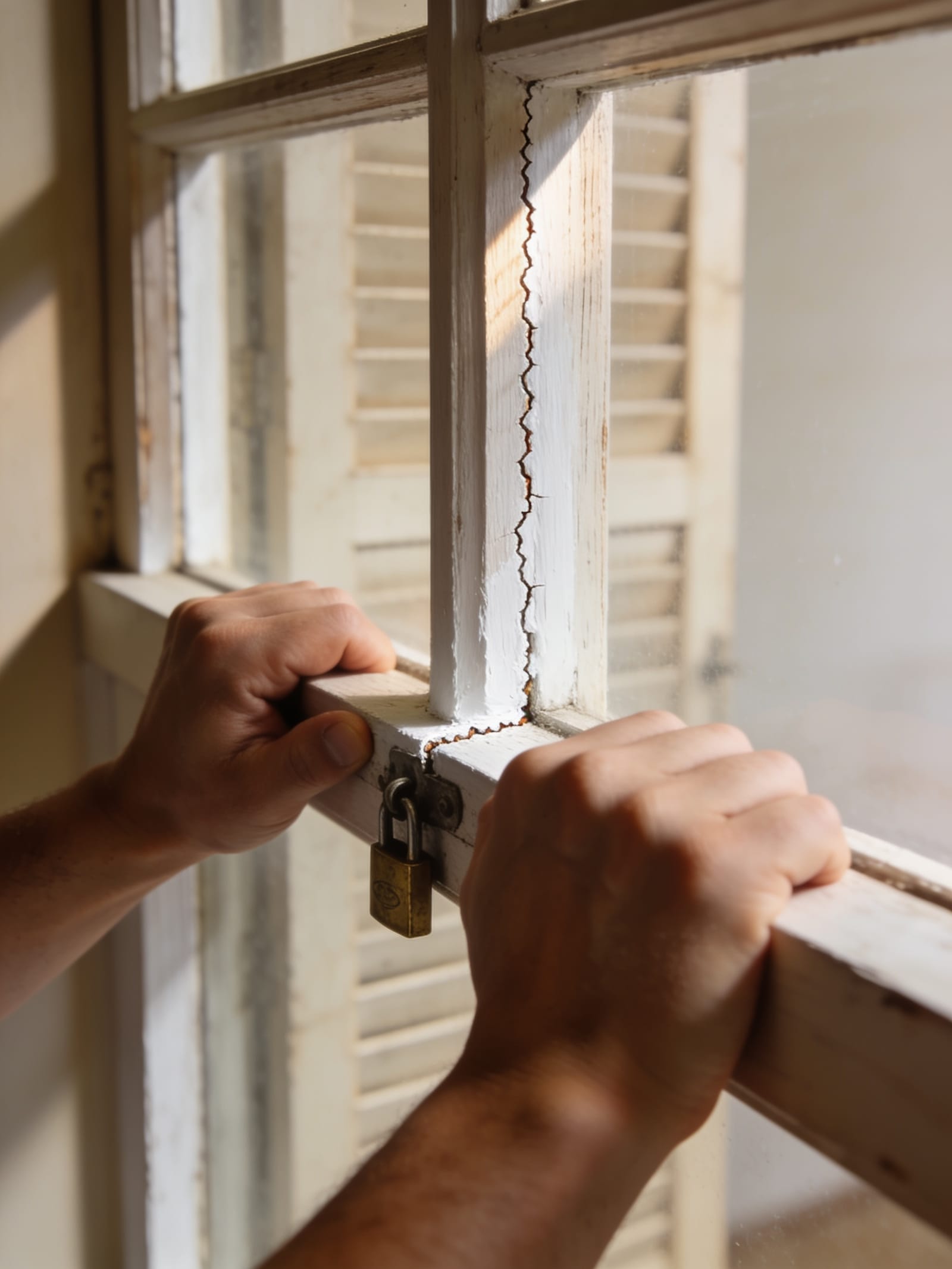


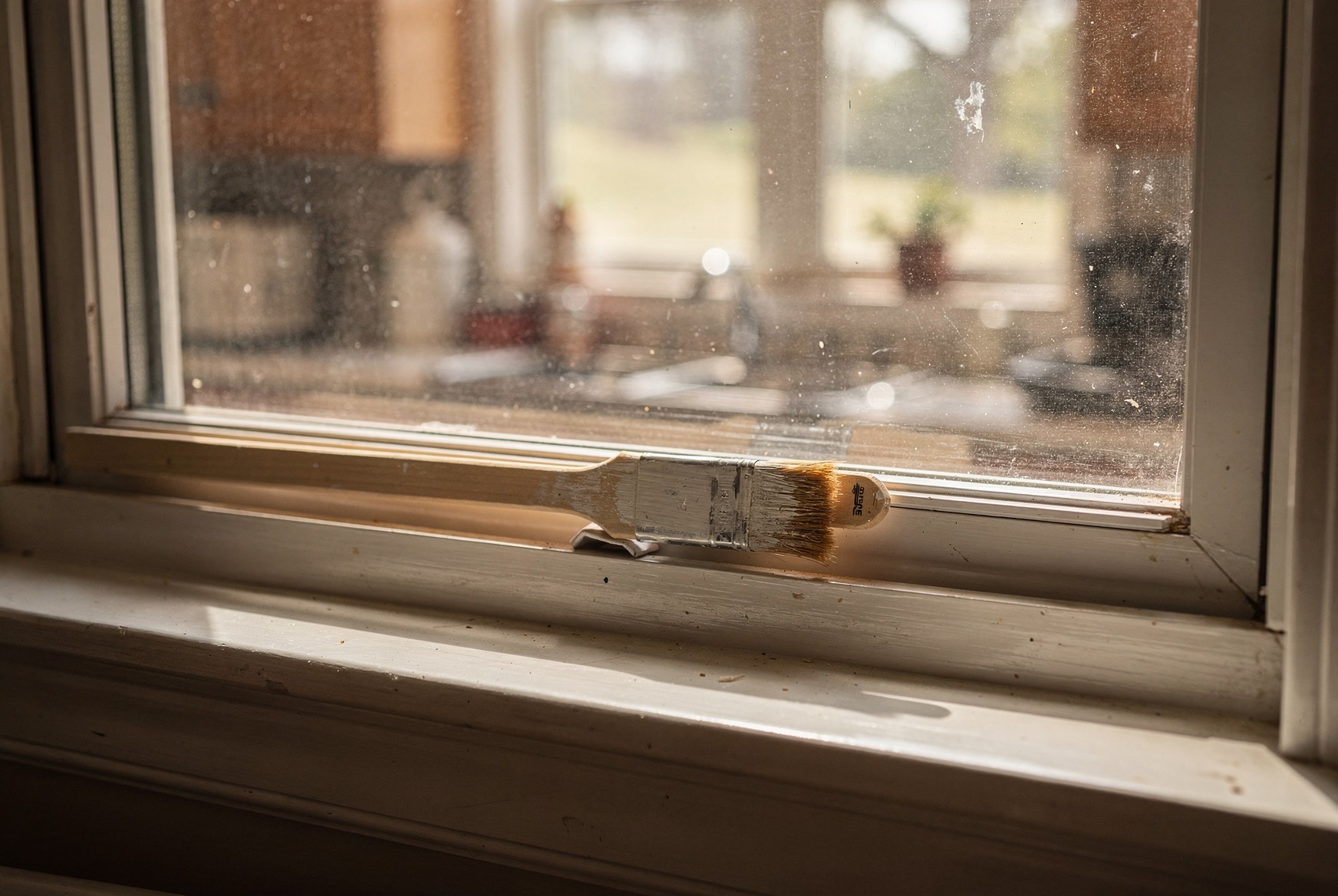
Somewhere in your house there’s a window held open by a paint stick. Or a candle. Or the third-heaviest book you own.
Everyone in the house has learned the drill: lift the sash, wedge the prop, don’t trust it. Someone may have even told you what that window means — that they’re “going bad,” that it’s time to price replacements.
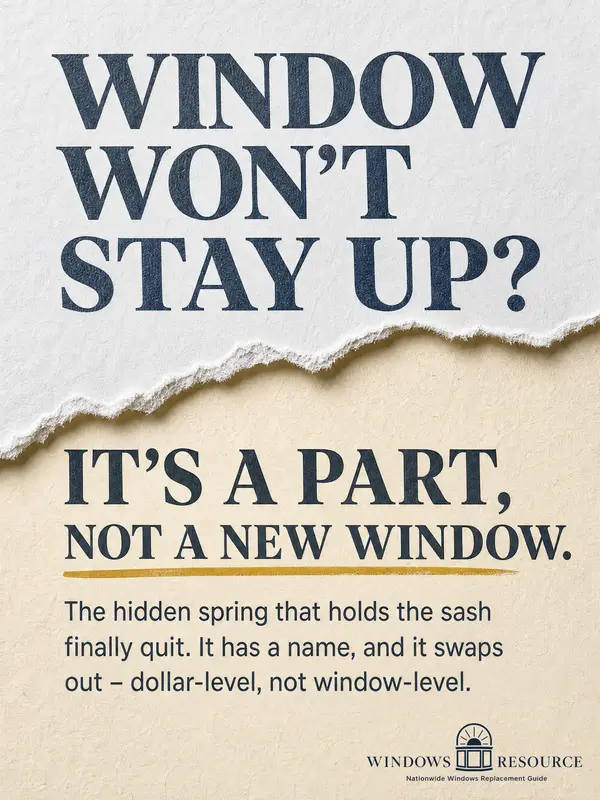
Here’s what I’d rather you hear first. The window that won’t stay up is my favorite house call, because the fix is so much smaller than the fear. What failed has a name, a price, and — on a lot of windows — a twenty-minute swap.
Why won’t my window stay up — do I need a new window? Almost always it’s a failed sash balance: the hidden spring inside the frame that carries the sash’s weight. It’s a replaceable part, usually swapped in pairs, at dollar-level cost — not window-replacement cost. Below: what a balance is, how to tell which kind you have, what the fix runs, whether you can do it yourself, and the one honest case where replacement genuinely wins.
What is a sash balance — and why did yours quit?
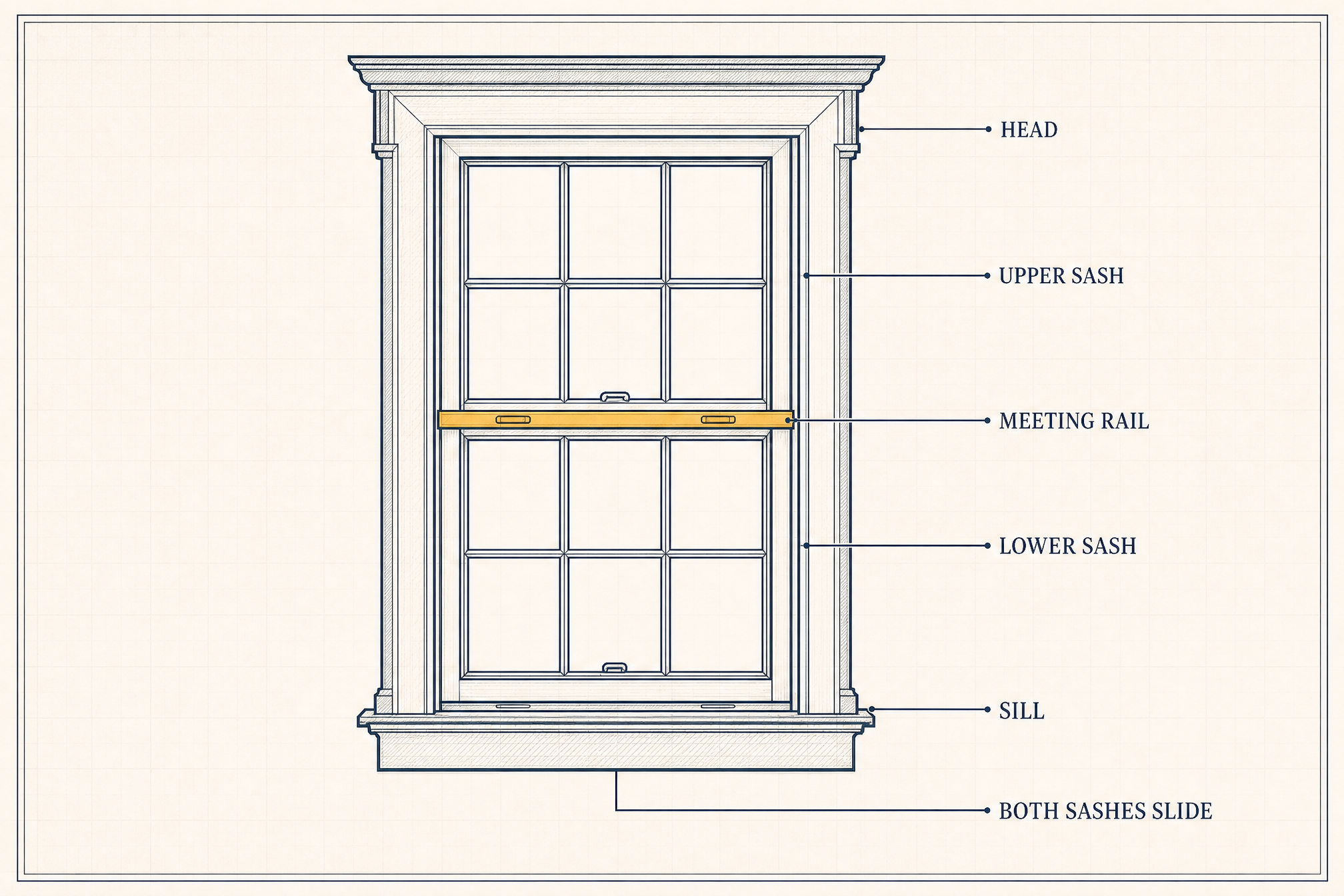
A sash balance is a concealed spring system inside the window frame that counterweights the sash — and when it breaks, nothing is holding the sash up anymore. The in a double-hung or single-hung window is heavier than it looks. Glass is dense.
What makes it feel light is a pair of balances hidden in the — one on each side — quietly doing the lifting every time you open it.

When a balance fails, the sash free-falls. That’s the slam. The window didn’t rot, the frame didn’t shift — the spring that was carrying the weight let go.
Why they quit is unglamorous: cycles and age. Springs fatigue after years of open-and-close. Sometimes a replacement sash or added glass made the sash heavier than the balance was rated to carry, and it wore out early — retrofit a single-pane window with heavier double-pane glass and never re-rate the balance, and it drops the sash slowly over time.
The part is invisible by design, which is why almost nobody knows it exists. You can’t fix — or even price — a part you’ve never heard named. So let’s name it, and then let’s identify yours.
Which of the three balance types do you have?
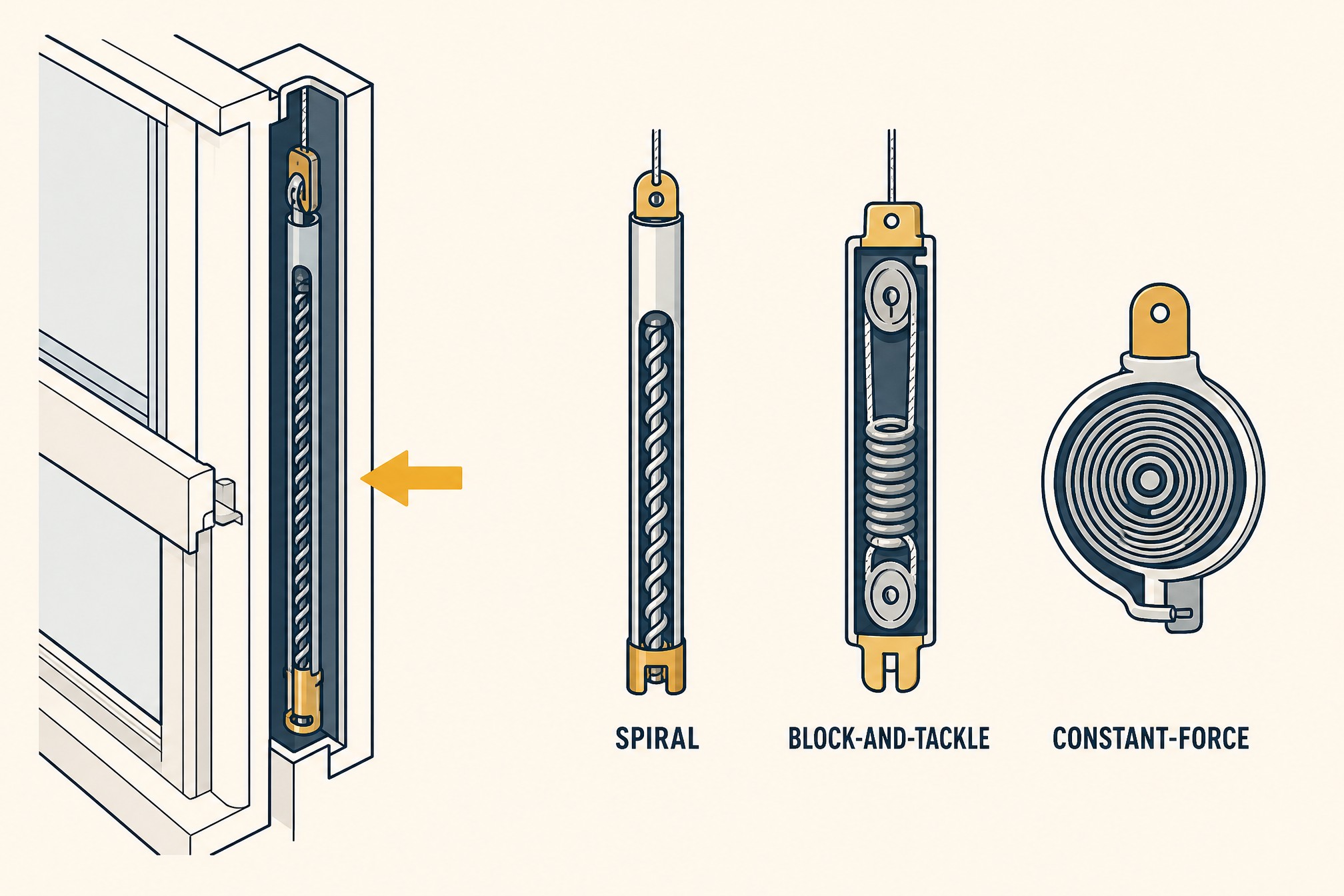
Most windows use one of three balance designs — spiral, block-and-tackle, or constant-force — and the replacement has to match the type and the weight rating. A sixty-second look inside the jamb usually tells you which one you’ve got.
- Spiral balance. A metal or plastic tube with a rod that twists inside it. Common on older wood and vinyl windows. When it fails, the sash often drifts down slowly rather than slamming.
- Block-and-tackle balance. A compact spring-and-pulley cartridge that sits in the jamb channel — the workhorse in a lot of vinyl tilt-in double-hungs. Often rides on a .
- Constant-force balance. A flat coiled stainless-steel spring, like a tape measure’s coil, housed in a slim cartridge at the top of the jamb track. It’s the smooth, low-effort design common in newer vinyl tilt-wash windows — the reason a new sash glides with one finger while an old one needed two hands and a prayer.
That last one I know from training rather than from twenty years in a truck, and I’ll be straight about that. The contrast is a real felt thing: put your hand on a sash riding a fresh constant-force coil right after wrestling one with a dead balance, and you understand instantly why the part matters.
| Balance type | How to spot it | Where it's used | Repair note |
|---|---|---|---|
| Spiral | A tube in the jamb with a twisting rod | Older wood and vinyl windows | Replaceable; the rod's spring tension must be set correctly |
| Block-and-tackle | A spring-and-pulley cartridge in the jamb channel | Many vinyl tilt-in double-hungs | Replaceable as a cartridge; often paired with a balance shoe |
| Constant-force | A coiled stainless spring at the top of the track | Newer vinyl windows | Coil kits are replaceable; the smoothest-operating of the three |
Spiral
- How to spot it
- A tube in the jamb with a twisting rod
- Where it's used
- Older wood and vinyl windows
- Repair note
- Replaceable; the rod's spring tension must be set correctly
Block-and-tackle
- How to spot it
- A spring-and-pulley cartridge in the jamb channel
- Where it's used
- Many vinyl tilt-in double-hungs
- Repair note
- Replaceable as a cartridge; often paired with a balance shoe
Constant-force
- How to spot it
- A coiled stainless spring at the top of the track
- Where it's used
- Newer vinyl windows
- Repair note
- Coil kits are replaceable; the smoothest-operating of the three
Why the ID matters: balances aren’t generic. They’re matched to the sash’s weight, usually via a rating stamped on the balance itself. Get the type and rating right and the window works like new. Guess, and it fails again.
What does the fix actually cost?
A fraction of any replacement window — national cost guides put a single balance replacement at roughly $75–$300, and a pair at about $150–$500. Those are wide national cost-guide ranges, not an NC quote, and they’re the same figures I use on the honest worth-it math page.
Compare that against what any full replacement window runs and the point makes itself. This is the cheapest real fix in the whole repair-or-replace conversation.
Now the detail that pre-empts quote confusion: balances get replaced in pairs. Both sides of one window, together.
If someone quotes you per-window rather than per-balance, that’s the pairs rule at work — the “pair” price is the honest unit. And if the number lands wildly above the national band for a straightforward swap, that’s worth a second question, the same way any quote is worth a sanity check.
Can you DIY it?
On many vinyl windows — yes, honestly. The outline looks like this: tilt the sash into the room and lift it free, pop the old balances out of the jamb, read the type and the rating stamp, and fit the matching replacements.
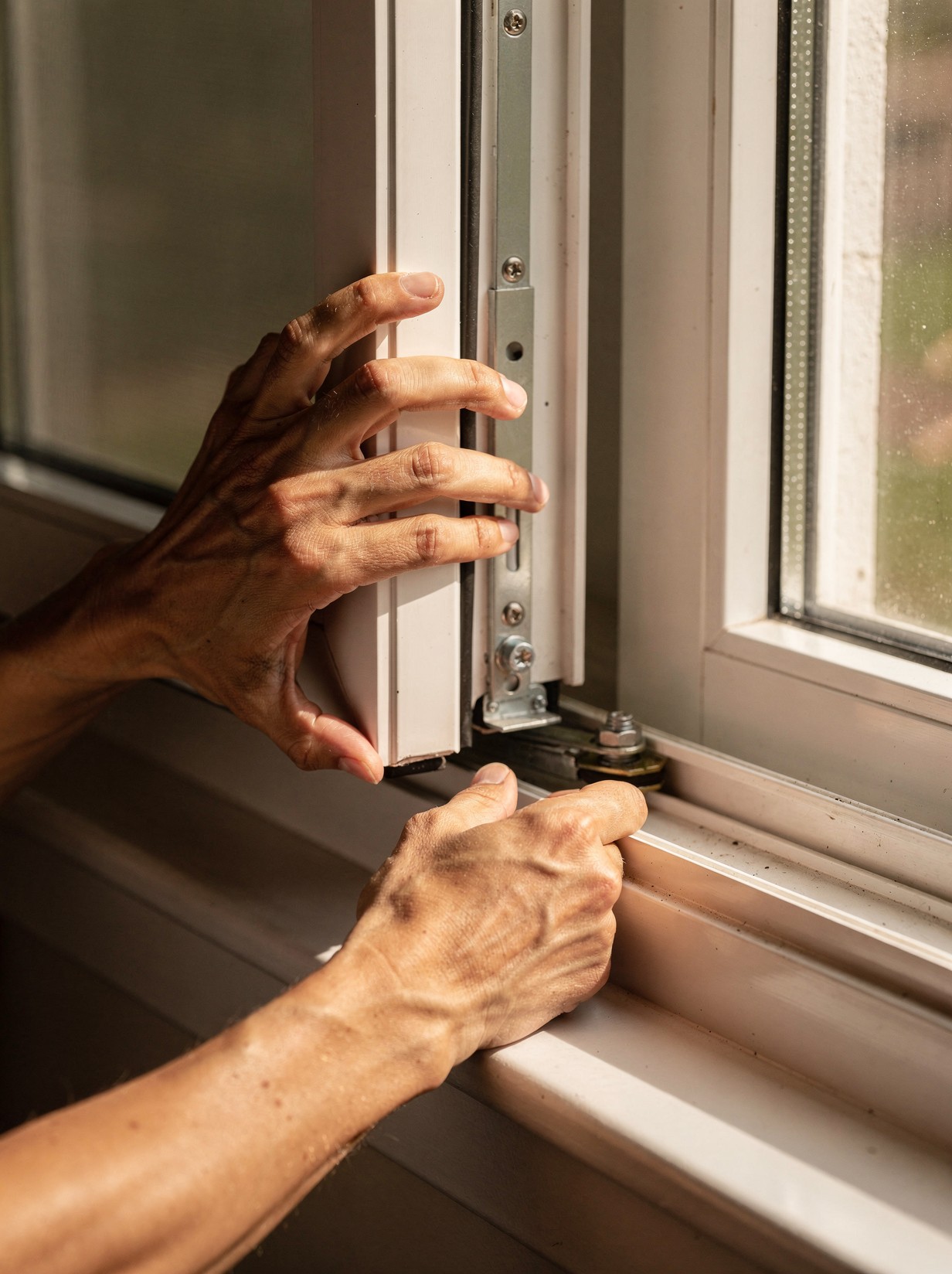
Plenty of homeowners do exactly that in an afternoon. I’m not going to pretend it’s beyond you — the site’s whole premise is that you’re capable of more than the fear suggests.
I’m also not going to write you a step-by-step and wave you at it, for three honest reasons:
- The spring is the hard part physically. A wound balance stores real energy. It can snap loose while you’re handling it, and fingers lose that argument.
- Old windows hide surprises. Broken balance shoes, brittle vinyl, jamb tracks worn out of shape — the twenty-minute job can become a ninety-minute one mid-window.
- Matching the part is the hard part logistically. Type, length, and weight rating all have to match. Order the wrong balance and you’ve bought a very specific paperweight.
If you’d rather hand it off, this is a small job for a handyman or a window-repair outfit. It’s genuinely fine either way. The win was learning the part’s name — from here, every path is cheap.
When does “won’t stay up” really mean replace?
When it’s the third small failure on the same old unit — not when it’s the first. This is the honest exception, and it deserves real teeth rather than a footnote.
One failed balance on an otherwise healthy window is a repair. Full stop. But windows age as a system, and sometimes the balance is just the loudest symptom of a unit that’s failing on several fronts at once:
- Balances going all over the house — one per year, like dominos falling in slow motion
- Fog between the panes you can’t wipe off — a failed seal, which is its own separate fix-or-not question
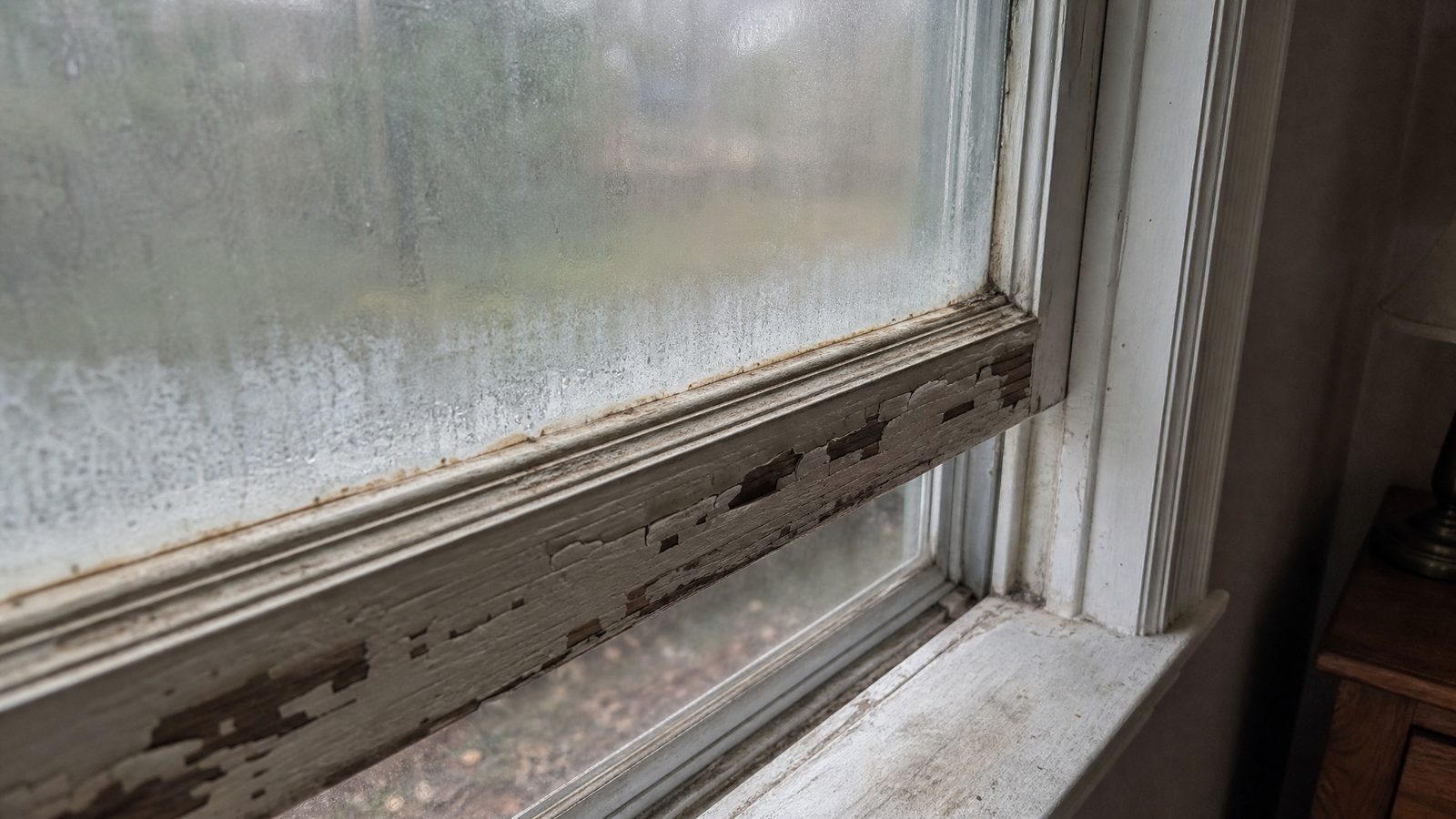
- Soft or rotting wood at the sill — the one true replace signal
- Single-pane glass and year-round drafts — the window is behind the times even when everything works
Stack a balance pair on top of a seal repair on top of chronic drafts, and the repairs stop being cheap in aggregate.
The rule of thumb the repair-or-replace hub runs on: when the repair bill climbs toward a meaningful fraction of replacement — the hub uses a 30–50% zone as the honest gray area — the math starts favoring the new window.
So if someone told you “won’t stay up means they’re all going bad,” don’t write that off as a sales line. On a house full of tired single-pane units, it can be true in aggregate. The distinction worth keeping: the balance is a part, not a verdict — the verdict comes from counting the failures, not from the slam.
If you’re near that line, run the honest worth-it math before anyone runs it for you.
What’s the 2-minute check before you call anyone?
Three questions sort the slamming window into the right page — and the right price class.
- Does it slide but not hold? That’s a balance. You’re on the right page — the fix is a part, replaced in pairs, at the national band above.
- Does it not budge at all? Different problem, usually paint or swelling — that’s the stuck and painted-shut fix, and it’s often free.
- Is the sill soft when you press it? That’s water in the wood, and it changes the conversation — read the rotted-sill page before spending a dollar on parts.
While you’re at the window: if you feel a draft even when it’s closed and locked, that’s usually weatherstripping, and it’s another few-dollar fix worth doing in the same afternoon. Most older double-hung units in North Carolina collect two or three of these small issues at once — and most of them are exactly this cheap to put right.
And if you’d rather show the window to someone than diagnose it solo, that’s what a no-pressure second opinion is for. Retire the paint stick either way. It’s earned it.
Sources, Verification & Fact-Checking verified July 2026
Every load-bearing fact on this page is sourced and verified against a primary authority.
Verified July 2026 via direct review of the cited authority — the links open the controlling source so you can check it yourself rather than take our word.
- A window that opens but won’t stay up is typically a failed sash balance — the concealed spring system in the jamb that counterweights the sash, and a replaceable part rather than a whole-window verdict: This Old House, “How to Replace a Window Sash Spring Balancer” (the guidance also underpins the live stuck.mdx page). (view source — This Old House)
- The three balance designs and where each is used (spiral tube-and-rod on older wood/vinyl; block-and-tackle spring-and-pulley cartridge in modern vinyl double-hungs; constant-force flat coiled-steel spring in newer vinyl tilt-wash windows), and that replacements must match the balance’s type, length, and weight rating — usually a code stamped on the part: window-parts supplier reference (SWISCO-class balance identification guidance), confirmed July 2026. (view source — SWISCO, Window Balances)
- Why balances fail (spring fatigue and age; a sash made heavier than the balance’s rating — e.g., a single-pane unit retrofitted with heavier double-pane glass — wearing the balance out early) and why they are replaced in pairs (a new spring opposite a worn one creates uneven tension, rides the sash crooked, and makes the new part overcompensate and fail early): SWISCO balance guidance + This Old House, confirmed July 2026. (view source — This Old House)
- DIY feasibility on tilt-in vinyl windows (tilt the sash in, remove it, swap the matching balances) and the spring-tension safety caveat (balances are spring-loaded and can release forcefully; use the correct tensioning tool and keep clear of the coil or rod): This Old House sash-balancer guidance, which explicitly warns the spring “could snap back if mishandled” and recommends a pro for complex or historic windows. (view source — This Old House)
- Balance replacement cost band ($75–$300 single / $150–$500 pair, national cost-guide aggregates, not an NC quote): the same band carried on the worth-it page (Angi/Fixr/HomeGuide-class aggregates, verified July 2026). Hedged in text as a national range, not an NC quote.
- Repair-cost-vs-replacement 30–50% gray zone: the repair-or-replace hub’s existing rule of thumb — cluster-consistent, not a new claim; linked to the hub.
- Story callout (feared won’t-stay-up window fixed by a mail-order balance pair): a composite of the recurring DIY-forum arc (r/HomeImprovement / r/fixit), where homeowners identify a balance by its stamped rating, order a match from a parts supplier such as SWISCO, and restore smooth operation. Framed as the pattern these threads follow, not a single sourced account; the parts-supplier-photo-ID and stamped-rating beats are grounded, the decorative details are illustrative.