


You’ve got a quote in front of you and it reads like one number: windows, installed. Somewhere inside that number is what the windows cost and what the work cost — and you can’t see the seam.
The window price you can already check. The cost pages put real ranges on the units, and it’s easy to compare a vinyl quote to a fiberglass one per window.
The part that stays hidden is the labor: the hours, the crew, the tear-out and the flashing. That’s the line I want to pull into the light here, because it’s the one a lump-sum quote is built to keep folded up.
By the end you’ll know roughly what the labor line runs, what pushes it up or down, and the one question that makes a quote show it to you.
How much is the labor to install a window in NC? As a national range, the labor line alone runs roughly $100–$300 per window for an insert (pocket) replacement and about $150–$800 for full-frame work or large bay/bow units needing two installers — and labor is commonly about 30% of the total job. Those are national cost-guide figures, not your quote. The way to trust yours is to get it broken out, per window, on paper.
What does the labor line actually cost?
Pulled out on its own, the labor to install a replacement window runs a fairly readable range — it’s the lump sum that makes it look mysterious. Here are the national bands the cost guides land on:
- Insert (pocket) replacement: roughly $100–$300 per window in labor. The old frame and trim stay put, so there’s less to tear out and rebuild.
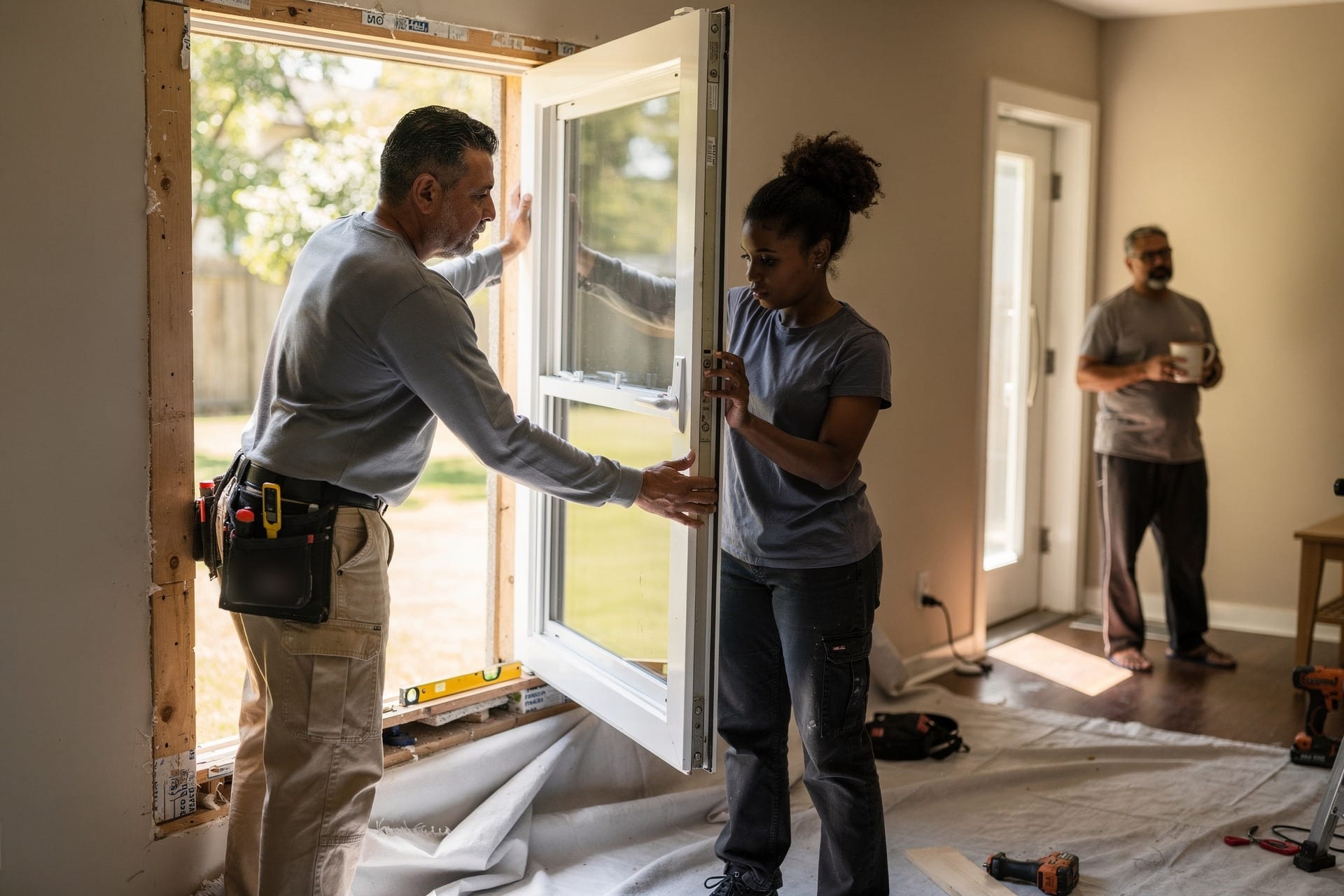
- Full-frame replacement, or large bay/bow units: roughly $150–$800 per window. Back to the rough opening, more flashing, and often a second installer on the bigger units.
- As a share of the job: labor is commonly about 30% of the total — the other ~70% is the window unit, the glass package, trim, and materials.
I’m keeping these as national ranges on purpose. They come from the cost guides, not from an NC price sheet, and your real number moves with your house — how many windows, insert or full-frame, and what the crew finds once the old units come out. Treat them as the shape of the thing, then make your own quote show you where your job lands.
Here’s the same idea as a picture — where the labor sits inside the whole job:
Where your money goes on a typical job
Directional split from national cost guides — not to scale for any one quote. The gold slice is the line lump sums hide.
Why does labor get its own number — and why do lump sums hide it?
Because the labor line is where a quote either earns your trust or dodges it. The window unit is a commodity you can price anywhere. The install is the part that decides whether that window works — and it’s the part that’s easy to keep vague.
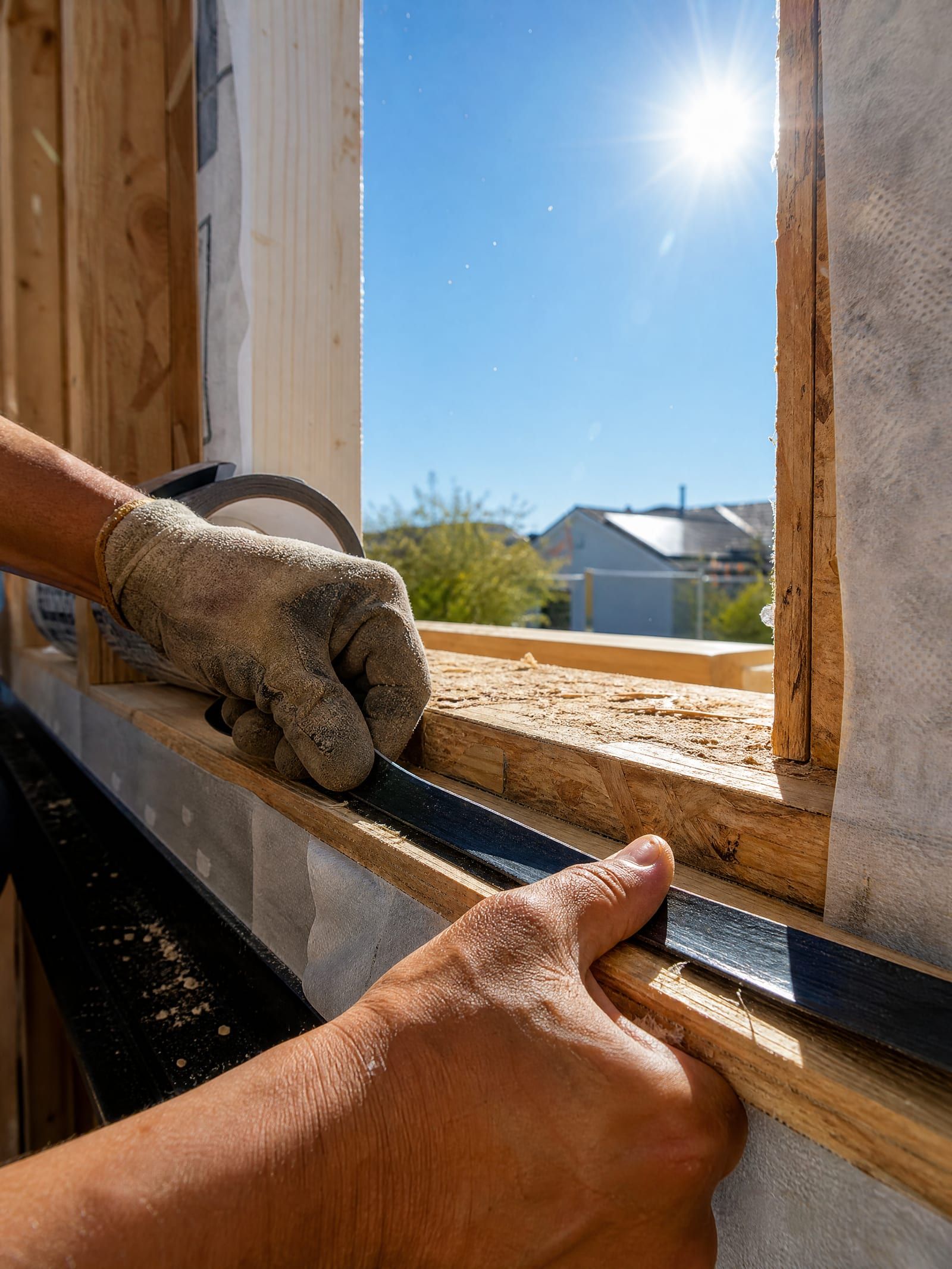
Most of what you’re paying for on the labor line isn’t muscle. It’s water and square: setting the unit on a sill pan, flashing it bottom-sides-head, shimming it plumb, foaming the gap without bowing the frame. That craft is the whole install, and it’s exactly the work that a rushed crew shortcuts to come in low.
So the labor line isn’t a nuisance charge — it’s the price of the part of the window you’ll never see once the trim goes on.
That’s why a single “installed” number should make you curious, not comfortable. A lump sum isn’t a price so much as a price with the labor hidden inside it. It might be perfectly fair. You just can’t tell until it’s broken out.
What drives the labor line up or down?
A handful of things move the labor number, and once you know them you can read almost any quote. Most of them come down to how much the crew has to tear out, how hard the opening is to reach, and how many people the job needs.
| Labor driver | Pushes labor DOWN | Pushes labor UP |
|---|---|---|
| Install method | Insert — old frame and trim stay put | Full-frame — tear-out to the rough opening, more flashing |
| Opening condition | Sound, square, dry frame | Rotted sill or framing to repair first |
| Access | Ground floor, clear approach | Second-story, tight, or awkward openings |
| Size, style & crew | Standard double-hung, one installer | Large bay/bow or picture spans needing two installers |
| Cladding returns | Simple wood siding | Stucco, brick, or historic trim to cut and rebuild |
| Extras | Nothing to haul | Old-window disposal, permits, and inspection where required |
Install method
- Pushes labor DOWN
- Insert — old frame and trim stay put
- Pushes labor UP
- Full-frame — tear-out to the rough opening, more flashing
Opening condition
- Pushes labor DOWN
- Sound, square, dry frame
- Pushes labor UP
- Rotted sill or framing to repair first
Access
- Pushes labor DOWN
- Ground floor, clear approach
- Pushes labor UP
- Second-story, tight, or awkward openings
Size, style & crew
- Pushes labor DOWN
- Standard double-hung, one installer
- Pushes labor UP
- Large bay/bow or picture spans needing two installers
Cladding returns
- Pushes labor DOWN
- Simple wood siding
- Pushes labor UP
- Stucco, brick, or historic trim to cut and rebuild
Extras
- Pushes labor DOWN
- Nothing to haul
- Pushes labor UP
- Old-window disposal, permits, and inspection where required
None of these is padding — they’re real hours and real materials. A second-story stucco opening with a rotted sill genuinely takes longer than a ground-floor insert, and the labor line should say so. What you’re checking for isn’t whether the number is low; it’s whether it matches the job in front of you.
Insert vs full-frame: the biggest labor lever
The single thing that moves the labor line most is insert versus full-frame — and it’s not a choice off a menu. Your frame’s condition decides it.
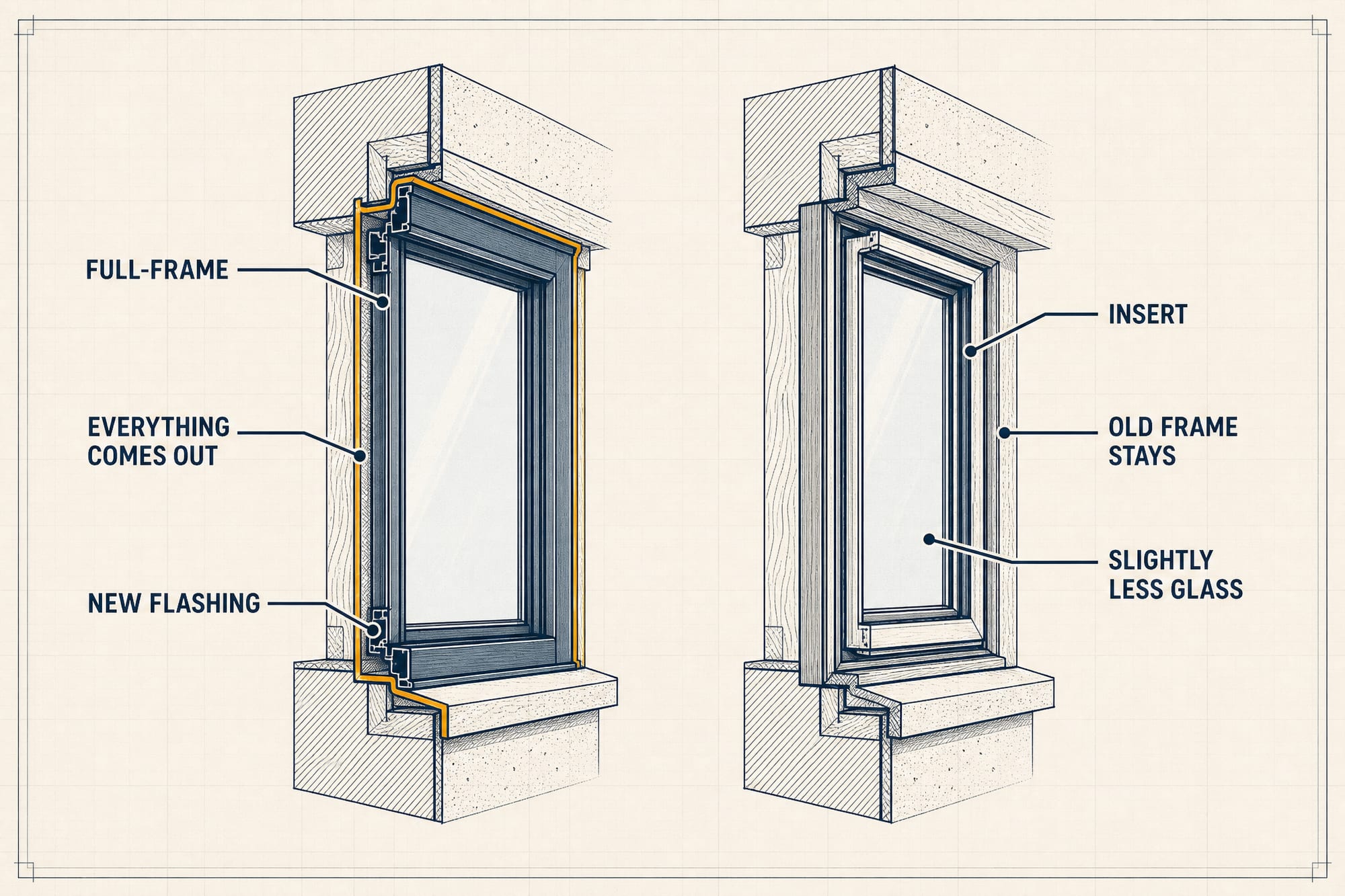
An insert (pocket) replacement drops a new window into your existing frame. The trim and exterior stay put, so there’s less to remove and less to rebuild. That’s the lighter labor line — roughly $100–$300 a window.
A full-frame replacement goes back to the rough opening: sash, frame, sometimes trim, all out. The crew can inspect and re-flash the opening from scratch, which is exactly why it costs more — more hours, more flashing, often a bigger crew. That’s the $150–$800 band. On the whole job, full-frame typically adds roughly 20–30% over an insert.
Here’s the honest part: full-frame isn’t an upsell when your sill is rotted or your opening is racked — it’s the correct call, and an insert over bad structure just buries the problem.
But full-frame is an upsell if your frame is sound, square, and dry and someone’s steering you to it anyway. Which one your house actually needs is a frame-condition question, not a sales question — and it’s the difference between the two labor bands above.
How to make your quote show the labor line
The fix is one question, asked before you sign: get the labor broken out, per window, in writing. A fair installer will do it without blinking. The estimate that resists is the one worth a second look.
Here’s the ask, more or less word for word: “Can you itemize this — each window as its own line with the unit and the labor separated, plus disposal, permits, and both warranties?” That turns a lump sum into something you can actually compare against another bid, and against the ranges on the cost pages.
The short version
You already know what a window costs. The labor line is the part you have to pull into the light — and it’s worth the trouble.
- The number: roughly $100–$300 a window for an insert, $150–$800 for full-frame, and about 30% of the job overall. National ranges, not your quote.
- The biggest lever: insert vs full-frame — decided by your frame’s condition, not a menu.
- What it buys: the water-and-square craft that decides whether the window works, not just the muscle to carry it in.
- The one move: get the labor broken out, per window, in writing. A quote that won’t is telling you something.
Labor isn’t the line to shave — a crew that comes in suspiciously low on the install is often the one that caulks over the flashing and costs you by year two. It’s the line to see. Once it’s on paper next to the window unit, a fair quote reads fair, and a padded one has nowhere left to hide.
If you want a second set of eyes before you sign — what’s the window, what’s the labor, and whether the install line fits your job — that’s a no-pressure conversation. Bring the estimate. And if you’re still sizing up the whole number, here’s what replacement windows cost in NC and how to tell if your quote is reasonable.
Sources, Verification & Fact-Checking verified July 2026
Every load-bearing fact on this page is sourced and verified against a primary authority.
Verified July 2026 via direct review of the cited authority — the links open the controlling source so you can check it yourself rather than take our word.
- The labor line alone runs roughly $100–$300 per window for an insert (pocket) replacement and about $150–$800 per window for full-frame work or large bay/bow units needing two installers; labor is commonly about 30% of the total job. National cost-guide ranges, presented as national figures rather than an NC quote — the same bands carried on the vinyl cost page and across the cost cluster. (view source — HomeAdvisor window-installation cost guide; view source — Fixr window-replacement cost guide)
- Full-frame replacement typically adds roughly 20–30% over an insert on the whole job, because it goes back to the rough opening — more labor and more material. Directional national figure, consistent with the NC cost page; the exact premium moves with the opening and the scope. Which method a house needs is decided by the frame’s condition (sound/square/dry favors an insert; rot or racking calls for full-frame), covered on the full-frame-vs-insert page.
- Most of the labor line is water-management and squaring craft — sill pan, flashing lapped bottom-sides-head, shimming plumb, low-expansion foam — not simply setting the unit in place. This is the work that decides whether the window performs and the part a rushed install shortcuts; detailed on the what-to-expect page and grounded in standard building-science and manufacturer install practice.
- An itemized, line-item quote — each window with its unit and labor broken out, plus disposal, permits, and both the product and labor (workmanship) warranties in writing — is the standard for a trustworthy estimate. ENERGY STAR’s replacement-window guidance advises getting several quotes and demanding estimates that name brand, model, U-factor and SHGC with labor and materials broken out. (view source — ENERGY STAR, buying replacement windows)