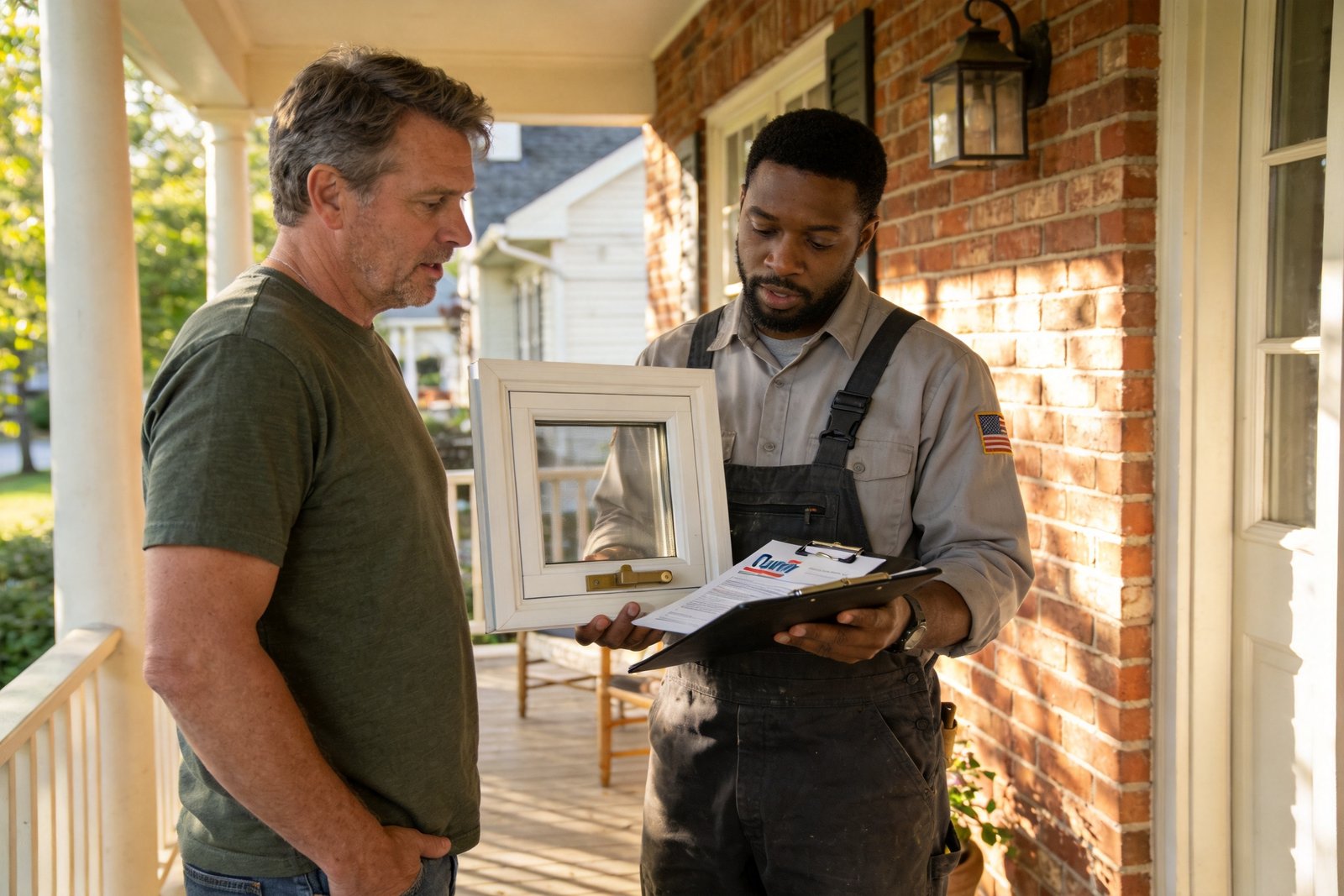

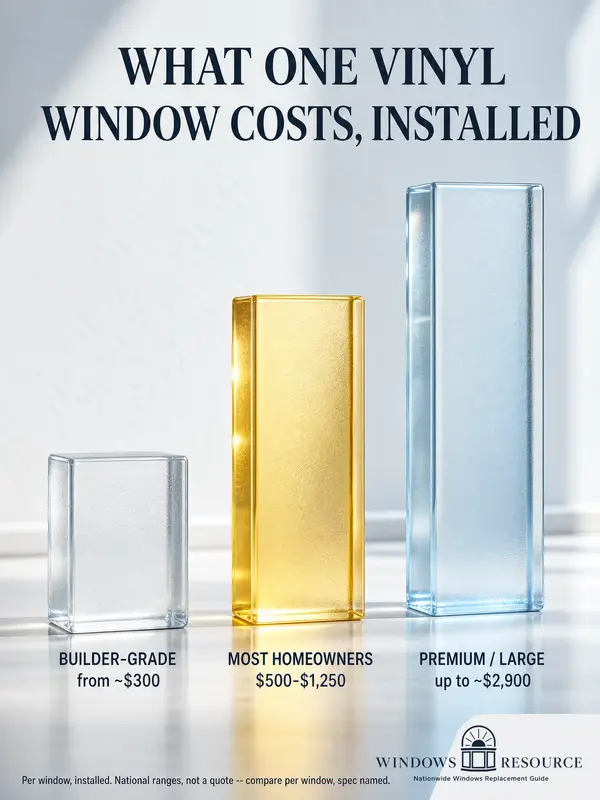


Same street, same ten openings, and one quote was nearly double. The vinyl wasn’t the difference.
If that’s roughly where you’re sitting — pricing the default option and wondering why the “value” material produces such un-valuable confusion — this page is the map.
The only vinyl window price that means anything is per window, installed, with the spec written next to it. Everything below builds toward that one skill.

How much do vinyl replacement windows cost in NC? Vinyl runs in two tiers, per window installed: recycled-content (builder-grade) ~$450–$1,600 and first-generation (virgin) ~$800–$2,400. The tier you’re sold, the glass package, the install method, and the company’s business model drive the spread. Compare per window, spec named, and the price becomes readable.
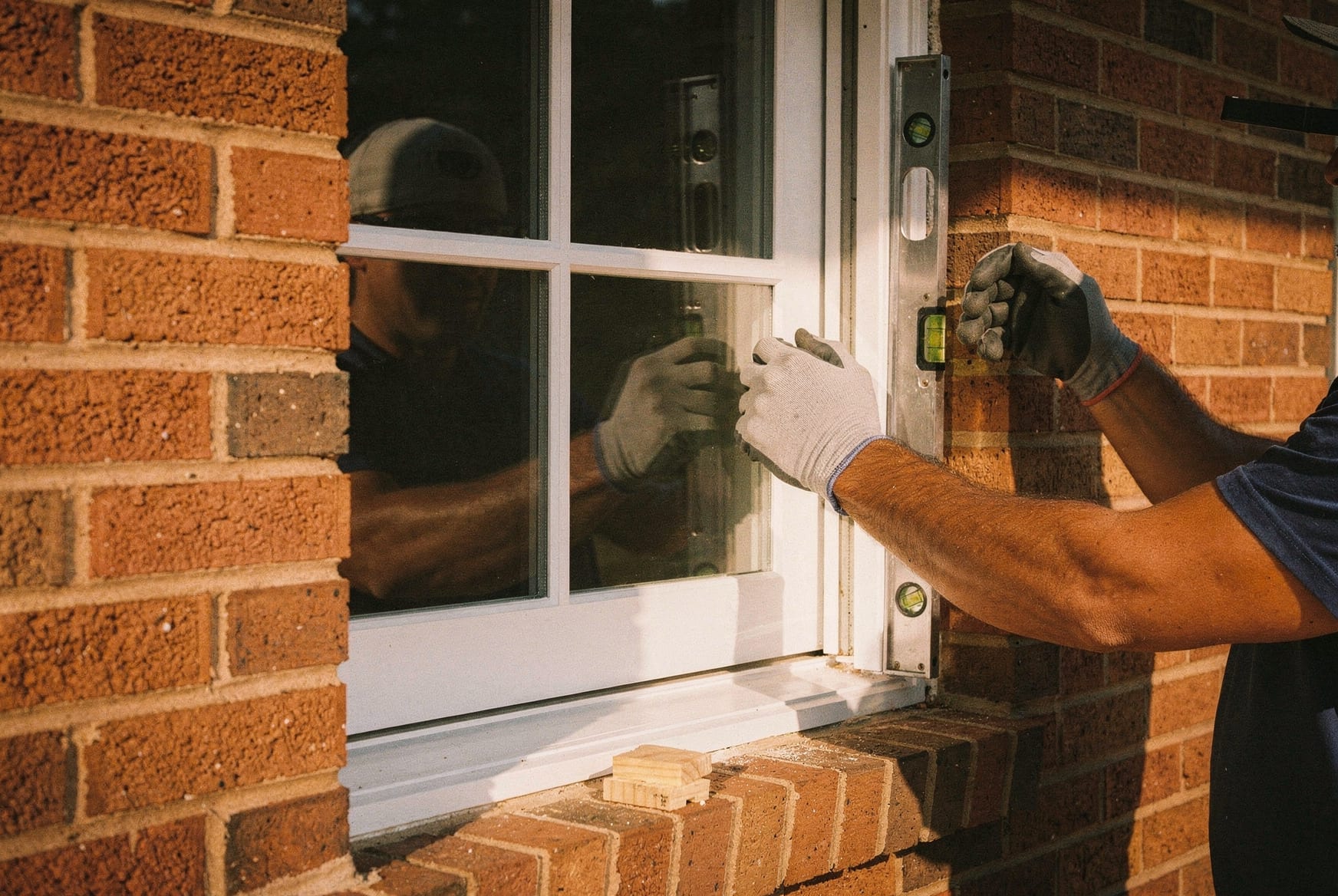
The honest NC ranges (per window, installed)
Quality vinyl typically lands from several hundred dollars to low four figures per window installed — and the spread is the story. These are national-aggregate bands applied to the NC market, not a price sheet:
Verified July 2026. Vinyl runs in two tiers: recycled-content (builder-grade) roughly $450–$1,600 per window installed, and first-generation (virgin) vinyl about $800–$2,400; large or custom sizes reach higher. National aggregators log a lower big-box floor (This Old House records some jobs near $232–$740) — that’s the cheapest stock, not the NC in-home norm. Verify against your own local bids.
- Recycled-content (builder-grade) vinyl: the entry tier — the section below explains what the low price trades away.
- First-generation (virgin) vinyl: the step up in colour and weld consistency, and commonly what the in-home-sales brands quote.
- Large or custom sizes: priced one-off, above either tier.
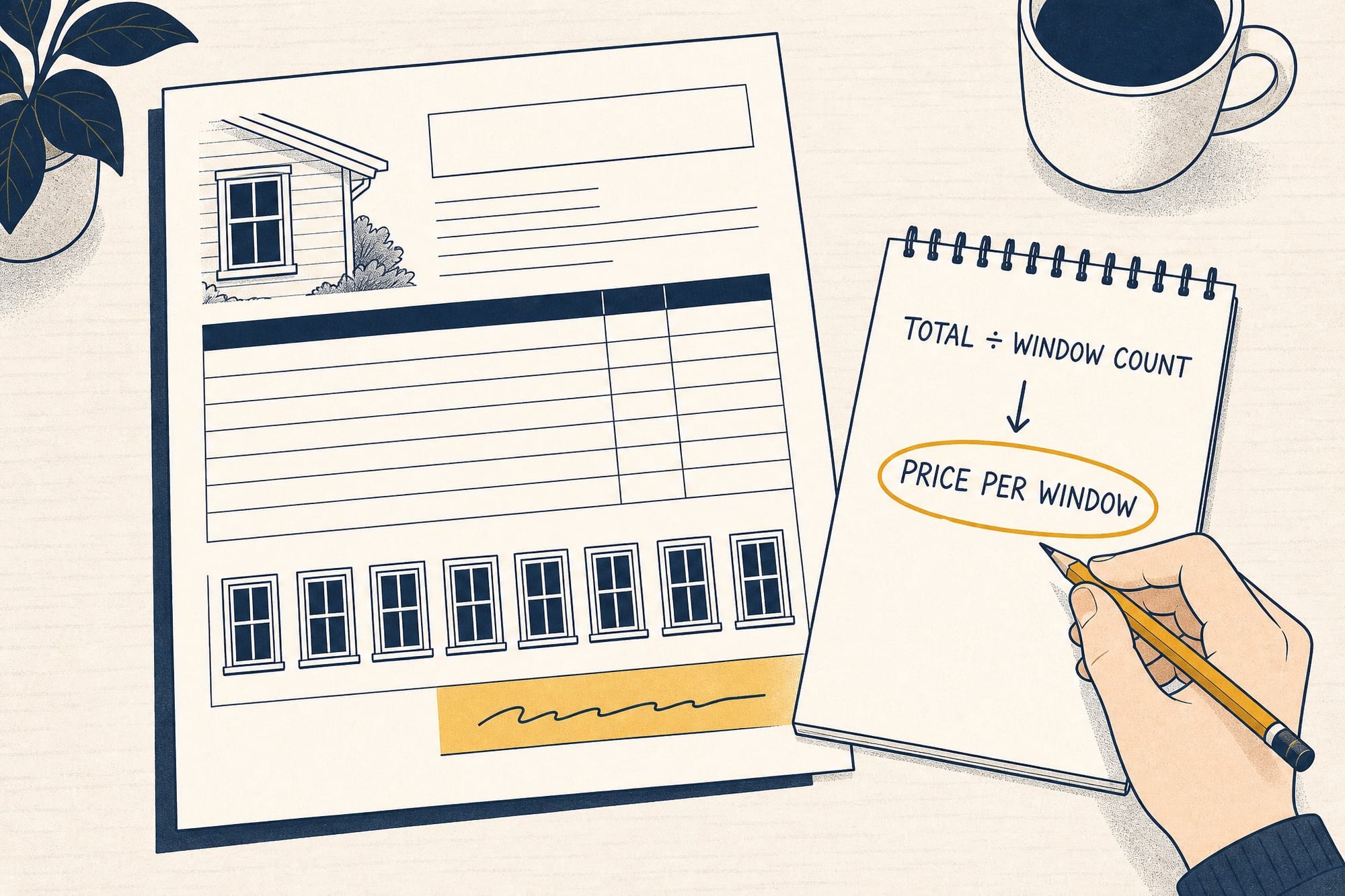
Per-window installed is the comparable unit — the rule this whole cost cluster runs on. Two “$14,000” quotes aren’t equal if one covers 9 windows and the other covers 15.
Divide first, compare second. The wider context lives at the full NC cost picture.
Whole-house math without the mystery
Multiply honestly: your window count times a per-window band — that’s the whole trick. Project totals mislead because window count hides inside them.
Verified July 2026: a typical 10-window home lands roughly in the $10,000–$35,000 range once the per-window bands above are multiplied out — still a national aggregate, not an NC-specific number.
That 10-window band looks absurdly wide until you unpack it: it’s the per-window spread times ten, doing exactly what spreads do.
Which is why the levers below — not the total — are what you should actually be reading.
What moves a vinyl quote (the 5 levers)
Five levers move the number far more than the vinyl itself. Name them on your quote and the spread stops being mysterious:
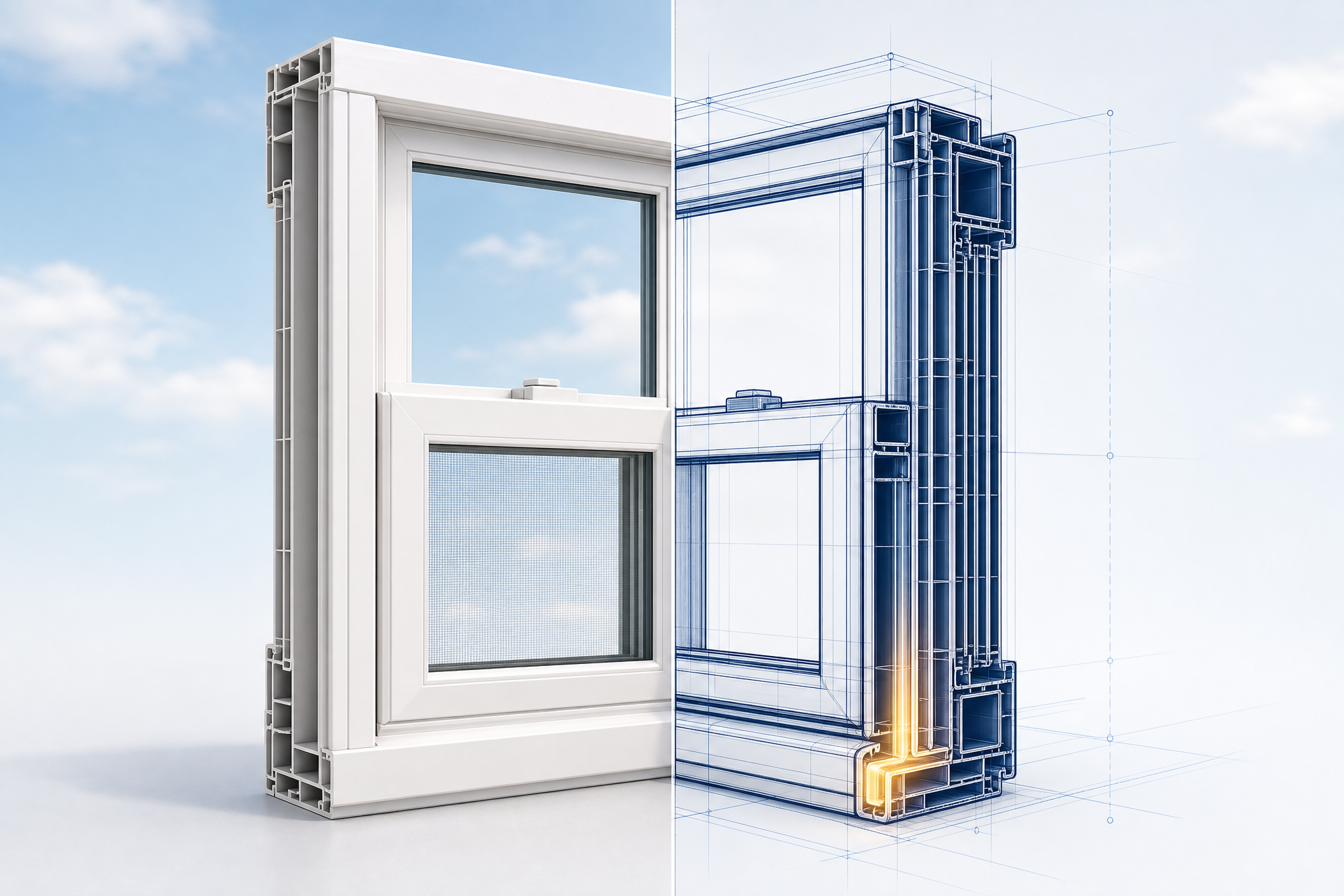
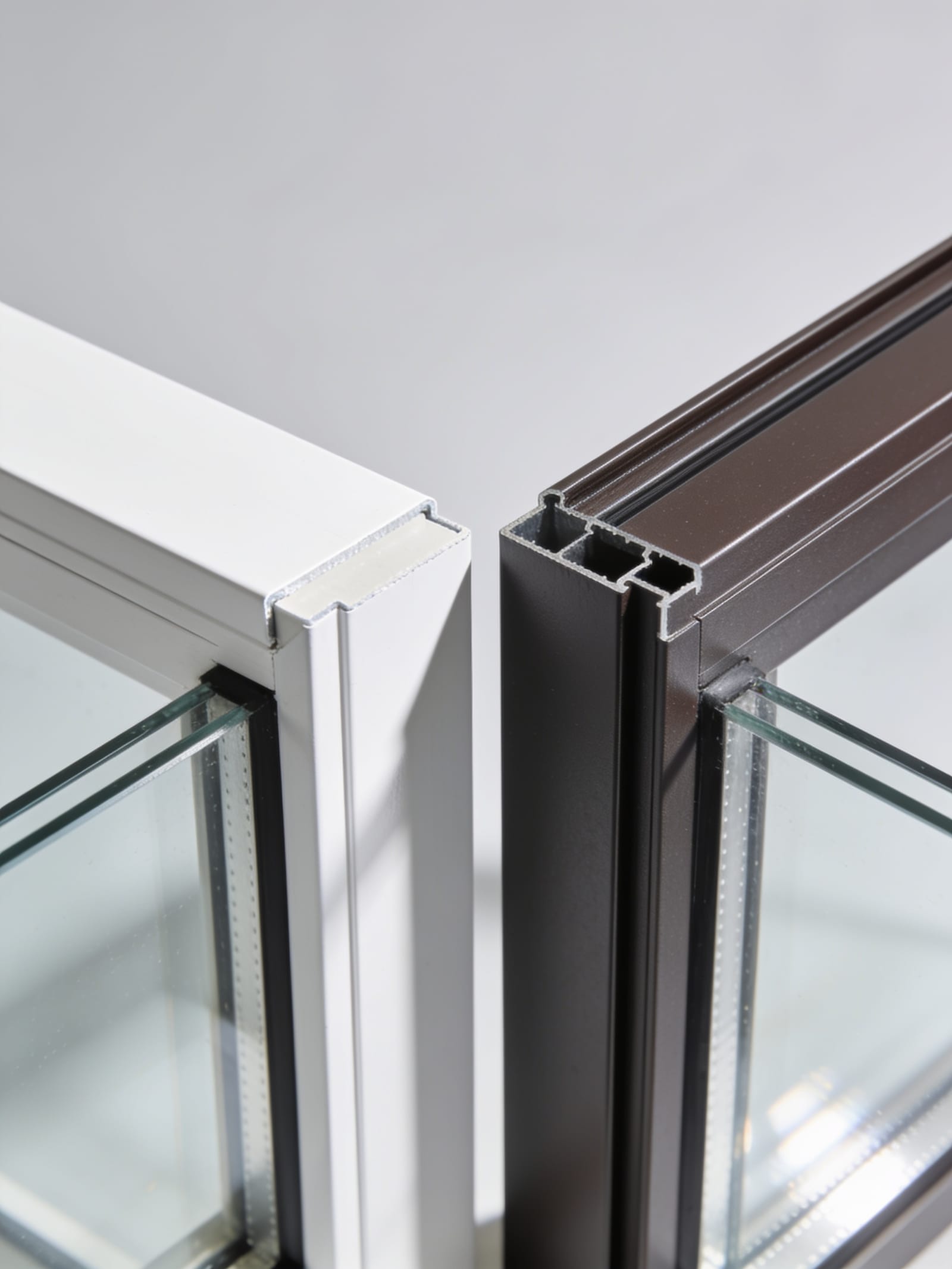
- Grade of vinyl. Builder-grade and premium are both “vinyl windows.” Wall thickness of the extrusion, fusion-welded corners vs mechanical joints, and internal reinforcement separate them — the next section makes this concrete.
- Glass package. coatings, argon fill, and the spacer system are most of the window’s actual performance. Here’s the glass package behind the price.
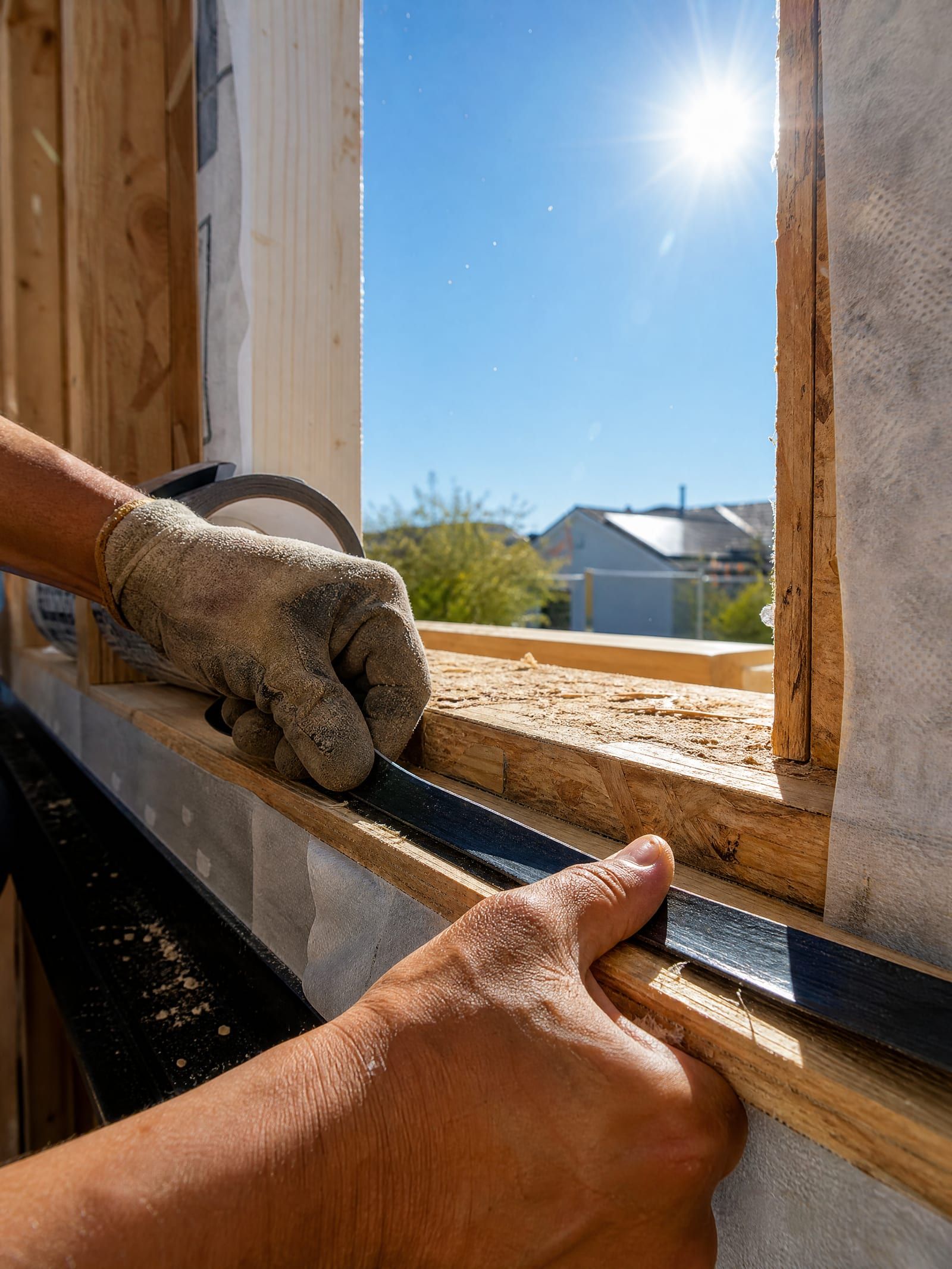
- Insert vs full-frame. An insert drops into your sound existing frame. Full-frame tears out to the studs. Labor and scope differ meaningfully — insert vs full-frame (the labor lever) explains which your house needs. Per national cost guides, the labor line alone runs roughly $100–$300 per window for inserts and $150–$800 for full-frame work, and labor is commonly about 30% of a job.
- Size, style, and operation. A big casement costs more than a standard double-hung. Bays, bows, and second-story access add labor.
- Business model. Full-service companies carry showrooms, advertising, and commissioned sales teams — overhead that buys single-source accountability and is priced into every job. Leaner local operations price lower and leave more of the vetting to you. Neither is a trick. They’re different products. Know which one you’re buying.
Builder-grade vs vinyl worth buying
The cheapest vinyl saves you money now and can charge you again later — and the difference is spec, not branding. Here’s what the low price typically trades away:
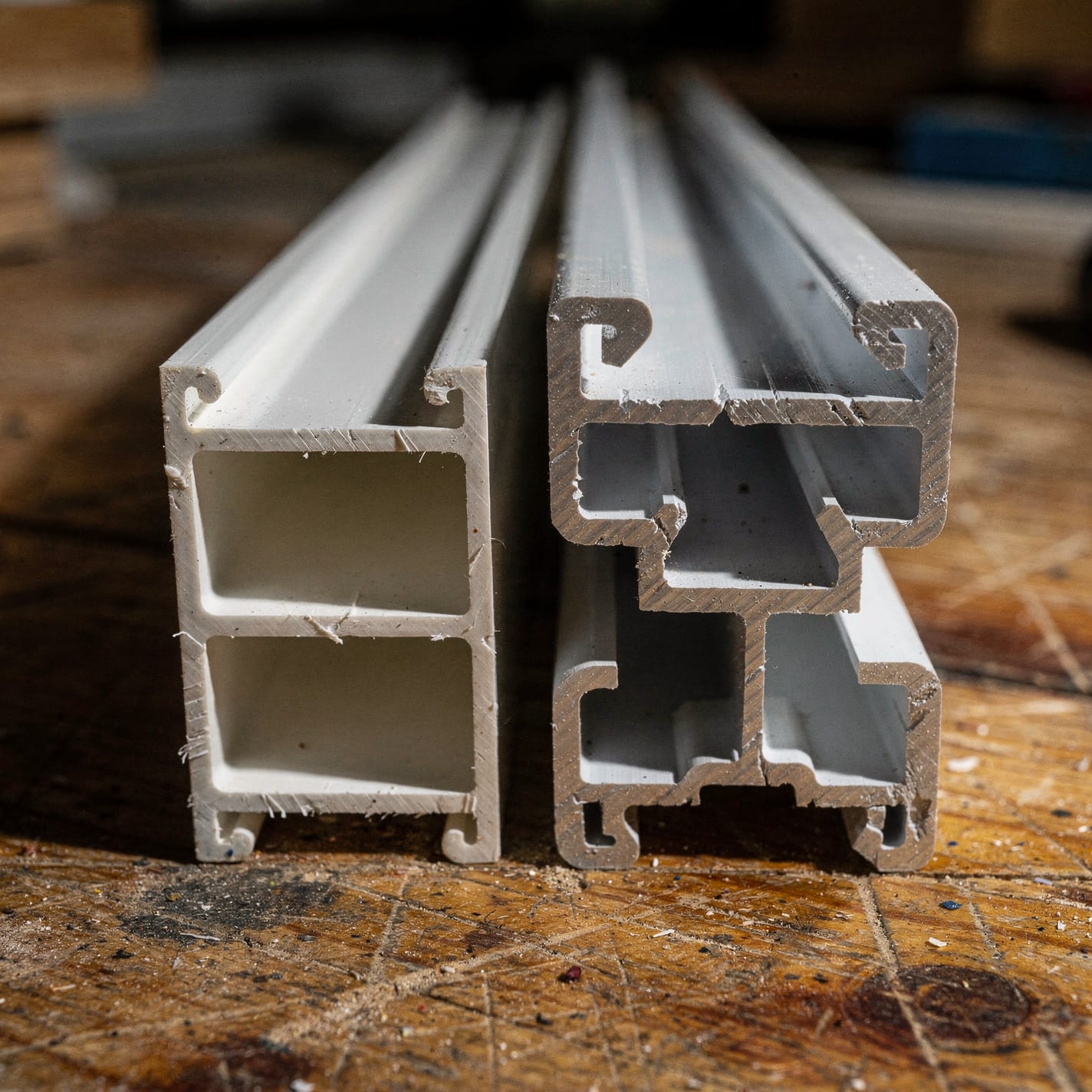
- Thin extrusions. Less material in the frame walls means more flex, and vinyl already moves the most of the common frame materials with temperature swings. Flex works seals.
- Bare glass packages. Clear double-pane with no Low-E and no gas fill passes the “double-pane” checkbox and little else — in an NC summer, the coating is the comfort.
- Fewer chambers, no reinforcement. Multi-chamber profiles and reinforced meeting rails are what keep a sash square for decades.
- Short labor warranties. The product warranty may read fine. The install coverage is where budget jobs go quiet.
Quality vinyl fixes all four for a defensible premium — that’s the “pay for it twice” false economy in reverse.
For the material itself (chambers, welded corners, lifespan, the dark-color caveat), see how vinyl performs as a material. Vinyl’s typical lifespan runs 20–40 years, grade and exposure depending.
| Factor | Builder-grade vinyl | Quality vinyl | Fiberglass (upgrade context) |
|---|---|---|---|
| Installed range | Low end of the vinyl band | The broad NC-typical middle | Above vinyl — a real premium (see below) |
| Corners & reinforcement | Mechanical joints, thin walls | Fusion-welded corners, multi-chamber, reinforced rails | Inherently rigid; lowest thermal movement |
| Glass package norms | Clear double-pane, often no Low-E | Low-E + argon standard; better spacers | Same quality glass; the frame is the upgrade |
| Lifespan | Shortest of the three | About 20–40 years, grade and exposure depending | About 40–50 years; seals stay tight longest |
| Who it fits | Flip-and-sell timelines | Most NC homeowners staying put | Dark colors, big openings, longest horizon |
Installed range
- Builder-grade vinyl
- Low end of the vinyl band
- Quality vinyl
- The broad NC-typical middle
- Fiberglass (upgrade context)
- Above vinyl — a real premium (see below)
Corners & reinforcement
- Builder-grade vinyl
- Mechanical joints, thin walls
- Quality vinyl
- Fusion-welded corners, multi-chamber, reinforced rails
- Fiberglass (upgrade context)
- Inherently rigid; lowest thermal movement
Glass package norms
- Builder-grade vinyl
- Clear double-pane, often no Low-E
- Quality vinyl
- Low-E + argon standard; better spacers
- Fiberglass (upgrade context)
- Same quality glass; the frame is the upgrade
Lifespan
- Builder-grade vinyl
- Shortest of the three
- Quality vinyl
- About 20–40 years, grade and exposure depending
- Fiberglass (upgrade context)
- About 40–50 years; seals stay tight longest
Who it fits
- Builder-grade vinyl
- Flip-and-sell timelines
- Quality vinyl
- Most NC homeowners staying put
- Fiberglass (upgrade context)
- Dark colors, big openings, longest horizon
How to read a vinyl quote
Per-window line items, spec named, both warranties — that’s a readable quote. Specifically: each window as its own line with the brand and series, the and off the label, the install method, and the product and labor warranties in writing.
Copy this and send it to any bidder
“Can I get this quoted per window, with the line (brand/series), U-factor, SHGC, install method, and both warranties written in?”
Every serious company can answer this. The answers are what make quotes comparable.
Once the quotes come back in that shape, sanity-check the number you got against the bands up top.
And if the payment plan is part of the pitch, anchor on the total first — here’s paying over time, honestly.
Vinyl vs the upgrade path
Fiberglass costs meaningfully more per window — worth the jump for specific houses, not as a default. National sources spread the premium wide.
Survey-style data shows fiberglass averaging modestly above vinyl, while unit-cost guides put it at 50–100% more for comparable grades. “Comparable” is doing heavy lifting in every version of that sentence.
Verified July 2026: survey data (This Old House, 2025) puts the market-average premium at a modest roughly $93/window (about $651 average fiberglass vs. about $558 average vinyl across many configurations), while unit-cost guides comparing matched, comparable-grade windows put fiberglass at 50–100% more per unit.
As a rough dollar shorthand for a matched-spec comparison, expect somewhere in the $200–$700+ per-window range over comparable vinyl, trending toward the high end for larger or custom sizes. The market-average figure is lower mainly because it blends budget fiberglass against premium vinyl and vice versa.
Those are national/big-box figures. Through the in-home-sales channel where most NC homeowners get quoted, composite and fiberglass run a full tier higher — about $2,400–$4,400 per window — which is why a fiberglass bid there can read as double a local vinyl quote. The fiberglass cost page breaks down both channels.
When is it worth it? Dark exterior colors (vinyl can warp dark in full NC sun), large openings, and the longest ownership horizons. The full head-to-head is at when fiberglass is worth the jump.
If you’d rather walk your actual numbers with someone before you commit — window count, quotes, and the spec lines side by side — that’s what a no-pressure second opinion is for.
Sources, Verification & Fact-Checking verified July 2026
Every load-bearing fact on this page is sourced and verified against a primary authority.
Verified July 2026 via direct review of the cited authority — the links open the controlling source so you can check it yourself rather than take our word.
- Per-window vinyl tiers (recycled-content ~$450–$1,600 installed, first-generation/virgin ~$800–$2,400; 10-window whole-house ~$10k–$35k): the tiers carried in the knowledge base (
cost-and-warranty.md§2) and across the cost cluster. National cost-guide aggregates (Angi/HomeAdvisor/Fixr-class) show a lower big-box floor (~$232–$1,200) because they survey mostly big-box and local-installer work; the tiers reflect the NC market including the in-home channel where most homeowners get quoted. Verify against live local quotes. - Labor portion (about $100–$300/window insert, about $150–$800 full-frame; labor commonly about 30% of the job): national cost guides — presented as national ranges, not an NC quote. (view source — HomeAdvisor; view source — Fixr)
- Vinyl lifespan (about 20–40 years) and the dark-color warp caveat: grounded in current building-science and frame-material references; grade- and exposure-dependent. Figure hedged pending a linked public source.
- Fiberglass premium over vinyl: verified July 2026 — This Old House’s 2025 survey data puts the average premium at roughly $93/window ($651 average fiberglass vs. $558 average vinyl), a modest average across many configurations; other national unit-cost guides put comparable-grade, apples-to-apples fiberglass at 50–100% more per unit. The spread is wide because “comparable” varies between a broad market average and a matched-spec comparison. (view source — This Old House, fiberglass vs. vinyl windows; view source — HomeGuide — HomeGuide returned a bot block on automated fetch; verify in browser)
- Business-model lever (overhead priced into full-service jobs; leaner models price lower; neither is a trick): a structural explanation of how full-service and lean sales models are priced, not a claim about any named company.
- Glass-package and NFRC-label mechanics: NFRC and ENERGY STAR — the same verified basis as the site’s energy-ratings reference. (view source — NFRC)