

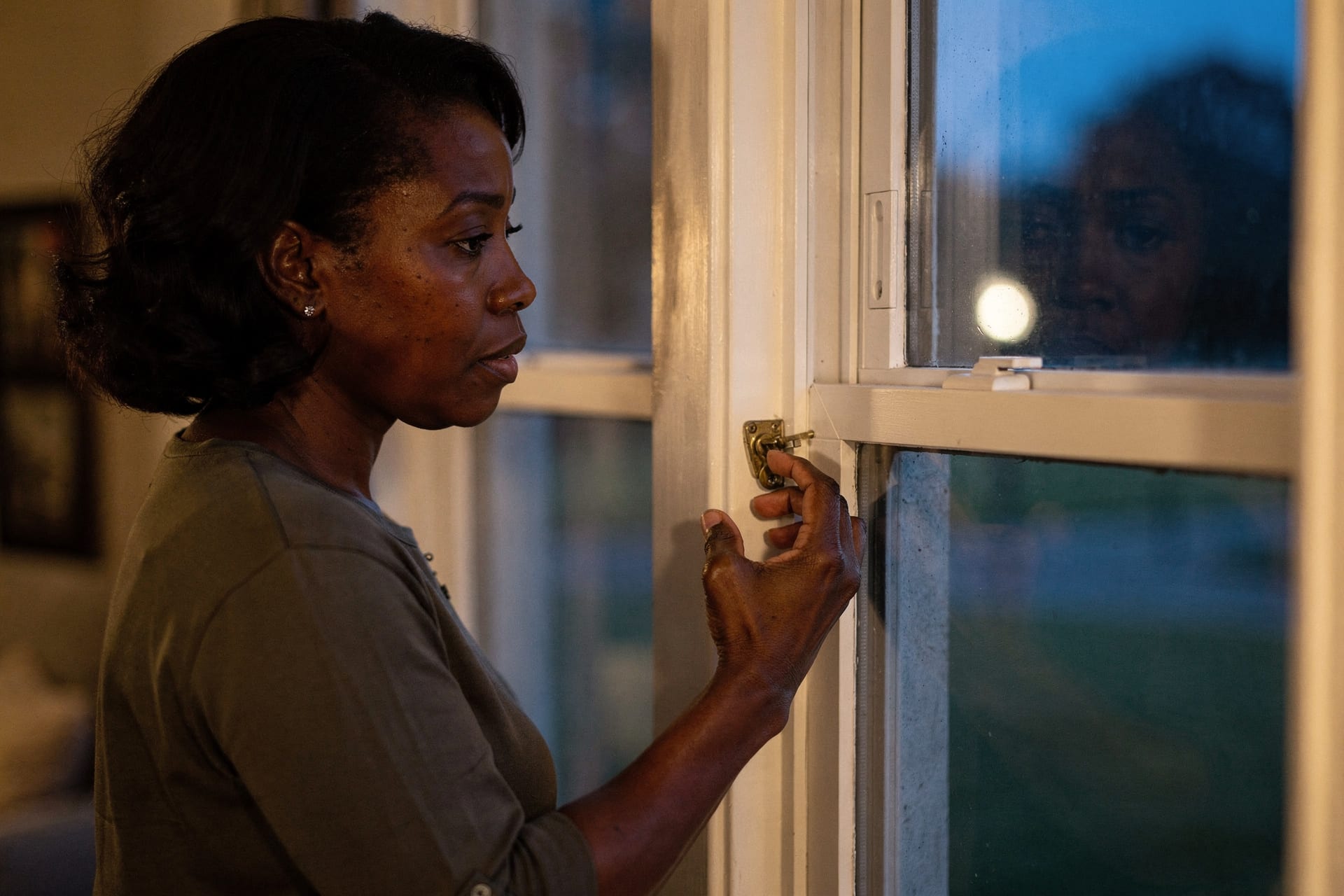
There’s a window in a lot of houses that everyone’s quietly given up on. The latch doesn’t quite catch, so it just… stays shut but unlocked. Nobody says anything until the night the wind picks up, or the kid moves into the ground-floor bedroom, and suddenly it’s the window you think about after the lights go out.
Here’s what I’d rather you hear first. A window that won’t lock is one of the cheapest problems in this whole repair-or-replace conversation. The part that failed usually has a name, a few-dollar price, and a screwdriver-level fix.
Let’s find the fix — and then let’s answer the security worry honestly, because that part is real and nobody else on the first page of results bothers to.
Why won’t my window lock? Usually one of a few small things: the sash isn’t seated square, the keeper (the catch the lock grabs) has drifted out of line, or the cam lock itself is worn. All are a screwdriver, a shift, or a few-dollar part — not a new window. The one real exception is a sash that’s sitting permanently out of square.
Why won’t my window lock?
Almost always it’s one of five things — and four of the five are cheap. On a double-hung, the lock is a cam lock: a little lever that rotates and hooks into a metal catch called the keeper (or strike) on the other sash. When it won’t lock, something is keeping that hook and that catch from meeting.
Here’s the short list, roughly in the order I’d check them:
- The sash isn’t seated square. The window is sitting a hair off in the frame, so the cam and keeper don’t line up. Most common on a double-hung where the top sash has drifted down.
- The keeper has drifted out of line. Its mounting screws loosened and it shifted, so the cam swings but never catches.
- The cam lock is worn or broken. If the handle turns but nothing engages, the internal cam is stripped or sheared. The lock spins freely.
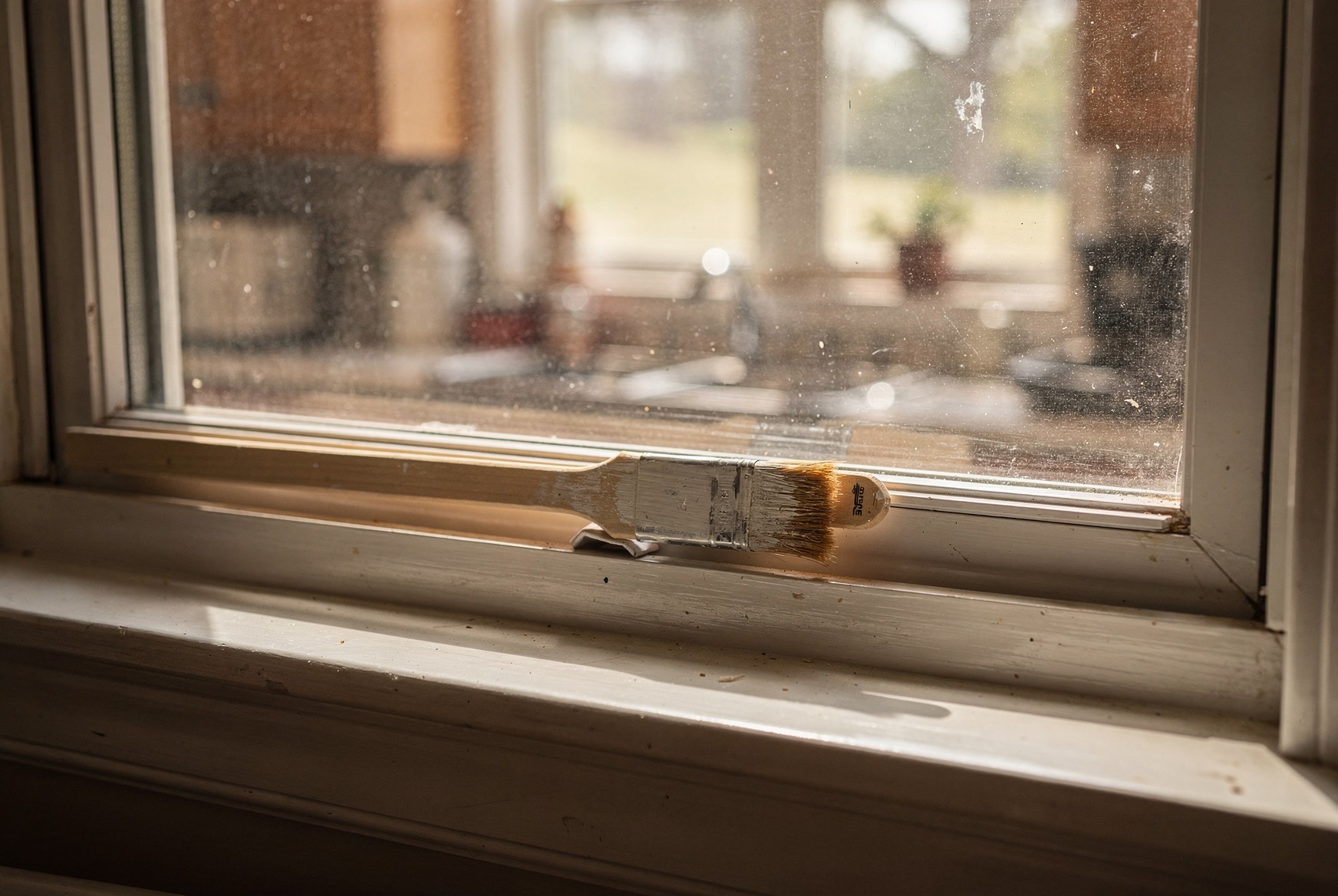
- Paint or grime is blocking it. Built-up paint or dirt keeps the sash from closing all the way, or gums the cam. (That’s often the same culprit behind a sash that’s painted shut.)
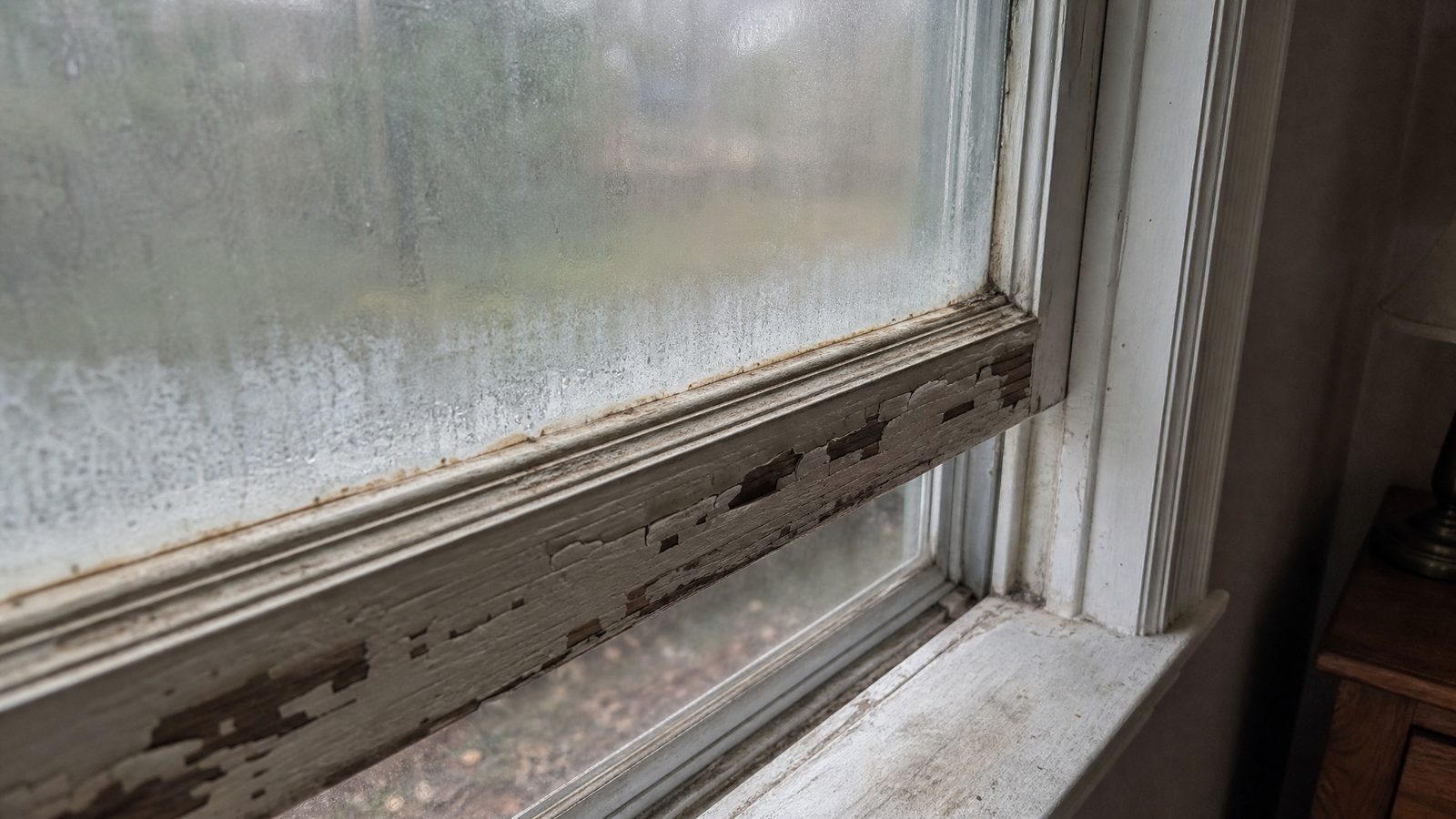
- The sash is out of square for a structural reason — a swollen sash in a humid NC summer, or a frame nudged by years of house settling. This is the one that can point somewhere bigger.
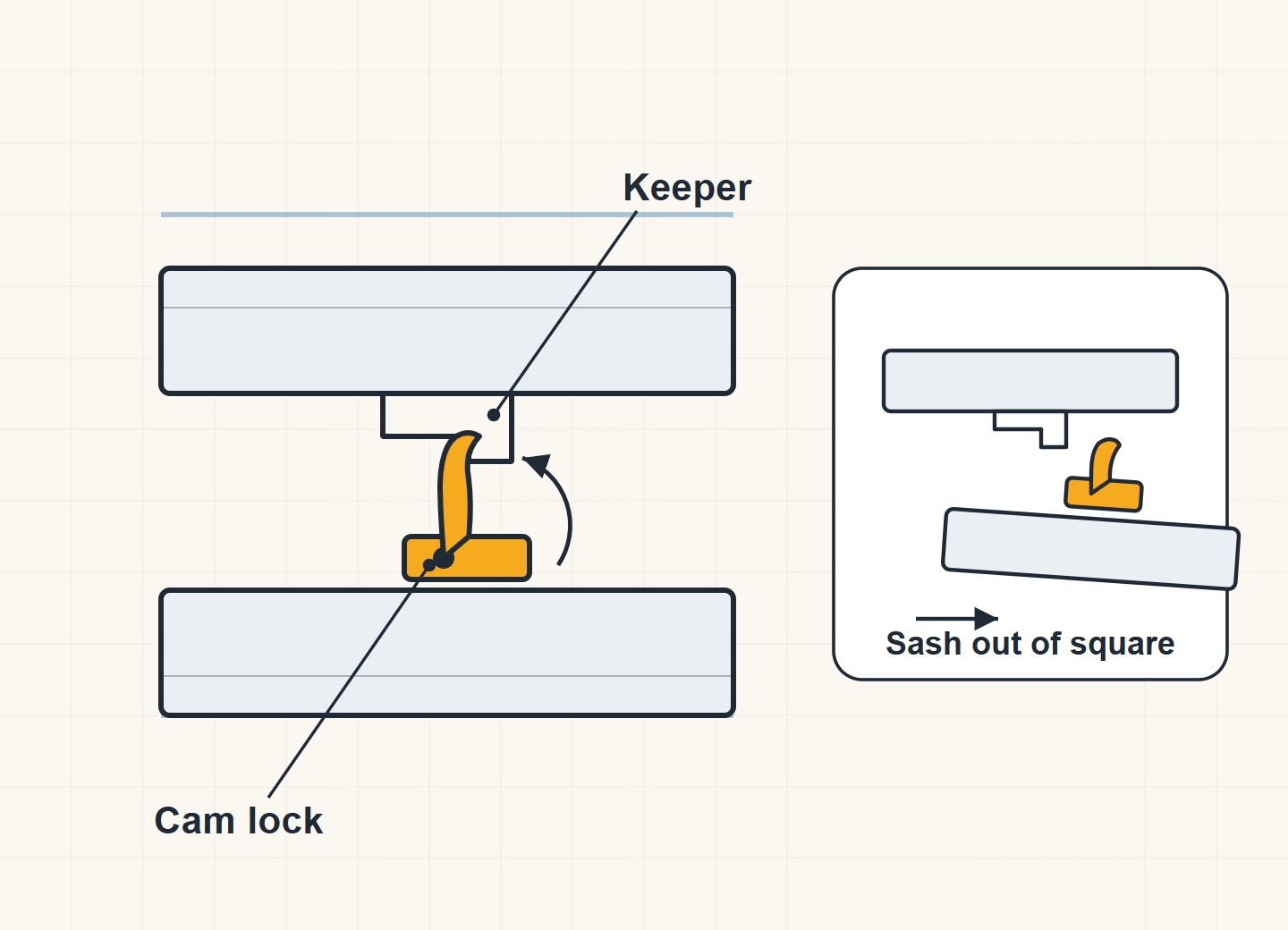
The reason this matters: four of those five are a part or an adjustment. Only the last one — a sash that’s genuinely, permanently out of square — is a bigger conversation. So let’s rule the cheap ones in first.
How do I fix a window that won’t lock?
Work these in order, easiest first — most windows never make it past step two. None of this needs more than a screwdriver.
- Reseat the sash. On a double-hung, push the top sash fully up into its pocket, then pull the bottom sash all the way down, and try the lock. A dropped top sash is the single most common reason the cam and keeper don’t meet.
- Realign the keeper. Close the window and look at the cam and the keeper together. If they’re off, loosen the keeper’s screws, shift it until the cam seats cleanly, and retighten. Many keepers have slotted holes exactly for this.
- Fix loose or stripped screws. Snug down anything loose on the lock or keeper. If a screw won’t bite, go up one length, or pack the hole with a wood-glue-and-toothpick fill and let it set before re-driving.
- Clean and lube. Brush out dirt and old paint around the cam and keeper, then use a dry or silicone-based lubricant — not oil, which grabs dust and gums it back up.
- Swap the part. If the handle spins with nothing catching, the cam lock is done — unscrew it and fit a matching one. If the catch is bent or missing, replace the keeper. Both are inexpensive individual parts.
A quick note for the non-double-hung crowd: on a casement or awning window the lock is a multipoint handle that drives a bar with several catches. Same logic — clean it, check the catches line up, and a handle that spins without locking means the internal gear has failed and the mechanism gets replaced, not the window.
The whole repair, at its most expensive, is a cam lock and a keeper — a few dollars in parts.It slides down and won’t stay put to re-lock? That’s not the lock.
If the sash won’t stay where you put it long enough to lock it, you don’t have a lock problem — you have a balance problem. This is the one that fools people, so it gets its own heading.
The tell is specific: you unlock the window to crack it for some air, and the sash drifts down on its own, and now the cam won’t line up with the keeper because the sash won’t hold position. The lock is fine. What’s failed is the hidden spring — the sash balance — that’s supposed to hold the sash’s weight.
That’s a different (and still cheap) fix, and it has its own page — here’s what a sash balance is and what the swap runs. Chase the balance, not the lock, and the window will latch fine again.
One more reframe while we’re here: if a window has never locked right since the day it was installed, and reseating it doesn’t fix it, that’s not really a lock question. That’s a squaring-and-shimming question — the marks of an install that wasn’t set true.
When a lock problem actually means replace
Rarely — and only when the sash or frame itself has moved, not when a part wore out. I’d rather talk you out of a replacement you don’t need than into one you do.
A worn cam lock, a bent keeper, a dropped sash, a little paint — none of those are the window failing. They’re parts and adjustments. The honest replace signals are structural:
- The sash is permanently out of square — not swollen-for-the-season, but sitting crooked no matter the weather, so nothing lines up.
- The frame is warped or bowed enough that the sash and lock will never meet again.
- There’s soft, punky wood at the sill or sash when you press it — water damage, which is the one true replace signal across this whole cluster.
Even then, one bad sign on one window is a repair, not a sentence for the whole house.
The math only tips toward replacement when the failures stack up on a unit that’s tired on several fronts at once — and that’s a counting exercise, which is exactly what the repair-or-replace test is for.
If someone told you a stuck lock means “they’re all going bad,” don’t take that as a line — but do go count. On a house full of tired single-pane units, it can be true in aggregate.
Is a window that won’t lock a security risk?
It’s worth handling, but keep it calm — it’s rarely an emergency, and it’s almost always fixable the same week. A window that won’t lock is a loose end, not a crisis. Prioritize the ground-floor and street-facing ones, because those are the ones exposure actually applies to, and most of them are a keeper shift or a part swap away from solid.
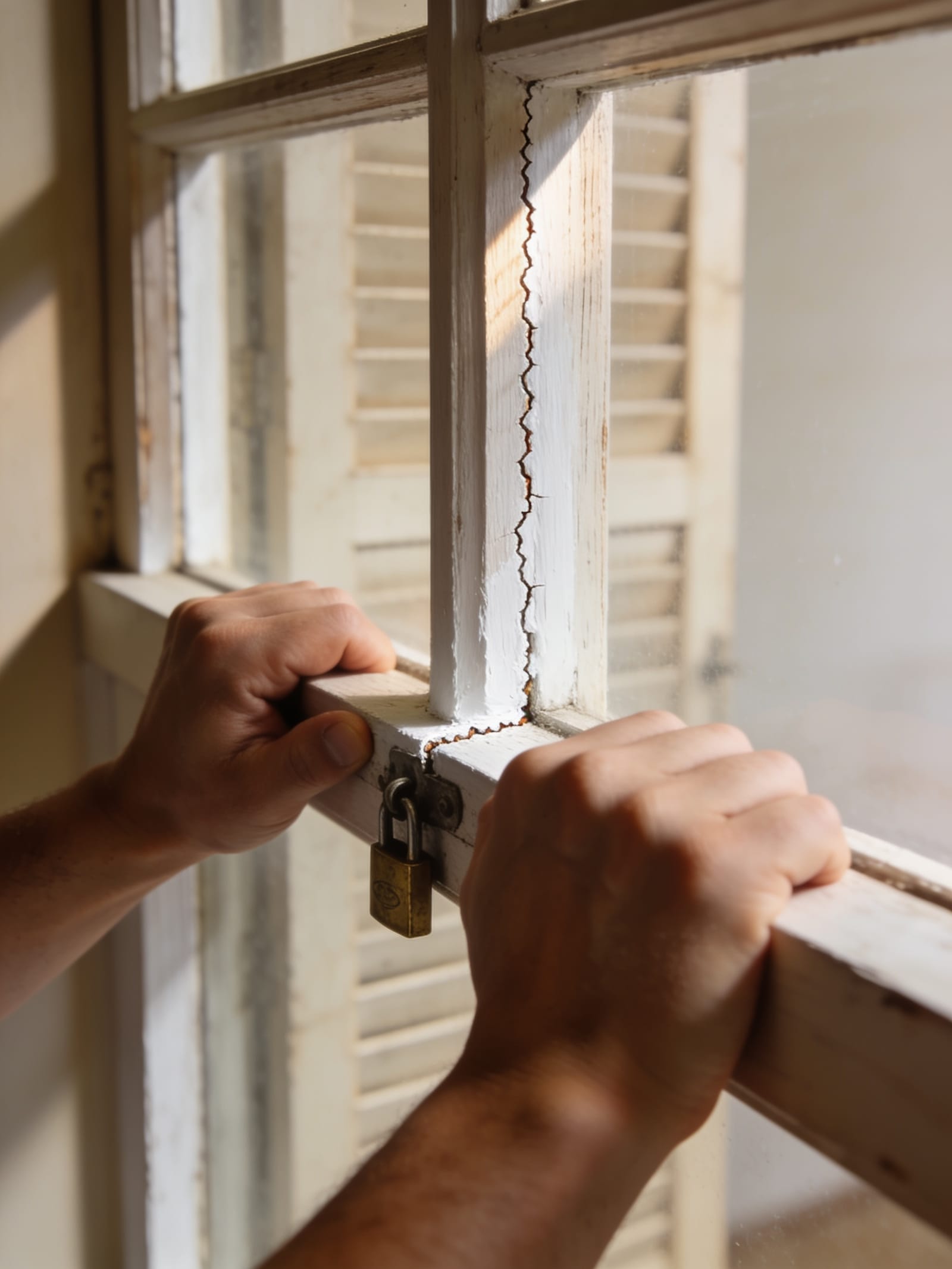
If you want it secured tonight while you wait on a part, a snug dowel or a cut length of broomstick laid in the track of a double-hung or slider stops it from being opened from outside. It’s a stopgap, not a fix — but it lets you sleep.
North Carolina’s residential code sets specific escape-opening requirements for bedrooms — the dimensions and how they apply are covered on the NC window permits page, which is where to check before you do anything permanent to a sleeping-room window.
For everything else, this is a good-news page: the lock you’ve been eyeing at night is, nine times out of ten, a screwdriver and a few-dollar part. And if you’d rather have someone look before you buy anything, that’s what a no-pressure second opinion is for.
Sources, Verification & Fact-Checking verified July 2026
Every load-bearing fact on this page is sourced and verified against a primary authority.
Verified July 2026 via direct review of the cited authority — the links open the controlling source so you can check it yourself rather than take our word.
- On double-hung and single-hung windows the lock is a cam (sash) lock — a rotating lever that hooks into a keeper/strike plate — while sliders use a latch/bolt and casement/awning windows use a multipoint espagnolette handle. A handle that turns freely without engaging means the internal cam is stripped or sheared; a lock that engages but won’t catch the keeper is loose mounting screws or a warped/settled frame; replace the lock outright when the housing is cracked, the gears are stripped, or the keeper is bent or broken. (view source — Engineer Fix)
- The four common causes a window won’t lock (misalignment, dirt/paint buildup, loose or corroded hardware, warped frame) and the four DIY fixes: tighten the lock (replace stripped screws with slightly longer ones), clean and apply a silicone-based lubricant, loosen the keeper’s screws and shift it until it aligns, and re-seat the sash squarely in the track. (view source — Window World)
- The double-hung reseat procedure — slide the upper sash fully up, pull the lower sash down, then engage the lock — plus a dropped top sash and a disengaged balance shoe as reasons the lock won’t align. When the sash rides off its balance/shoe, the lock won’t line up until the balance is addressed. (view source — Window World)
- Cost framing — a cam lock and a keeper are inexpensive, off-the-shelf replacement parts (a few dollars), a small fraction of any replacement window. A double-hung sash lock is a standard stocked hardware item, commonly sold as a single set that includes the lock, the matching keeper, and the mounting screws — not a special order. (view source — Ace Hardware, sash locks)
- The “sash slides down and won’t stay to re-lock” case is a failed sash balance, not a lock failure. A homeowner describes one double-hung whose top sash “slides down by itself too much and makes it hard to re lock it into place,” and the answer that comes back is a balance fix — a sash cord on an older unit, or the manufacturer’s balance (possibly still under warranty) on a newer one. The story callout is written as the recurring pattern these threads follow, not a single sourced account. (view source — r/Renovations)
- Bedrooms require an operable emergency escape opening under the residential code, so a bedroom window that won’t lock or operate is an egress concern, not just a security one. The NC-amended net-clear-opening dimensions live on one page only — the NC window permits page — and are deliberately not restated here, so the figures have a single source of truth.