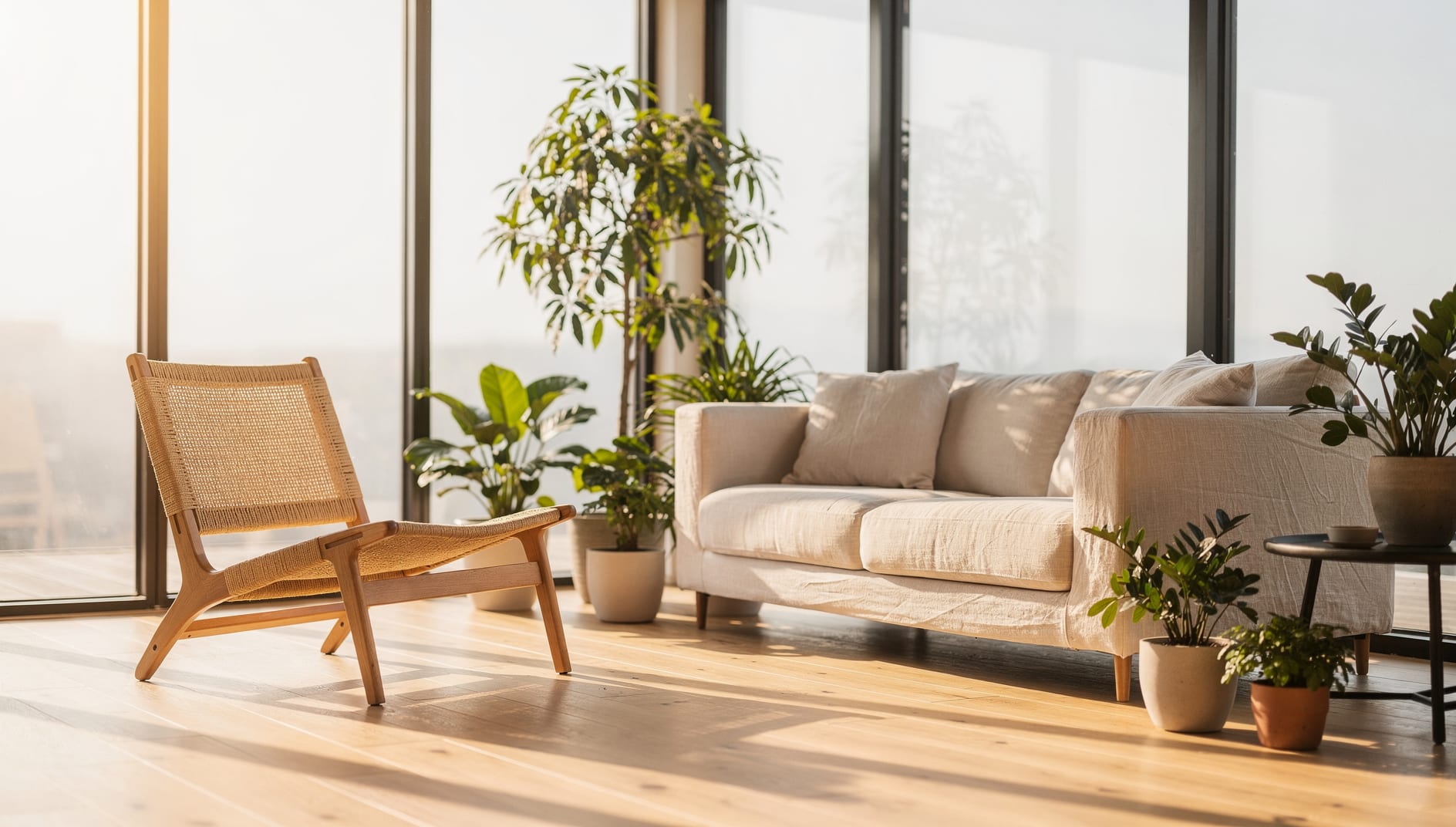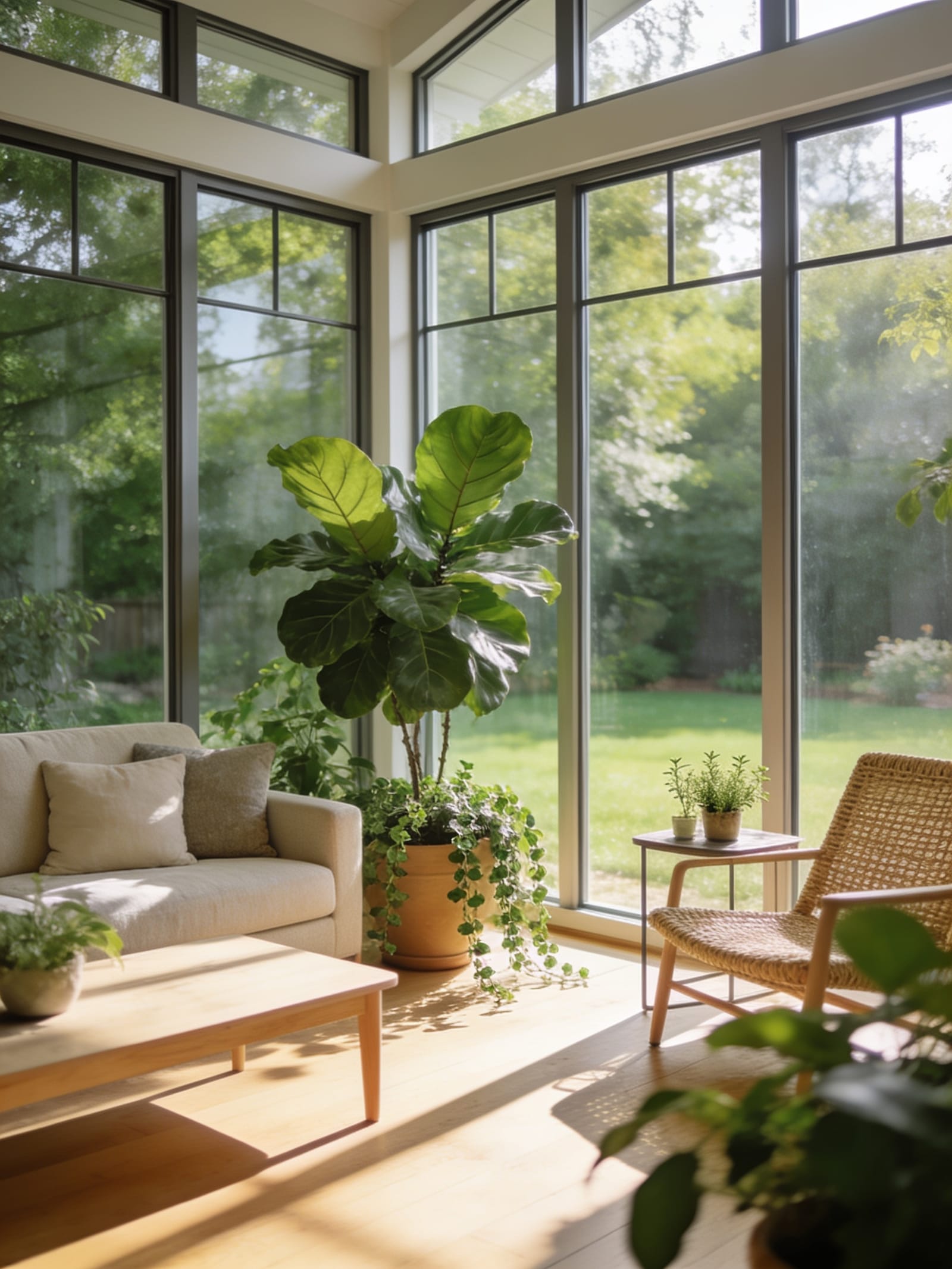


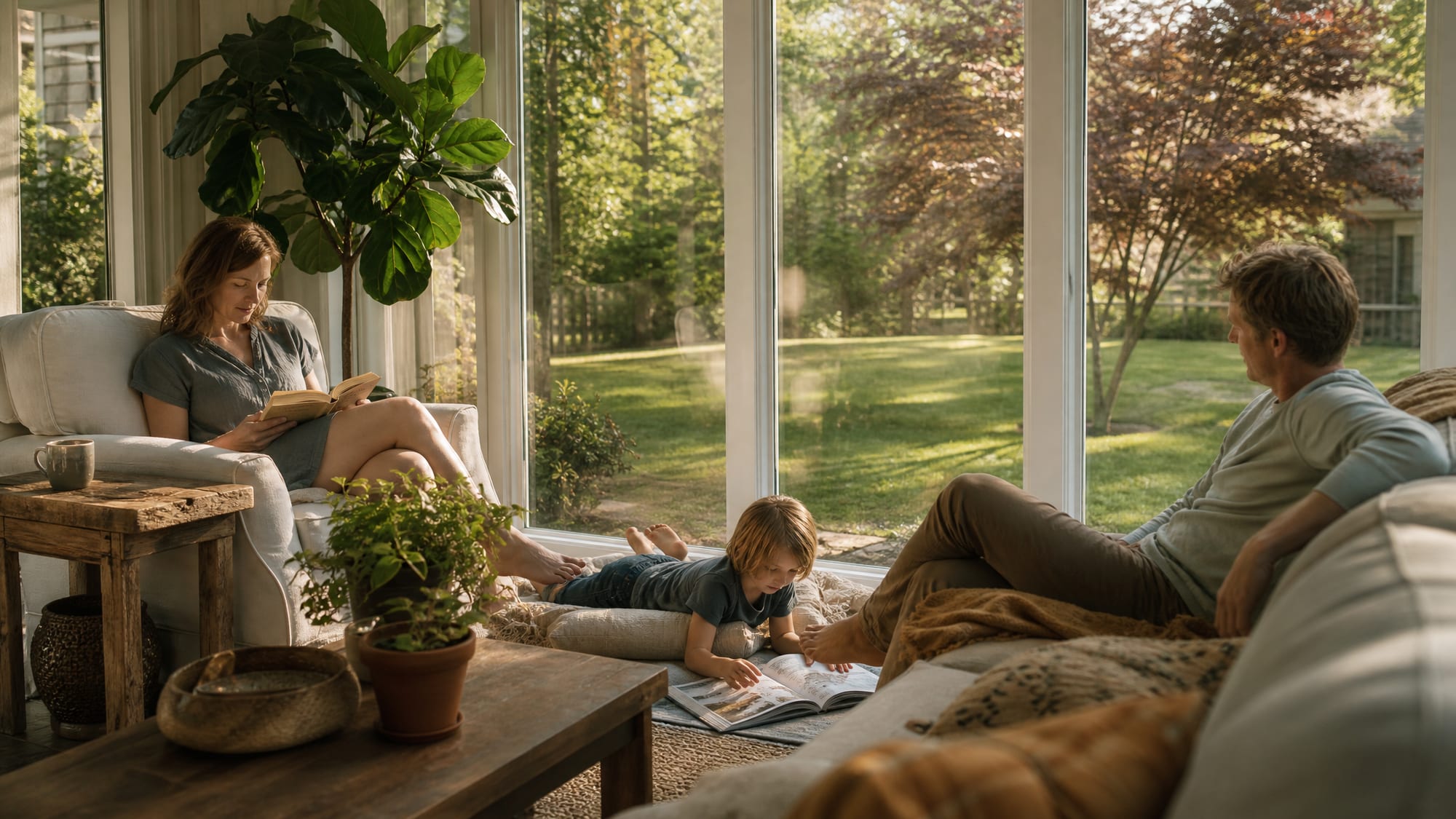
You save the photo. A wall of glass, a linen sofa, a fiddle-leaf fig catching the light, coffee steaming on a reclaimed-wood table. It looks like the room where your whole life would get calmer.
Then the quiet, burned-once part of your brain asks the real question: would that actually work in my house — or would it roast by noon in July and buckle the floor by August?
That’s the gap this page lives in. The shelter magazines will show you forty gorgeous rooms and never once tell you which ones survive a Carolina summer. I sell and measure these rooms in North Carolina for a living, so here’s the honest version — the pretty ideas, tagged with the room each one actually needs.
Which sunroom ideas actually hold up in NC? All of them can — if the idea is matched to the right build and the right glass. Year-round ideas (home office, indoor garden, everyday breakfast room) need a real 4-season room; warm-month ideas (reading nook, spring-to-fall plant room, weekend entertaining) are happy in a cheaper 3-season. The two things that decide whether any of them “hold up” are the glass and the flooring — get those right and the rest is decorating.
What can you actually use a sunroom for?
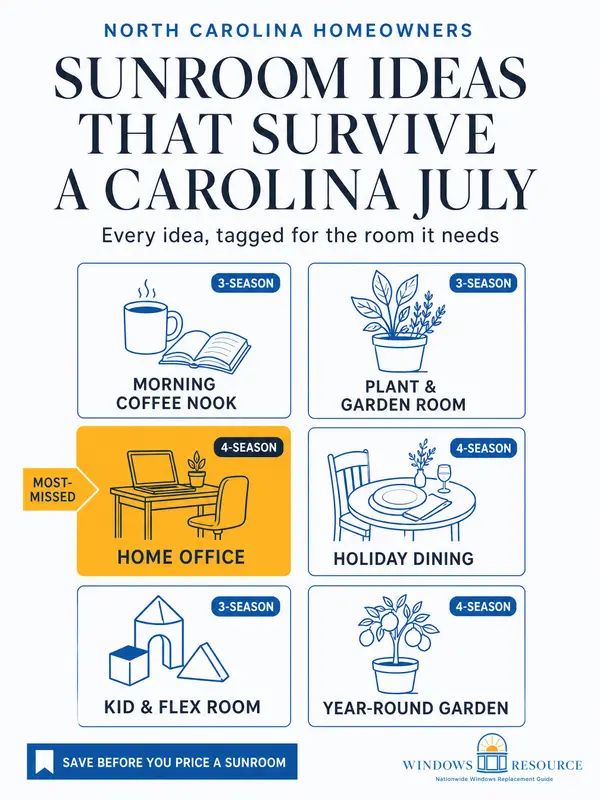
The best “idea” isn’t a style — it’s a use. Pick how you’ll live in the room first, and the design, the glass, and the season-rating all fall out of that. Here are the uses NC homeowners tell me they love most, each tagged for the room it wants:
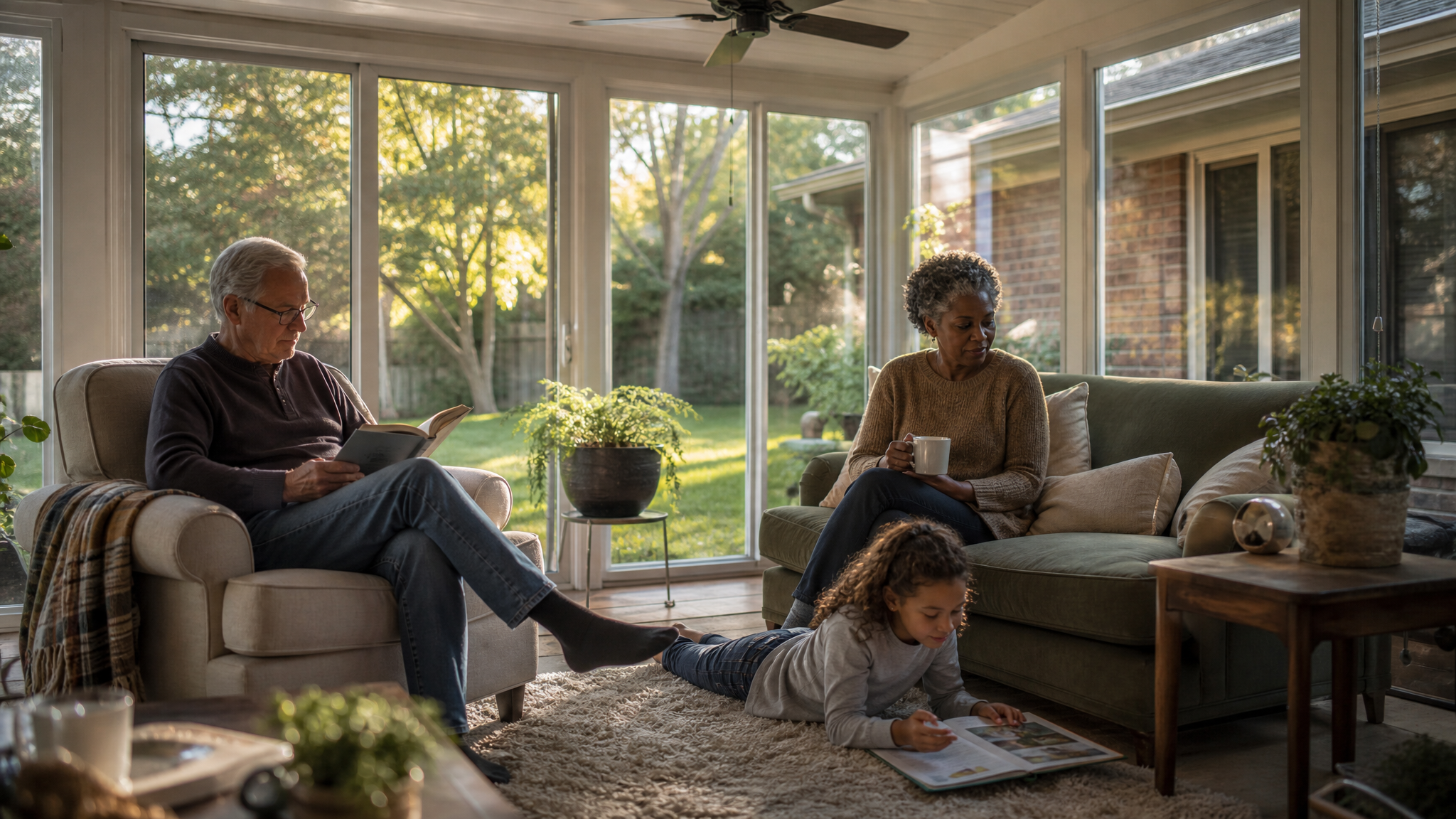
- The morning-coffee and reading haven. A chair, good light, a spot to hide from the house for twenty minutes. The single most-loved use — and a happy 3-season idea, since you’ll chase the comfortable months anyway.
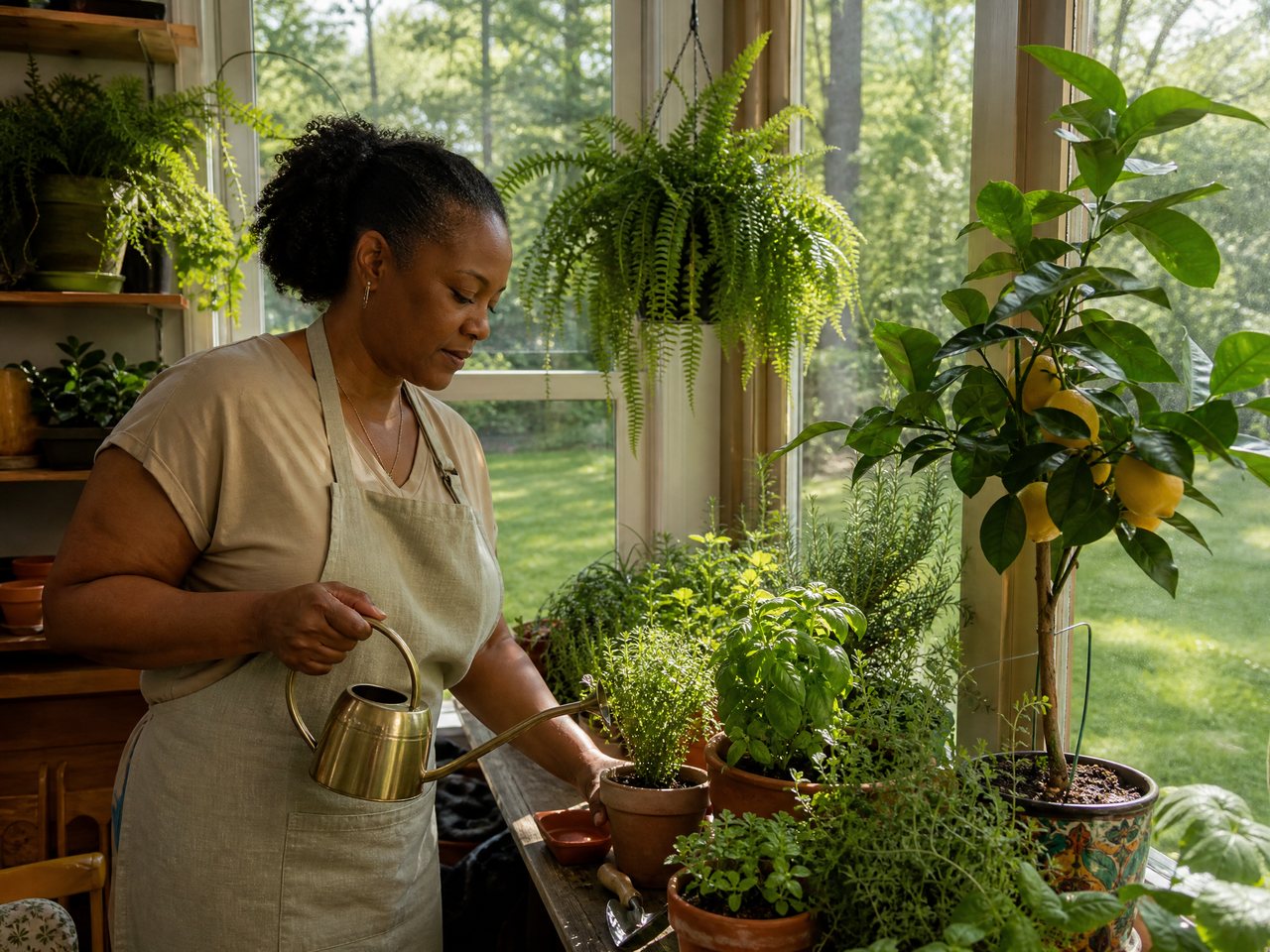
- The plant and garden room. Herbs on the sill, a Meyer lemon in the corner, ferns everywhere. This one splits: a spring-to-fall plant room is 3-season, but a true year-round indoor garden that keeps growing in January needs a 4-season with real heat.
- The home office. The room a lot of NC families quietly added after 2020. If you’re in it every workday, year-round, it’s a 4-season — you can’t take December off.
- Casual dining and entertaining. The overflow table, the place the party spills into. Warm-month version is 3-season; if it hosts the holiday dinner, go 4-season.
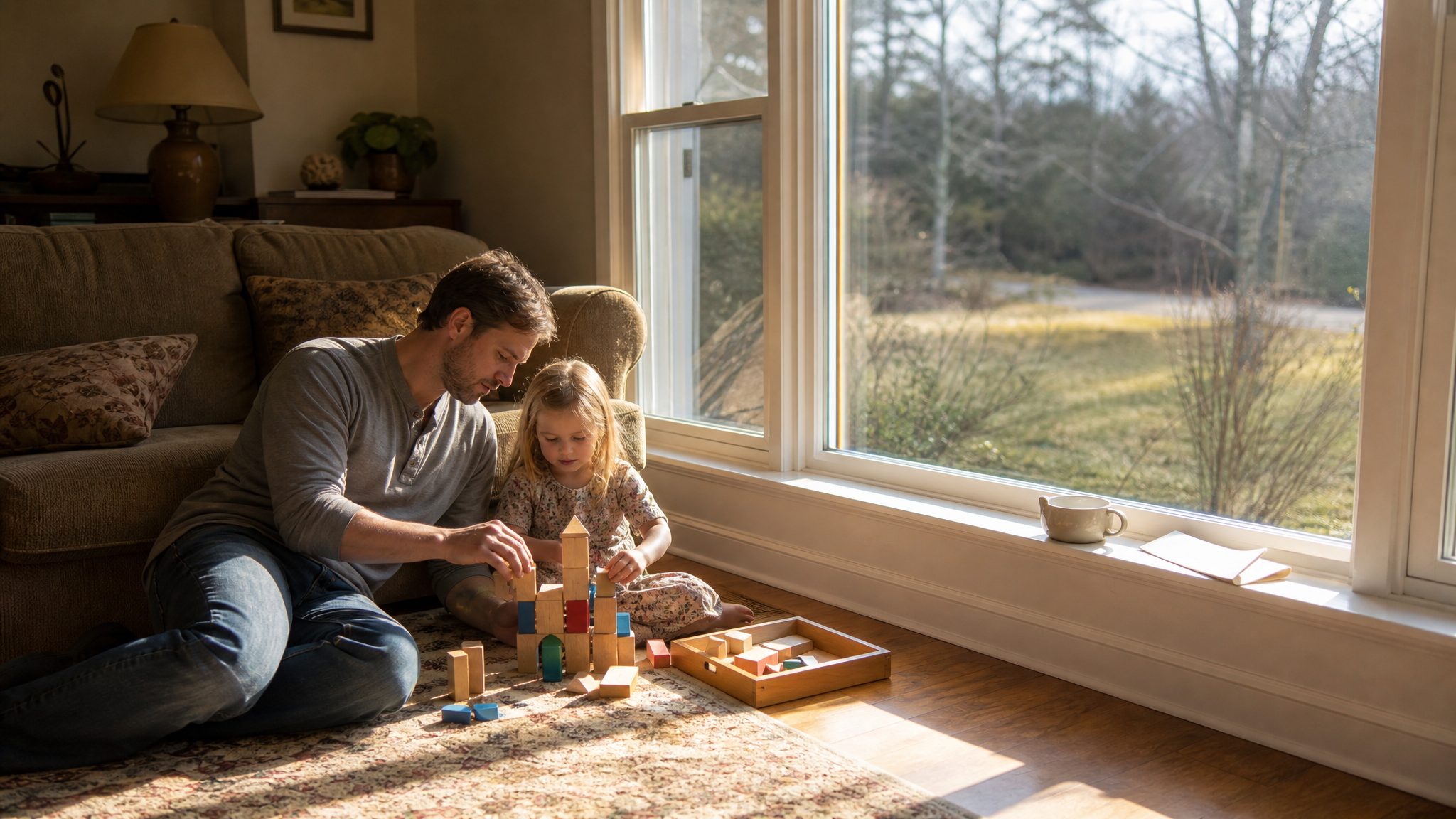
- The kid or flex room. A bright, semi-outdoors place for Legos and rainy afternoons. Usually 3-season — but plan the flooring for spills and the outlets for chargers.




The idea is the easy part.
Which build it needs — and the glass and floor that make it hold up — is the rest of this page.
Five ways NC homeowners actually use these rooms — each tagged with the build it wants. Tap any to see it full-size.
Notice what I did there: every idea came with a season-rating, because that’s the choice hiding under the pretty photo. Which brings us to the question no listicle answers.
Which ideas need a 4-season room — and which are happy in a 3-season?
The rule is simple. Use the room in January or every single day, and it’s a 4-season. Want it only when the weather’s nice? A 3-season does the job for a fraction of the price.
The gap between them is real construction, not a marketing tier. A 4-season room is insulated in the walls, roof, and floor, glazed with insulated glass, and tied into . A 3-season skips the insulation and central heat — which is exactly why it costs so much less.
Here’s how the common ideas sort — the self-check the magazines leave out:
| Your idea | Season-rating it needs | Why |
|---|---|---|
| Spring-to-fall reading nook | 3-season | You'll follow the comfortable months anyway |
| Warm-month plant room | 3-season | Most houseplants are fine spring through fall unheated |
| Weekend entertaining spot | 3-season | Occasional, warm-season use |
| Everyday home office | 4-season | You can't skip December — needs real heat and cooling |
| Year-round indoor garden | 4-season | Tender plants need heat through an NC winter |
| Holiday dining room | 4-season | It has to work on a cold night with the family in it |
Spring-to-fall reading nook
- Season-rating it needs
- 3-season
- Why
- You'll follow the comfortable months anyway
Warm-month plant room
- Season-rating it needs
- 3-season
- Why
- Most houseplants are fine spring through fall unheated
Weekend entertaining spot
- Season-rating it needs
- 3-season
- Why
- Occasional, warm-season use
Everyday home office
- Season-rating it needs
- 4-season
- Why
- You can't skip December — needs real heat and cooling
Year-round indoor garden
- Season-rating it needs
- 4-season
- Why
- Tender plants need heat through an NC winter
Holiday dining room
- Season-rating it needs
- 4-season
- Why
- It has to work on a cold night with the family in it
If your idea lands in the 4-season column, that’s not a reason to panic — it’s a reason to read which type each idea needs before anyone quotes you, so you know what the extra construction is actually buying.
The flooring question nobody in the pretty photos answers
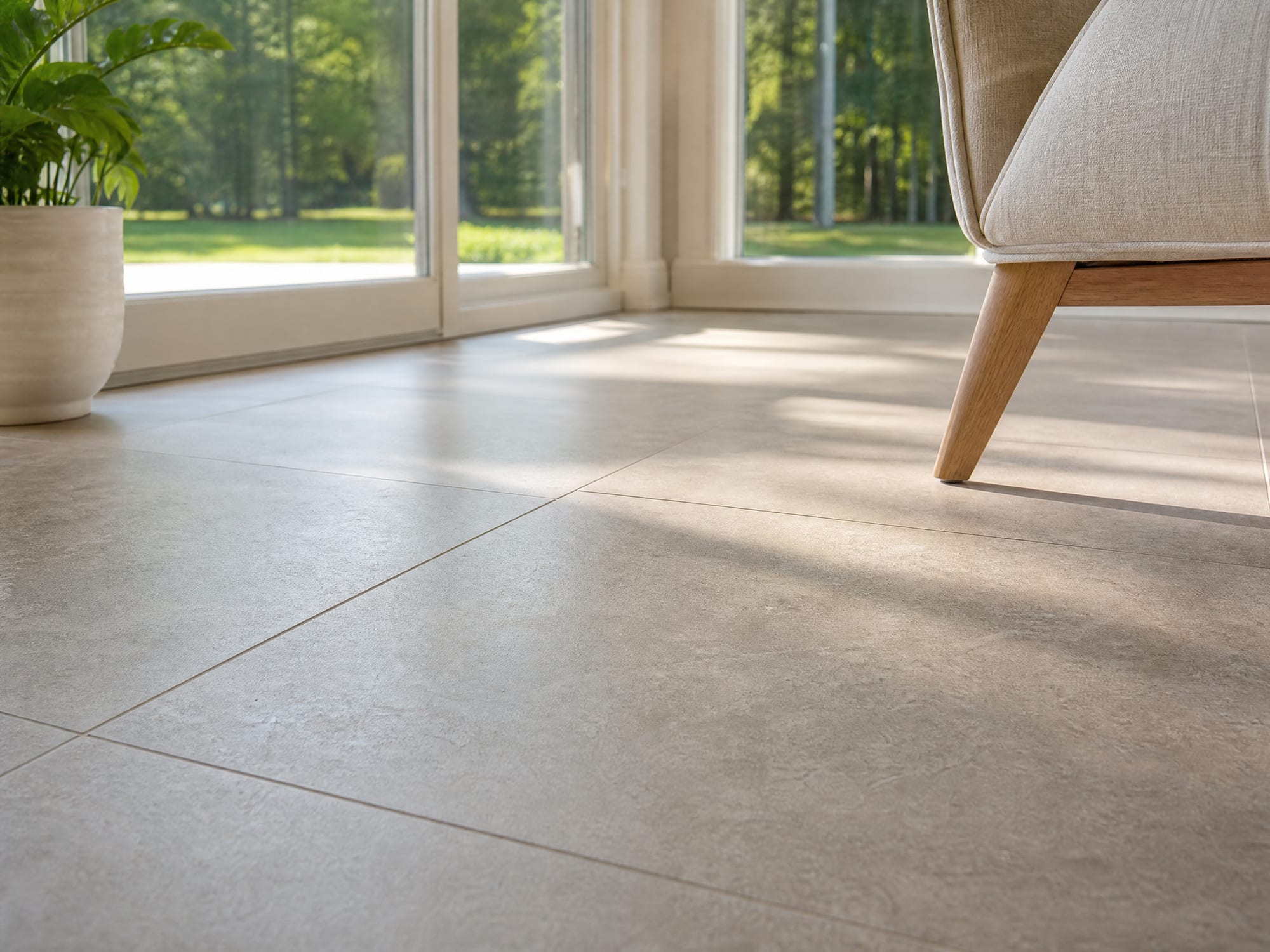
The gorgeous plank floor in that photo may be quietly cooking. This is the single biggest “holds up in NC” gap between a Pinterest room and a real one, so I’m going to be blunt about it.
Luxury vinyl plank — — is the most-photographed sunroom floor there is. It’s also the one homeowners most often report failing in a hot, sun-drenched glass room.
Here’s the mechanism. Direct sun can drive a floor surface far above room temperature, and vinyl expands as it heats. In an unconditioned room that swings from cool morning to blazing afternoon, that movement shows up as peaking planks and joints that pop apart.
The temperature math, checked. Most vinyl-plank warranties require a service range around 55–85°F. The material starts expanding near 85°F, and sustained exposure above roughly 120°F damages most systems, which top out around a 150°F rating. A dark floor in a sun-drenched glass room can sit in the 130–140°F range on a July afternoon — right in the zone the warranties are written to avoid. Treat the exact surface number as directional (it’s an industry synthesis, not a single published spec), and confirm any specific product’s rating before you buy.
Here’s what actually holds up on an NC patio, and what to keep out of the direct-sun zones:
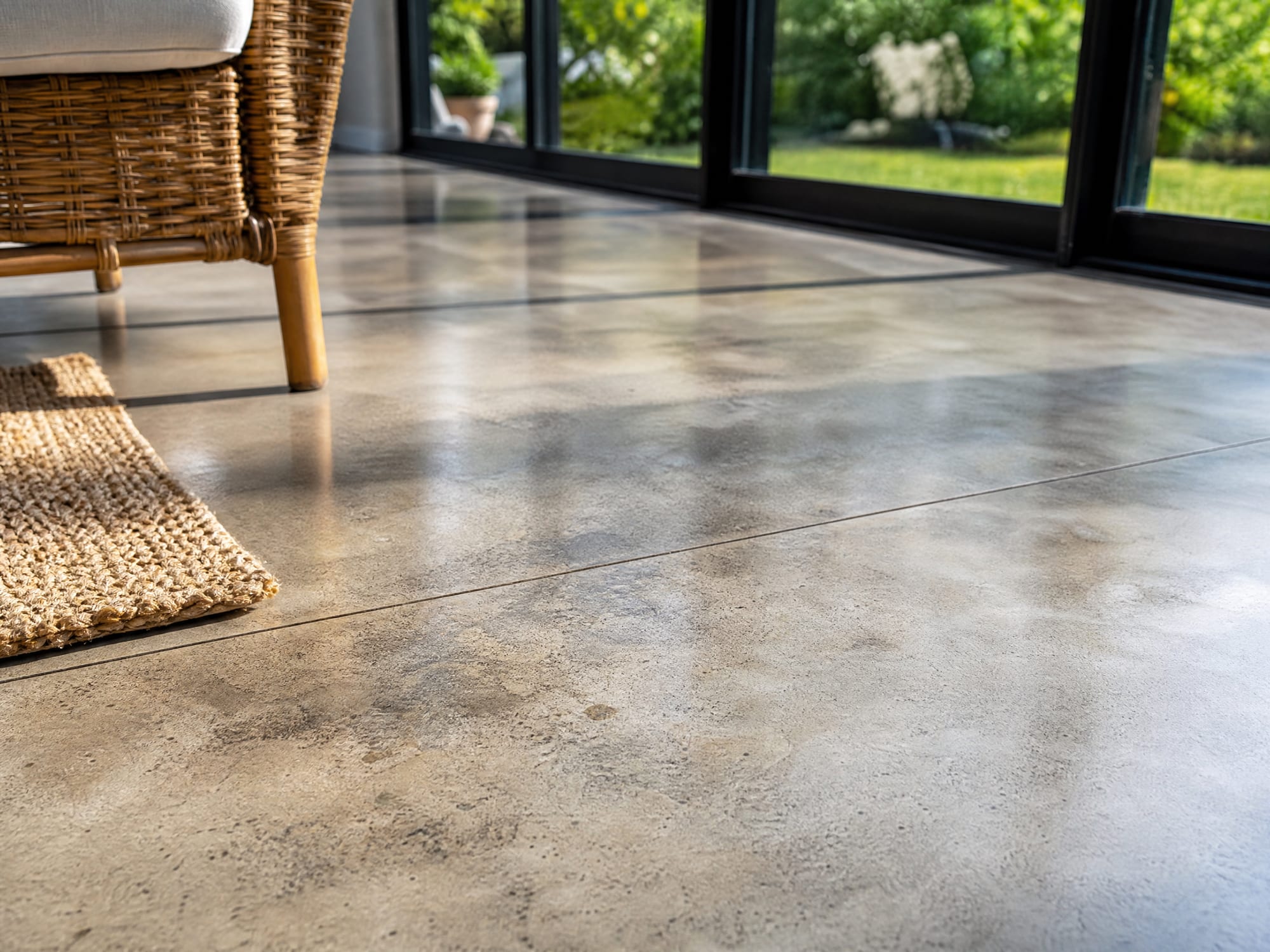
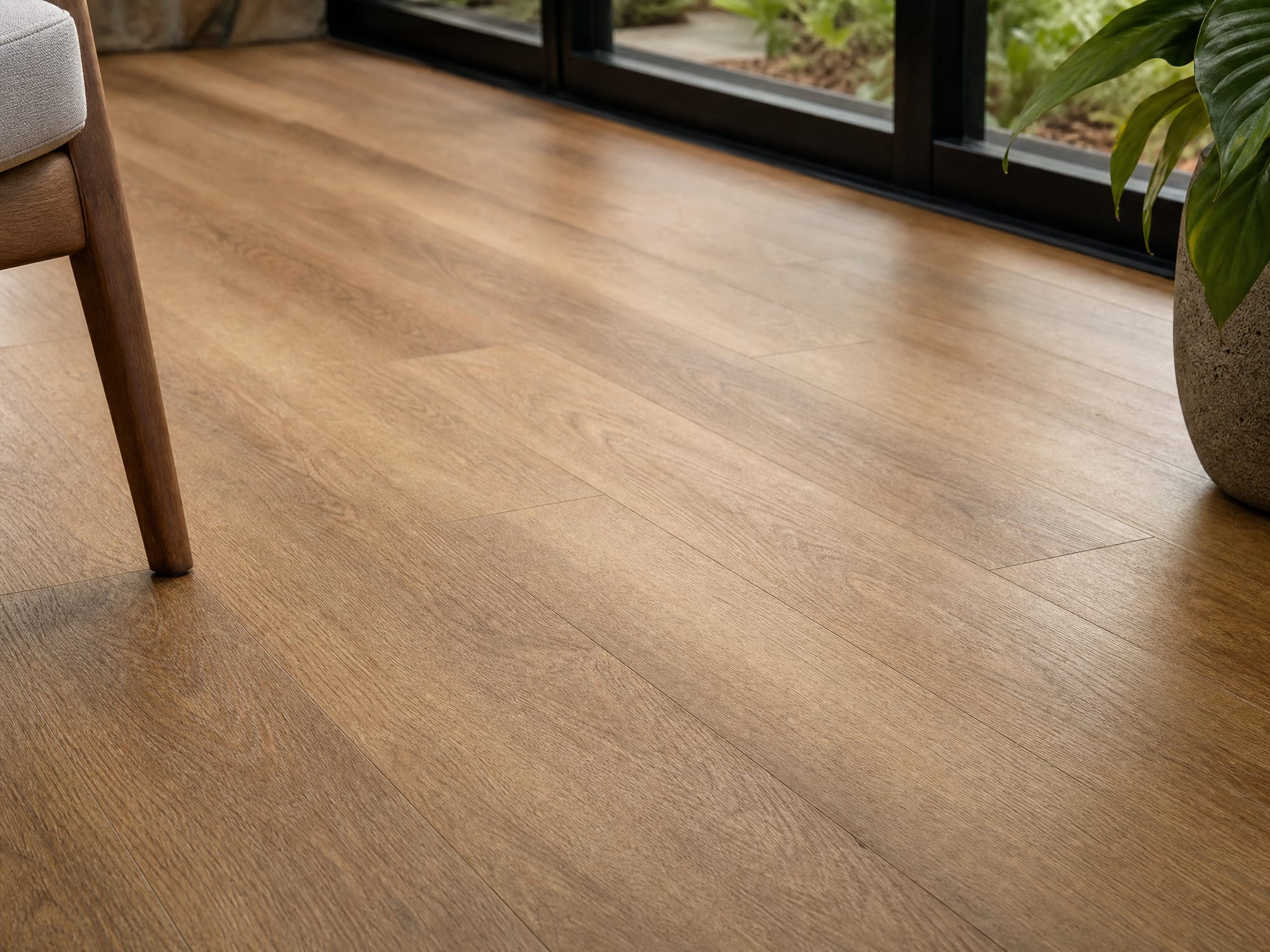
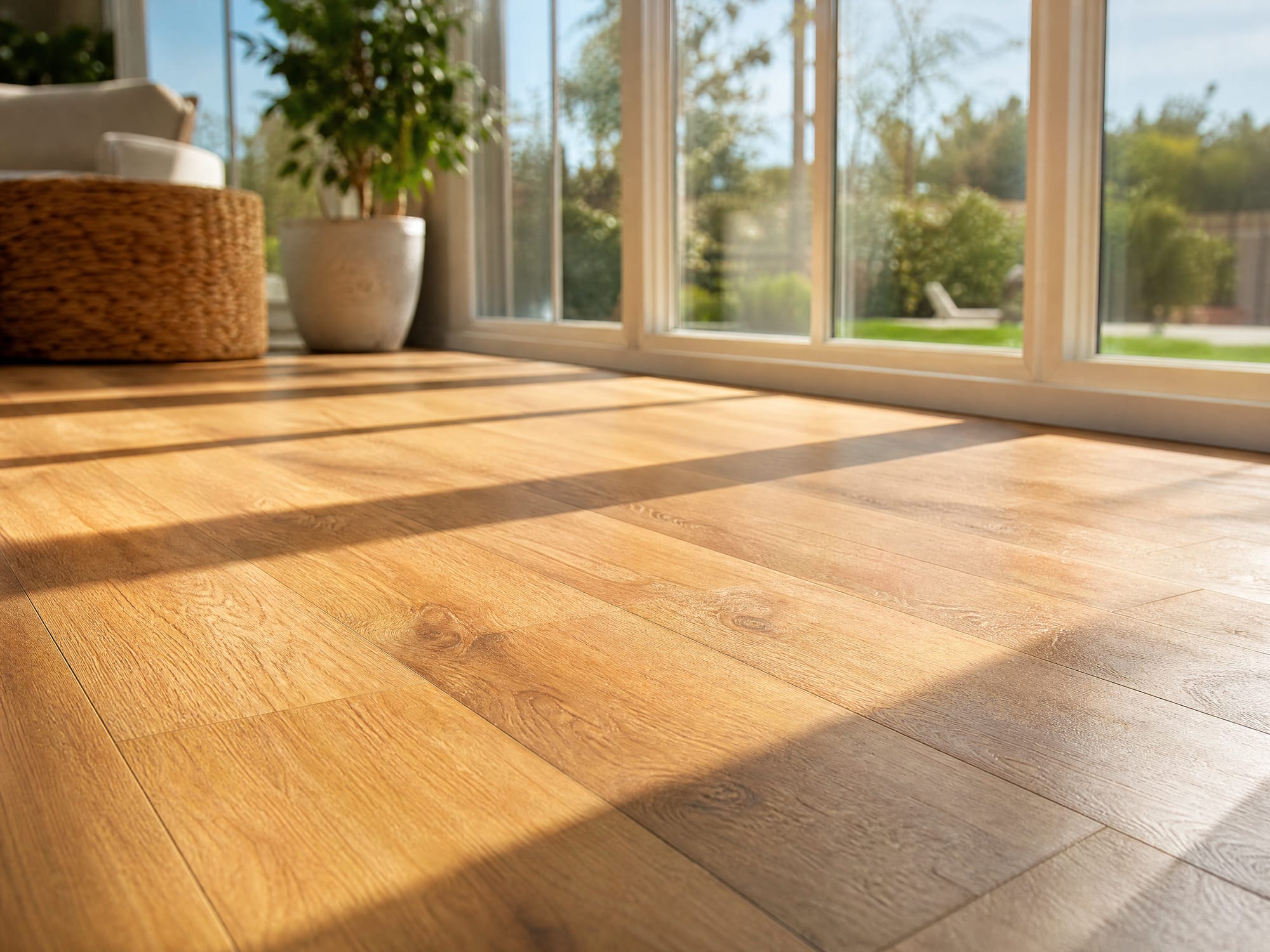
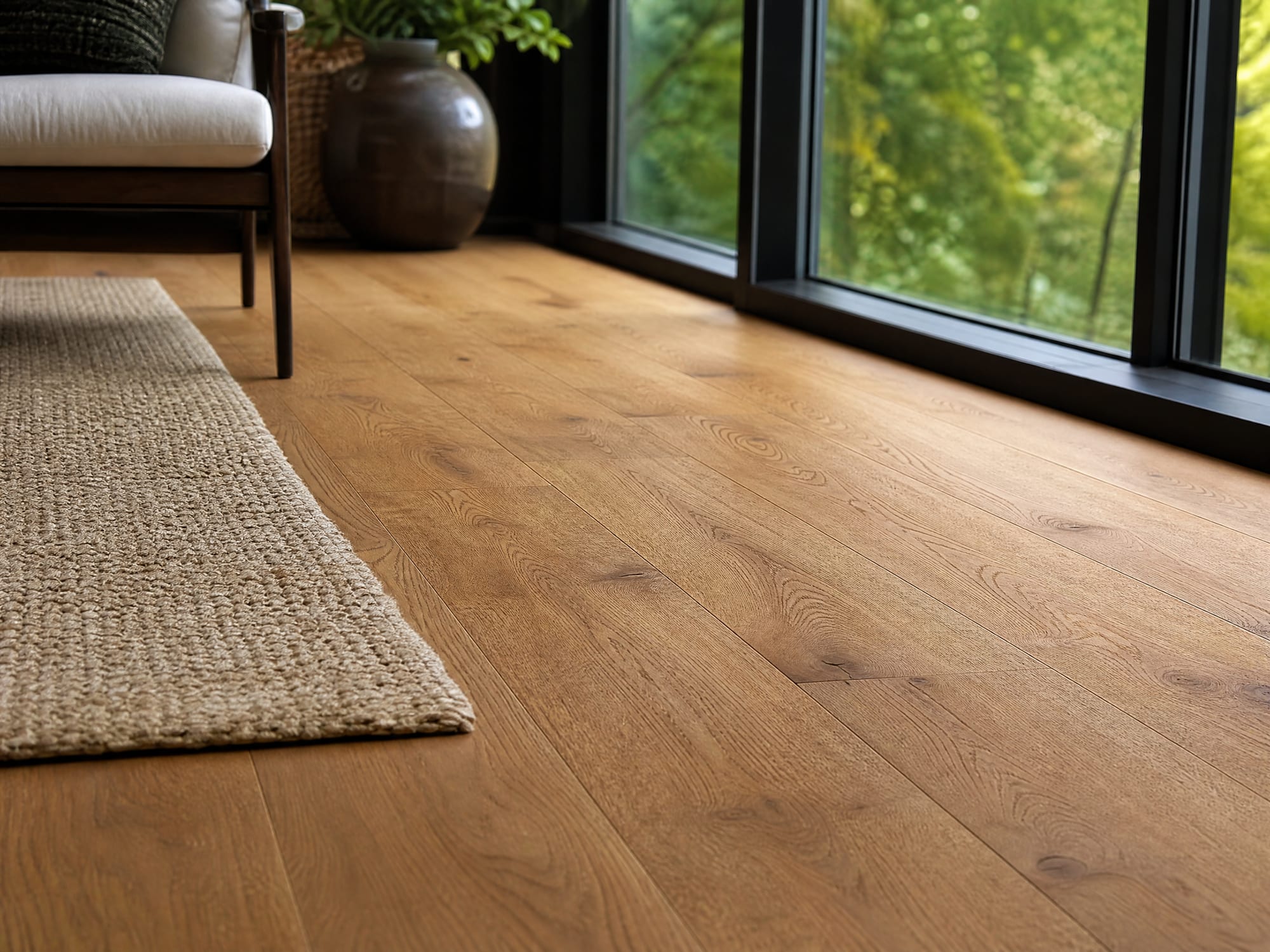
| Flooring | Look | Holds up in an unconditioned NC sunroom? | The honest note |
|---|---|---|---|
| Porcelain / ceramic tile | 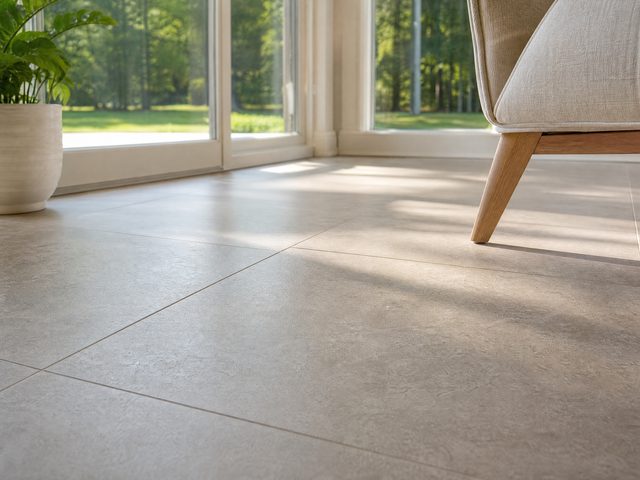 | Yes — the safe pick | Thermally stable, sun- and moisture-proof; cold underfoot in winter |
| Stained / sealed concrete | 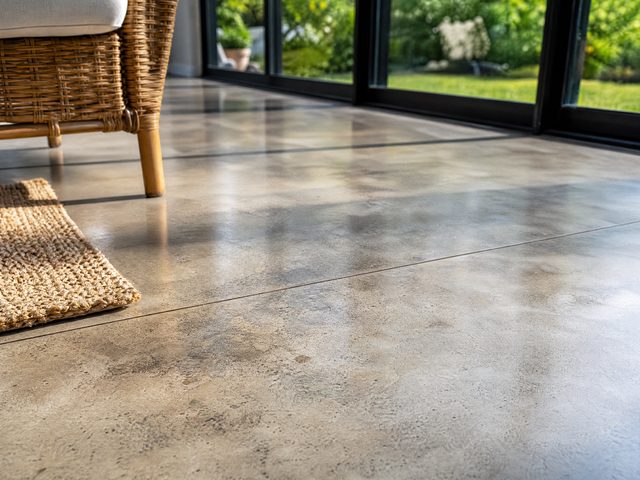 | Yes | Great for a slab-on-patio build; seal it for stain resistance |
| Rigid-core SPC plank | 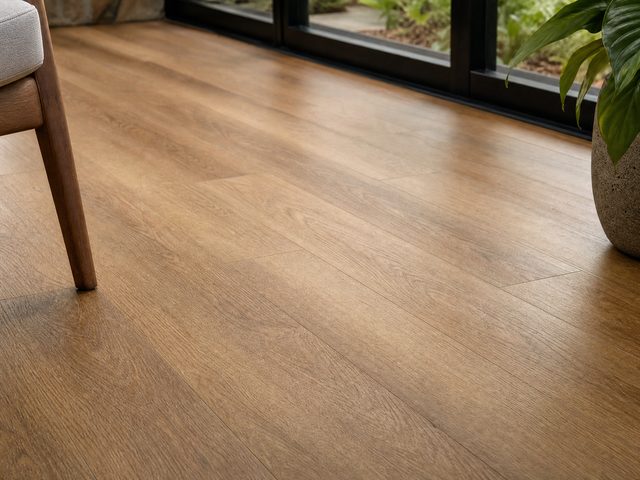 | Sometimes | A few lines carry a 3-season-room warranty — but usually only if the room stays enclosed and out of direct sun |
| Standard LVP | 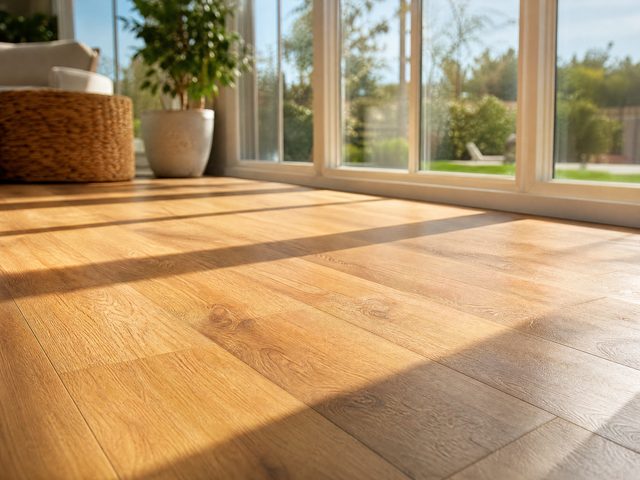 | Risky | Can buckle under direct sun; warranty often voids in an unconditioned room |
| Engineered wood | 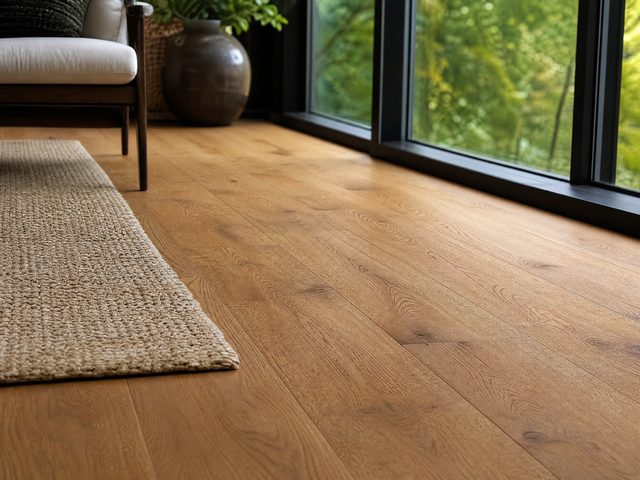 | Only if climate-controlled | Fine in a 4-season room; not for an unheated one |
Porcelain / ceramic tile
- Look
-
- Holds up in an unconditioned NC sunroom?
- Yes — the safe pick
- The honest note
- Thermally stable, sun- and moisture-proof; cold underfoot in winter
Stained / sealed concrete
- Look
-
- Holds up in an unconditioned NC sunroom?
- Yes
- The honest note
- Great for a slab-on-patio build; seal it for stain resistance
Rigid-core SPC plank
- Look
-
- Holds up in an unconditioned NC sunroom?
- Sometimes
- The honest note
- A few lines carry a 3-season-room warranty — but usually only if the room stays enclosed and out of direct sun
Standard LVP
- Look
-
- Holds up in an unconditioned NC sunroom?
- Risky
- The honest note
- Can buckle under direct sun; warranty often voids in an unconditioned room
Engineered wood
- Look
-
- Holds up in an unconditioned NC sunroom?
- Only if climate-controlled
- The honest note
- Fine in a 4-season room; not for an unheated one
How to make any of these ideas actually hold up in NC
Four choices decide whether a beautiful sunroom stays beautiful here — the glass, the orientation, the shade, and the fabric. Get these right and almost any idea from the top of this page works. Skip them and even a 4-season room can disappoint.
- The glass is the whole ballgame. Low-E glass with a low blocks summer heat while still passing daylight. In North Carolina’s sun, that solar-heat number matters as much as anything on the quote. The glass that makes the light work is the same rating system your windows use — it’s worth reading before any sunroom appointment.
- Orientation is free, so use it. A west-facing wall of glass takes the low afternoon sun head-on and re-radiates heat for hours — the hardest room to keep cool. East stays pleasant in the morning, north is the most even, and south is winter-friendly but wants shade in summer. You usually can’t move the room, but you can plan the glass and shade around where the sun actually hits.
- Plan the shade and the air. Roof overhangs, exterior solar shades, and a good ceiling fan turn a hot room into a comfortable one. A fan alone can make a 3-season room usable on days it otherwise wouldn’t be.
- Buy fabric that can take the sun. Direct light fades and weakens ordinary upholstery fast. Performance and -resistant fabrics, washable covers, and sun-friendly materials like wicker and rattan are the ones that still look good in year three.
One more unglamorous thing that quietly ruins pretty rooms: outlets. Plan more than you think you need, so you’re never running an extension cord across the floor to the one lamp. It’s the cheapest thing to get right and the most annoying to fix later.
Small space, real budget: ideas that still work
A small sunroom is often the smarter buy — you’re not paying to condition space you won’t use. The moves that make a narrow room feel bright and open are the cheap ones: light, sun-reflecting colors on the walls; a mirror to bounce the light; multi-use furniture that stows; and going vertical with plants instead of eating floor space.
Where “on a budget” is smart: a modest footprint, a simple screen-to-glass upgrade, keeping the layout tight.
Where cheaping out bites back: the glass, the flooring, and the shade. Those are the parts you can’t easily redo, and they’re the exact parts that decide whether the room holds up. Spend there; save on the styling.
If you want the honest numbers before you fall for a finish, what these designs cost in NC breaks down where the money goes — as national planning bands, roughly $80–$220 per square foot for a 3-season and more for a 4-season, not an NC quote.
From idea to an honest plan
Here’s the whole page in one move. Pick the idea you can’t stop thinking about — then ask the one question the photos never do: will I use this room in January, or just when the weather’s nice?
That answer tells you 3-season or 4-season, and everything else — the glass, the floor, the budget — follows from it. If you want a second set of eyes, from idea to an honest plan walks the rest of the sunroom branch, and you can always book a no-pressure consult and we’ll stand in your actual space and figure out which version your house wants.
The prettiest sunroom on the internet is worthless if you can’t sit in it in July. Let’s build you the one you can!
Sources, Verification & Fact-Checking verified July 2026
Every load-bearing fact on this page is sourced and verified against a primary authority.
Verified July 2026 via direct review of the cited authority — the links open the controlling source so you can check it yourself rather than take our word.
- Season-rating by use — year-round or daily-use ideas (home office, indoor garden, holiday dining) need a 4-season room (insulated walls/roof/floor, insulated Low-E glass, HVAC tie-in); warm-month ideas (reading nook, spring-to-fall plant room, weekend entertaining) work in a 3-season. This is the construction difference between the two rooms, not a marketing tier — detailed on the 3-season vs 4-season page, which cites the DOE fenestration and NC Residential Code sources. (view source — U.S. Dept. of Energy, Building Science Education: Types of Windows)
- Flooring — porcelain/ceramic tile and stained concrete are the safest floors for an unconditioned NC sunroom; standard LVP can expand and buckle under direct sun, and many LVP warranties exclude unconditioned three-season rooms. The warranty point checks out across multiple manufacturer warranties (verified July 2026): several require a roughly 55–85°F service range and void coverage for direct-sun or non-climate-controlled installs, and the lines that do warrant a “three-season room” generally require it to stay enclosed and out of direct sun. The 130–140°F surface figure is a directional synthesis of those manufacturer service-range and heat-damage thresholds (vinyl expands near 85°F; sustained exposure above ~120°F damages most systems, which are rated to about 150°F), not one published spec — treat it as order-of-magnitude and confirm the specific product’s rating and warranty before purchase. (Grounded manufacturer-warranty synthesis, July 2026 — multiple manufacturers, no single fetchable primary URL; confirm with the product’s own spec sheet.)
- Summer comfort in a glass room is primarily a glass-and-orientation story — Low-E glass with a low solar heat gain coefficient (SHGC) blocks solar heat while passing daylight, and a west-facing glass wall is the hardest to keep cool. SHGC is the same NFRC rating used on replacement windows; the glass details live on the glass page. (view source — National Fenestration Rating Council and ENERGY STAR windows key criteria)
- Cost — a 3-season sunroom runs roughly $80–$220 per square foot and a 4-season more, as national planning bands (not NC quotes; time-sensitive and region-dependent). Full breakdown and cost drivers on the sunroom cost page. (National cost-guide ranges; verify against a local NC quote for your project.)