

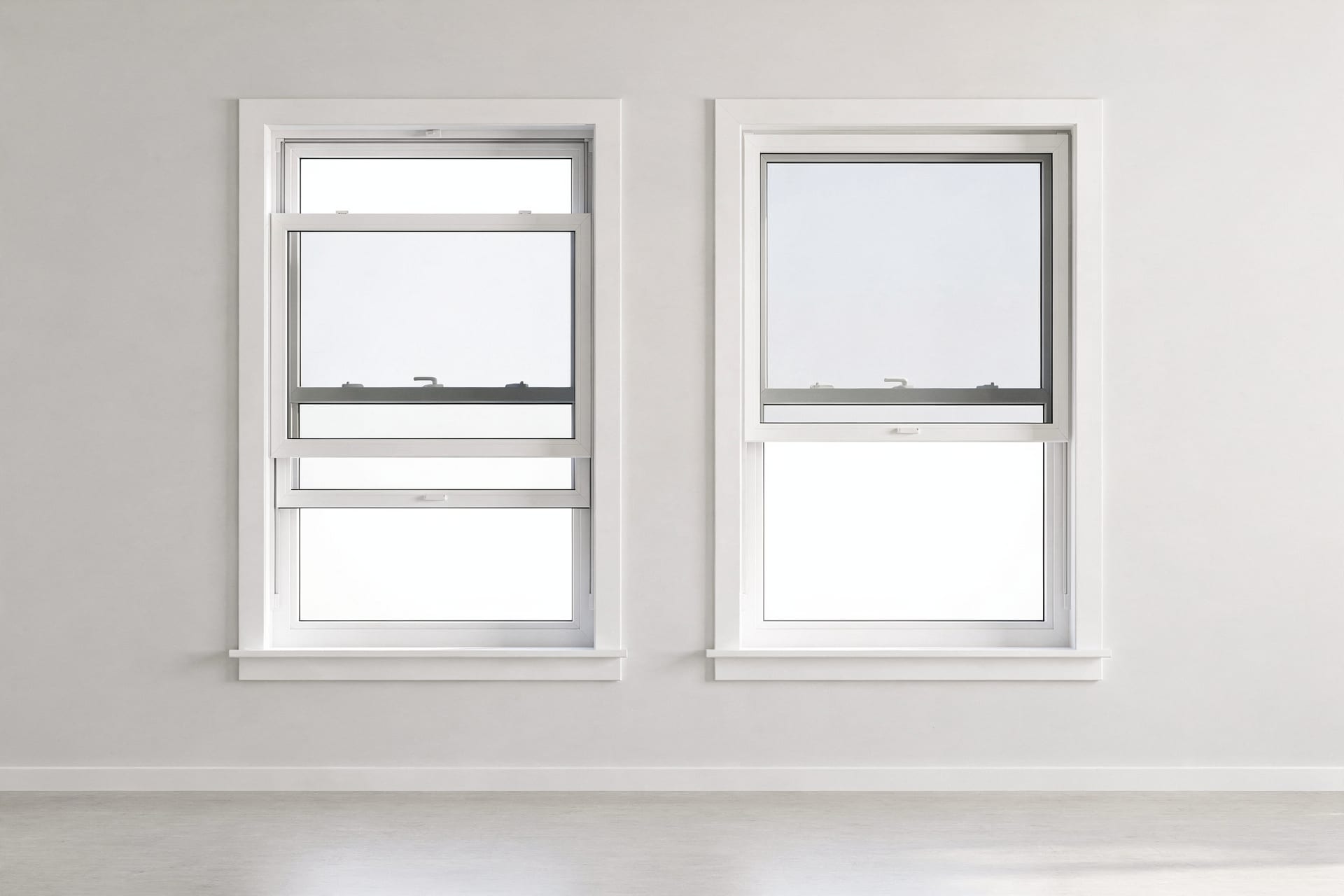
You’re looking at a window quote, and single-hung is the cheaper line. Double-hung costs a bit more, and the rep has a favorite. And you’re trying to work out whether the upgrade is worth real money or whether it’s just a nicer word for the same window.
Here’s how I’d decide if it were my own house. No brochure required.
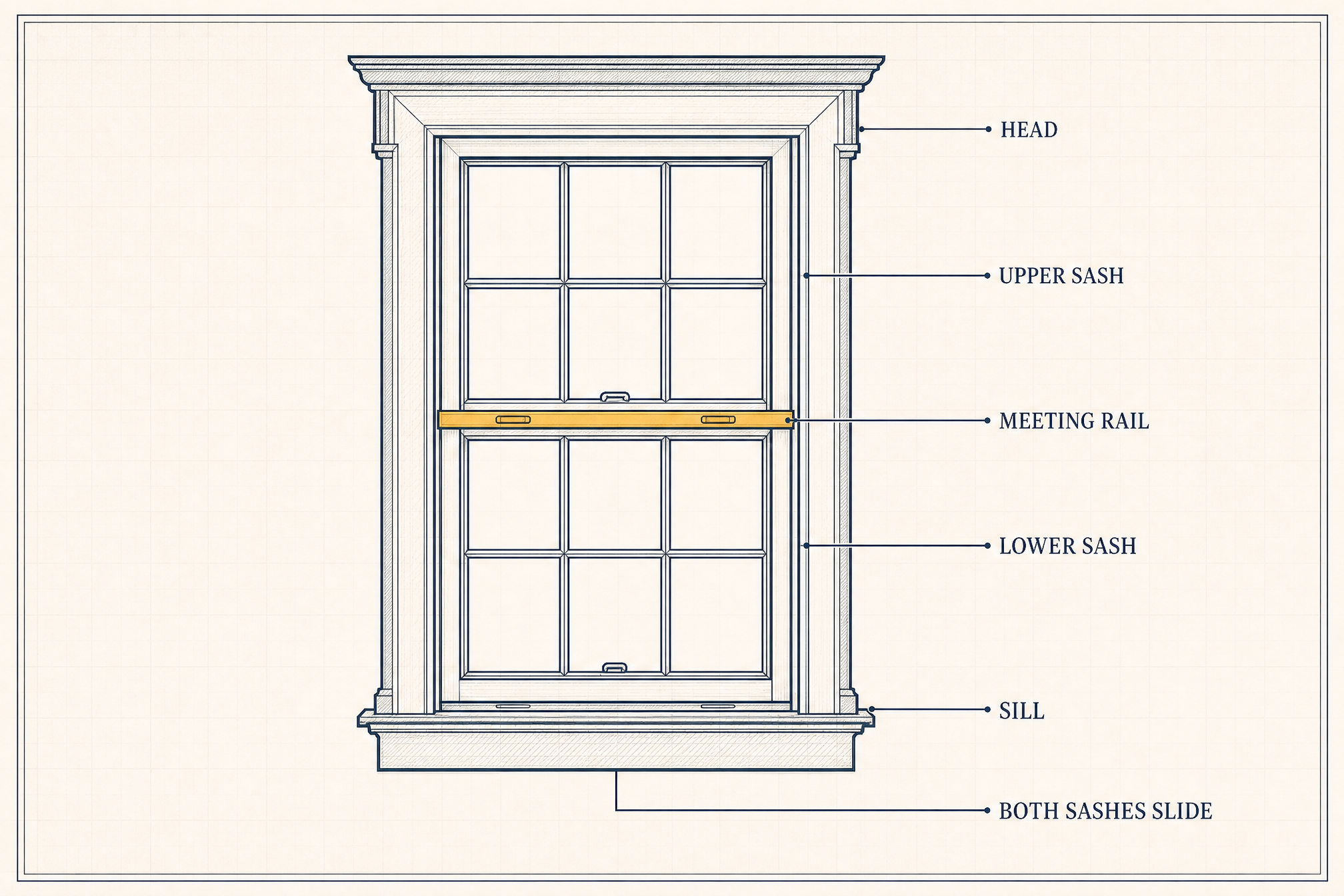
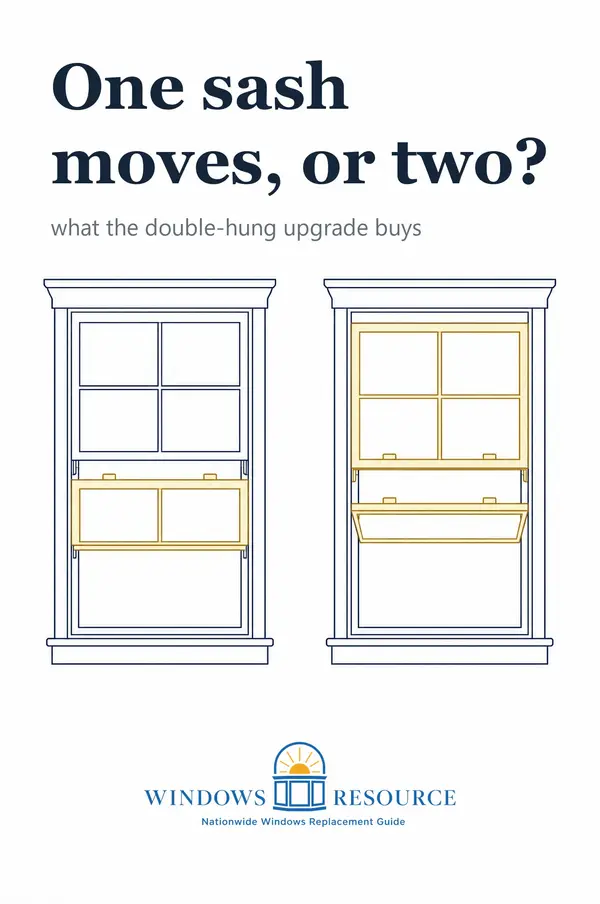
The short version: there’s only one real difference between these two. On a single-hung the top sash is fixed and never moves. On a double-hung, both sashes move — and most tilt inward so you can clean the outside glass from inside. Everything else — cost, ventilation, drafts — follows from that one fact.
Single-hung or double-hung — the quick call? Single-hung is the cheapest operable style and it’s genuinely fine on any window you can reach. Double-hung costs a little more and buys you a top sash that moves — for top-and-bottom airflow and, the part people actually care about, tilt-in cleaning on upstairs windows. Pay for the upgrade where you’ll use it, not on every opening.
Single-hung vs double-hung: the quick verdict
Pick by the floor and the reach — not by the name that sounds more premium. Here’s the decision in one block:
- Pick single-hung if: the window is on the ground floor or somewhere you can reach the outside easily, the budget matters, or it’s a rental or a builder-grade job where cost per opening adds up.
- Pick double-hung if: it’s an upstairs bedroom you’ll have to clean, you want the flexible top-and-bottom airflow, or you’re keeping the traditional look most older NC homes already wear.
Both are good windows, and they seal about the same. The difference the whole page turns on is whether the top sash moves — and whether that’s worth the upcharge on that particular window.
| Factor | Single-hung | Double-hung |
|---|---|---|
| Sashes that move | Bottom only — the top sash is fixed | Both sashes slide independently |
| Cleaning upstairs | Top-sash exterior is a ladder job | Both sashes tilt in — clean the outside from inside |
| Ventilation | Bottom-open only | Open top and bottom for convection airflow |
| Air seal / drafts | One moving sash — slightly fewer seams | Two moving sashes — a touch more to seal; still tight when installed right |
| Relative cost | The cheapest operable style | A bit more than a comparable single-hung |
| Best for | Ground floor, rentals, budget jobs | Upstairs bedrooms, anything you'll clean, traditional looks |
Sashes that move
- Single-hung
- Bottom only — the top sash is fixed
- Double-hung
- Both sashes slide independently
Cleaning upstairs
- Single-hung
- Top-sash exterior is a ladder job
- Double-hung
- Both sashes tilt in — clean the outside from inside
Ventilation
- Single-hung
- Bottom-open only
- Double-hung
- Open top and bottom for convection airflow
Air seal / drafts
- Single-hung
- One moving sash — slightly fewer seams
- Double-hung
- Two moving sashes — a touch more to seal; still tight when installed right
Relative cost
- Single-hung
- The cheapest operable style
- Double-hung
- A bit more than a comparable single-hung
Best for
- Single-hung
- Ground floor, rentals, budget jobs
- Double-hung
- Upstairs bedrooms, anything you'll clean, traditional looks
What’s the actual difference between single-hung and double-hung?
One thing: on a single-hung only the bottom sash moves; on a double-hung, both do. That’s it. Everything else is a consequence of that single change.
Both belong to the HUNG family — sashes that slide up and down in vertical tracks. That’s one of four ways a window opens: HUNG (slides up/down), SLIDE (glides left/right), SWING (cranks out on a hinge, like a casement), and FIXED (sealed, no operable sash).
On a single-hung, the top sash is set in place permanently. Only the bottom sash rides up and down. On a double-hung, the top sash moves too — and on most modern ones, both sashes tilt inward. That tilt is the feature you’re really deciding about, so let’s put it where it matters.
Which is easier to clean upstairs?
The double-hung, and it’s not close — because both sashes tilt inward so you wash the outside glass from inside the room. This is the single most useful thing the upgrade buys, and it’s the reason people reach for it on second-story bedrooms.
On a single-hung, the bottom sash often tilts, but the top sash is fixed. Its outside face is exactly where you can’t reach it — up high, over a shrub or a roofline. To clean it you’re going outside with a ladder, or you’re leaning out the opening, or you’re just not cleaning it.
A double-hung’s top sash tips in, and the glass comes to you. Upstairs, that’s the difference between a five-minute job at the windowsill and a Saturday with a ladder braced in the flower bed.
Is a double-hung worth the extra money?
It’s worth it exactly where you’ll use the moving top sash — and it’s an upsell anywhere you won’t. You’re right to be suspicious of a blanket “double-hung is better.” Better at what, and for which window?
The upgrade buys you two things: top-and-bottom airflow, and tilt-in cleaning on the top sash. On an upstairs bedroom, that cleaning alone usually justifies it. On a traditional home where you’re matching the classic look, double-hung is also the like-for-like most older NC houses already wear.
But on a ground-floor window you can reach from outside with a hose and a rag, you’re paying for a tilt feature you’ll never trigger. That’s the honest case for single-hung — not “the cheap default,” but the right tool for a reachable opening.
NC homeowner takeaway: don’t buy double-hung for the whole house on autopilot, and don’t cheap out on the one upstairs bedroom you’ll be cursing every spring. Mix them. Double-hung where you’ll clean or want the airflow; single-hung where you won’t. A rep who pushes double-hung on every opening — or single-hung to hit a price — is selling the quote, not your house.
Do more moving sashes mean more drafts?
No — a well-installed double-hung is a tight window, and the seal difference between the two is marginal. This is the fear the “fewer moving parts” pitch plays on, and it’s mostly overstated.
A single-hung has one moving sash instead of two, so on paper it has slightly fewer seams to seal — the fixed top sash sits permanently against the frame and simply doesn’t move. A double-hung seals along its meeting rail, where the two sashes overlap in the middle, plus the side jamb-liner tracks both sashes ride in.
More seams isn’t the same as “drafty,” though. It’s just more for the seal and the install to get right.
Where a hung window actually lives on the air-seal ranking is below the compression-seal swing styles. A fixed picture window is tightest, then compression-seal styles like the casement, then the hung windows, then sliders.
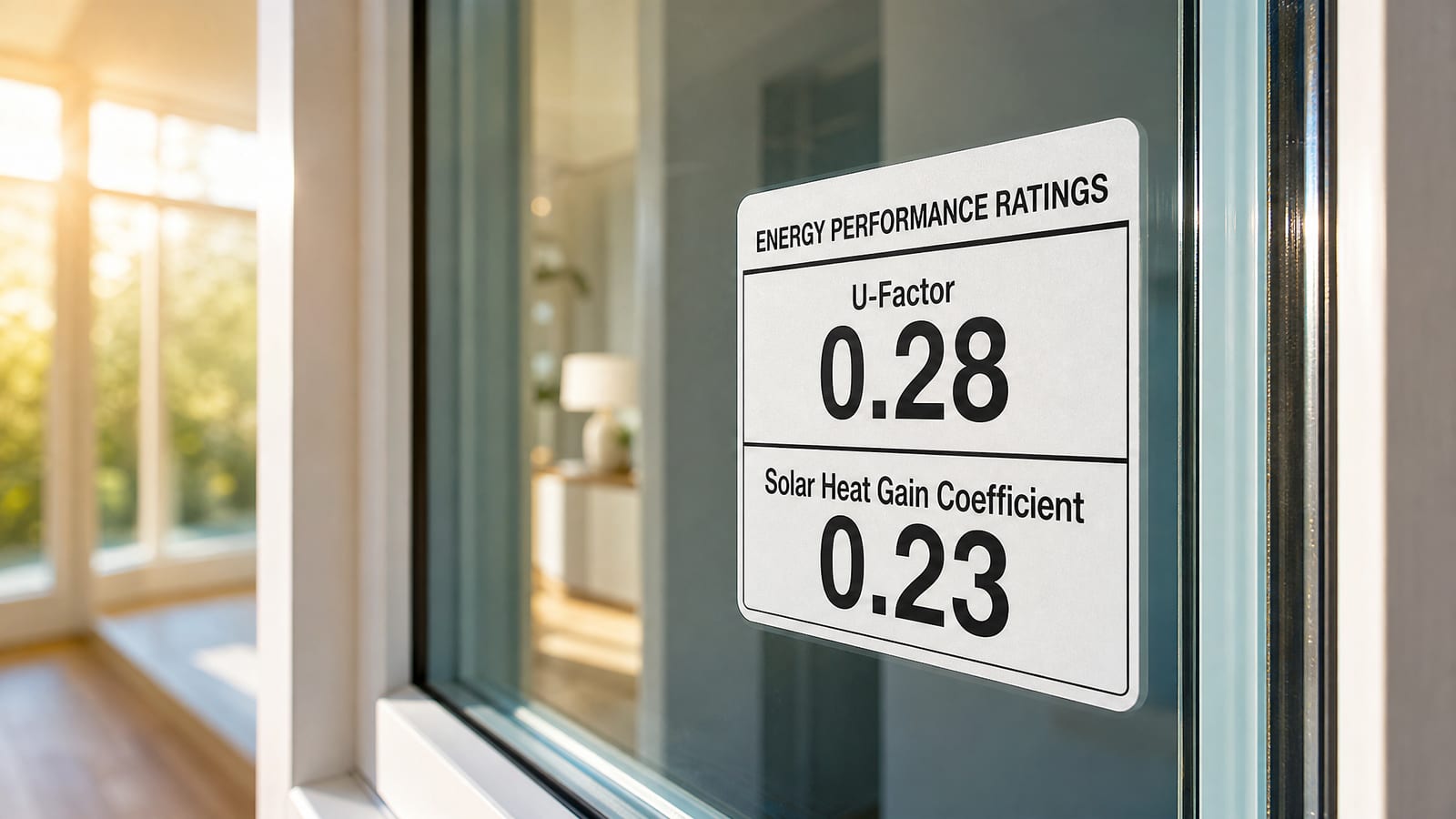
The number to read is the on the label — lower is tighter. Here’s what the air-leakage rating actually tells you. If drafts are your real complaint, the honest answer isn’t single-versus-double at all — it’s the tighter-sealing casement.
One code note if the room is a bedroom: both hung styles open only about half the unit, so neither is egress-efficient. You need a fairly large window to clear the required opening.
Because only half of either hung window opens, a casement clears the same hole in a smaller frame — that’s opening geometry, not a knock on hung windows. Here’s how egress sizing actually works before you order a bedroom unit.
So which should you buy?
The pro truth that outranks the whole debate: the install decides whether either style holds its seal — more than single-versus-double ever will. A clean square set, proper flashing, the right shims. That’s what keeps a window tight over the years.
So make the call window by window:
- Ground floor, reachable, budget-minded, or a rental → single-hung. It’s the cheapest operable style, it seals tight when it’s installed right, and you’ll never miss the fixed top sash on a window you can reach.
- Upstairs bedroom, anything you’ll clean, or you want the top-and-bottom airflow and the classic look → double-hung. The tilt-in top sash earns its upcharge every time you skip the ladder.
For the deeper dive on the style most NC homes already have, here’s how the double-hung really seals and where it fits. And if a draft is what’s actually driving this, casement vs double-hung is the comparison you want — the seal, not the sash count, is the thing.
The two myths to drop: “double-hung is just better” and “single-hung is the cheap default you should be embarrassed by.” Neither holds. Double-hung earns its money on windows you’ll clean and rooms you’ll ventilate. Single-hung is the right, tight, sensible pick everywhere else. And on either one, the real winner is the install.
Got a quote that’s all one style and you’re not sure the rooms match? That’s exactly what a no-pressure second opinion is for — talk it through with an NC window expert.
Bring the quote. We’ll match the style to the room, opening by opening.
Sources, Verification & Fact-Checking verified July 2026
Every load-bearing fact on this page is sourced and verified against a primary authority.
Verified July 2026 via direct review of the cited authority — the links open the controlling source so you can check it yourself rather than take our word.
- The defining difference: a single-hung has one operable sash (bottom) with a fixed top; a double-hung has two operable sashes that both slide, and most modern double-hungs tilt both sashes inward for cleaning. This is the mechanical fact the whole comparison rests on. (view source — U.S. Dept. of Energy, Building Science Education: Window Operation Methods)
- Single-hung is typically the lower-cost operable style; double-hung costs a bit more and adds top-and-bottom (convection) ventilation plus tilt-in cleaning of the upper sash. Cost direction is qualitative — the gap moves with brand, size, and glass package, so no dollar figure is asserted here; real NC dollars live on the cost page. The tilt-in top sash is the double-hung’s practical advantage on upstairs windows, where a single-hung’s fixed upper sash exterior is hard to reach.
- Air-seal difference between single- and double-hung is marginal; both are “hung” windows that sit below compression-seal (casement/awning/hopper) and fixed windows on air leakage, and above sliders. A single-hung has one moving sash and therefore slightly fewer potential air-leak paths, but the U.S. Department of Energy groups single- and double-hung together and does not publish a finer sub-ranking between them — the difference is directional, and seal quality and installation dominate. The DOE notes hinged/projecting windows “generally have lower air leakage rates than sliding windows because the sash closes by pressing against the frame.” (view source — U.S. Dept. of Energy, Building Science Education: Window Operation Methods)
- Air Leakage (AL) is the NFRC label rating that reflects seal tightness; a lower AL is a tighter product. The NFRC label reports Air Leakage alongside U-Factor and SHGC so any two windows compare apples-to-apples. (view source — NFRC, the energy performance label)
- Both hung styles open only about half the unit, so neither is egress-efficient; North Carolina’s emergency-escape opening requires a 4.0 sq ft minimum net clear openable area (2018 NC Residential Code R310.2.1) — not the national 5.7 sq ft. NC amended the base IRC: R310.2.1 sets a minimum net clear openable area of 4.0 sq ft, a minimum net clear opening height of 22 inches, a minimum width of 20 inches, and a sill no more than 44 inches above the floor. Because only the operable half of a hung window counts, a larger unit is needed to hit the opening — a casement clears it in a smaller frame. Always confirm against the code your local inspector enforces. (view source — 2018 NC Residential Code R310.2.1, via ICC)
- Install quality decides whether either style holds its seal. A window set plumb, level, and square with proper flashing and shims seals over time; the style name matters less than the set. The upstairs-cleaning story is a recurring forum pattern, told as illustration, not attributed to any one named thread.