

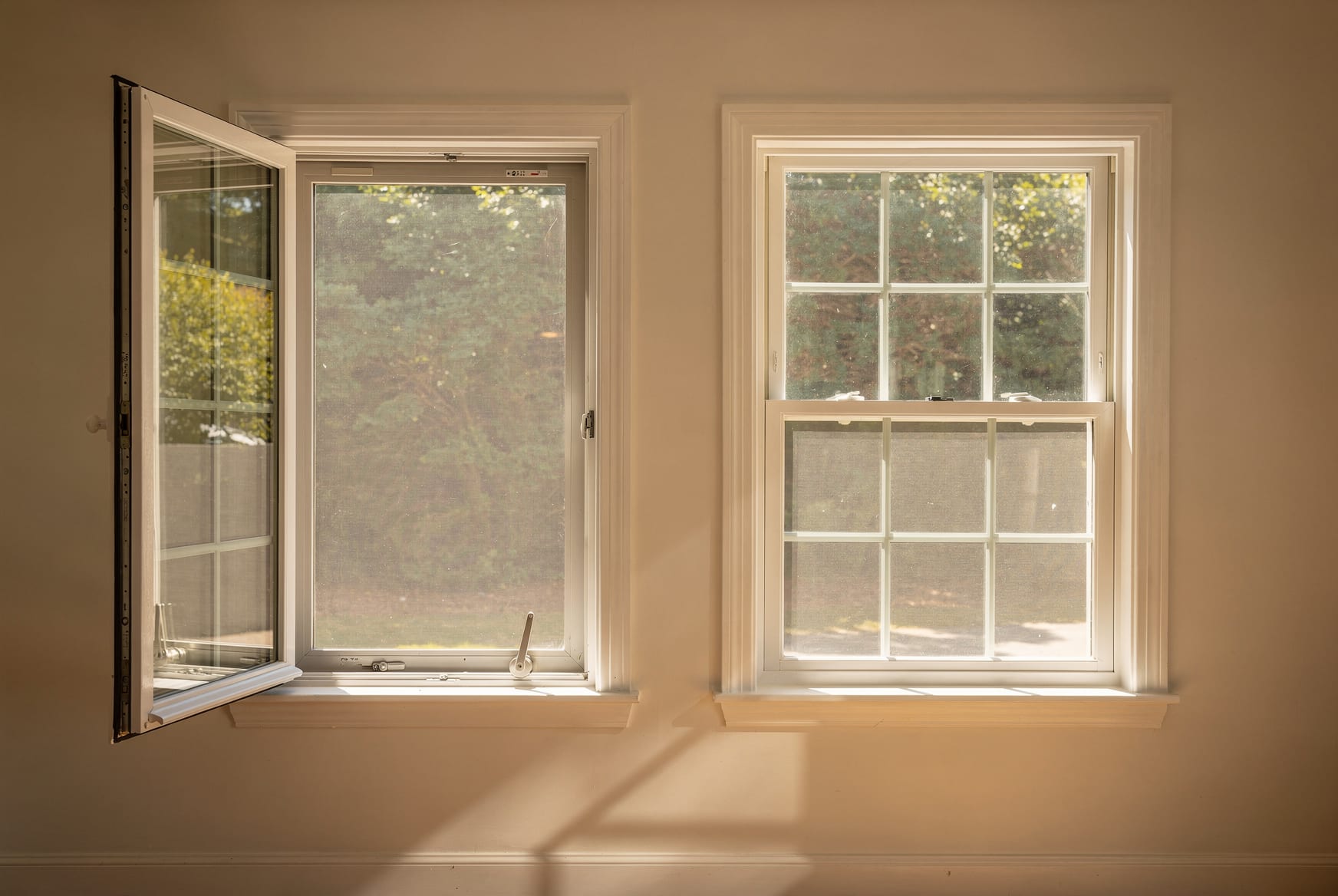
You’ve got two window styles in front of you and a rep leaning toward whichever one he happens to sell. One cranks out on a hinge. The other slides up and down like the ones already in your house. And you’re trying to work out which is actually right for the room.
Here’s how I’d decide between them if it were my own place. No brochure required.
The short version: this isn’t a “which style is better” question. It’s a “what does this specific room need — a tighter seal, an easier reach, an egress opening, or just the classic look” question. Answer that, and the style picks itself.
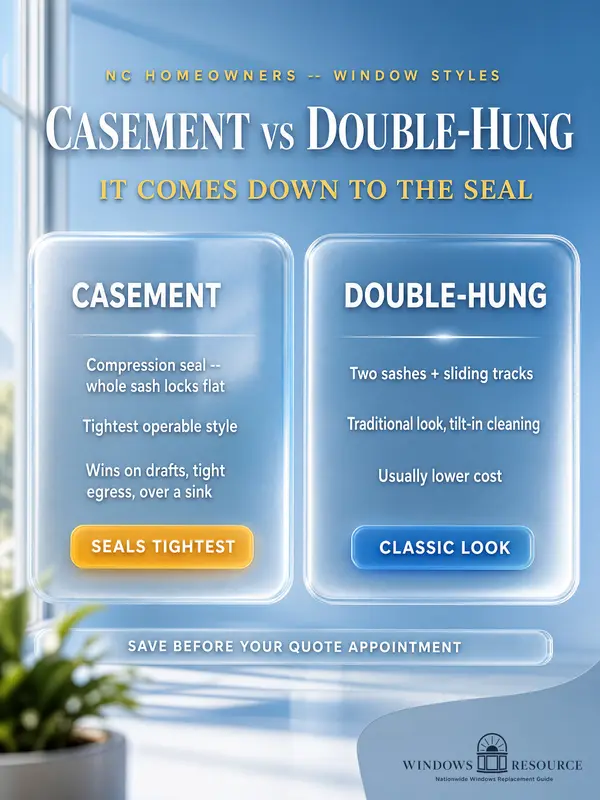
Casement or double-hung — the quick call? The casement seals tightest and clears egress in a smaller unit, so it wins on drafts and tight bedroom walls. The double-hung gives the traditional look most older NC homes already have, tilt-in cleaning, and usually a lower price. Pick by the room, not the name on the quote.
Casement vs double-hung: the quick verdict
Pick the style that fits the room and the wall it faces — not the one that’s easiest to sell. Here’s the decision in one block:
- Pick casement if: drafts are your real complaint, the window sits over a sink or counter you can’t reach across, or it’s a tight bedroom wall that has to hit egress.
- Pick double-hung if: you want the traditional look, you’ll clean an upstairs window yourself, the wall is exposed and windy, or a lower price on a like-for-like replacement matters most.
Both are good windows. The difference the whole page turns on is the seal — how each style closes, and how that plays in NC’s heat and drafts.
| Factor | Casement | Double-hung |
|---|---|---|
| Air seal / drafts | Tightest operable style — locks flat as a compression seal | Two moving sashes plus sliding tracks — more seams to seal |
| Ventilation | Whole sash swings out and scoops side breezes | Open top and bottom for convection airflow |
| Egress efficiency | Most efficient — nearly the full sash becomes clear opening | Only the operable half counts — needs a larger unit |
| Operation & reach | One-handed crank — wins over a sink or counter | Push the sash up or down; both sashes tilt in to clean |
| Wind | Catches wind like a sail if left open in a storm | Nothing to catch — the sash rides inside its track |
| Look | Modern, unobstructed glass | Traditional — what most older NC homes already have |
| Relative cost | A bit more — crank and hinge hardware | Usually the lower-cost operable style |
| Best for | Draft-prone rooms, tight egress walls, over-sink spots | Traditional looks, upstairs bedrooms you'll clean |
Air seal / drafts
- Casement
- Tightest operable style — locks flat as a compression seal
- Double-hung
- Two moving sashes plus sliding tracks — more seams to seal
Ventilation
- Casement
- Whole sash swings out and scoops side breezes
- Double-hung
- Open top and bottom for convection airflow
Egress efficiency
- Casement
- Most efficient — nearly the full sash becomes clear opening
- Double-hung
- Only the operable half counts — needs a larger unit
Operation & reach
- Casement
- One-handed crank — wins over a sink or counter
- Double-hung
- Push the sash up or down; both sashes tilt in to clean
Wind
- Casement
- Catches wind like a sail if left open in a storm
- Double-hung
- Nothing to catch — the sash rides inside its track
Look
- Casement
- Modern, unobstructed glass
- Double-hung
- Traditional — what most older NC homes already have
Relative cost
- Casement
- A bit more — crank and hinge hardware
- Double-hung
- Usually the lower-cost operable style
Best for
- Casement
- Draft-prone rooms, tight egress walls, over-sink spots
- Double-hung
- Traditional looks, upstairs bedrooms you'll clean
Which one seals tighter against NC drafts?
The casement — because locking it pulls the whole sash flat against the frame. This is the heart of the comparison, and it’s the one place the two styles genuinely part ways.
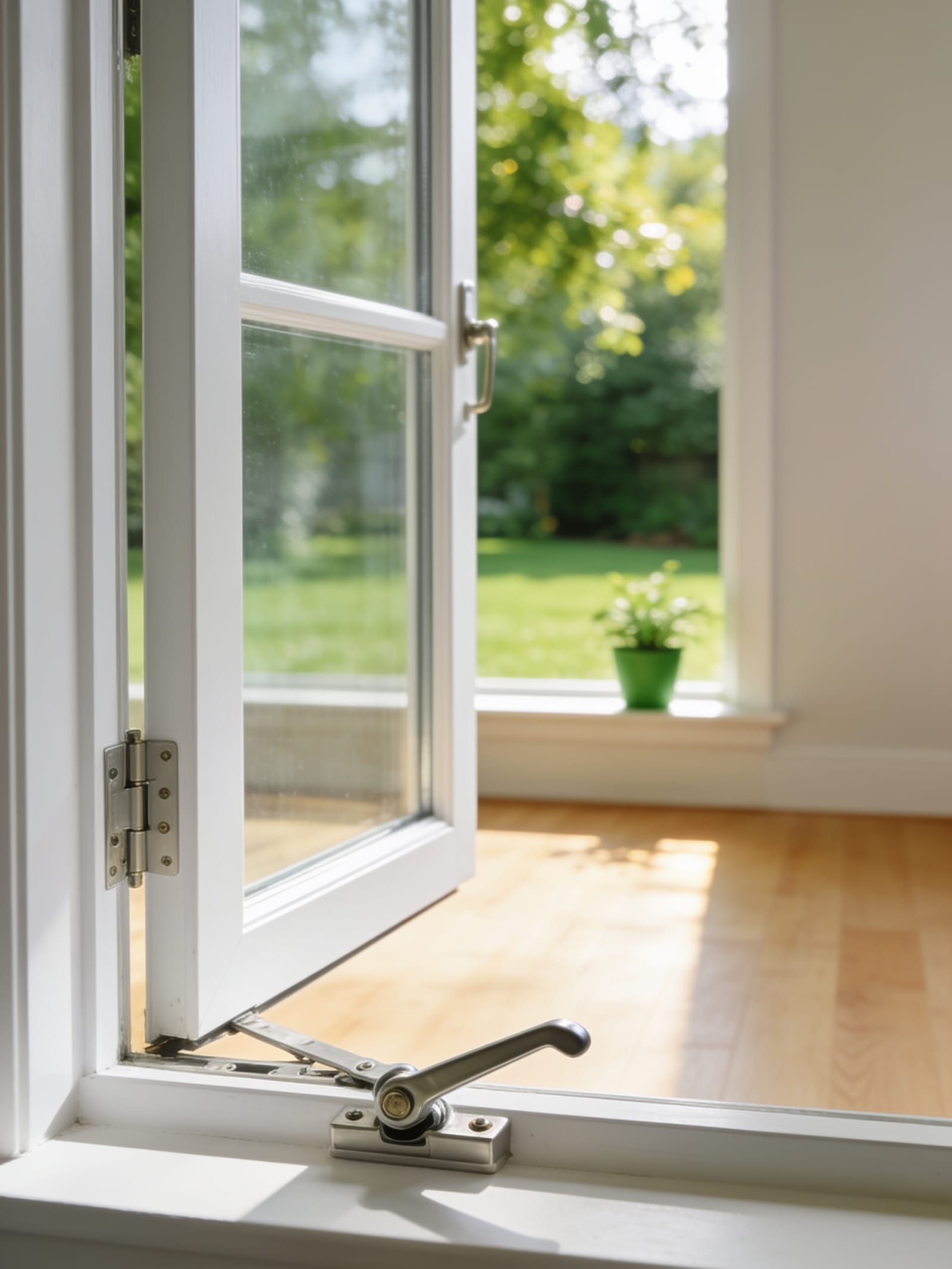
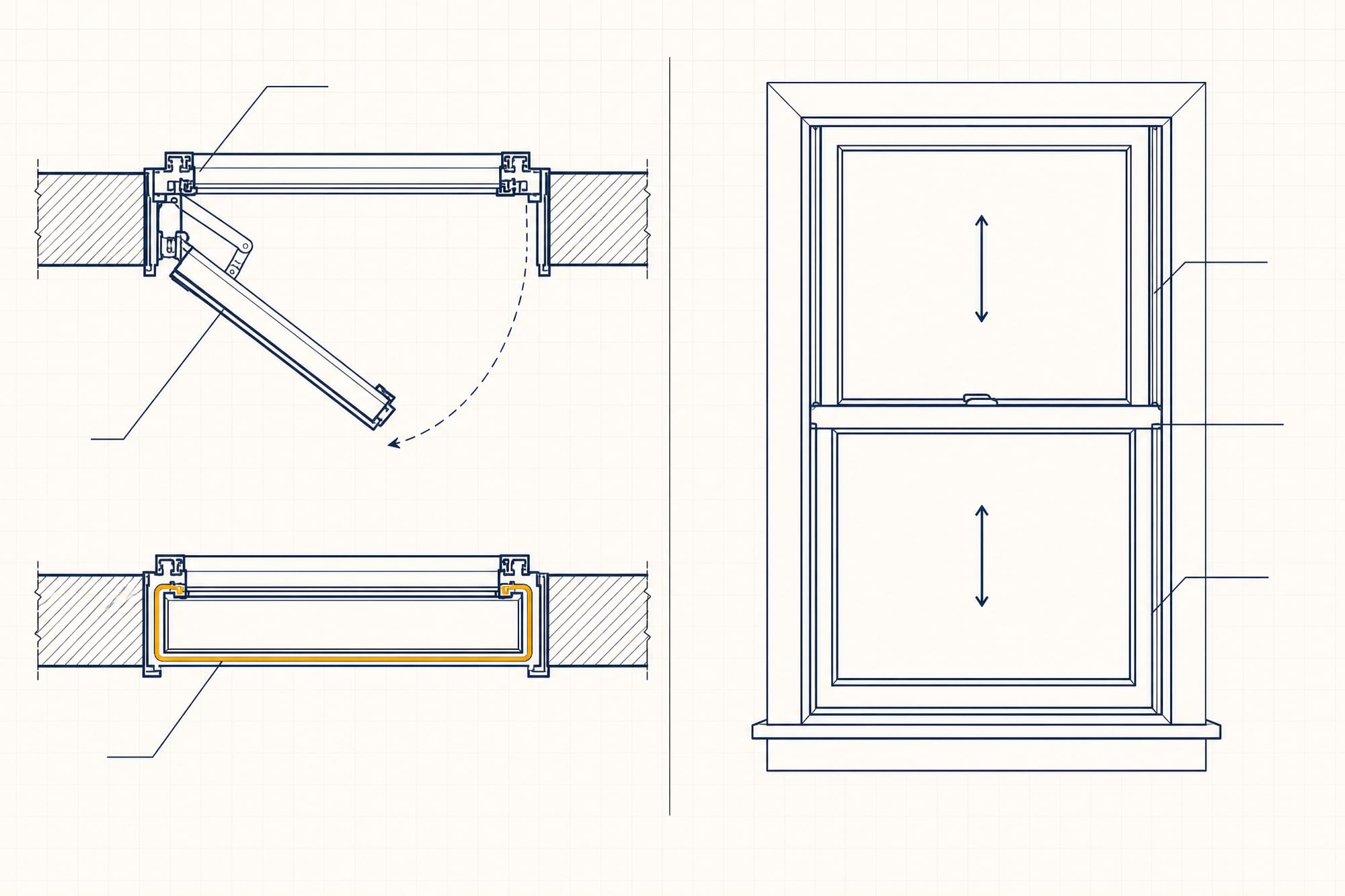
A casement closes with a compression seal: the crank and multi-point lock press the sash tight against a gasket that runs all the way around the frame. There’s no sliding gap left for air to ride through.
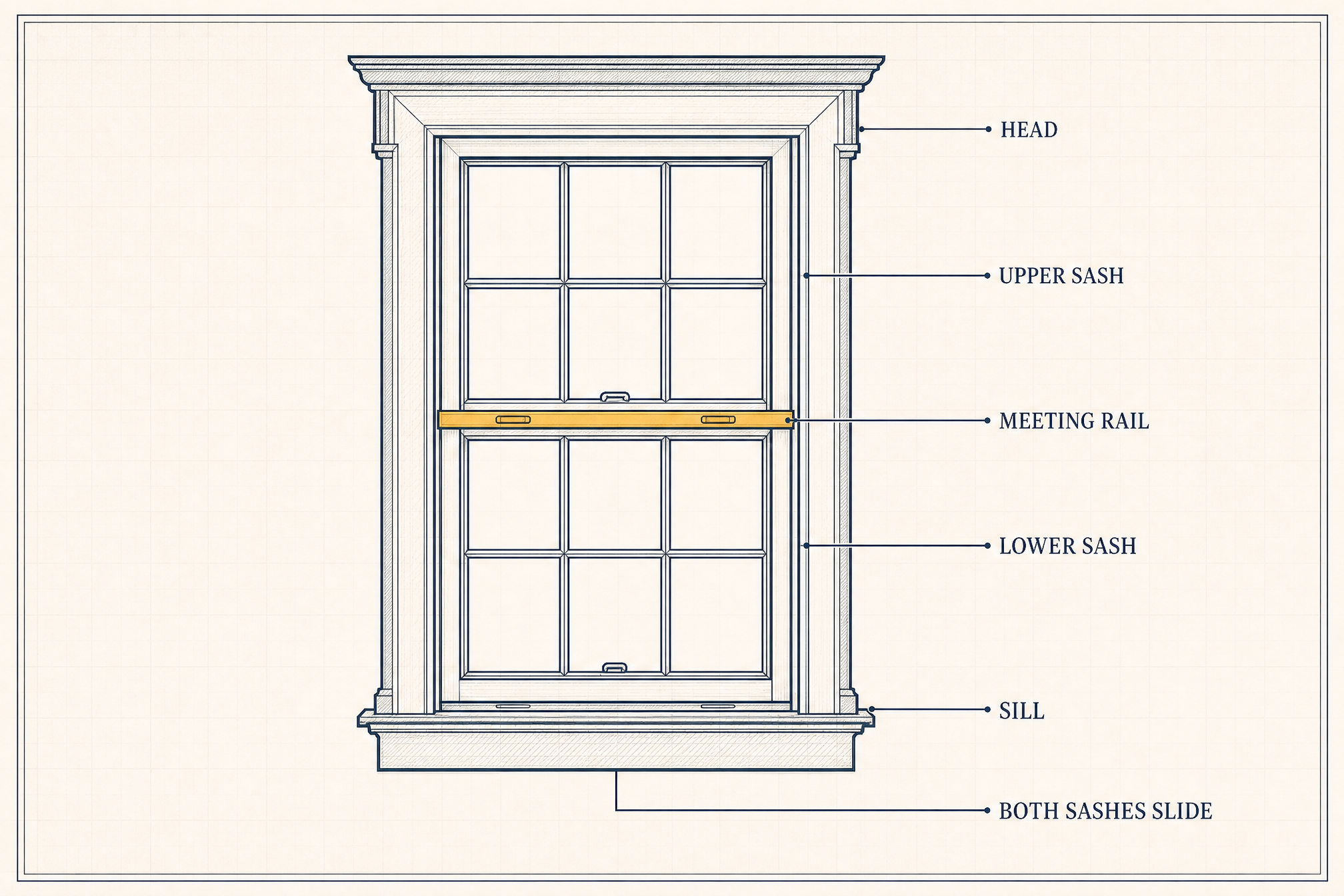
A double-hung seals differently. It has two moving sashes and the tracks they slide in, so it has more seams to get right — the meeting rail where the two sashes overlap in the middle, and the side jamb-liner tracks. That’s not a flaw; it’s the trade for sashes that move.
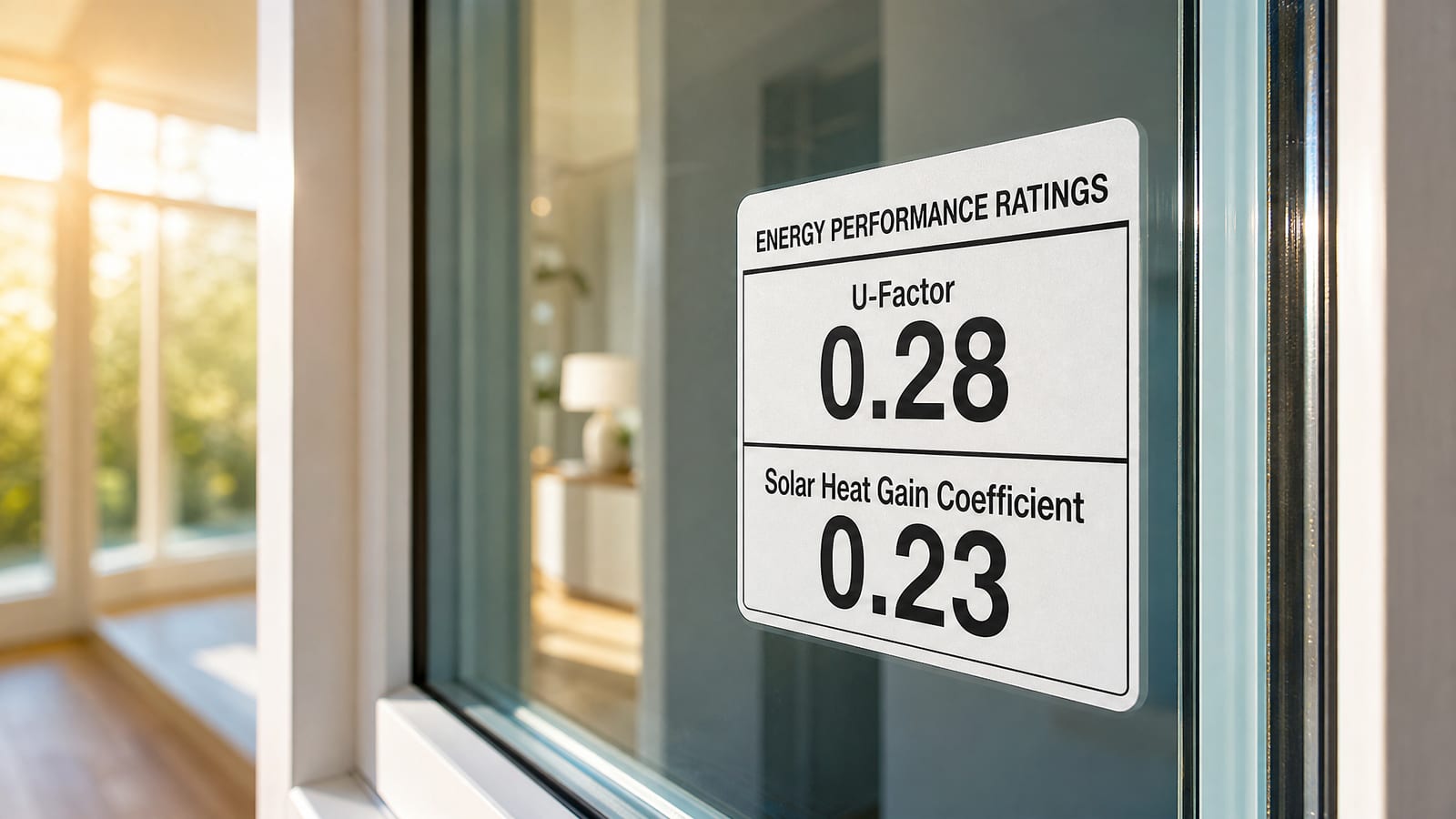
On the air-seal ranking, a fixed picture window is tightest, then the compression-seal styles like casement, then the hung windows, then sliders. It shows up as the on the label — lower is tighter. Here’s what the air-leakage rating actually tells you.
Here’s the difference in one picture — how each style closes:
One honest caveat before you order a house full of casements: a well-built, well-installed double-hung is a tight window. More seams is not the same as “drafty.” If your closed double-hung leaks cold, that’s usually a failed seal or a rough install — not the style itself.
Ventilation and everyday operation — which is easier to live with?
They both ventilate well; they just do it differently, and the operation is where personal fit decides it. Neither wins outright here — the room does.
A casement swings its whole sash outward, so it catches side breezes a sliding sash can’t, and the crank works with one hand. That one-handed reach is the entire reason a casement is the go-to over a kitchen sink or a counter you can’t lean across.
A double-hung opens at the top and bottom, which lets warm air out the top while cooler air comes in the bottom. And its headline trick is tilt-in cleaning — both sashes tip inward so you can wash the outside glass from inside the room. Upstairs, that saves you a ladder.
The casement’s honest cost of admission is the hardware. The crank and hinge are moving parts that wear over time — worth checking the operator warranty. And left open in a storm, the whole sash catches wind. On an exposed, windy wall, that’s a real consideration; on a sheltered one, it’s a non-issue.
Which clears egress in a tight bedroom wall?
The casement, clearly — because nearly the whole sash becomes clear opening. If the room is a bedroom, the window has to double as an emergency escape, and that’s where the two styles separate the most.
A casement swings its full sash out of the way, so a fairly small unit can satisfy the required opening. A double-hung opens only its operable half, so you need a noticeably larger overall unit to clear the same hole. On a narrow wall with limited room to go bigger, that efficiency is the whole ballgame.
Here’s the number that governs it in NC — and it’s not the one you’ll read on most national sites:
North Carolina amended the escape-opening requirement down from the base model code, so if you’ve seen the national 5.7 sq ft figure quoted, NC is different. Either style can meet it — the casement just gets there in a smaller frame. Here’s how egress sizing actually works before you order.
The classic look, and the cost gap
Double-hung wins the traditional look and usually the price; casement wins the clean modern glass — and this one is genuinely down to taste. There’s no wrong answer here, so don’t let anyone pretend there is.
A double-hung reads traditional. It’s the style most older North Carolina homes already wear, which is why it’s the like-for-like replacement people reach for first — it keeps the house looking like itself. It has been doing that quietly for generations and has never once been accused of being trendy.
A casement reads modern, with an unobstructed sheet of glass and no meeting rail across the middle.
On cost, a casement usually runs a bit more than a comparable double-hung because of the crank-and-hinge hardware. It’s not a huge gap, and it moves with brand, size, and glass package — which is exactly why I won’t pin a number to it here.
Real NC dollars live on the cost page, where frame material and install type move your total more than the style name does.
So which should you buy?
The pro truth that outranks the style debate: a great window installed badly loses to a mid window installed right — whichever style you pick. You’re right to suspect the install matters more than the label. It does.
A clean square set, proper flashing and sealing, the right shims — that’s what decides whether either style holds its seal over the years, more than casement-versus-double-hung ever will.
So make the style call on the room:
- Draft-prone, over a sink, or tight egress → casement. The tight seal, the one-handed crank, and the egress efficiency are exactly what those rooms need.
- Traditional look, upstairs cleaning, exposed windy wall, or lower budget → double-hung. The classic look and tilt-in cleaning earn their place, and nothing catches the wind.
For the deeper dives, here’s why the casement’s crank-out sash seals tightest and how the double-hung really seals and where it fits. The wider view — all the window styles side by side — is worth a look if you’re mixing styles across the house.
NC homeowner takeaway: The two myths to drop are “casements are always better” and “double-hungs are just the cheap default.” Neither holds. A casement earns its premium on seal, reach, and egress. A double-hung is the right, good-looking, well-sealing pick for traditional homes and cleanable upstairs windows. The real winner on either one is the install!
Got both styles on a quote and you’re not sure which walls should get which? That’s exactly what a no-pressure second opinion is for — talk it through with an NC window expert.
Bring the quote. We’ll match the style to the room.
Sources, Verification & Fact-Checking verified July 2026
Every load-bearing fact on this page is sourced and verified against a primary authority.
Verified July 2026 via direct review of the cited authority — the links open the controlling source so you can check it yourself rather than take our word.
- Casement seals tightest of the operable styles via a compression seal; double-hung has more air-leak paths. Locking a side-hinged casement presses the whole sash flat against the frame, while a double-hung seals along its meeting rail and two sliding side tracks. The U.S. Department of Energy states that casement, awning, and hopper windows “generally have lower air leakage rates than sliding windows because the sash closes by pressing against the frame,” while single- and double-hung and sliding windows “generally have higher air leakage rates than projecting or hinged windows.” A fixed picture window, with no operable sash, is tightest of all; the finer ordering within the sliding family is directional (DOE does not publish that sub-ranking). (view source — U.S. Dept. of Energy, Building Science Education: Window Operation Methods)
- Air Leakage (AL) is the NFRC label rating that reflects seal tightness; the glass package drives the other energy numbers. The NFRC label reports Air Leakage alongside U-Factor and SHGC, letting you compare any two windows apples-to-apples — a lower AL is a tighter product. (view source — U.S. Dept. of Energy, Building Science Education; NFRC — the energy performance label)
- Casement is the most egress-efficient style because nearly the whole sash becomes net clear opening. A casement opens fully, so a smaller unit can hit the required net clear openable area, where a double-hung — only half of which opens — needs a larger unit to clear the same hole. This is opening geometry, not a rated spec. (view source — 2018 NC Residential Code R310.2.1, via ICC)
- North Carolina’s emergency-escape opening requires a 4.0 sq ft minimum net clear openable area (2018 NC Residential Code R310.2.1) — not the national 5.7 sq ft. NC amended the base IRC: R310.2.1 sets a minimum net clear openable area of 4.0 sq ft, a minimum net clear opening height of 22 inches, and a minimum width of 20 inches, with the sill no more than 44 inches above the floor. “Net clear opening” is the actual hole with the sash fully operated, not the frame or glass size. Always confirm the requirement against the code your local inspector enforces. (view source — 2018 NC Residential Code R310.2.1, via ICC)
- Operational trade-offs (casement crank/hinge hardware wears and the open sash catches wind; double-hung tilt-in sashes clean from inside) are inherent to each mechanism, not spec claims. No manufacturer-independent lifespan standard exists for operator hardware, so no lifespan figure is quoted here — check the operator warranty on any specific unit.
- Cost direction (a casement typically runs a bit more than a comparable double-hung) is qualitative. The gap reflects the added crank-and-hinge hardware and moves with brand, size, and glass package; no dollar figure is asserted here — NC dollars live on the cost page. The kitchen-sink story is a recurring forum pattern, told as illustration, not attributed to any one named thread.