

You’ve narrowed it to vinyl, and now the showroom hands you a rack of samples that all look faintly the same — clapboard, Dutch lap, board & batten, shake — and asks which one you want on your house for the next 25 years.
That’s a strange decision to make holding a six-inch chip under fluorescent light.
Here’s the thing nobody at the showroom quite says out loud: the profile you pick matters more than almost any other single choice for whether the finished wall reads custom or reads cheap. Same material, same color, wildly different result — because the profile is the texture your eye actually lands on from the street.
This page is the profile catalog turned into a decision. What each style is, which ones read upscale, the reveal-size choice you’re making without knowing it, whether the fancier look costs more, and — the part page-one guides skip — which profile actually fits an older North Carolina home.
The dollars-by-profile live on the siding cost page; the panel physics live on the vinyl material guide. This page is about the look.
What are the vinyl siding styles, and which fits my NC home? The everyday profiles are clapboard (plain horizontal lap — the safe default), Dutch lap (the same lap with a shadow-line groove, a touch more character), board & batten (bold vertical boards-and-battens — striking whole-house or a high-end accent), and shake / shingle (cedar-look texture, usually for gables and accents), plus decorative scallop and beaded. Dutch lap costs about the same as plain lap; board & batten and shake run modestly more. For most 1980s NC homes, a clean clapboard or Dutch lap with a shake or board-and-batten accent reads best — and the profile decides the look, while panel thickness and a clean install decide how it survives NC storms.
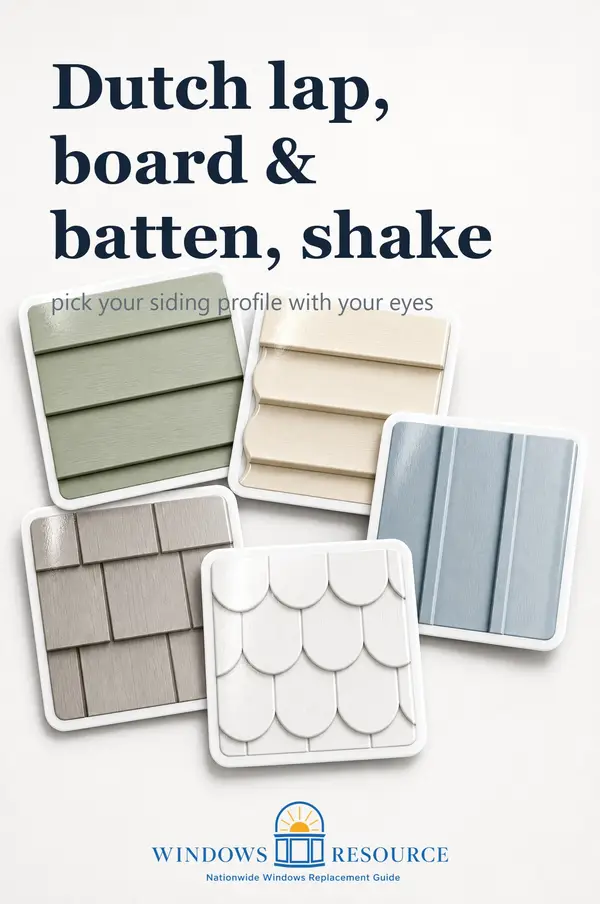
The profiles, side by side (pick with your eyes)
A “styles” decision is a visual one, so here’s every everyday profile as a texture swatch, not a paragraph. Read down the swatches first; the words are just there to confirm what your eye already picked.
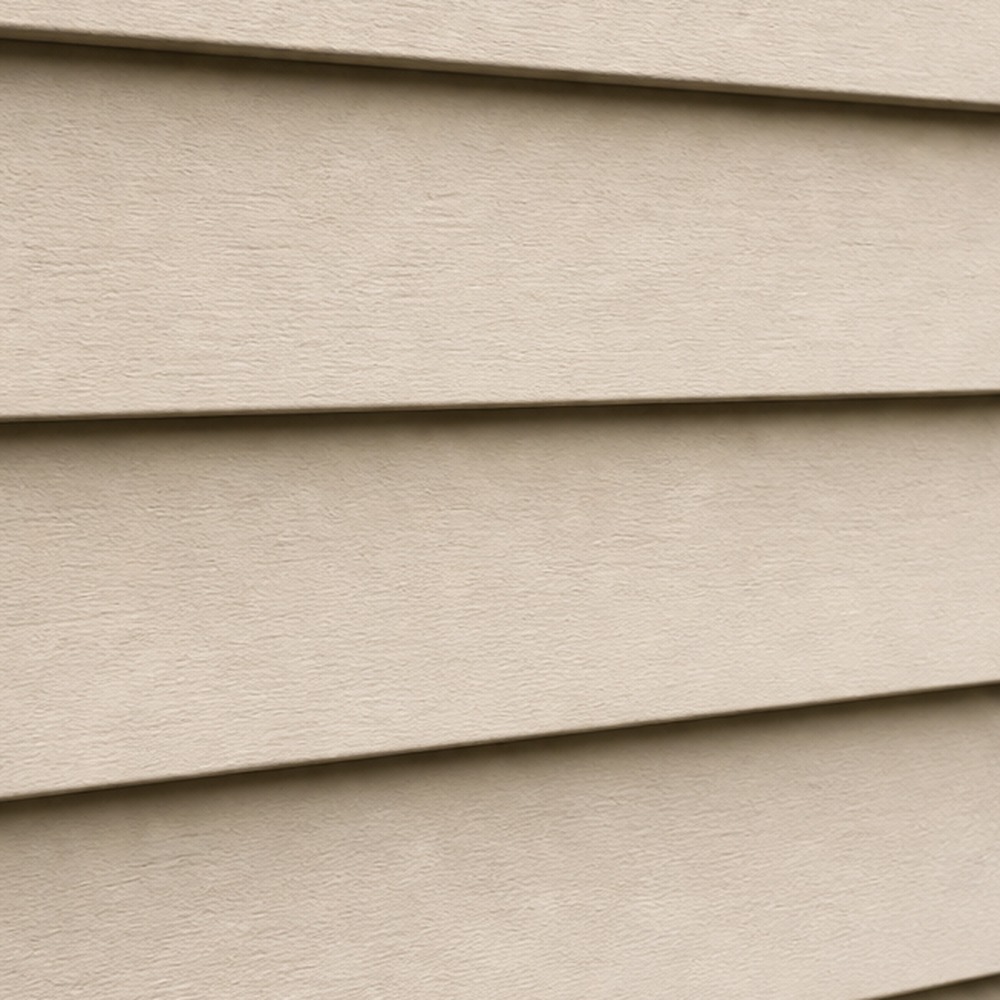
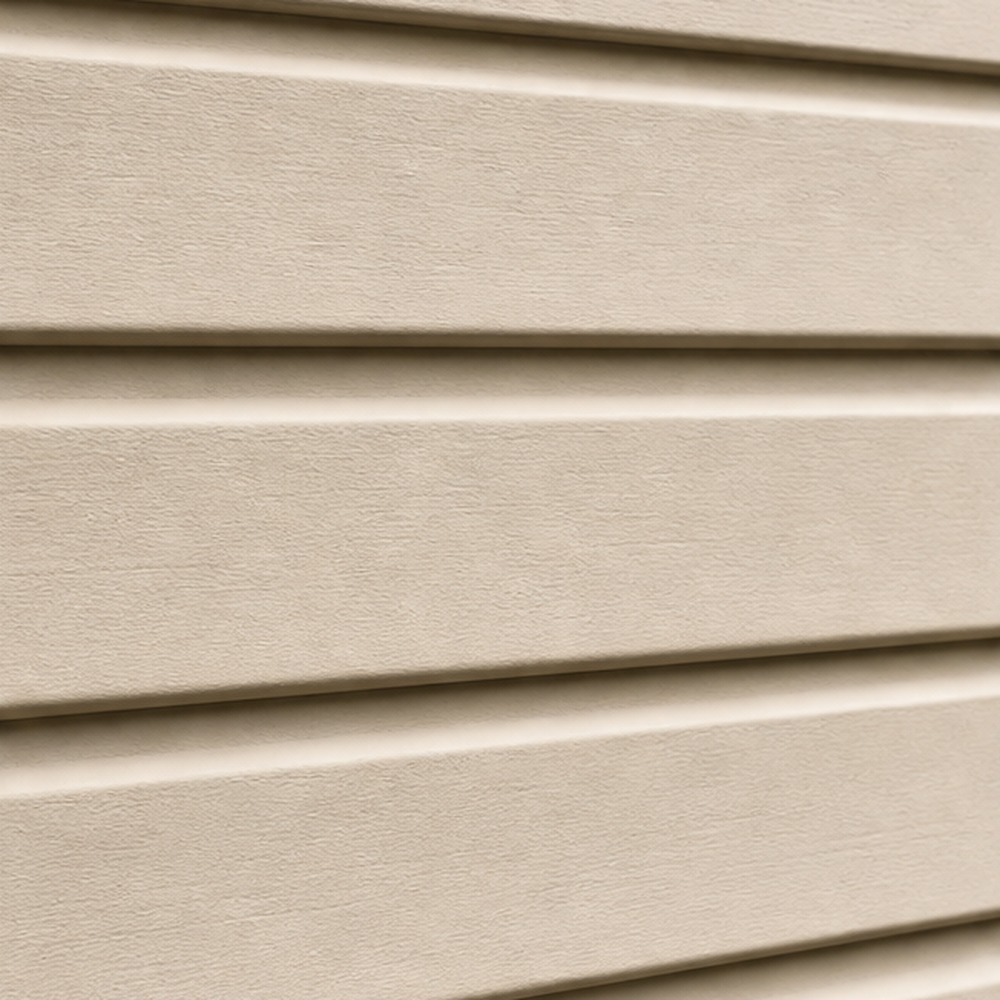
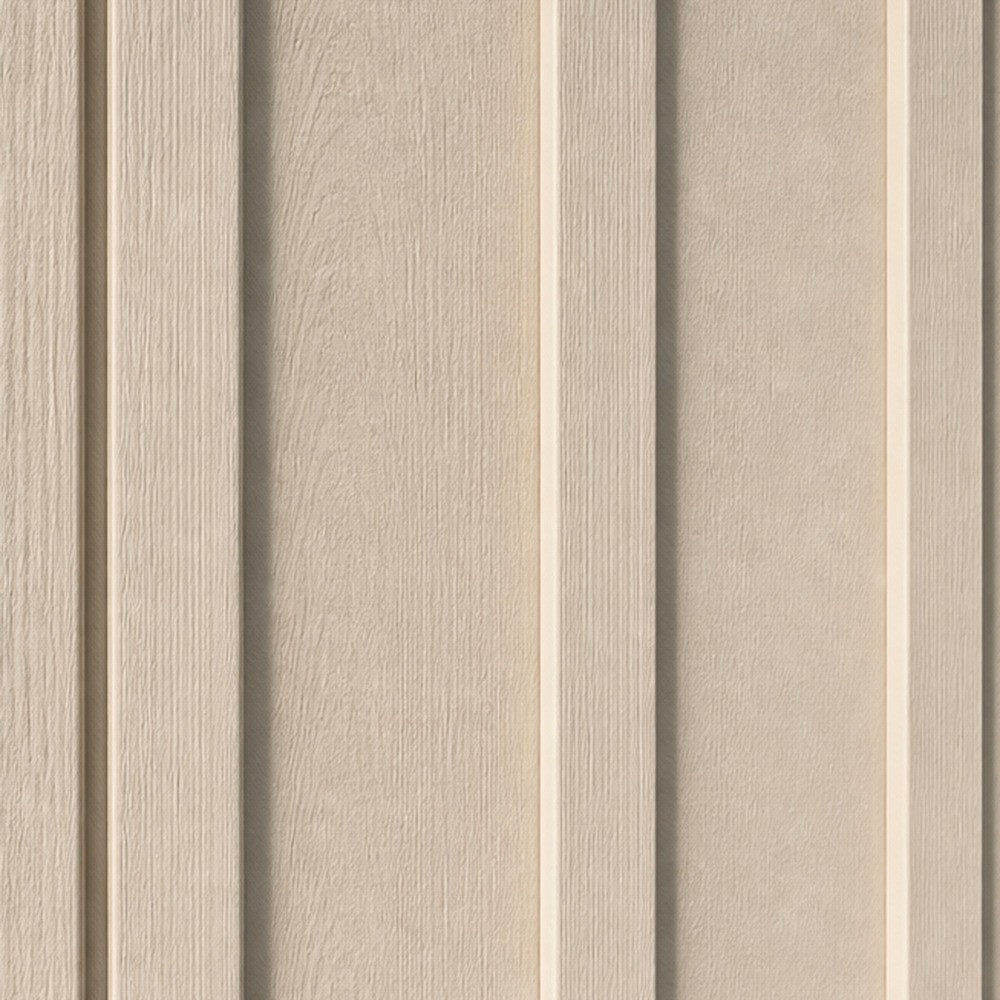
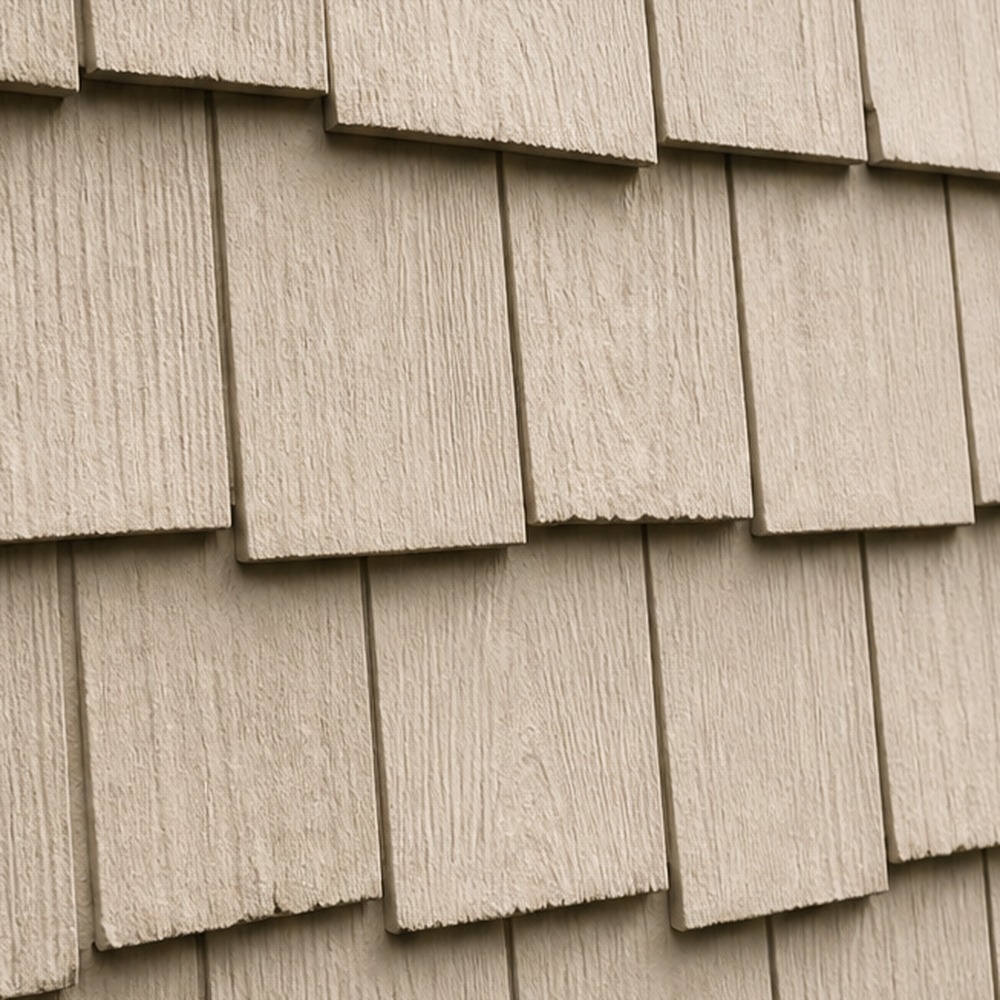
| Profile | Swatch | The look | Upscale or traditional | Best on |
|---|---|---|---|---|
| Clapboard (traditional lap) | 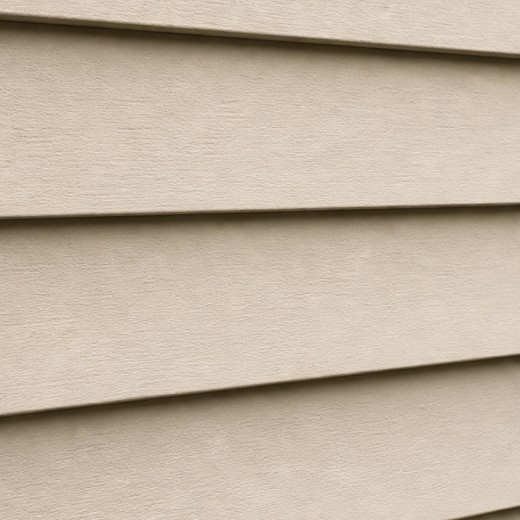 | Straight, clean horizontal lap — the default American look | Timeless, safe — won't date | Whole-house default on almost any home |
| Dutch lap | 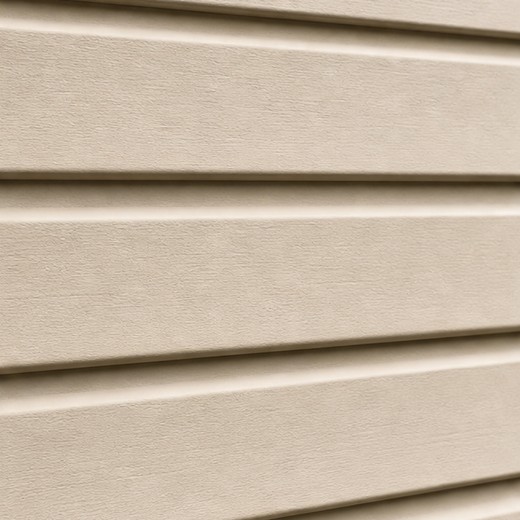 | The same lap with a routed groove and a deeper shadow line | Traditional, a touch more refined than plain lap | Whole-house; adds character to a plain ranch — for about the same price |
| Board & batten | 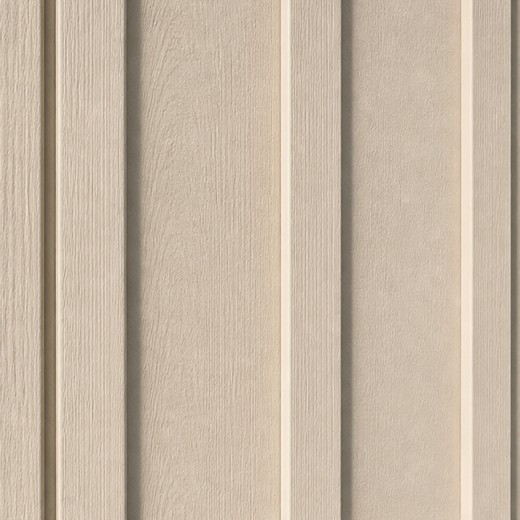 | Wide vertical boards with narrow battens; reads tall and modern-farmhouse | Bold — high-end as an accent, statement whole-house | Gables, entries, dormers as an accent; farmhouse-style whole-house |
| Shake | 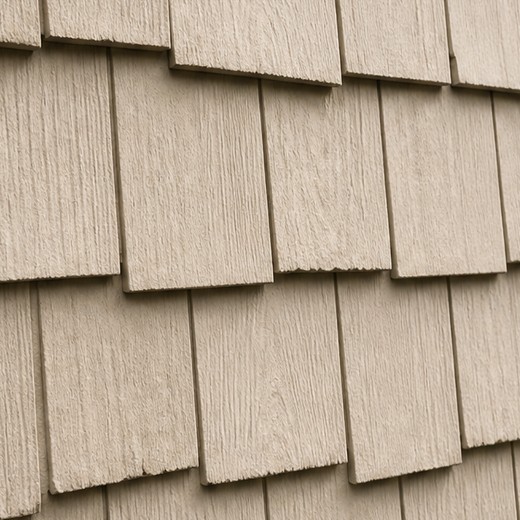 | Textured cedar-shake look, staggered (rustic) or straight-edge (crisp) | The most premium-looking of the everyday profiles | Gables and accents; rarely a whole house |
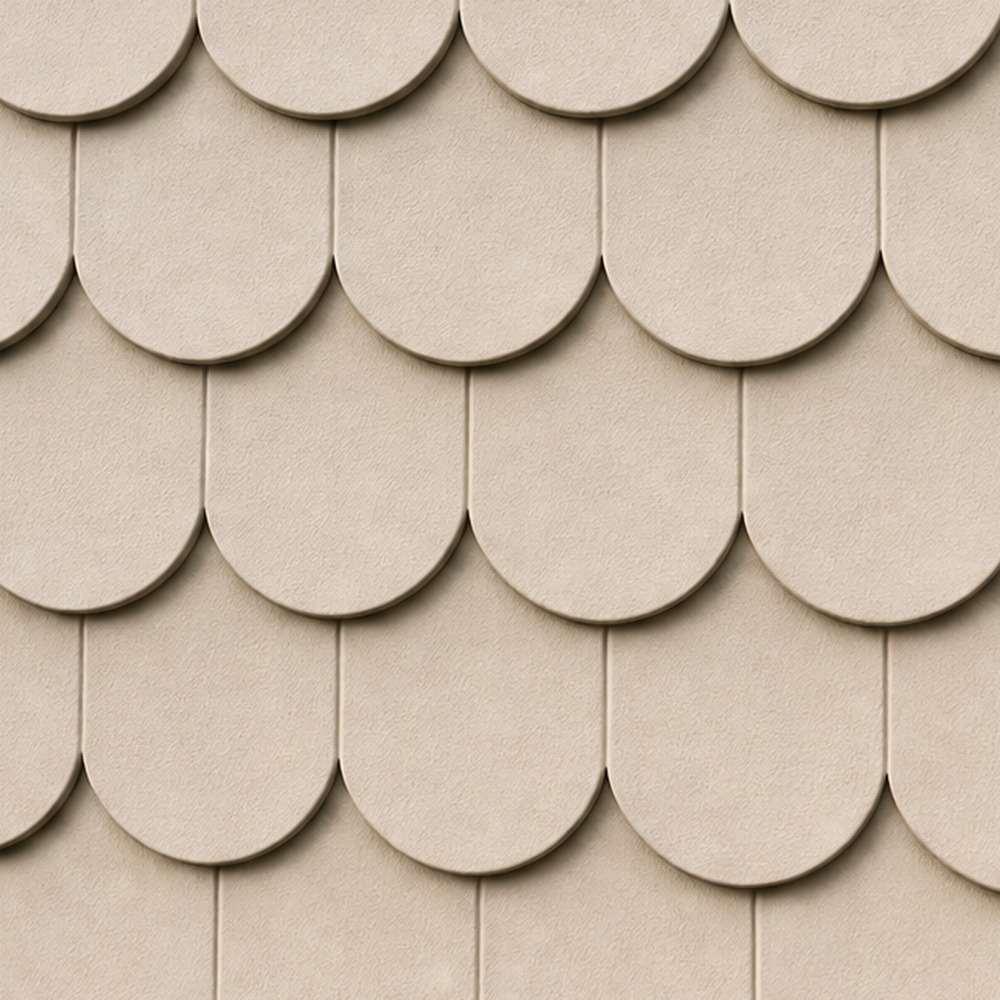
| Shingle / scallop (fish-scale) | 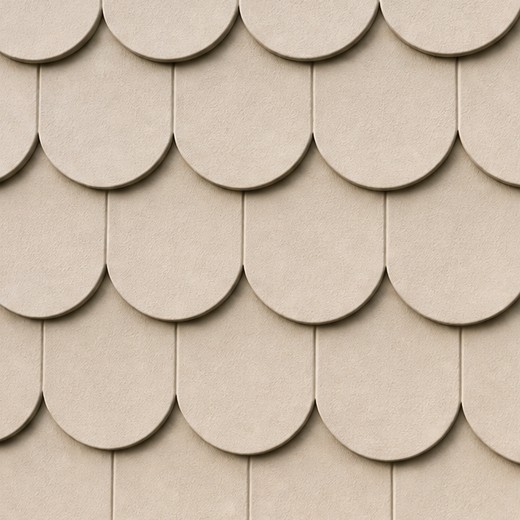 | Half-round or straight shingle courses, decorative and period | Decorative period accent | Gable accents on Victorian and cottage-style homes |
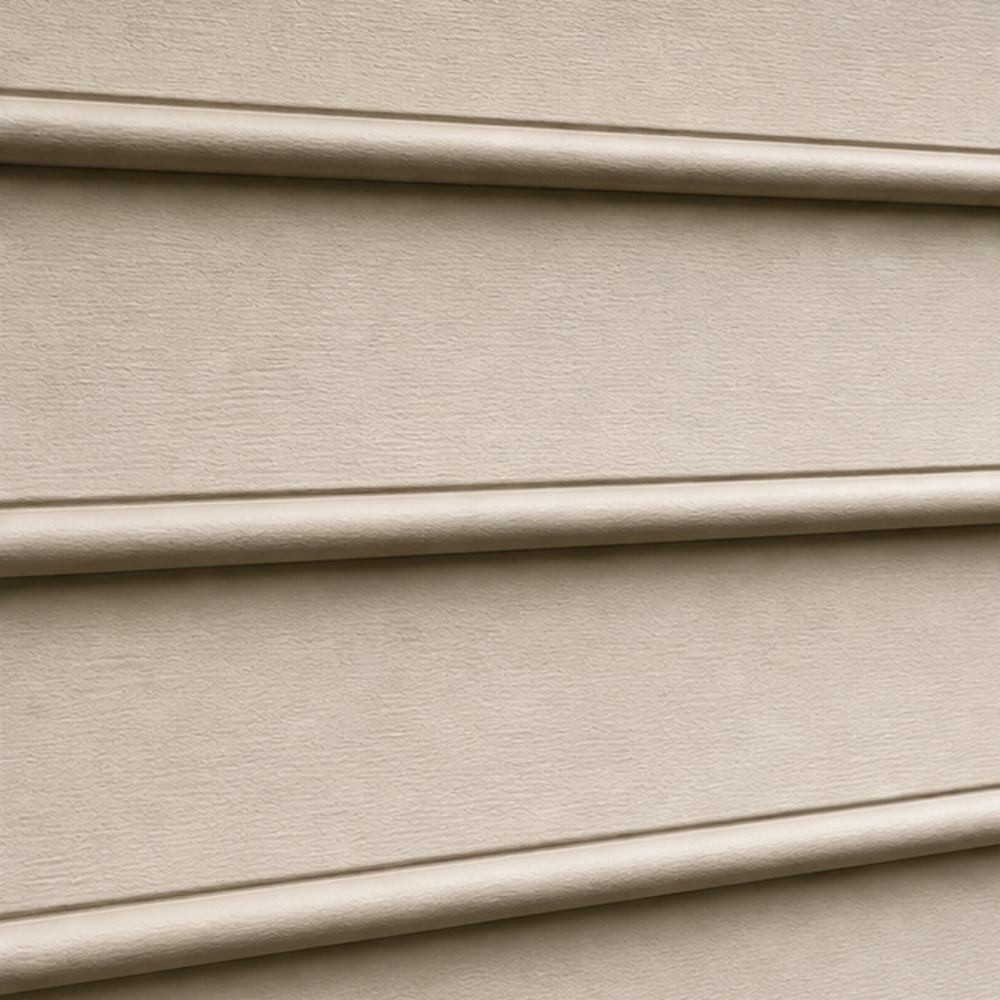
| Beaded | 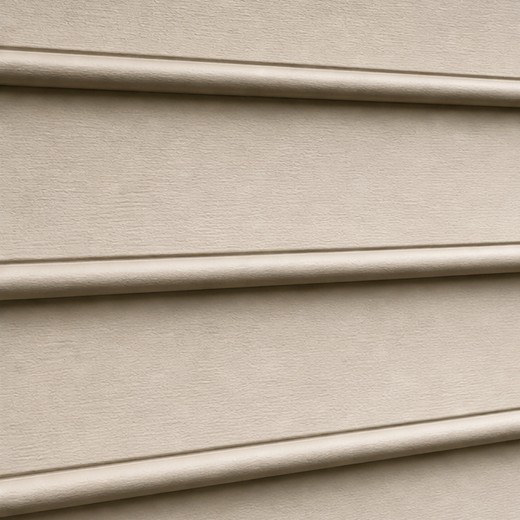 | Clapboard with a rounded bead at the bottom of each course | Refined, traditional-Southern | Whole-house on traditional and colonial homes |
Clapboard (traditional lap)
- Swatch
-
- The look
- Straight, clean horizontal lap — the default American look
- Upscale or traditional
- Timeless, safe — won't date
- Best on
- Whole-house default on almost any home
Dutch lap
- Swatch
-
- The look
- The same lap with a routed groove and a deeper shadow line
- Upscale or traditional
- Traditional, a touch more refined than plain lap
- Best on
- Whole-house; adds character to a plain ranch — for about the same price
Board & batten
- Swatch
-
- The look
- Wide vertical boards with narrow battens; reads tall and modern-farmhouse
- Upscale or traditional
- Bold — high-end as an accent, statement whole-house
- Best on
- Gables, entries, dormers as an accent; farmhouse-style whole-house
Shake
- Swatch
-
- The look
- Textured cedar-shake look, staggered (rustic) or straight-edge (crisp)
- Upscale or traditional
- The most premium-looking of the everyday profiles
- Best on
- Gables and accents; rarely a whole house
Shingle / scallop (fish-scale)
- Swatch
-
- The look
- Half-round or straight shingle courses, decorative and period
- Upscale or traditional
- Decorative period accent
- Best on
- Gable accents on Victorian and cottage-style homes
Beaded
- Swatch
-
- The look
- Clapboard with a rounded bead at the bottom of each course
- Upscale or traditional
- Refined, traditional-Southern
- Best on
- Whole-house on traditional and colonial homes
Clapboard vs Dutch lap — what’s the actual difference?
Almost nothing, and that’s the useful part: Dutch lap is clapboard with a shadow. They’re the same overlapping horizontal panel. Dutch lap just adds a routed groove along the top edge of each course, which throws a stronger shadow line and reads a little more detailed on the wall.
Most people don’t realize they’re the same panel, so “Dutch lap” can sound like a premium upgrade tier when it’s really just a profile choice, not a grade. Same board, one extra groove, fancier name.
And because it’s the same extrusion with one extra cut, the price is close to identical. That makes Dutch lap the easiest character-for-free move in the whole catalog — a plain ranch picks up depth and a slightly more custom read without moving the number.
If you want the plain, quiet, won’t-ever-look-dated option, clapboard is genuinely fine. If you want a touch more depth for the same spend, Dutch lap. That’s the whole decision between them.
Board & batten: whole-house statement or tasteful accent?
Board & batten is the profile everyone’s asking about right now — and the honest guidance is: one primary lap, one accent, and pick which role it plays on purpose. The vertical boards-and-battens look reads tall, clean, and modern-farmhouse, and it’s the most-searched profile of the bunch. That popularity is exactly why it’s easy to overdo.
Two ways to use it, both legitimate:
- As an accent — on a front gable, an entry, a dormer, or a single feature wall. This is the low-risk, high-payoff move. It breaks up a big flat elevation and reads distinctly high-end.
- As a whole-house statement — full vertical siding for a committed modern-farmhouse look. It works, but it’s a strong choice that fits some homes and fights others. It suits a newer or farmhouse-styled house far better than a traditional 1980s ranch.
The failure mode isn’t the profile — it’s layering too many. A wall carrying lap plus board & batten plus shake plus scallop reads busy, not custom. The rule that keeps you safe: one primary profile across the main walls, one accent profile, and stop there.
Shake, shingle, and scallop — the accent profiles
Shake, shingle, and scallop earn their keep in small doses — a gable, a dormer, a band — where their texture pays off without taking over. These are the decorative profiles, and they’re where vinyl gets to imitate cedar and period woodwork.
- Shake is the cedar-shake look — staggered for a rustic edge or straight-cut for a crisp one. It reads the most premium of the everyday profiles and is fantastic for breaking up a large plain wall on a gable.
- Shingle and scallop (fish-scale) are half-round or straight decorative courses, the classic Queen Anne and cottage accent. Almost always a gable or band feature, not a whole house.
Shake is generally the priciest everyday vinyl profile, which is another reason it lives on accents rather than every wall. If you love the deeper, more authentic wood-grain look enough to want it across the whole house, that’s often the moment to price fiber cement and James Hardie against it — that’s the material built for that look at full scale.
Double 4 or double 5? The reveal-size decision nobody explains
Every lap profile comes in reveal sizes — double 4, double 4.5, double 5, single 7 — and that number quietly sets whether your wall reads busy-and-traditional or clean-and-contemporary. The “reveal” is the visible height of each course. A “double 5” panel shows two five-inch courses per panel; a “single 7” shows one seven-inch course.
Here’s the read almost no showroom explains:
- Smaller reveal (double 4) — more lines across the wall. Busier, finer, more traditional and cottage-like.
- Larger reveal (double 5, single 7) — fewer, taller lines. Calmer, cleaner, more contemporary.
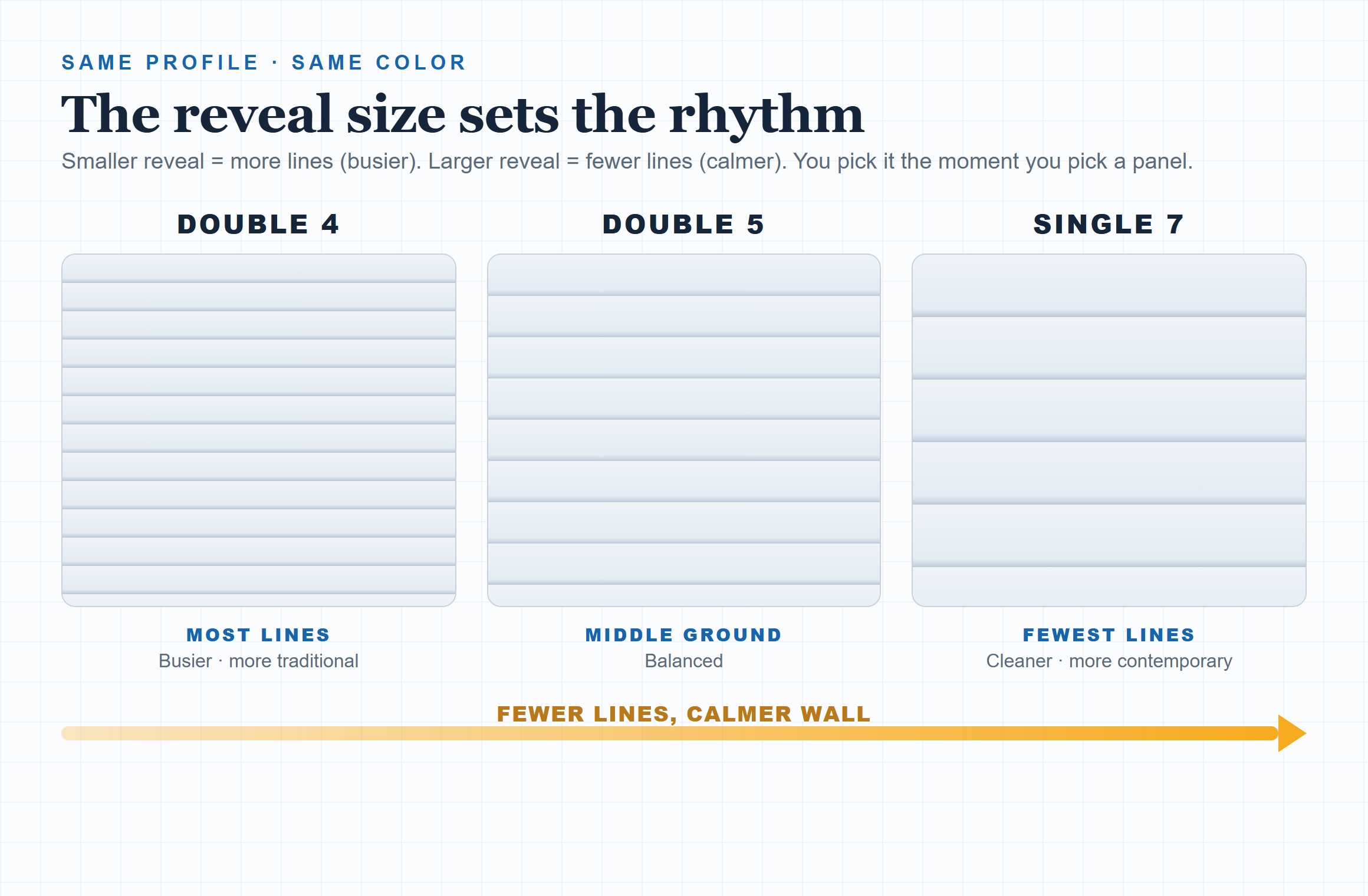
Neither is right or wrong. But it’s a genuine design decision, and you’re making it the moment you pick a panel — so make it on purpose. A smaller reveal on a period cottage; a larger reveal on a clean-lined mid-century or contemporary home.
Does the fancier profile cost more?
A little, and honestly less than people expect — Dutch lap costs about the same as plain lap, and board & batten and shake run modestly higher. The profile moves the price far less than the panel grade, the tear-off, and the trim detail do.
Here’s the directional read (the actual per-square-foot dollars live on the cost page, where they belong):
- Clapboard and Dutch lap — essentially the same price. Same panel, one extra routed groove.
- Board & batten — modestly higher per square foot than plain lap.
- Shake / shingle — generally the priciest everyday vinyl profile.
The practical takeaway: if you want the upscale look, the profile is rarely the expensive part. Using a pricier profile as an accent — a shake gable, a board-and-batten entry — buys most of the visual payoff for very little added cost, because you’re only paying the premium on a fraction of the wall.
Whether that fits your budget is a real number for your house, and that’s what the cost page is for.
Which profile fits an NC home’s era?
The single best filter isn’t trend — it’s your home’s era and street. A profile that fits the age of the house reads custom; one that fights it reads like a costume, no matter how nice the panel. This is the guidance page-one catalogs leave out, and it’s the one that actually prevents regret.
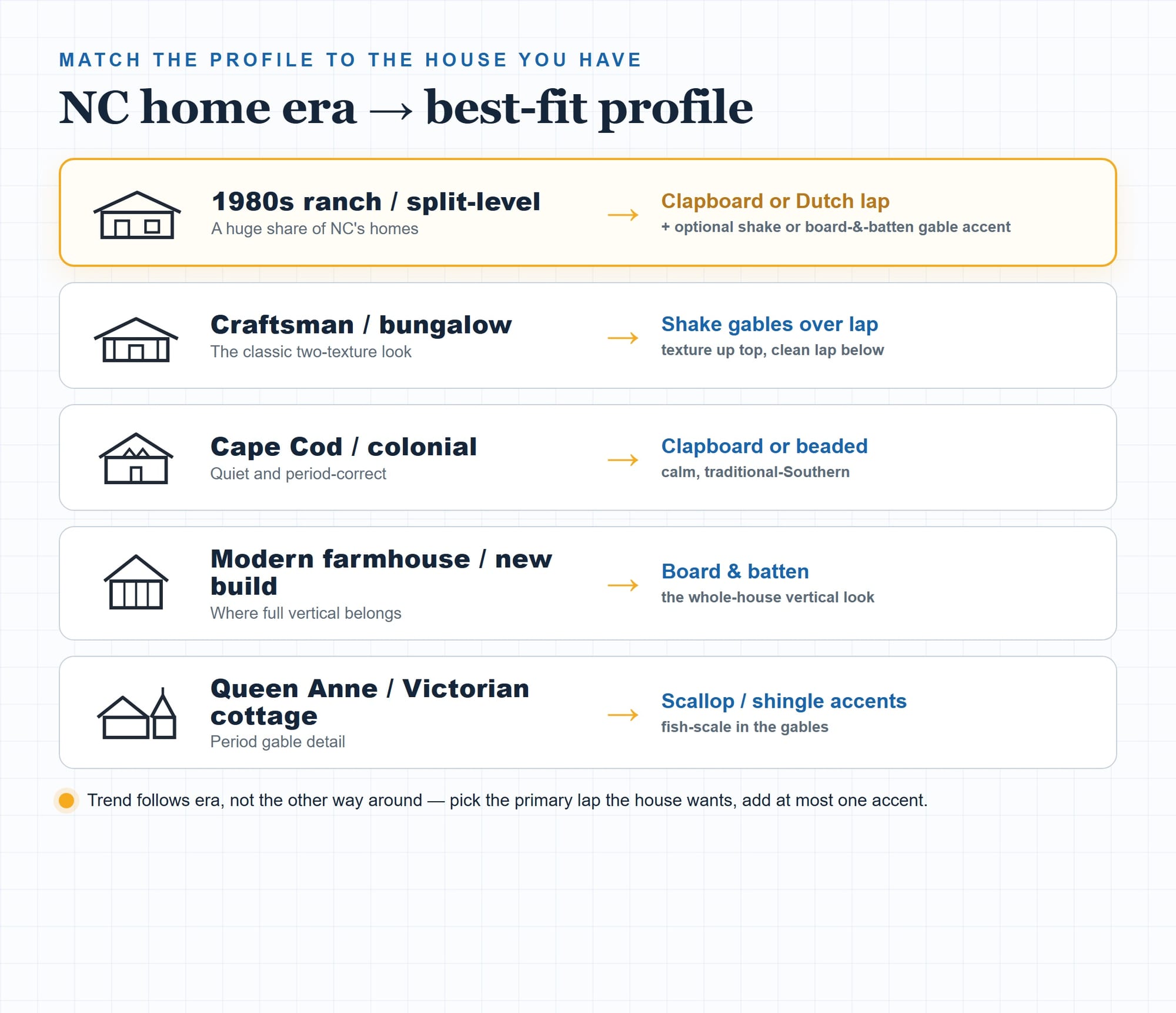
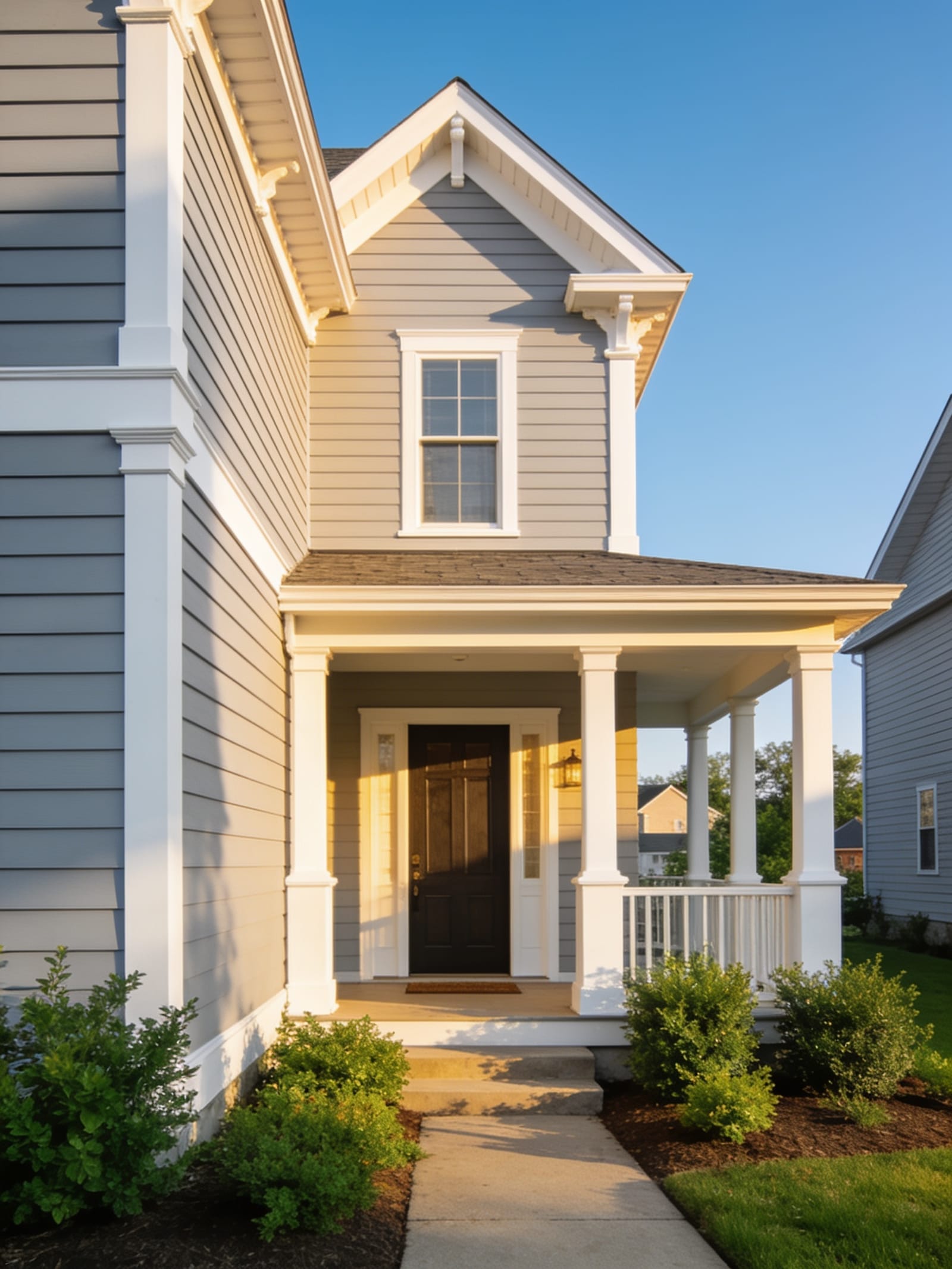
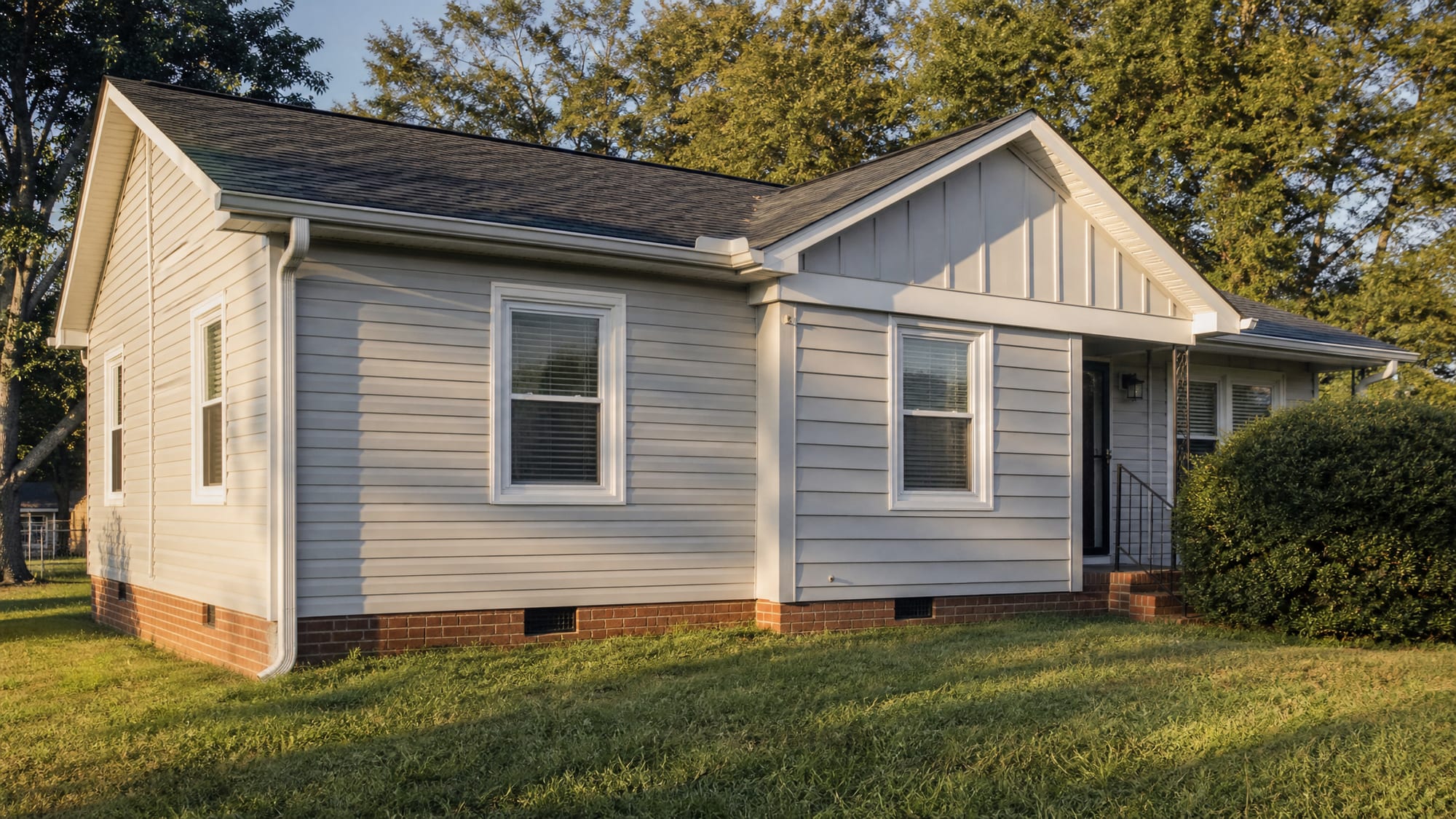
- 1980s ranch or split-level (a huge share of NC’s housing stock) — clean clapboard or Dutch lap on the main walls, with an optional shake or board-and-batten accent on a gable or entry.
- Craftsman or bungalow — shake in the gables over lap below; the classic two-texture Craftsman read.
- Cape Cod or colonial — clapboard or beaded; quiet and period-correct.
- Modern farmhouse or newer build — board & batten, where full vertical actually belongs.
- Queen Anne or Victorian cottage — scallop and shingle accents in the gables.
NC homeowner takeaway: you were right to want a name for what fits, not just “pick whatever you like.” Trust your instinct that a profile can look wrong on the wrong house — that instinct is correct. Start from your home’s era, pick a primary lap that suits it, and add at most one accent. That single filter does more for the finished look than any grade upgrade.
Will the profile hold up in NC wind?
The profile is a look; the panel’s tested rating and a clean install are what carry NC storms. This trips people up — they assume a heavier-looking profile is a sturdier one. It isn’t. Board & batten’s vertical seams and shake’s texture are more install-detail-sensitive, but the wind number comes from the panel’s thickness and how it’s hung, not its shape.
What actually decides storm performance:
- Panel thickness. Thicker grades resist wind and impact better. Standard mid-grade panels run around 0.042”–0.046”; premium runs thicker. The vinyl material guide covers the grade decision and the float-install physics in full — I won’t re-run them here.
- certification. The Vinyl Siding Institute’s third-party program verifies a panel actually meets the wind-load, impact, and thickness standards it claims. Look for it on any profile.
- The install. Correct nailing and expansion gaps deliver the rated performance. A premium panel hung tight fails before a mid-grade panel hung right.
For coastal North Carolina, ask for a product carrying a Miami-Dade County notice of acceptance and a crew that follows the fastening schedule. Inland Piedmont walls are within a certified panel’s ordinary day job. Either way, choose the profile for the look and the thickness for the storm — they’re two separate decisions.
Match the windows to the same facade
A profile choice is really a facade choice, and the windows are the other half of that facade. The same clean-lap-plus-one-accent instinct that makes siding read custom applies to choosing window styles — double-hungs on a traditional ranch, casements on a contemporary elevation — so the whole exterior reads like one deliberate design instead of two separate projects.
If you’re re-siding an older NC home, the windows are usually part of the same conversation anyway — same wall, same installer, often the same quote.
And if you want to see the profiles in real light instead of guessing from a chip, that’s exactly what a walkthrough is for. Tell me your home’s era and which way it faces, and I’ll bring the actual samples to hold against your wall — a no-pressure second opinion, with the honest read on which looks go custom for the same money.
Sources, Verification & Fact-Checking verified July 2026
Every load-bearing fact on this page is sourced and verified against a primary authority.
Verified July 2026 via direct review of the cited authority — the links open the controlling source so you can check it yourself rather than take our word.
- The vinyl profiles and what each is — clapboard (traditional horizontal lap, sold as double 4 / double 5 / single 6, the number being each lap’s height in inches); Dutch lap (the same lap with a routed groove throwing a shadow line); board & batten (wide vertical boards with narrow battens); shake and shingle (cedar-look accents, usually gables); plus beaded and scalloped/fish-scale decorative profiles. Profile definitions per the windowsresource knowledge base (siding product knowledge) and manufacturer profile catalogs (e.g. ProVia clapboard/Dutch lap lines). The reveal-size names and the “smaller reveal reads busier/traditional, larger reveal reads cleaner/contemporary” read are a plain-English design comparison, not a published standard. (view source — ProVia clapboard & Dutch lap profiles)
- Per-profile price movement is directional only — Dutch lap costs about the same as plain clapboard (same panel, one extra routed groove); board & batten and shake run modestly higher than plain lap, with shake generally the priciest everyday vinyl profile. Relative deltas are trade-directional. The specific per-square-foot bands behind them come from national cost aggregators, are time-sensitive, and are deliberately not printed here — no authority sets a market price, so we route every hard dollar to the siding cost page rather than cite a figure. (see the siding cost page for the dollars)
- Panel thickness and VSI certification drive wind and impact performance, not the profile shape — standard mid-grade vinyl runs roughly 0.042”–0.046” thick, premium thicker, above the ASTM D3679 residential minimum of 0.035”; contractor-grade vinyl commonly resists roughly 110–150 mph with premium lines rated higher, and coastal buyers should look for a Miami-Dade County notice of acceptance. Thickness bands, the ASTM 0.035” floor, the third-party certification program (run by the Vinyl Siding Institute, now the Polymeric Exterior Products Association / PEPA), and the wind ranges are from the windowsresource knowledge base (siding) and PEPA’s certified-products program; wind ratings are product-specific and install-dependent — correct installation is what delivers the rating. (view source — PEPA (formerly VSI) certified products)
- Coastal-NC wind context — the 2018 NC Residential Code (which adopts ASCE 7-10 for wind loads) puts coastal counties in higher wind and wind-borne-debris zones, with barrier-island ultimate design wind speeds around 140–150 mph and the wind-borne-debris region beginning at 130 mph; standard residential siding panels carry a baseline design-pressure (DP) rating near 30 psf while hurricane-zone product is specified to DP 50 psf or higher (tested per ASTM D5206), and coastal buyers should look for a heavier, higher-DP panel with a Miami-Dade County notice of acceptance. These figures are grounded against the NC code / ASCE 7-10 / ASTM D3679–D5206 framework but vary parcel-by-parcel; the exact design wind speed and required DP for a specific address come from the local building department, not a rule of thumb — confirm with the AHJ before relying on a number. The load-bearing point holds regardless: the profile does not change a panel’s wind rating — the tested DP rating, panel thickness, and install do.
- Which profile fits which home era is a design-fit judgment, not a spec — clapboard/Dutch lap for 1980s NC ranches and split-levels (with an optional shake or board-and-batten accent), shake gables over lap for Craftsman/bungalow, clapboard/beaded for Cape Cod/colonial, board & batten for modern-farmhouse/new builds, and scallop/shingle accents for Queen Anne/Victorian cottages. Architectural-era-to-profile guidance synthesized from manufacturer design guides (e.g. Progressive Foam’s home-design-to-profile mapping) and standard exterior-design practice, adapted to common NC housing stock; it is editorial design guidance, not a rule. (view source — Progressive Foam profile design guide)