

You’ve got a 1920s house, or one that feels like it, and the wood windows are showing their age — paint flaking at the sill, a corner joint gone soft, another repaint due. On the counter is a vinyl quote that’s cheaper and, the rep says, something you’ll never have to paint again.
And you’re stuck between two worries. One says vinyl will look cheap, hurt your resale, or get rejected by your historic board. The other says wood means fighting rot for the rest of the time you own the place.
The short version: this isn’t a good-versus-bad question. It’s an authenticity-versus-upkeep question — and in NC’s humidity, upkeep is the part most people underestimate.
Wood vs vinyl: the quick verdict
Pick the material that matches how much maintenance you’ll actually do — and what your house (or your district) genuinely requires. Here’s the decision in one block:
- Pick wood if: the authentic, period-correct look matters to you, your historic district requires it, and you’ll keep up with repainting and sealing on schedule.
- Pick vinyl if: you want to stop maintaining windows entirely, cost matters, and you’re not in a district that mandates the real material.
- Look hard at clad-wood if: you want the wood look without the rot-and-repaint chore — it’s the middle path, and it’s the one most people don’t know to ask for.
Both real-wood and vinyl are legitimate choices. The difference is what you’re signing up for. Wood gives you the look. NC humidity sends you the maintenance bill.
| Factor | Wood | Clad-wood (the middle path) | Vinyl (PVC) |
|---|---|---|---|
| Look / authenticity | The authentic, period-correct look; paint or stain any color | Real wood interior; factory-finished weatherproof exterior | Reads clean at a distance; grille and sightline detail less authentic up close |
| Maintenance | Highest — reseal or repaint on a regular cycle | Low outside; occasional interior touch-up | Very low — no painting; color runs through the material |
| Rot & NC humidity | The real catch — can rot, swell, or warp in humid NC if upkeep slips | Cladding shields the weather side, so the rot problem largely goes away | Doesn't rot — resists moisture and swelling |
| Lifespan | Long if maintained (restored wood can run generations); far shorter if neglected | Long, with minimal exterior upkeep | Long and low-drama — dependable for decades |
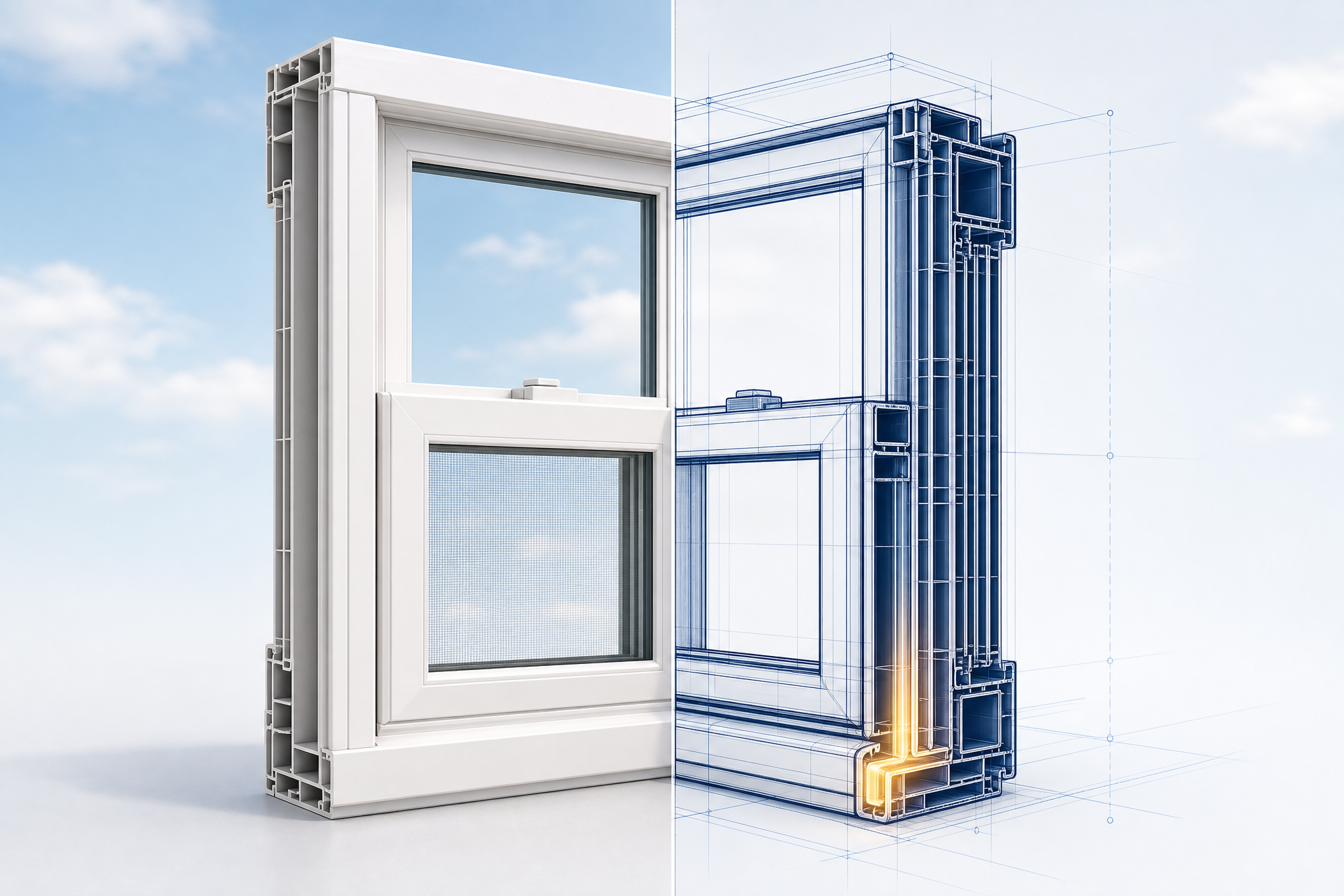
| Energy / insulation | Good natural insulator | Good — wood core, sealed exterior | Genuinely good — multi-chamber frame |
| Historic-district fit | Usually what a district board wants | Sometimes accepted as a look-alike — ask your board | Often restricted in true historic districts |
| Repaint later? | Yes — any color, any time | Interior yes; exterior is factory-finished | No — paint won't reliably adhere, and it can void the warranty |
| Best for | Period homes, purists, and board mandates | Wanting the wood look without the upkeep chore | Value plus walk-away-and-forget-it maintenance |
Look / authenticity
- Wood
- The authentic, period-correct look; paint or stain any color
- Clad-wood (the middle path)
- Real wood interior; factory-finished weatherproof exterior
- Vinyl (PVC)
- Reads clean at a distance; grille and sightline detail less authentic up close
Maintenance
- Wood
- Highest — reseal or repaint on a regular cycle
- Clad-wood (the middle path)
- Low outside; occasional interior touch-up
- Vinyl (PVC)
- Very low — no painting; color runs through the material
Rot & NC humidity
- Wood
- The real catch — can rot, swell, or warp in humid NC if upkeep slips
- Clad-wood (the middle path)
- Cladding shields the weather side, so the rot problem largely goes away
- Vinyl (PVC)
- Doesn't rot — resists moisture and swelling
Lifespan
- Wood
- Long if maintained (restored wood can run generations); far shorter if neglected
- Clad-wood (the middle path)
- Long, with minimal exterior upkeep
- Vinyl (PVC)
- Long and low-drama — dependable for decades
Energy / insulation
- Wood
- Good natural insulator
- Clad-wood (the middle path)
- Good — wood core, sealed exterior
- Vinyl (PVC)
- Genuinely good — multi-chamber frame
Historic-district fit
- Wood
- Usually what a district board wants
- Clad-wood (the middle path)
- Sometimes accepted as a look-alike — ask your board
- Vinyl (PVC)
- Often restricted in true historic districts
Repaint later?
- Wood
- Yes — any color, any time
- Clad-wood (the middle path)
- Interior yes; exterior is factory-finished
- Vinyl (PVC)
- No — paint won't reliably adhere, and it can void the warranty
Best for
- Wood
- Period homes, purists, and board mandates
- Clad-wood (the middle path)
- Wanting the wood look without the upkeep chore
- Vinyl (PVC)
- Value plus walk-away-and-forget-it maintenance
What wood and vinyl actually cost
Real wood and clad-wood run more than vinyl up front, and vinyl is the value pick — but I’m keeping the dollars relative on purpose. A national average dropped into a sentence isn’t a quote for your house.
The published ranges disagree wildly, which is exactly why I won’t pin a figure here. Cost moves with your window count, the grade, and the installer more than it moves with the label. Here’s what each one actually costs in NC.
What’s worth knowing is the shape of it. Vinyl sits in the value tier. Real wood is the premium, and a big part of that premium is buying a look — and a maintenance commitment — that comes with it.
Maintenance and rot: the real NC question
This is where the whole decision lives, and it’s the part page-one comparison guides skip: in a hot, humid state, wood’s failure mode is rot — and staying ahead of it is a chore that never ends. Vinyl simply doesn’t have this problem.
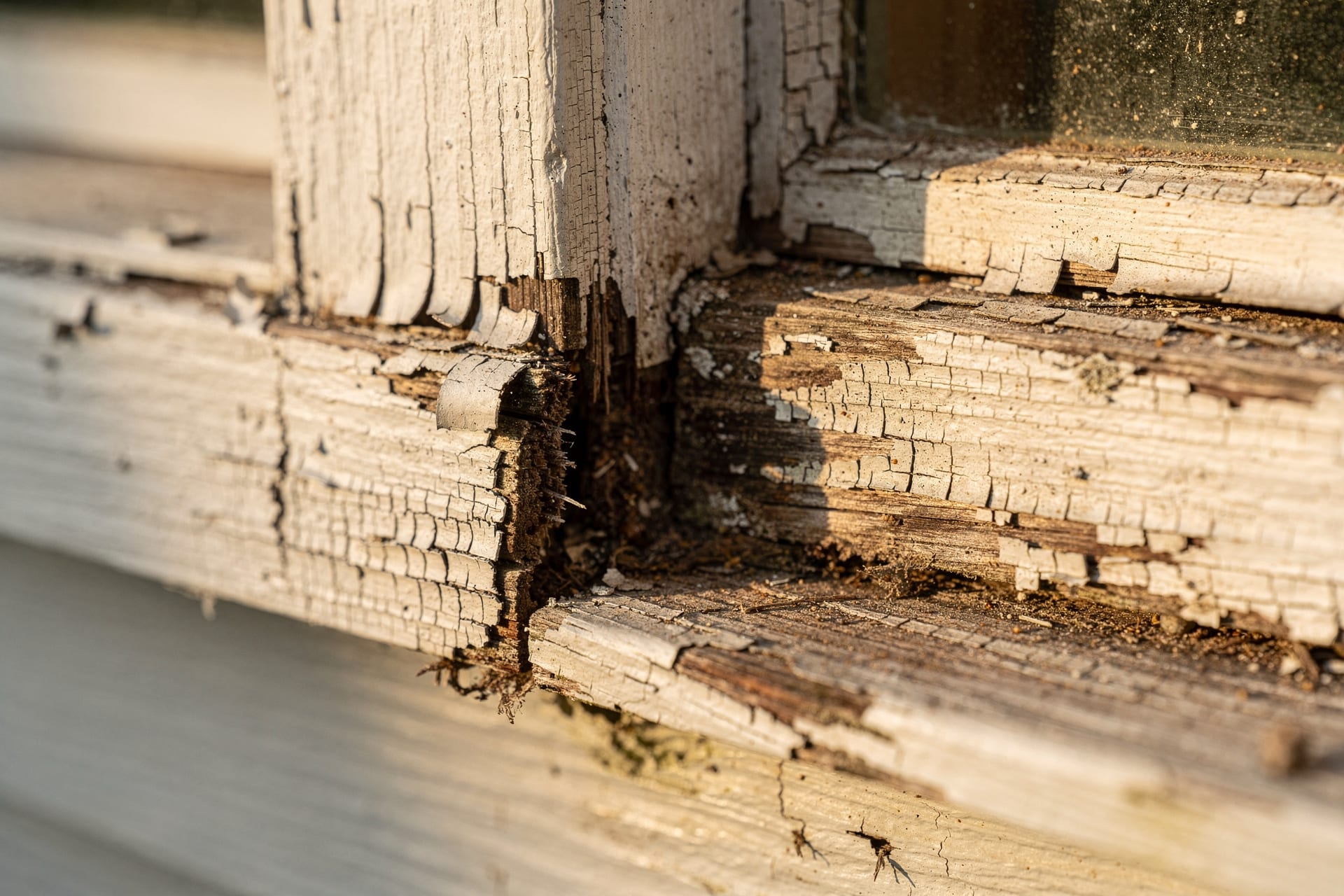
Wood is a genuinely good natural insulator and a beautiful material. But it drinks moisture. In NC humidity, a wood frame that misses its reseal-and-repaint cycle can swell, warp, and rot — often starting at the sill or a bottom corner where water sits.
Kept up, wood is fine — some historic frames have gone a century. The catch is the word kept. Miss a few cycles in the wrong exposure and the clock speeds up fast.
The people who install and repair windows for a living tend to say the quiet part plainly. One NC-area builder, writing on r/HomeImprovement about what he actually sees fail, put it bluntly: it’s mostly the wood windows he’s watched rot and had to rebuild, and for a standard replacement he doesn’t think wood is worth it over vinyl.
That’s not gospel — it’s one honest tradesman. But it matches what the humidity does to unmaintained wood here.
Vinyl’s appeal in one line: there’s nothing to repaint, and it doesn’t rot. You wash it and check the hardware. That’s the maintenance.
Which one lasts longer?
Wood can outlast vinyl — but only if it’s maintained, and that “if” is doing enormous work. Neglected in NC humidity, wood can fail years before a vinyl window that nobody thinks about.
Restored and cared-for wood windows have run generations. Quality vinyl runs a long, dependable life on its own, without the upkeep. The honest read is that maintenance, exposure, and install quality move the real lifespan more than the material name does.
So “wood lasts longer” is true in a museum and optional in a busy household. Be honest with yourself about which one you run.
Does vinyl look cheap?
From the street, a quality vinyl window reads just fine — the authenticity gap shows up close, on the details. This is the fear worth defusing, because it’s half-true, not fully true.
At ten or fifteen feet, most people can’t tell a good vinyl window from the wood one next to it. Where wood still wins is the up-close stuff on a period facade: true divided-light grilles, slimmer sightlines, the depth of a real sash.
If your house is a genuine landmark and the detail is the point, that gap matters. If it’s a comfortable older home on an ordinary street, it usually doesn’t — and one homeowner’s line from the forums sums up the mainstream view: unless the home and the neighborhood are truly historic, a good vinyl gets you a nice product for a fair price.
What about energy?
Both insulate well — don’t let the wood-vs-vinyl argument get decided on the frame’s R-value. Wood is a good natural insulator; vinyl’s multi-chamber frame is a genuinely good one too. They’re close enough that the frame isn’t where comfort is won or lost.
What actually decides the comfort is the glass package — the coating and argon fill — not the frame material. Here’s how to let the energy label break the tie, where the and rate the whole window as an assembly.
The middle path: clad-wood
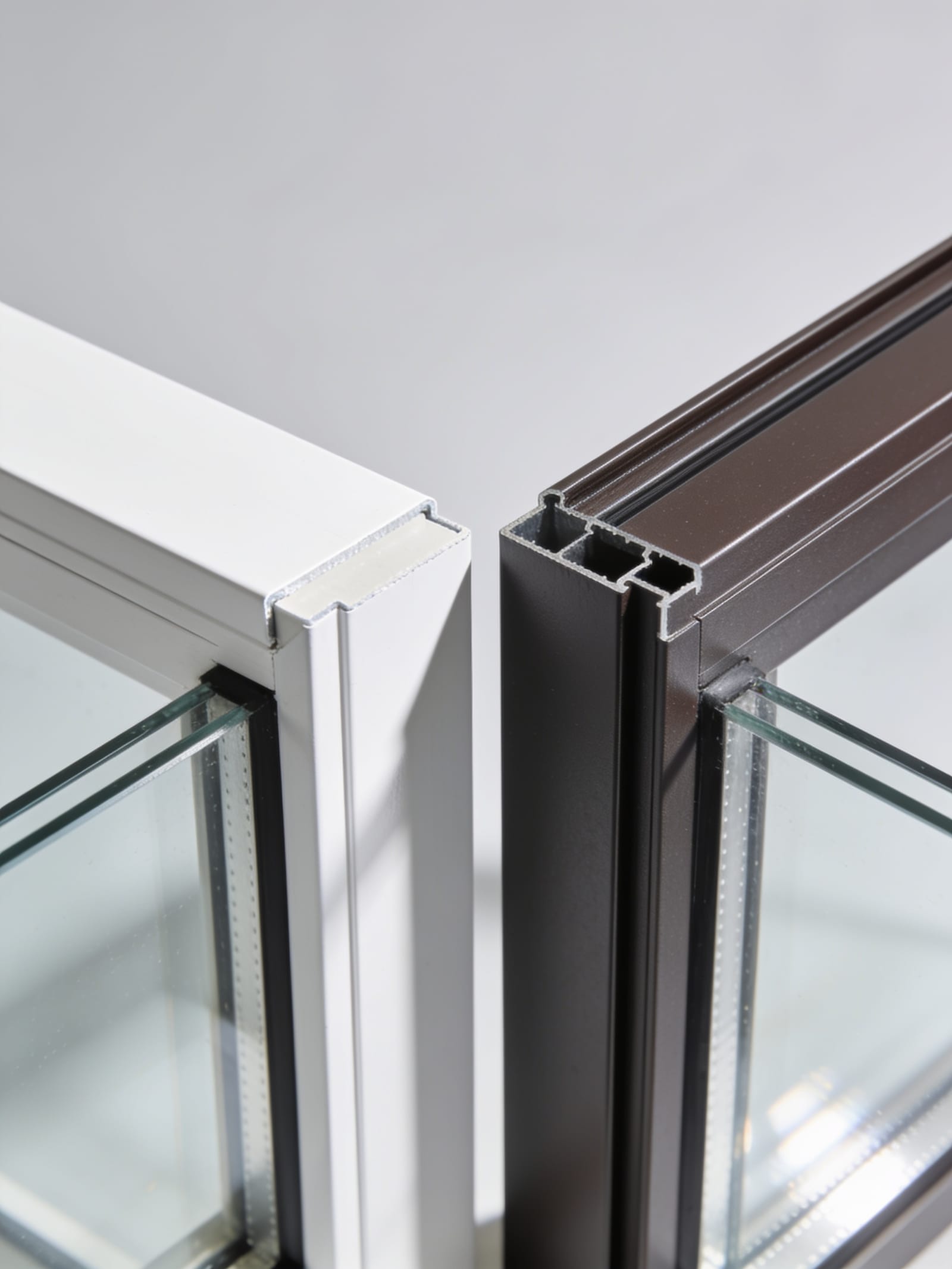
Clad-wood is the peace treaty in this whole fight: a real wood interior for the look, wrapped in a factory-finished weatherproof exterior that shields the weather side — so you keep the warmth and lose most of the rot-and-repaint chore. It’s the option most people don’t know to ask for.
The exterior cladding — vinyl, aluminum, or fiberglass depending on the line — takes the sun and rain that punish bare wood, while the inside stays real wood you can stain or paint to match your trim. That’s why a clad unit can go decades with only minor upkeep instead of a repaint every few years.
It isn’t free — clad-wood carries a premium. But if you want the wood look without signing up to fight NC humidity, this is the honest answer, and it’s why I’d put it on the table before anyone rules out either extreme. Here’s the fuller detail on wood and clad frames, and where vinyl’s strengths and limits land.
Resale, historic districts, and when wood is required
In a genuine historic district, the choice may not be fully yours — the board can require wood — and that’s where the real tension of this whole decision lives. Everywhere else, resale rarely punishes a clean, efficient vinyl window.
Homeowners in regulated districts describe the board honestly: one on r/HomeImprovement called a historic district “basically a very restrictive HOA,” where the rules protect the authentic look even when a modern look-alike would match it closely. That’s a reasonable goal — the district exists to protect the streetscape — and it’s also a real cost of living in one. Both things are true.
North Carolina has several: Oakwood in Raleigh, Montford in Asheville, districts in Wilmington, New Bern, Edenton, and Old Salem, among others. Each runs a preservation commission whose published standards lean the same way — repair before you replace, and match the original material — but the specifics vary board to board, so verify yours before you fall in love with a plan.
Here’s the escape hatch worth knowing: some boards accept clad-wood or a wood-look product as a compromise. Ask before you assume you’re stuck maintaining bare wood.
And one more honest option, because the pushiest thing this page can do is tell you to buy something: you might not need to replace at all.
If the wood is still sound and only tired, restoration is real — paint and glazing putty, weatherstripping, even slim retrofit dual-pane glass — and restoration shops do exactly this for century-old frames every day. If yours are sound, price a restore against a replace before you commit.
NC homeowner takeaway: two myths cancel out here. “Wood always lasts longer” is only true if you maintain it — in our humidity, unmaintained wood is the frame that fails first. And “vinyl is cheap junk that kills resale” doesn’t hold either, outside a genuinely historic facade.
Match the material to how much upkeep you’ll really do and to what your district requires. If you want the wood look without the rot chore, clad-wood is the answer hiding in the middle. And whichever you choose, a clean, square, properly flashed install decides more than the frame label ever will.
Want a straight read on your own house — whether your wood is worth restoring, whether a look-alike will pass your board, and where clad or vinyl is the smarter call? Get a no-pressure second opinion — book a consult on your quote, no pitch.
Bring the district letter if you’ve got one. That’s usually the fastest part to sort out.
Sources, Verification & Fact-Checking verified July 2026
Every load-bearing fact on this page is sourced and verified against a primary authority.
Verified July 2026 via direct review of the cited authority — the links open the controlling source so you can check it yourself rather than take our word.
- Wood is a good natural insulator with the authentic period look, but it is the highest-maintenance frame material — it needs regular resealing and repainting and is susceptible to rot, swelling, and warp in a humid climate if upkeep lapses; kept up, it can last generations. “Wood is a natural insulator, making wood windows inherently energy-efficient,” and wood windows “require consistent maintenance to prevent rot, warping, and insect infestations.” (view source — This Old House, “Wood vs. Vinyl Windows”) The U.S. Department of Energy’s frame-materials guidance agrees — wood frames “insulate relatively well, but they require regular maintenance” — but its page was unreachable at review, so This Old House is the attributed source here.
- Vinyl frames are a good insulator, do not rot, and require essentially no maintenance — the color runs through the material, so there is nothing to repaint; vinyl generally cannot be reliably painted, and painting it can affect or void the manufacturer’s warranty. Vinyl windows are “difficult to paint after installation” (view source — This Old House); paint “just doesn’t stick to that slippery vinyl surface well,” and a field-applied coat “could very well void the warranty put into place by the manufacturer” (view source — Feldco, “Why You Shouldn’t Paint Vinyl Windows”). Manufacturer warranties reviewed (Ply Gem, Simonton) exclude field-painted or coated units from coverage; the exact clause varies by brand, so the page keeps the claim general (“many manufacturers”).
- Clad-wood windows pair a real wood interior with a weatherproof, factory-finished exterior (vinyl, aluminum, or fiberglass), giving the wood look with far less exterior upkeep and largely removing wood’s rot exposure. Manufacturer framing of wood-clad as a wood-interior/low-maintenance-exterior compromise: clad units “offer the warm beauty and character of a wood interior, paired with the advantages of a low-maintenance vinyl exterior.” (view source — ProVia, “Wood vs. Vinyl Windows”) Source is a manufacturer; no specific clad lifespan figure is asserted on this page.
- Orientation cost, lifespan, and resale figures cited by national comparison guides — kept relative on this page, not asserted as NC quotes. One editorial comparison guide cites vinyl at roughly 140 to 900 dollars per window versus wood at about 260 to 2,000 dollars; wood lasting “30 years or more with proper maintenance” versus vinyl “15 to 20 years”; wood repainting every three to five years; and resale returns of about 68.5% (vinyl) versus 61.2% (wood). These figures were confirmed verbatim against the live source on 2026-07-10 and are cited for orientation only — real NC dollars live on the cost page. (view source — This Old House, “Wood vs. Vinyl Windows”) No single number is restated as an NC fact — ranges disagree across sources.
- In genuine historic districts, a review board may require wood windows to preserve the authentic streetscape; homeowners describe the rules as strict, and some boards accept clad-wood or wood-look products as a compromise. Attributed homeowner experience from r/HomeImprovement (a homeowner describing a historic district as “basically a very restrictive HOA,” and old-house owners weighing wood, clad, and vinyl). Reported as voice-of-customer, not as any board’s official policy. (view source — r/HomeImprovement discussion) Each named NC district (Oakwood/Raleigh, Montford/Asheville, Wilmington, New Bern, Edenton, Old Salem) is a real local historic district whose preservation commission publishes design standards that prioritize repairing over replacing windows and matching the original material; specific rules vary board to board, and no single board’s verbatim policy is asserted here.
- Installers report that unmaintained wood windows are a common failure they rebuild, and many old-house owners who are not in protected districts switch to quality vinyl; sound old wood windows can also be restored rather than replaced. Attributed homeowner and tradesman experience from r/HomeImprovement (a builder on what he sees fail; owners who switched to vinyl; restoration advocates). Reported as voice-of-customer. (view source — r/HomeImprovement discussion)