


You got an Andersen quote for around $1,100 a window from a local contractor. Last week, a different “Andersen” appointment quoted you nearly triple that. Now you’re at the kitchen table trying to work out who’s lying.
Nobody is. You were quoted two different companies that happen to share a name — and untangling that is this whole page.
Andersen Corporation manufactures windows and sells them through dealers and contractors; the install is on you or your builder. Renewal by Andersen is its separate, wholly-owned full-service replacement division — in-home sale, their product, their crews, at a premium. Same parent, two different purchases. Both facts come straight from the companies’ own sites, and I’ll keep every claim on this page attributed the same way.
Are Andersen windows worth it? Andersen the manufacturer makes genuinely well-regarded windows across a wide ladder — 100, 200, 400, and A-Series — sold through dealers, with the install on you. Renewal by Andersen is a different purchase reviewed on its own page. Which series you’re quoted, and who installs it, decide whether it’s worth it — here’s the honest breakdown, facts in one bucket and my opinion labeled as opinion.
Andersen vs Renewal by Andersen — which one quoted you?
Andersen sells windows; Renewal by Andersen sells a done-for-you replacement project. That one sentence resolves most of the confusion — and most of the price gap.
Here’s the structure, per the companies’ own sites:
- Andersen Corporation is the manufacturer. Its windows are sold through independent dealers, lumberyards, big-box retailers, and contractors. You buy the window; you or your contractor own the installation and the labor side of the job.
- Renewal by Andersen is Andersen’s wholly-owned, full-service replacement division. One company runs the in-home appointment, makes the product, installs it with its own crews, and stands behind the whole job — a package, priced like one.
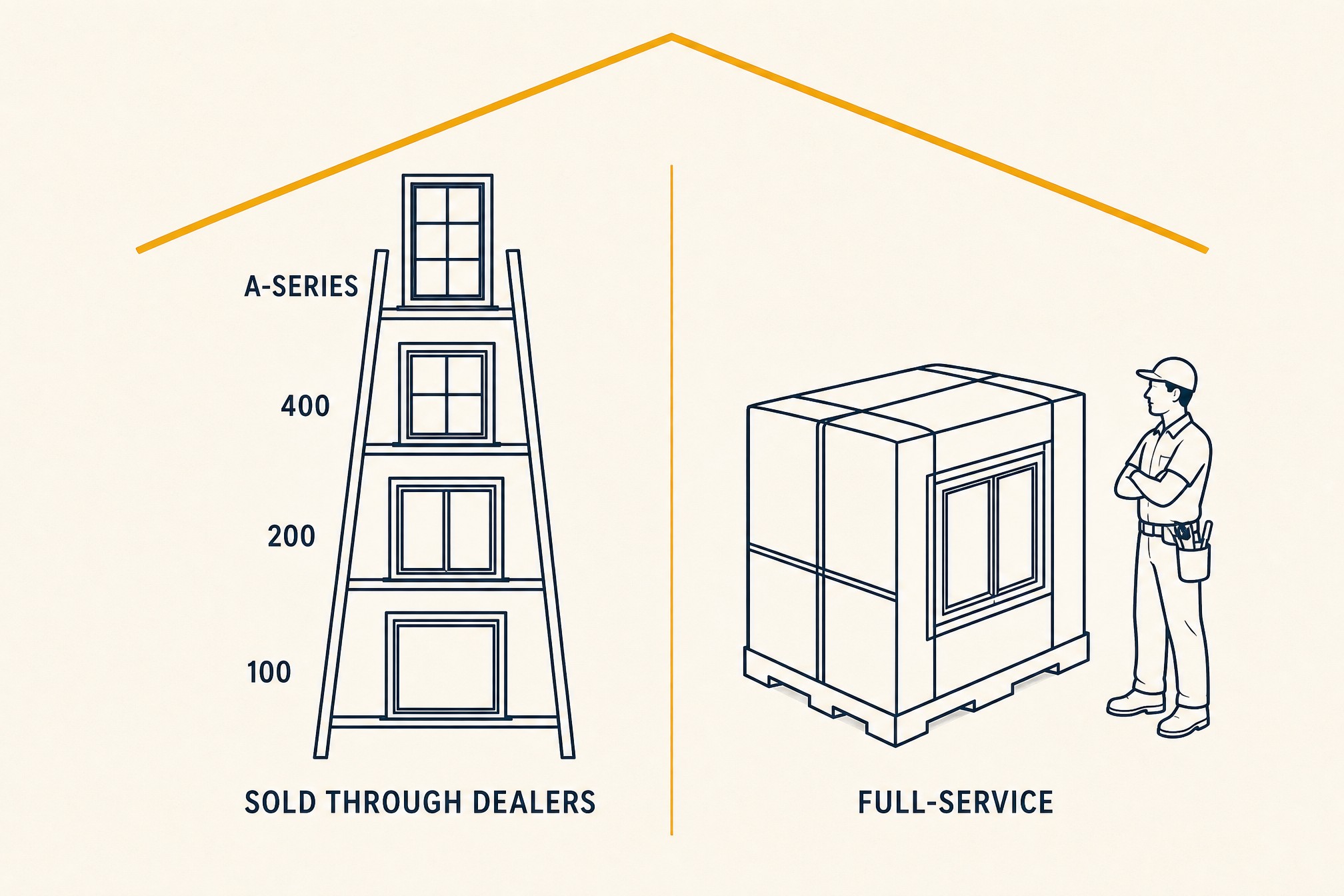
Neither one is a scam. They’re different trades — a product versus a project. A contractor quoting you a 400 Series window is selling you glass and frames; Renewal by Andersen is selling you the whole event, overhead and accountability included.
If the quote on your table is the full-service one, the fair review of that purchase — the product, the pitch, the price — lives on the Renewal by Andersen page. This page reviews the other Andersen: the windows themselves, bought through the dealer channel.
What are the Andersen series — and which one is on your quote?
“Are Andersen windows good?” can’t be answered until you name the series, because the ladder runs from budget composite to fully custom. Per Andersen’s own site, the residential lineup breaks down roughly like this:
- 100 Series — the budget line, made of Andersen’s Fibrex composite rather than wood. Simpler options, lower price point.
- 200 Series — the value wood line: wood interiors in the most popular sizes and styles, with fewer configuration choices.
- 400 Series — the flagship. Wood interiors with a protective vinyl-clad exterior, the deepest catalog of the traditional lines, and the one contractors most often mean when they just say “an Andersen.”
- A-Series and E-Series — the premium, most-customizable tier: architectural shapes, aluminum-clad or composite/fiberglass exterior options, and pricing to match.
| Series | Material | Position in the ladder | Honest note |
|---|---|---|---|
| 100 Series | Fibrex composite | Budget entry point | Compare it against good vinyl on the NFRC label, not on the name |
| 200 Series | Wood interior | Value wood line | Popular sizes and styles; fewer custom options |
| 400 Series | Wood interior, vinyl-clad exterior | The flagship default | What most contractors mean by 'an Andersen' |
| A-Series / E-Series | Wood interior; aluminum-clad or composite exterior options | Premium custom tier | Architectural work; priced accordingly |
100 Series
- Material
- Fibrex composite
- Position in the ladder
- Budget entry point
- Honest note
- Compare it against good vinyl on the NFRC label, not on the name
200 Series
- Material
- Wood interior
- Position in the ladder
- Value wood line
- Honest note
- Popular sizes and styles; fewer custom options
400 Series
- Material
- Wood interior, vinyl-clad exterior
- Position in the ladder
- The flagship default
- Honest note
- What most contractors mean by 'an Andersen'
A-Series / E-Series
- Material
- Wood interior; aluminum-clad or composite exterior options
- Position in the ladder
- Premium custom tier
- Honest note
- Architectural work; priced accordingly
The practical takeaway: the series is the real product name. “Andersen” on a quote tells you the manufacturer. The series line tells you what you’re actually buying — and whether two quotes are even describing the same window.
Is Fibrex actually good?
The verifiable part first, attributed: Fibrex is Andersen’s proprietary composite — described on the company’s own material pages as roughly 40% reclaimed wood fiber and 60% thermoplastic polymer (that composition was verified from Andersen’s site in July 2026). Andersen also claims Fibrex is “twice as strong as vinyl.” That strength claim is Andersen’s marketing, not my measurement, and I’m leaving it in their mouth.

What stiffness buys, mechanically: a stiffer material can carry the same glass with narrower frames, which means more glass area per opening. It also holds dark exterior colors better than standard vinyl, which can soften and move in direct sun — a real consideration on west-facing North Carolina walls that take hard afternoon light.
My take, labeled as opinion: Fibrex is a genuinely good material. Not fancy vinyl — a stiffer composite with real advantages in frame profile and dark-color stability.
Whether it’s better for your house than a good vinyl window is a different question, and it’s mostly a price question. A well-made vinyl unit that hits the ENERGY STAR numbers for our climate zone is a legitimate window.
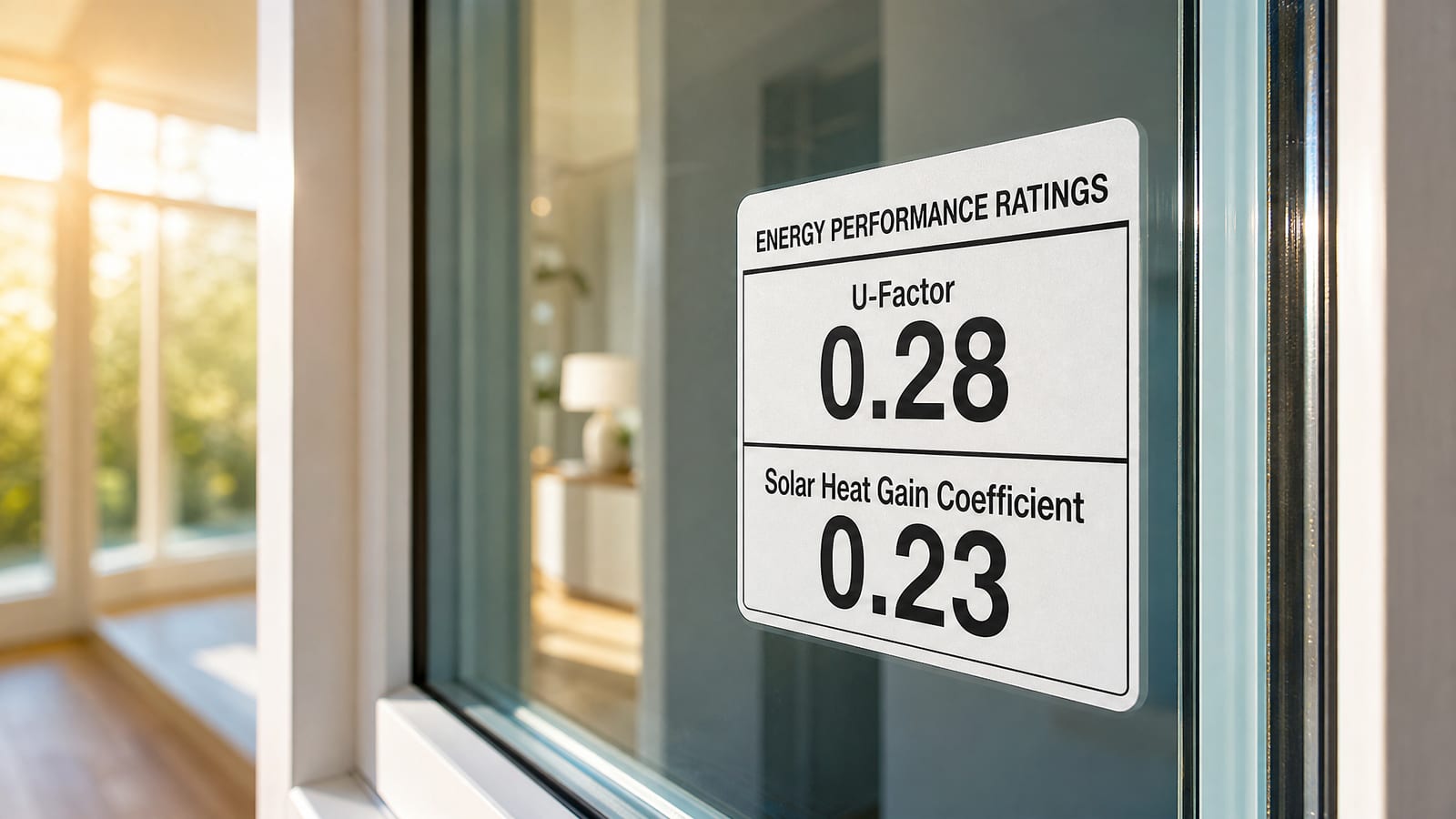
The fair way to compare them is the label — and are measured identically for both. Here’s how to read those ratings.
What do Andersen windows cost?
Context, not a quote: the span is enormous because the ladder is enormous. National cost aggregators put Andersen windows roughly in the $400 to $4,000 installed range per window depending on series, size, and glass package — a band so wide it’s almost a category rather than a price. The bottom of it is a 100 Series composite unit; the top is a custom A-Series opening.
That width is the answer to the two-quotes mystery. A 100 Series unit through a dealer sits at the bottom of that band. A custom A-Series sits at the top.
And a Renewal by Andersen opening isn’t in this band at all — it’s a different product under a different business model, with the full-service premium priced in. The cost picture for that purchase is on the Renewal by Andersen review.
So when your two “Andersen” numbers land far apart: look at the series line, then look at whether install is included. The gap usually explains itself — no villain required.
If a number still looks strange after that, run it through the quote sanity-check like any other bid.
What do owners praise — and what do they complain about?
Reported, not editorialized: praise clusters on the product; complaints cluster on price and service responsiveness. To be precise about sourcing, these are recurring themes from aggregated owner reviews on consumer platforms — what homeowners describe, not facts I’m stating about the company:
- The praise: durability, the look of the wood interiors, and the range of energy-efficiency options come up consistently — owners who bought the mid and upper series largely report getting what they paid for.
- The price complaint: the most common gripe is simply that Andersen costs more than comparable-looking windows. That’s consistent with the flagship positioning rather than contradictory to it.
- The service complaint: reviews on consumer platforms in the past couple of years also cite customer-service responsiveness — slow warranty-claim handling and difficulty getting post-install issues resolved in some accounts — and occasional hardware gripes on the budget line.
On the warranty: Andersen publishes a limited warranty whose terms vary by series and component. I’m deliberately not quoting year-terms here — those change, and the honest move is to read the current warranty document for the series on your quote before any number from a sales conversation carries weight.
What’s the install catch with a manufacturer brand?
When you buy through a dealer, the window’s ratings only survive if your installer does their job — and that’s the part of the purchase Andersen doesn’t control. This is where the manufacturer-versus-full-service distinction stops being trivia and starts costing money.
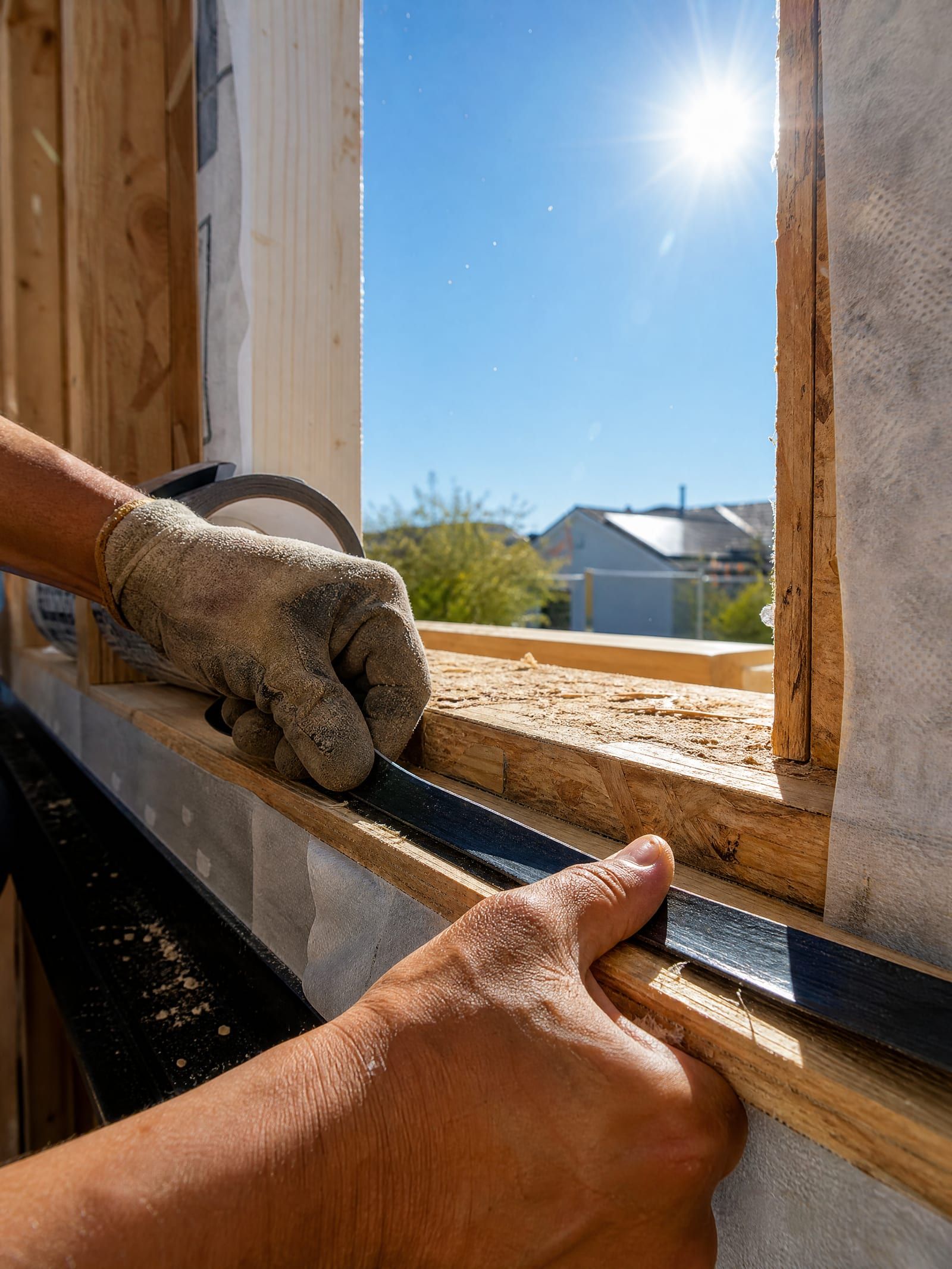
A 400 Series window with excellent NFRC numbers, installed out of square with gaps behind the trim, performs like neither the label nor the price. The can be flawless while the opening around it leaks. Cold pours off badly installed glass just as happily as off cheap glass.
So the dealer-channel path carries homework the full-service path doesn’t: you’re vetting the installer, not just the window. Who does the work, how they flash and seal the opening, what their labor warranty says — the installation hub covers what good looks like.
That’s not a knock on Andersen. It’s the honest shape of the trade: the manufacturer model gives you a better window per dollar and hands you the install risk. The full-service model charges a premium to take that risk off your hands. Install quality decides whether you got what the label promised — whichever Andersen you buy.
So — are Andersen windows worth it?
My opinion, labeled as opinion: often yes, if the series matches the job and the installer earns the window. By scenario:
- You want wood interiors and a deep catalog → the 200 and 400 Series are the natural lane, with the 400 as the default for a reason. Priced above vinyl, and owners largely report the product delivering.
- You want the budget composite → compare the 100 Series honestly against good vinyl on the NFRC label and the installed price. Sometimes the composite wins; sometimes the vinyl does. The label doesn’t care about the name — read the ratings, not the brochure.
- You want the whole project handled by one company → that’s not this purchase. That’s the full-service model, reviewed fairly on the Renewal by Andersen page — and compared against the other company models in how the best window companies stack up.
- You’re comparing against a budget package brand → the other end of the market works differently too; the Window World review covers how to vet that model.
Whichever rung you land on, the two moves that protect you are the same ones that protect you with every brand: get the series and NFRC numbers named in writing, and vet the installer like they’re the product — because half the time, they are.
And if you’ve got an Andersen quote — either Andersen — and want a straight read on which one it is and whether the number fits the product, that’s exactly what a no-pressure second opinion is for.
Sources, Verification & Fact-Checking verified July 2026
Every load-bearing fact on this page is sourced and verified against a primary authority.
Verified July 2026 via direct review of the cited authority — the links open the controlling source so you can check it yourself rather than take our word.
- Andersen Corporation = manufacturer sold through dealers/retailers (install on the buyer); Renewal by Andersen = its wholly-owned full-service replacement division selling one proprietary Fibrex line: confirmed July 2026 against both companies’ own sites. (view source — Andersen Windows; view source — Renewal by Andersen)
- Series ladder (100 = all-Fibrex budget line; 200 = wood-interior value with Perma-Shield vinyl exterior; 400 = best-selling wood-interior flagship with vinyl or Fibrex cladding; A-Series = architectural, composite/fiberglass exterior; E-Series = wood interior with extruded-aluminum exterior): confirmed July 2026 against Andersen’s own product pages (descriptions vary across affiliate sites — only Andersen’s site used). (view source — Andersen, Windows)
- Fibrex composition (about 40% reclaimed wood fiber / 60% thermoplastic polymer): verified July 2026 from Andersen’s own material page. (view source — Andersen, Fibrex)
- “Twice as strong as vinyl”: presented strictly as Andersen’s own attributed marketing claim about Fibrex, never adopted in Marc’s voice — matches Andersen’s current site wording (July 2026).
- Cost band (roughly $400–$4,000 per window installed, national context): directional aggregate from 2026 cost guides, never presented as a quote — routed to the cost page for real numbers; hedged in body.
- Owner review themes (praise: durability, looks, efficiency options; complaints: price, customer-service/warranty responsiveness, budget-line hardware, dealer-install variability): reputational — attributed to aggregated consumer-platform reviews (July 2026), reported not editorialized, never stated as company fact.
- Warranty: structure only (“limited warranty, terms vary by series and component”) — NO year-terms printed, by policy, even though public sources quote them.
- Install-quality-decides-performance framing (NFRC ratings only survive a correct install): cluster-consistent with the installation and energy-ratings pages; qualitative, no numbers claimed.
- Story callout (review threads resolving on the which-series/which-company question): a genuinely recurring pattern in Andersen review threads (confirmed July 2026); framed on the page as a recurring pattern, not attributed to one named thread. No disparagement — the confusion, not any person, is the subject.